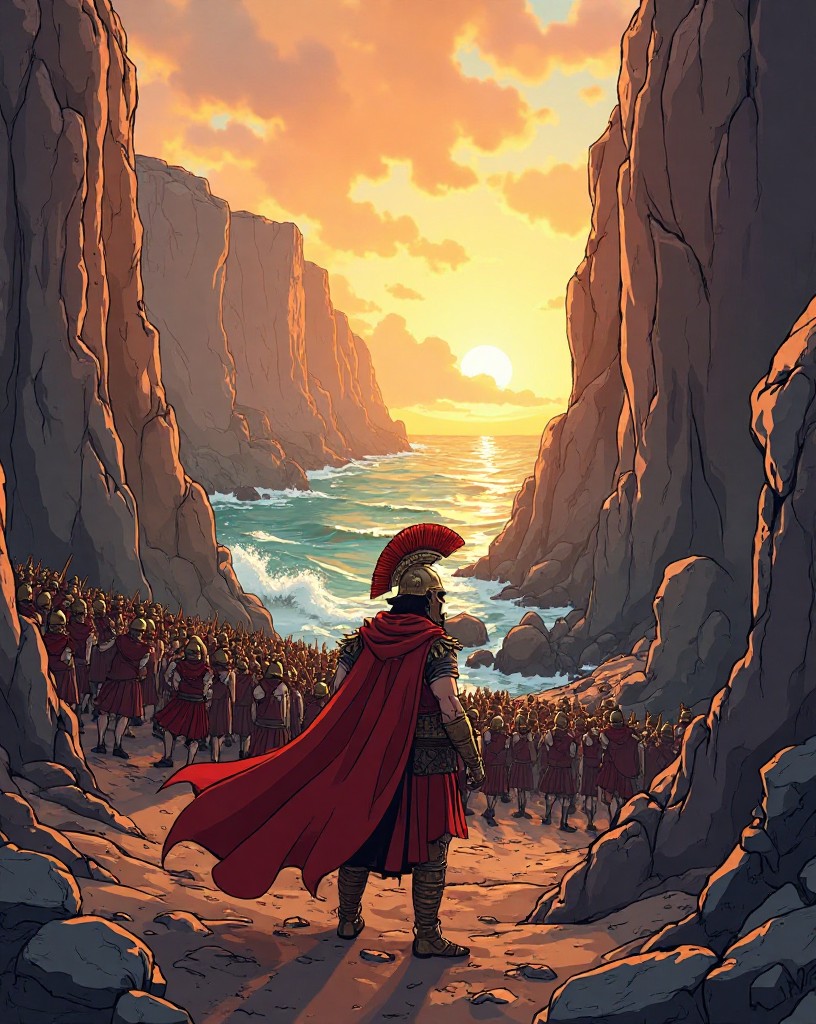
The Hot Gates
Three hundred Spartans, a pass too narrow to lose, and a king who would not leave.
Thermopylae · 480 BC
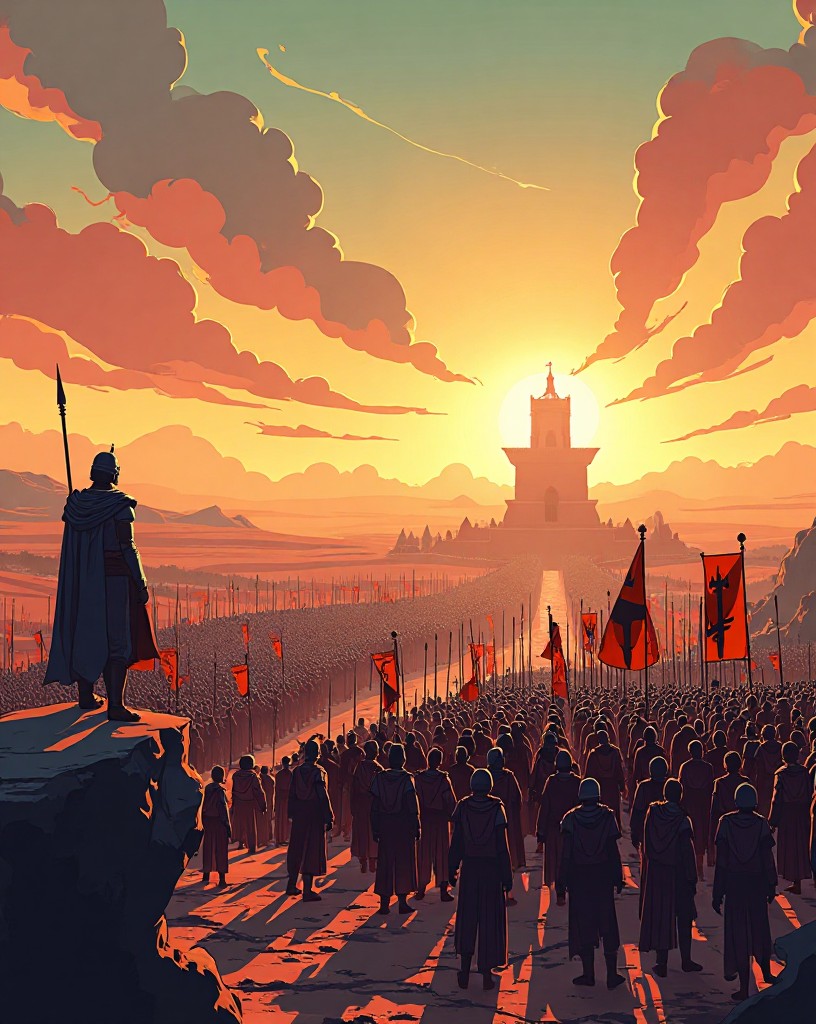
480 BC. The Persian king Xerxes marches west with an army so vast that, the Greeks say, it drinks rivers dry. His purpose is to swallow Greece whole.

To reach the heart of Greece by land, he must pass through Thermopylae — the Hot Gates — a coastal passage so tight in places that a single cart can barely squeeze through.
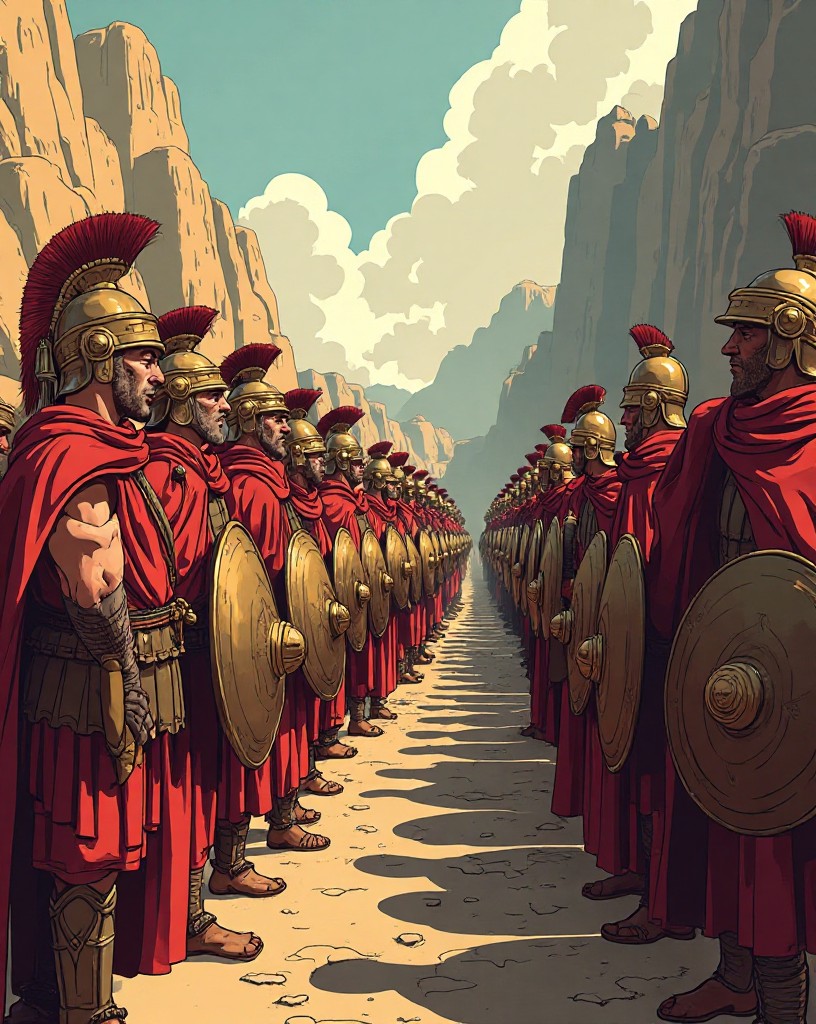
There, a small Greek force waits. At its heart stand three hundred Spartans under their king, Leonidas.
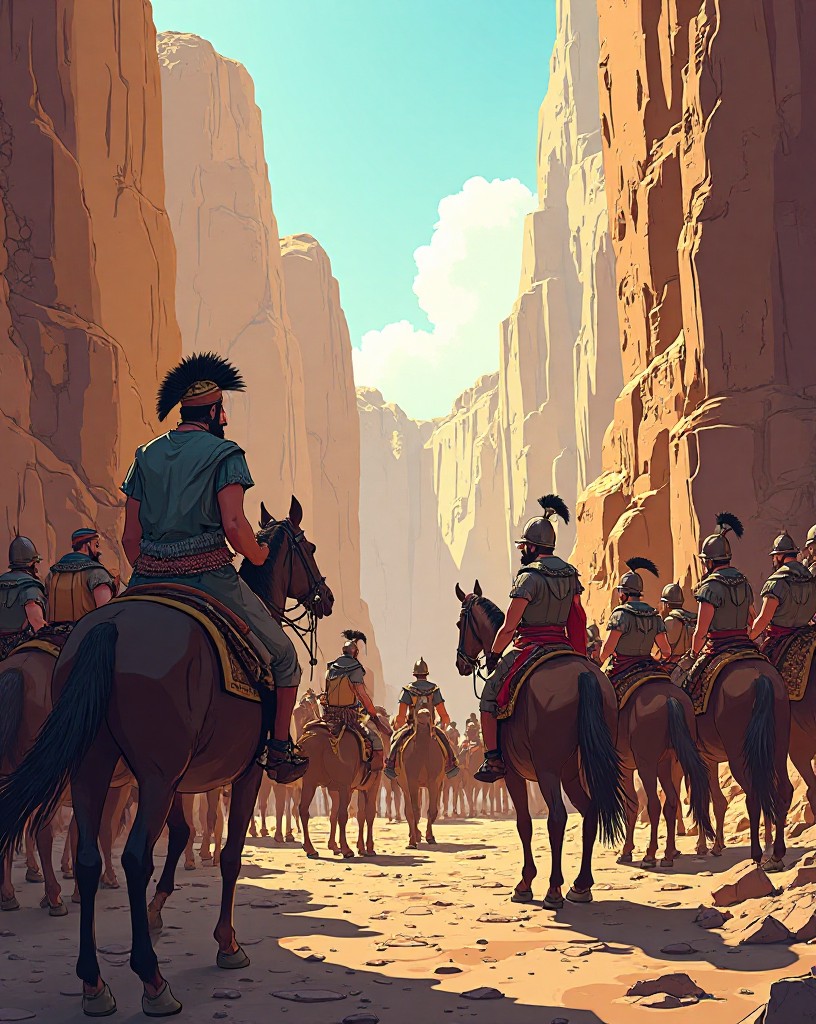
Xerxes sends envoys to the pass, demanding the Greeks lay down their weapons.
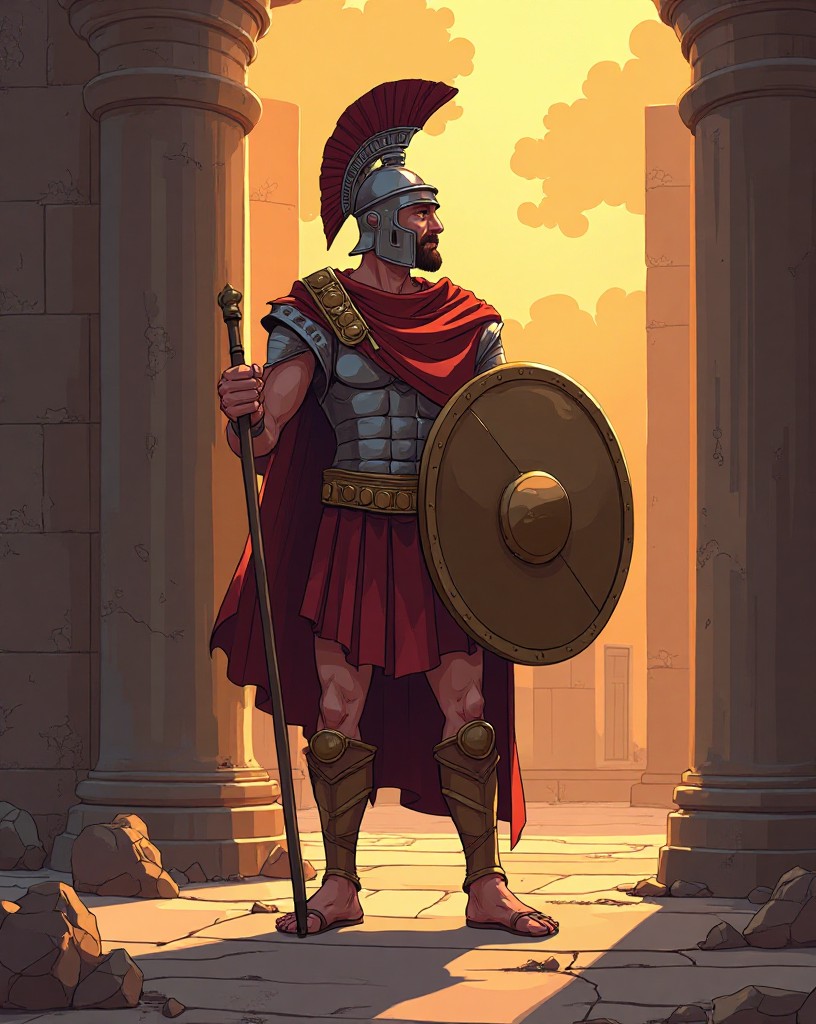
King Leonidas
“Molon labe. Come and take them.”
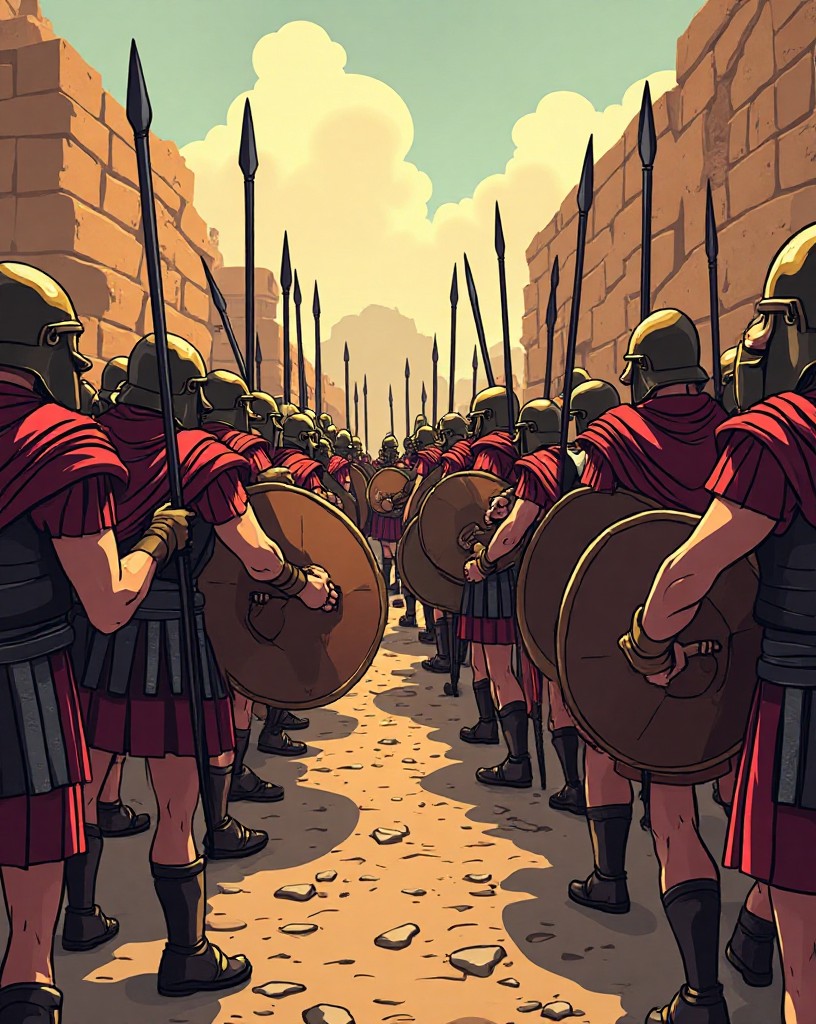
The Persians attack. In the narrow pass their numbers count for nothing — only a few can fight at once, and the heavily armored Greeks cut them down wave after wave.
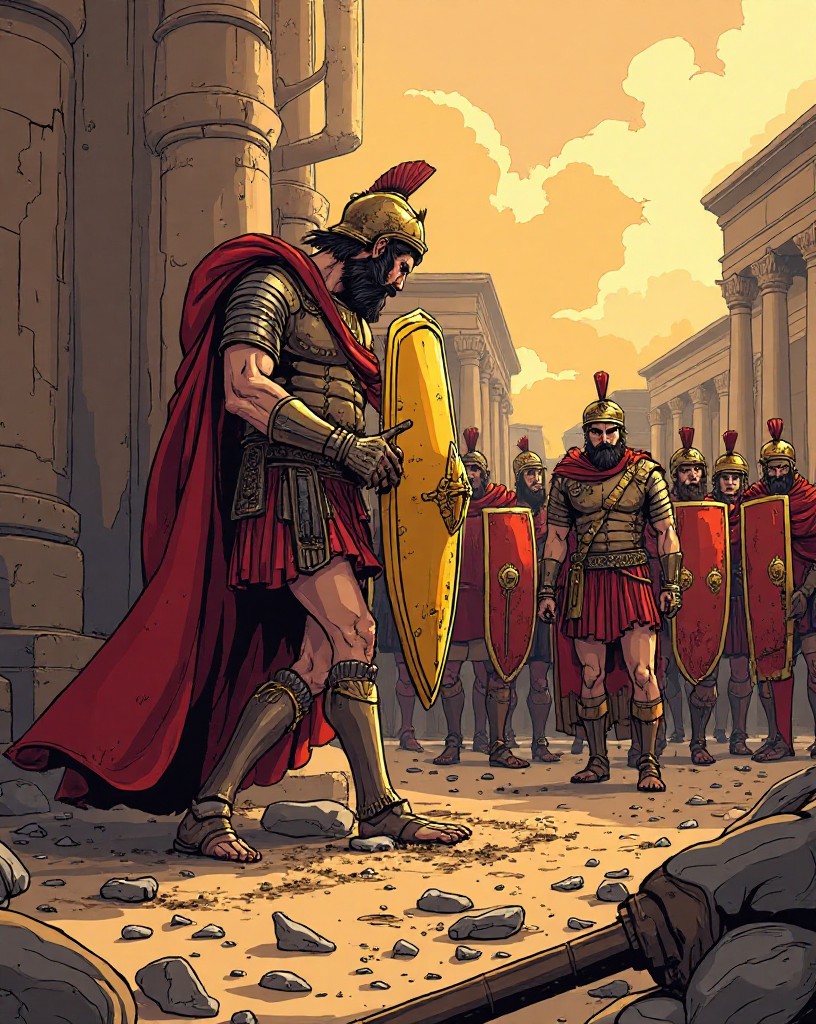
Even the king's elite guard, the Immortals, are thrown back. For two days the Hot Gates hold, and the greatest army on earth cannot break a few thousand men.
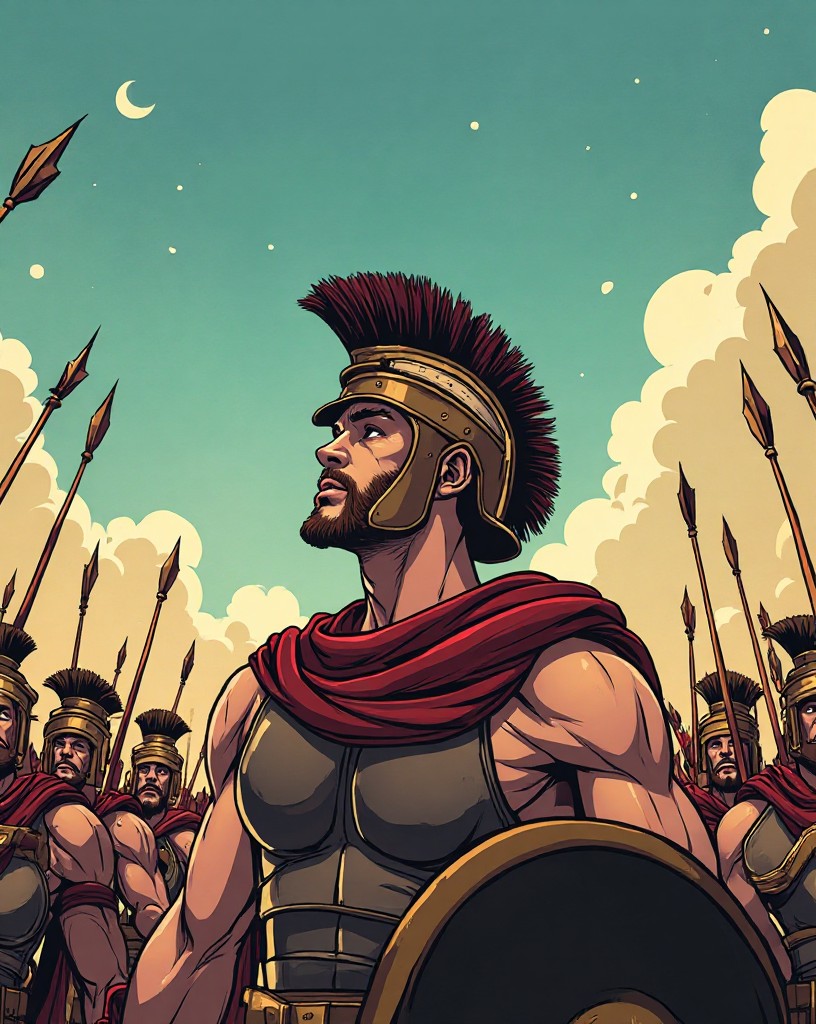
Dienekes the Spartan
“So many arrows they will blot out the sun? Good. Then we shall fight in the shade.”
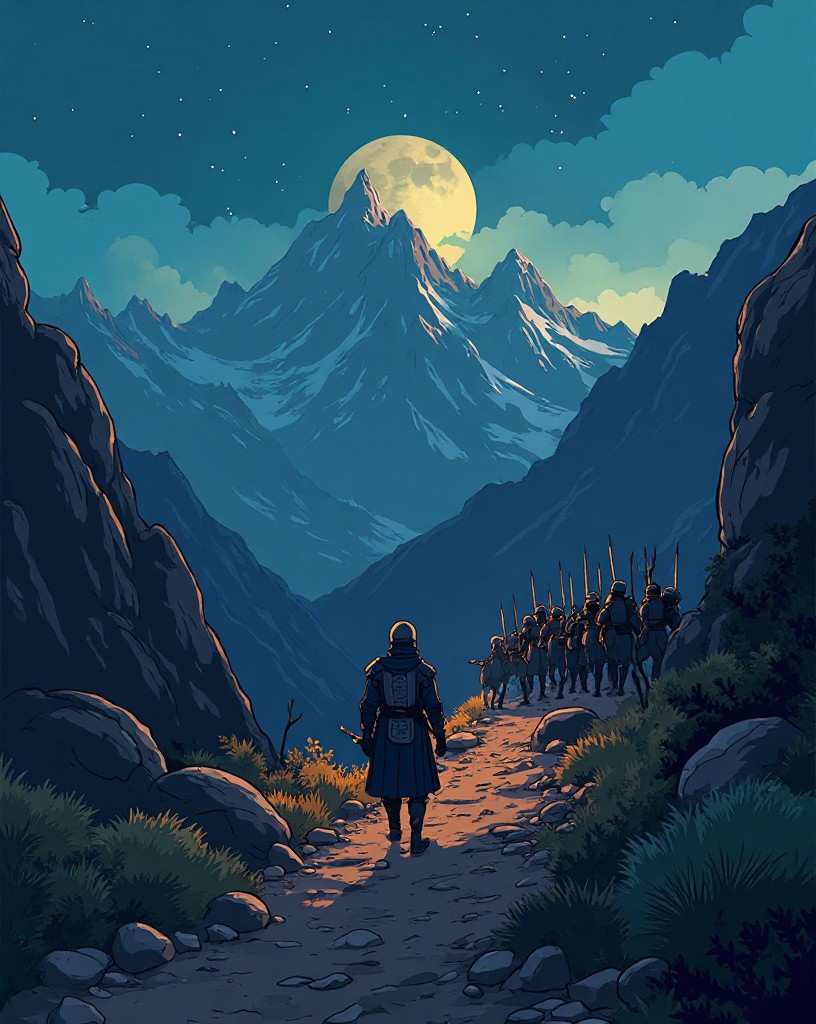
Then a local man named Ephialtes betrays them, showing the Persians a hidden mountain path that winds behind the Greek line.
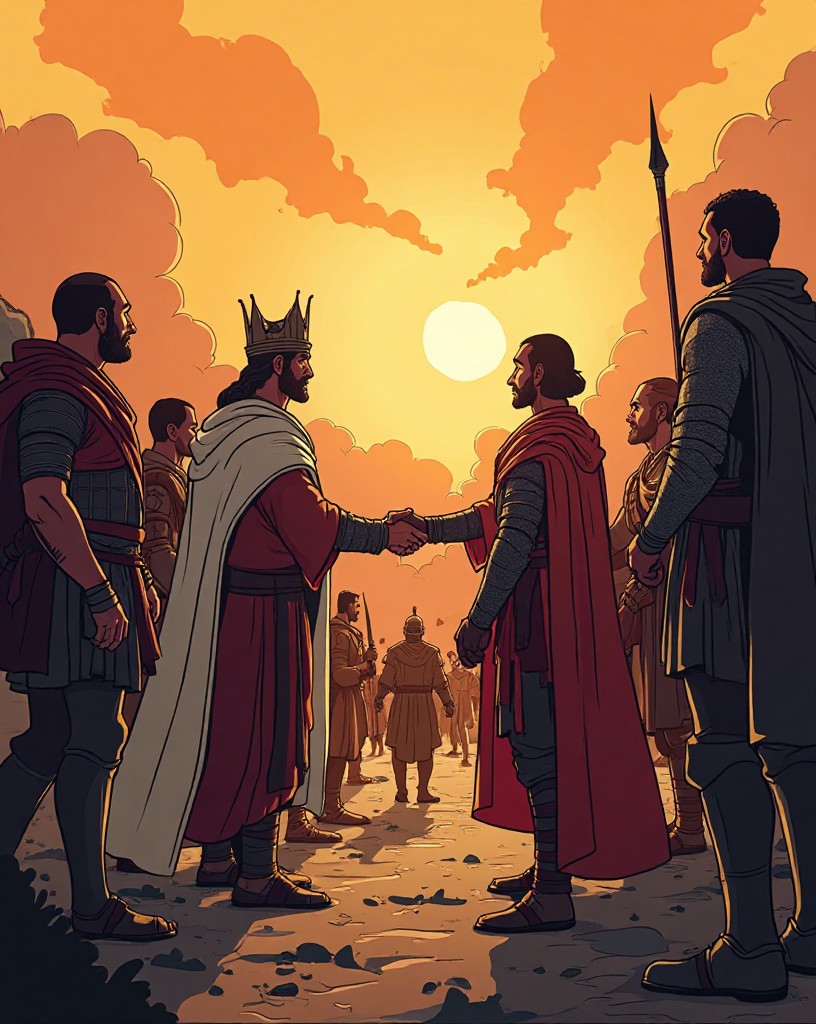
Learning he is about to be surrounded, Leonidas sends most of the allied Greeks away to fight another day. He and his three hundred Spartans stay — with a few others who refuse to leave.
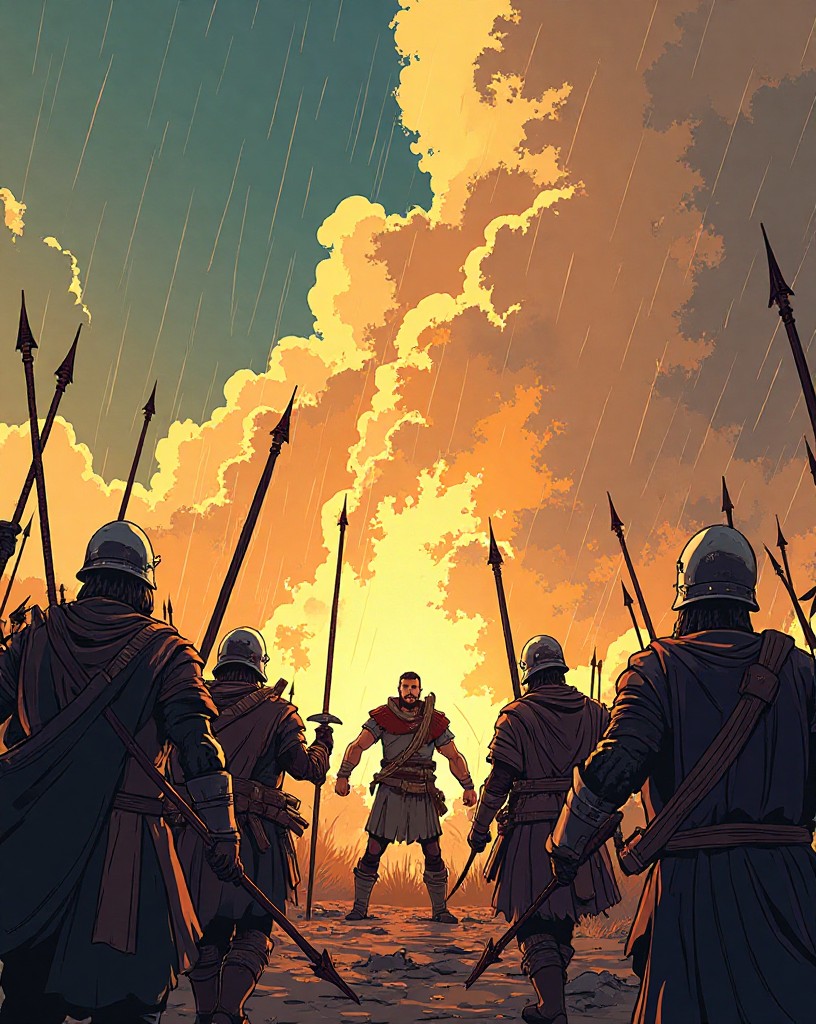
On the third day they march out into the open and fight until their spears shatter and their swords break — and then with hands and teeth, until the last of them falls beneath a storm of arrows.
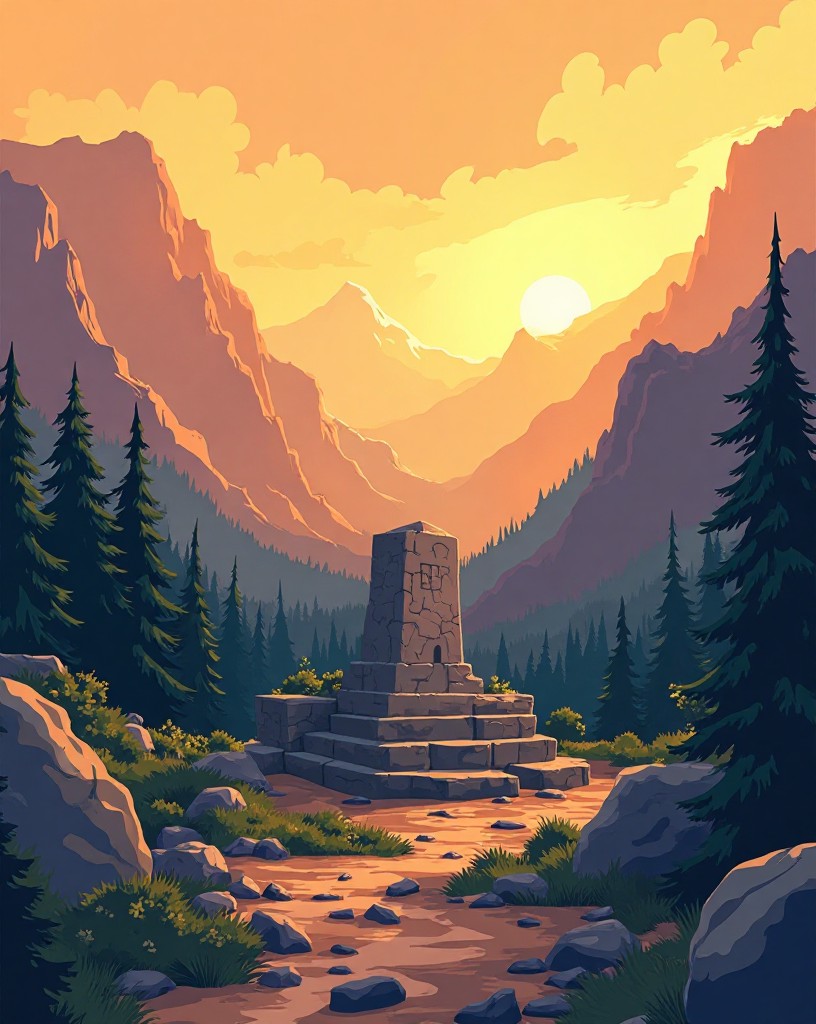
The stand bought Greece the time it needed, and within a year the Persians were driven back for good. On a stone at the pass were carved the words: "Go tell the Spartans, passerby, that here, obedient to their laws, we lie."
Sources
This story was adapted from the following. The illustrations are stylized depictions, not photographs of the events.
The Histories, Herodotus
The principal ancient account of the battle (Book VII).
“Battle of Thermopylae”, Wikipedia
Overview, numbers, and the famous quotations.
That’s the story.
More are in the studio. Head back to the collection to see what’s coming.