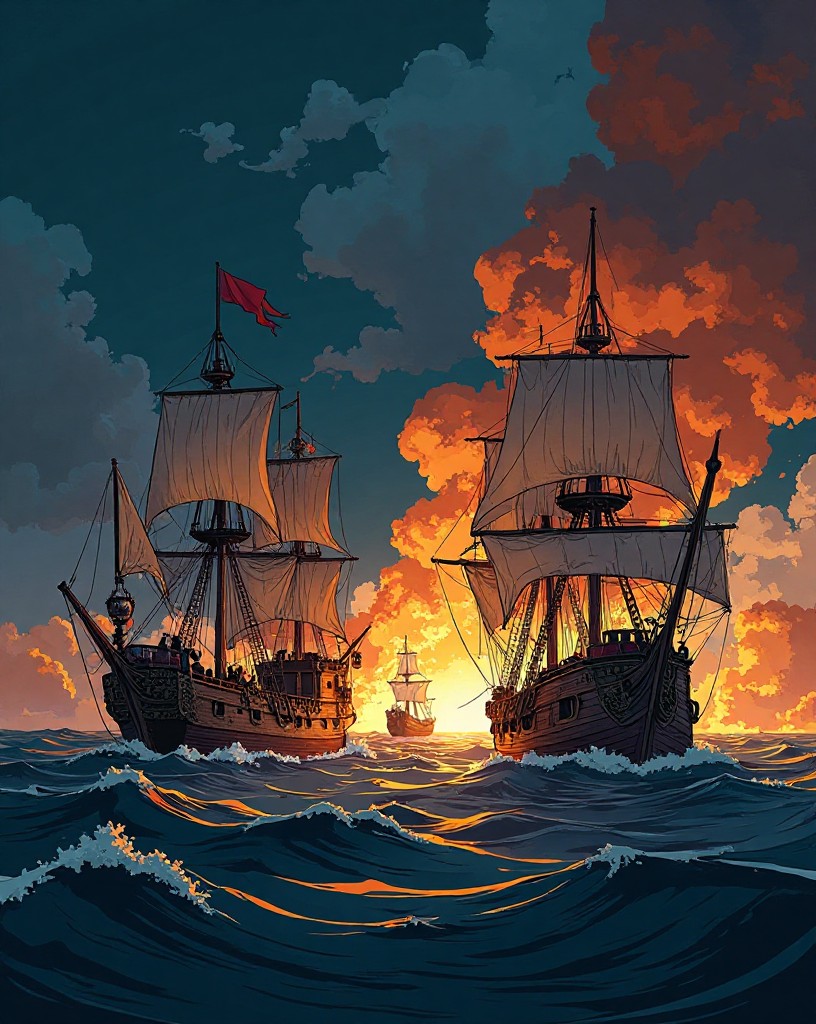
The Spanish Armada
The greatest fleet in the world, undone by fireships and a Protestant wind.
English Channel · 1588
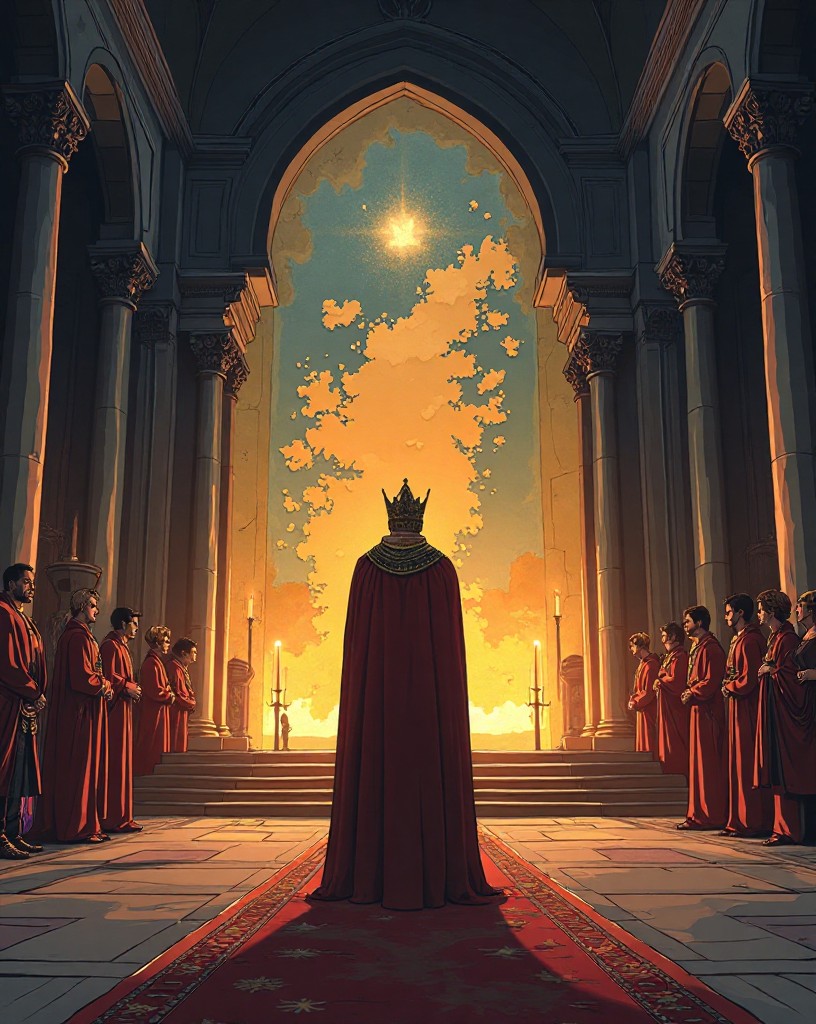
1588. King Philip II of Spain, the most powerful monarch in the world, has had enough of Protestant England — its raids on his treasure ships, its meddling, its queen. He assembles a vast fleet to invade: the Spanish Armada.
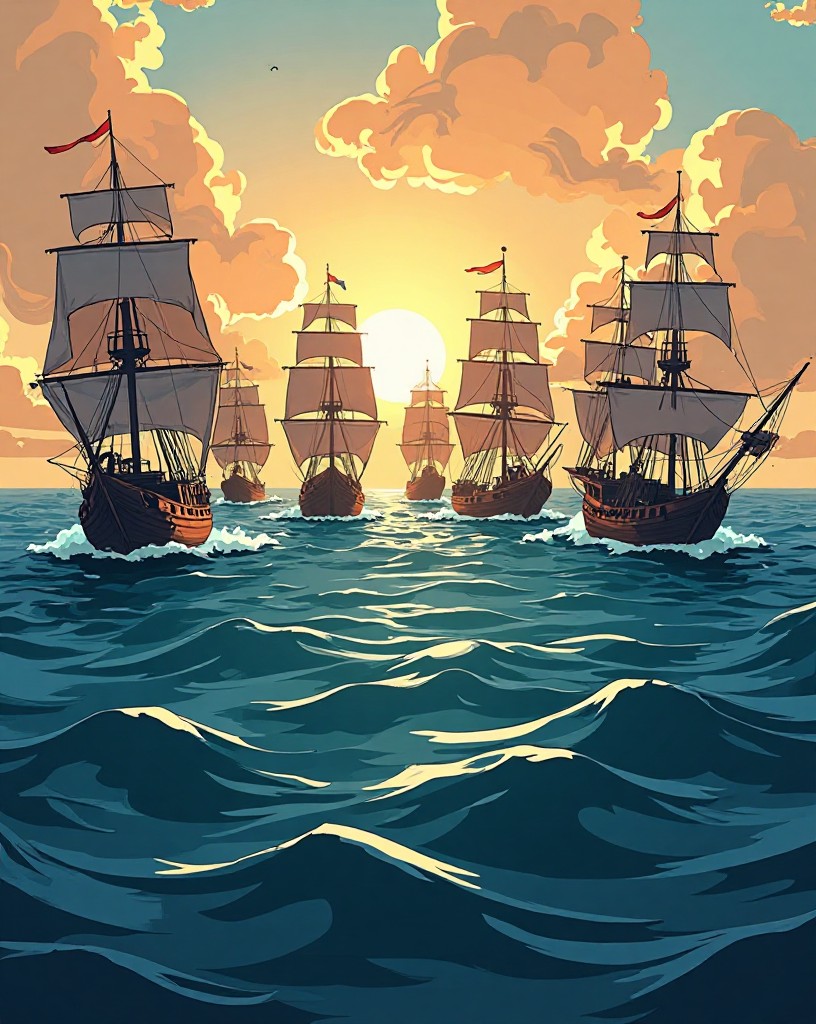
It is enormous — around a hundred and thirty ships carrying thousands of soldiers and sailors. The plan: sail up the Channel, link with an army on the coast, and ferry it across to crush England.
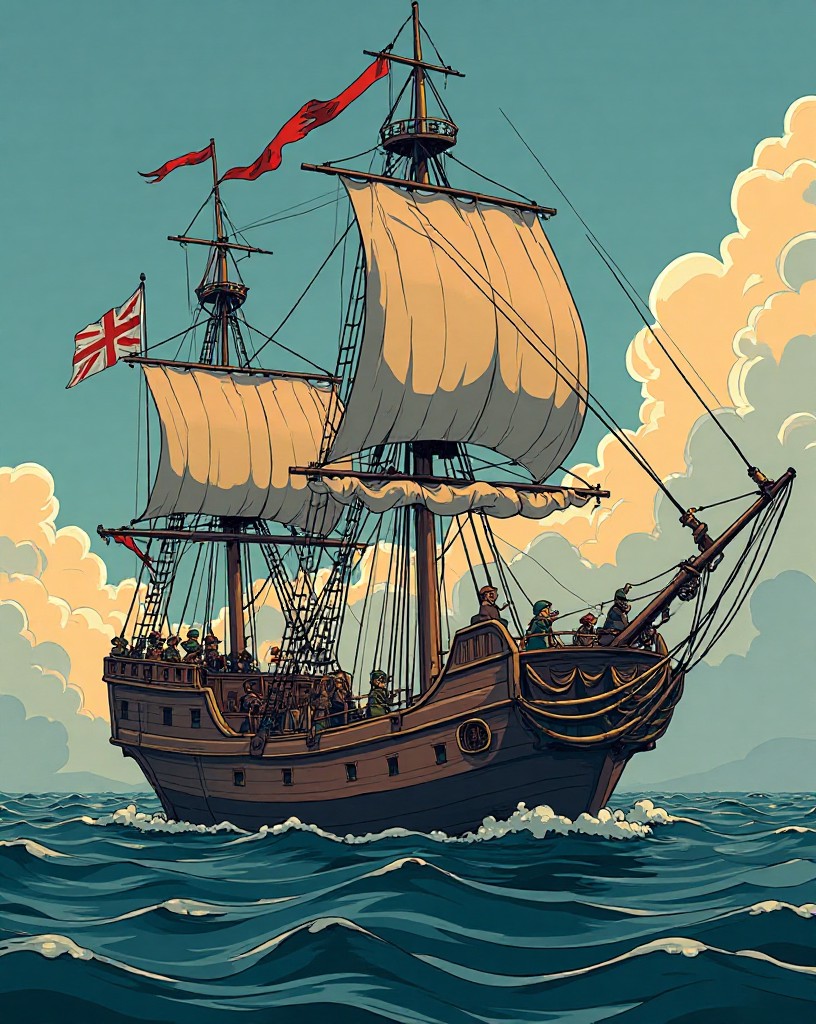
Against it stands Elizabeth I and an English navy of smaller, faster, more nimble ships, with longer-range guns and bold captains like Francis Drake.
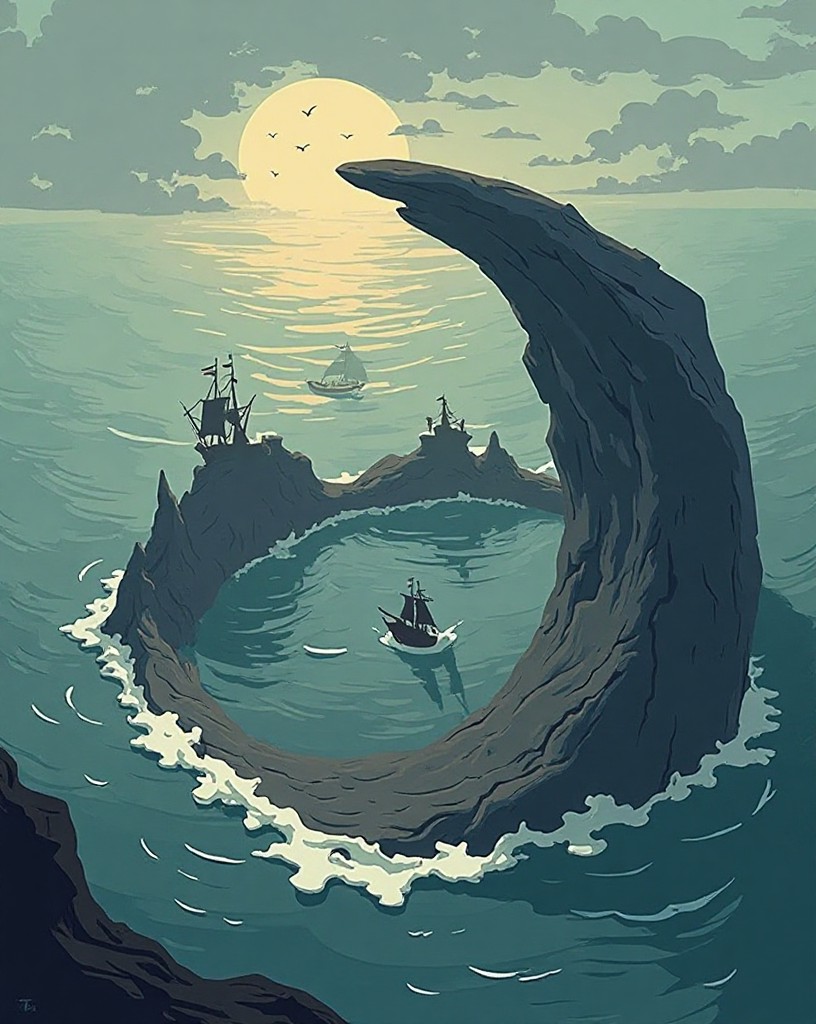
The Armada sails up the Channel in a tight, disciplined crescent the English find almost impossible to break.
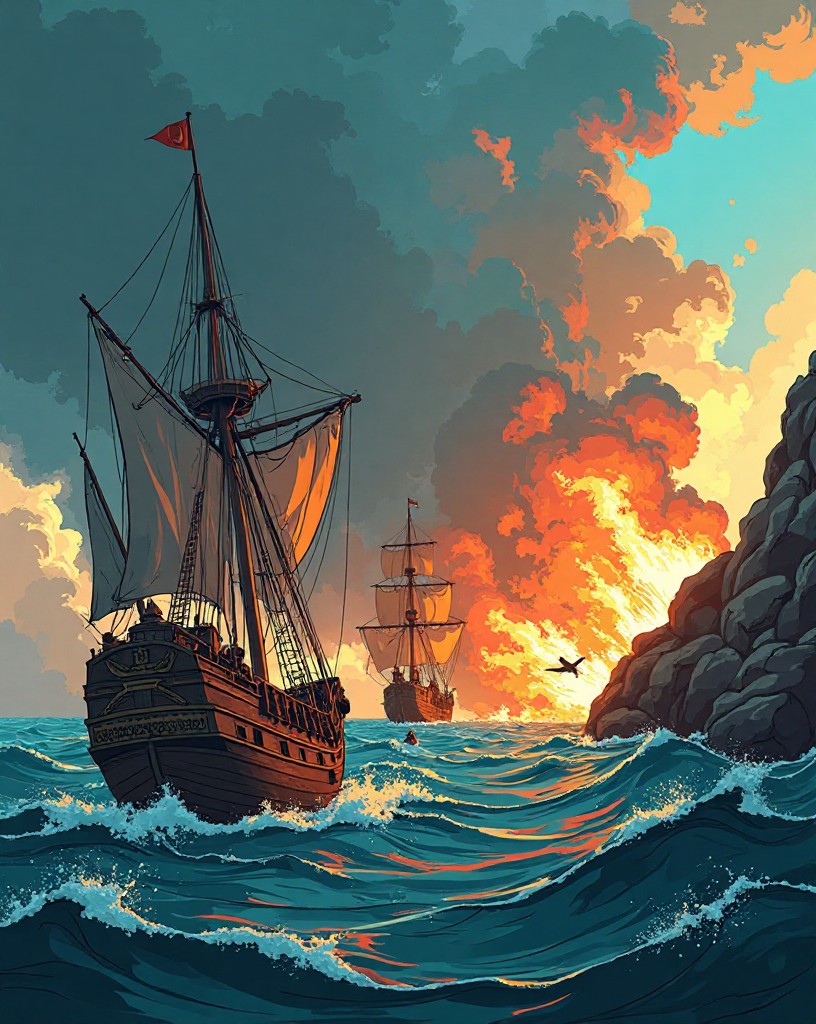
For days the English nip at its heels, firing from a distance, unable to land a decisive blow against the great floating fortress.
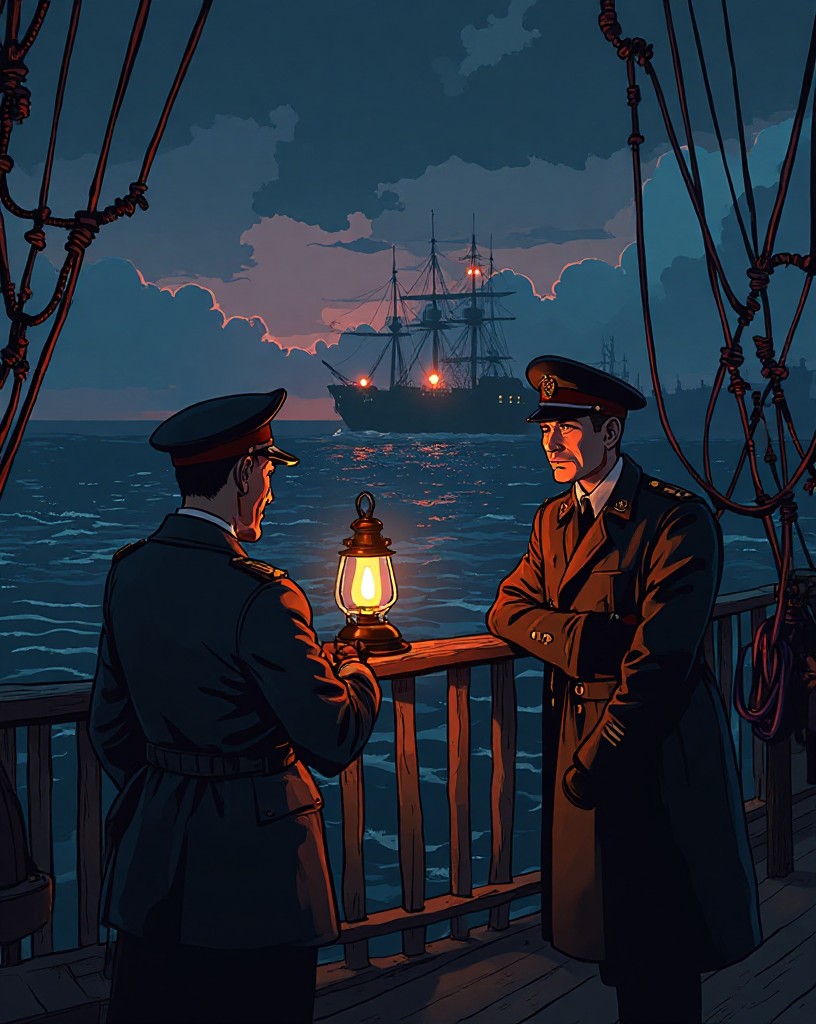
An English captain
“We cannot break their formation by gun alone. So we'll break it by fire — tonight.”
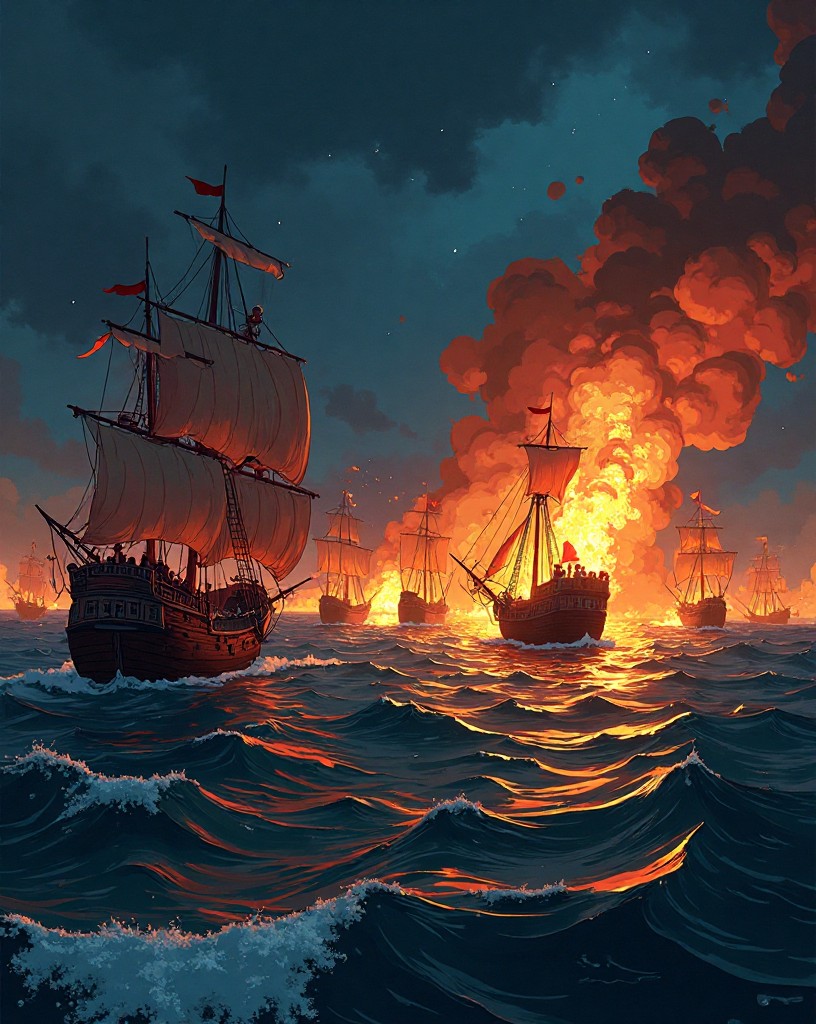
The Armada anchors off Calais. In the dark, the English send in fireships — old vessels packed with pitch and powder, set ablaze and steered straight at the anchored fleet.
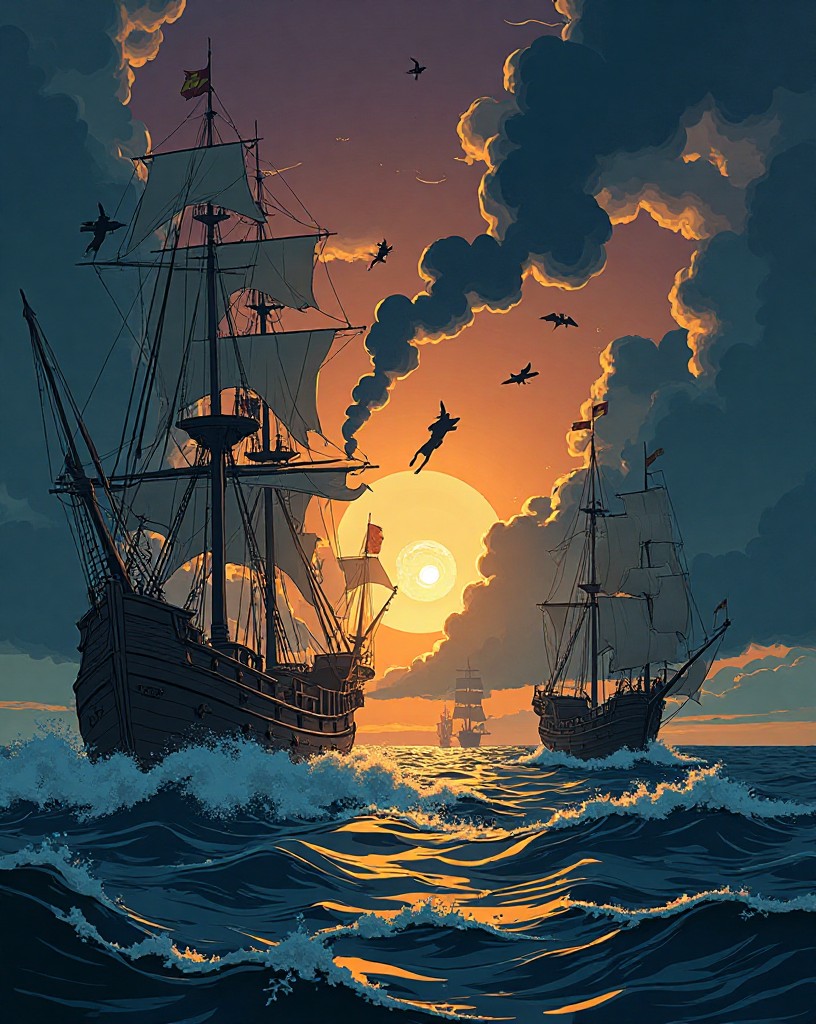
Panic. To escape the flames, the Spanish captains cut their anchor cables and scatter into the open sea — exactly as the English hoped.
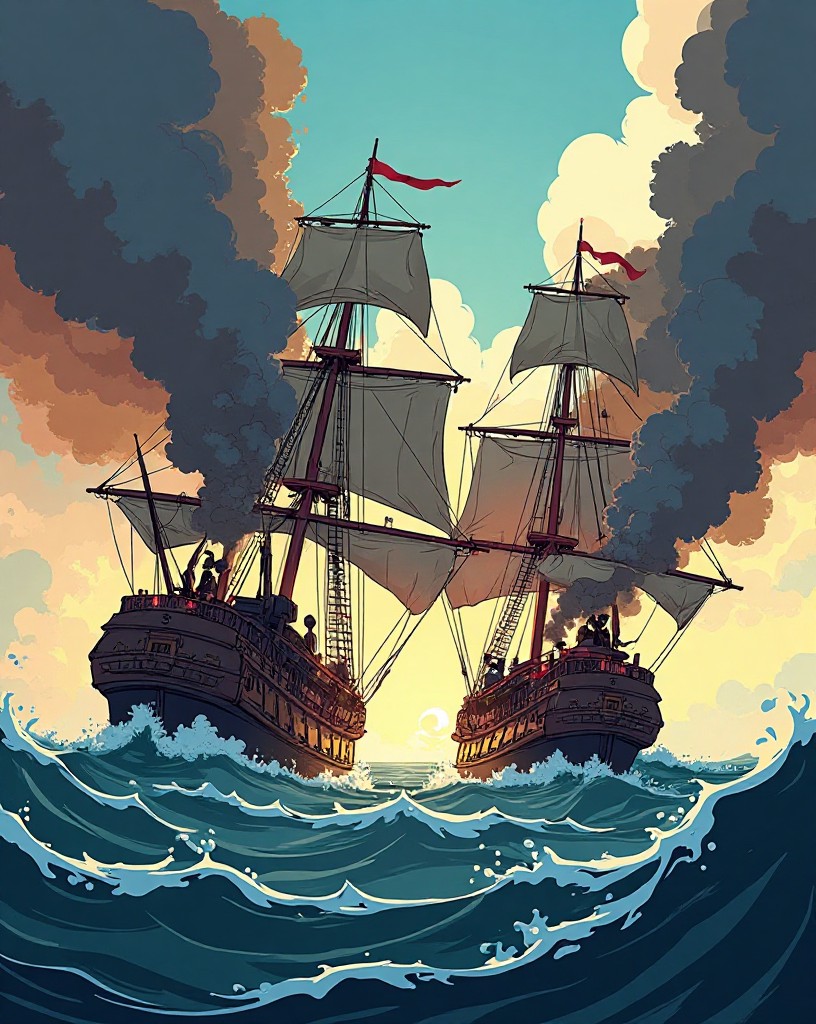
The next day, off Gravelines, the English fall on the broken formation at close range and pound it for hours. The Armada is battered, and the invasion plan is in ruins.
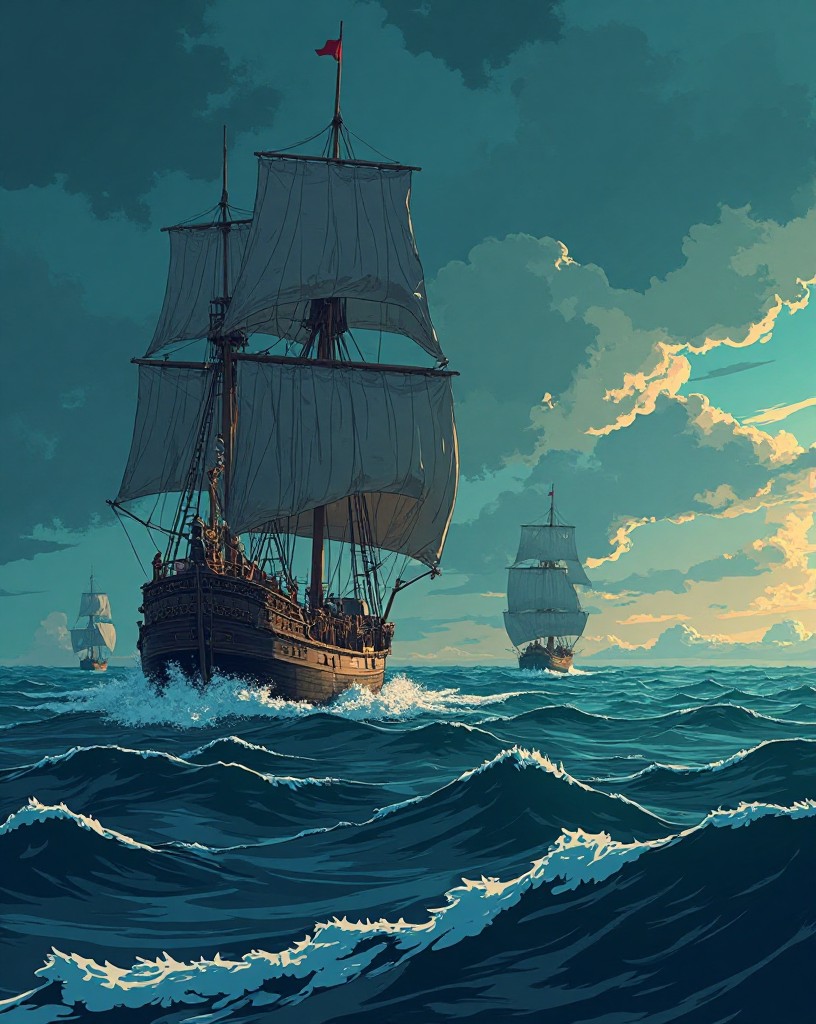
Unable to turn back through the Channel, the Spanish are forced to flee the only way left: north, all the way around Scotland and Ireland.
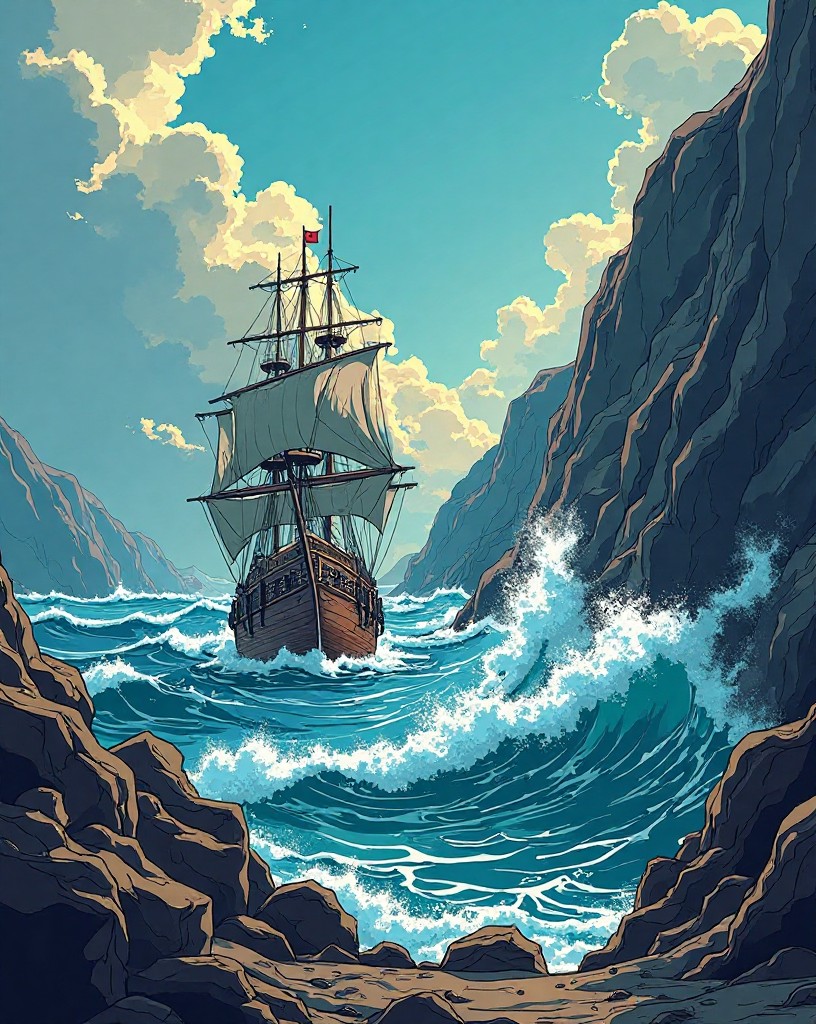
There the sea finishes what the English began. Fierce storms — later called the Protestant Wind — smash the fleeing ships on rocky coasts. Barely half the Armada limps home.
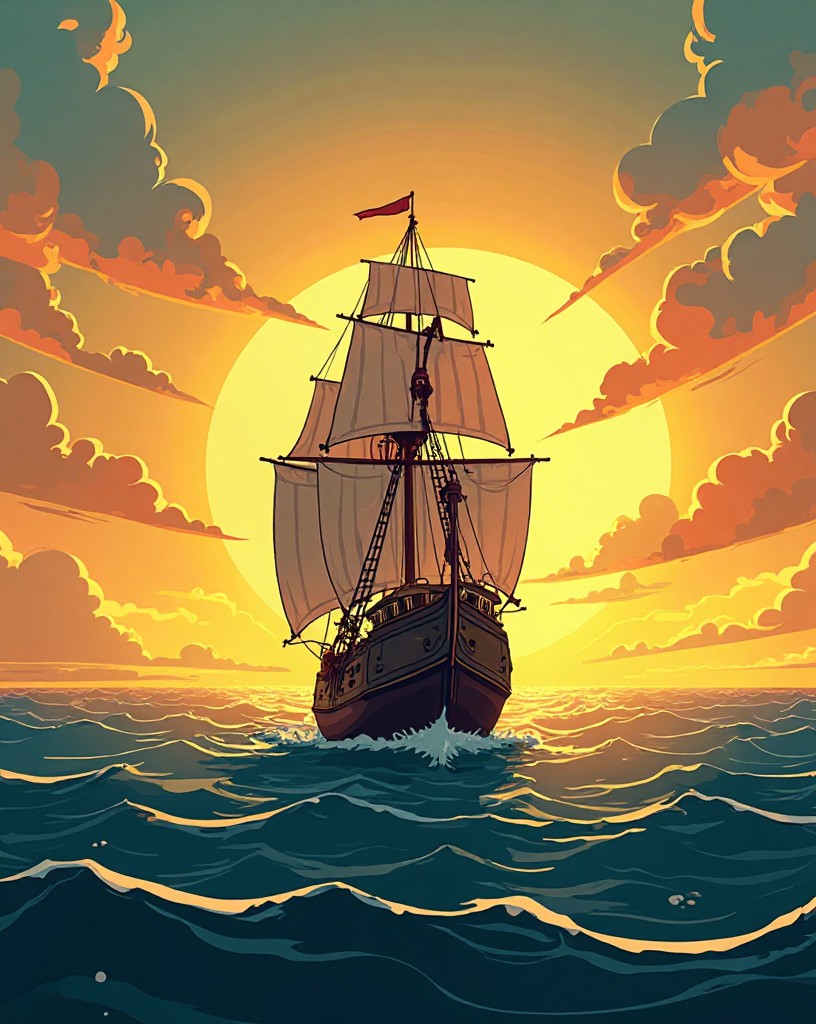
England, against the odds, had survived. The defeat of the Armada announced the rise of English sea power and the slow decline of Spain's — and an island nation began to look outward, toward the oceans, and an empire to come.
Sources
This story was adapted from the following. The illustrations are stylized depictions, not photographs of the events.
“Spanish Armada”, Wikipedia
Overview, the fireships, Gravelines, and the storms.
The Armada, Garrett Mattingly (1959)
Classic narrative history.
That’s the story.
More are in the studio. Head back to the collection to see what’s coming.