Six Days
A war won in a single morning in the air, and lost arguments still raging today.
Middle East · June 1967
June 1967. The Middle East holds its breath. Egypt has massed its army in the Sinai on Israel's border, closed a vital strait to Israeli ships, and allied with Syria and Jordan. Arab leaders speak openly of destroying the young state of Israel. War feels certain.
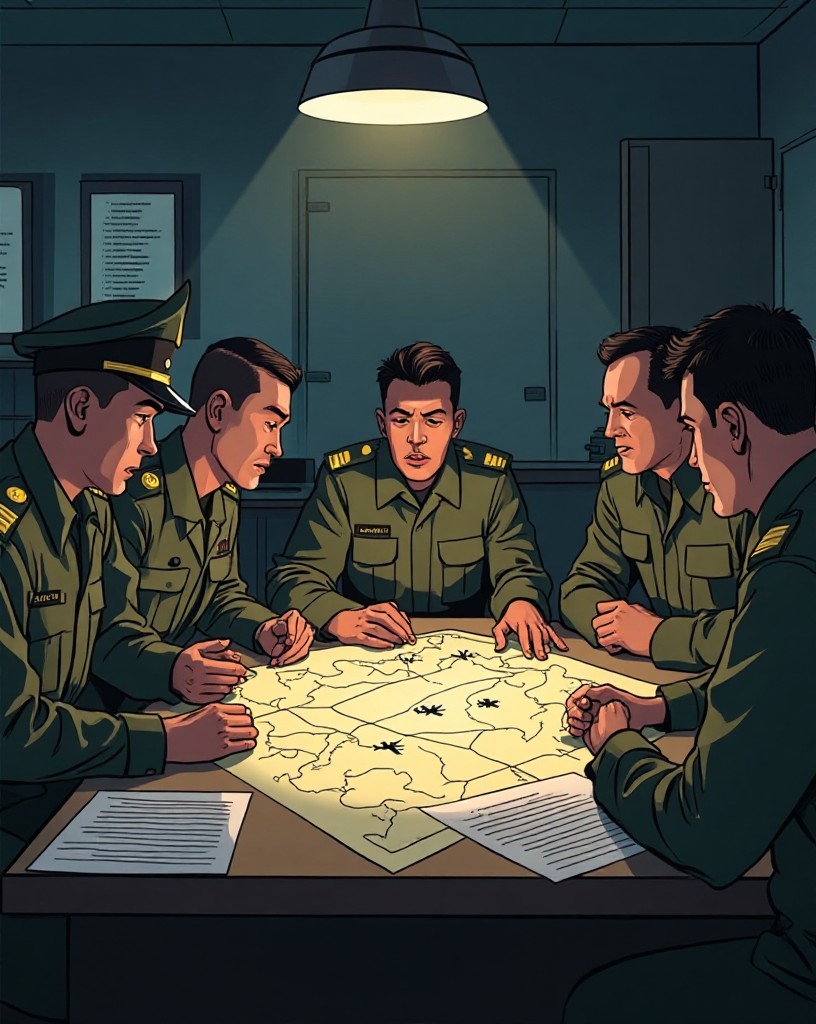
Surrounded and badly outnumbered, Israel's commanders make a desperate decision: not to wait to be attacked, but to strike first — and to stake everything on a single secret gamble.
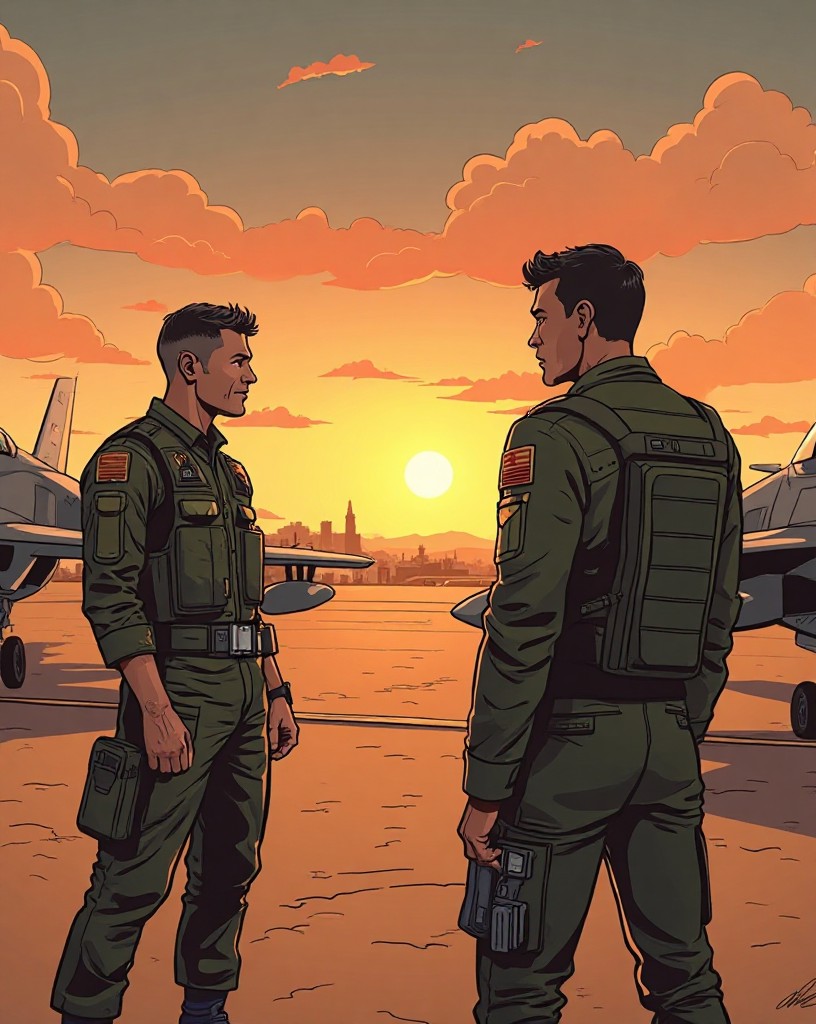
An Israeli commander
“If we let them strike first, we may not survive it. We hit their air forces on the ground, at dawn, all at once — before a single plane can take off.”
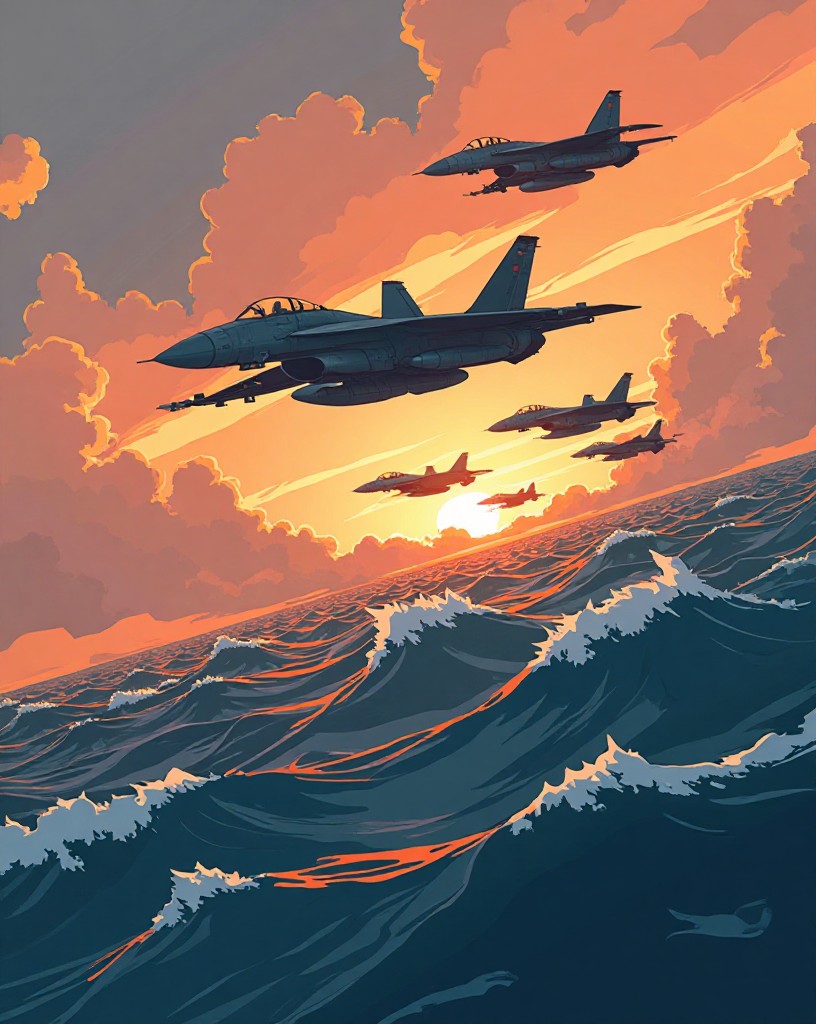
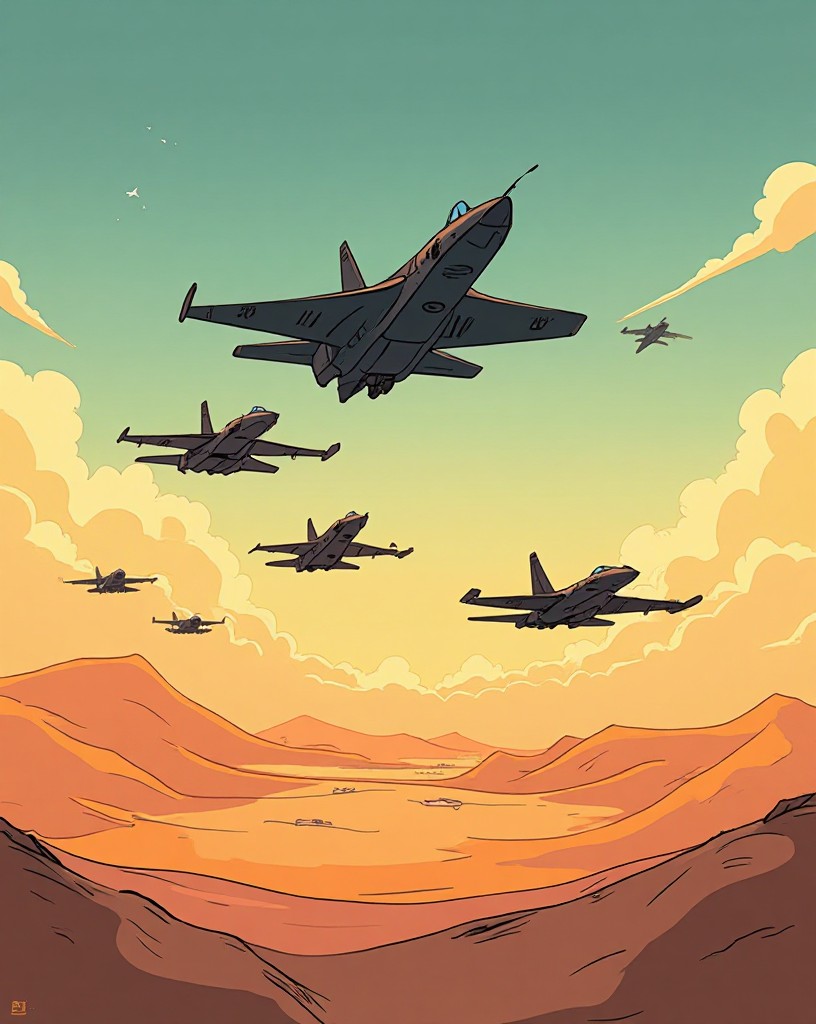
On the morning of June 5th, almost the entire Israeli air force takes off and flies low over the sea — beneath the radar, in radio silence — leaving its own skies all but empty.
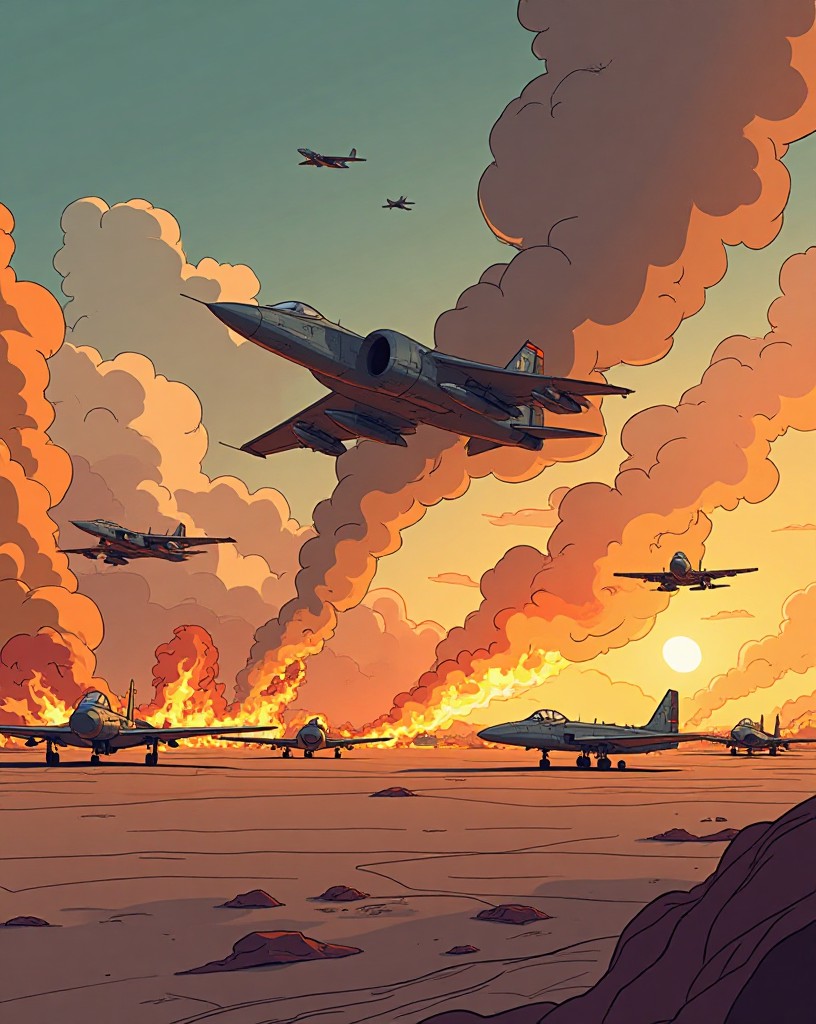
They arrive over Egypt's airfields just as the dawn patrols have landed. In a few hours, they destroy hundreds of aircraft on the ground, before most can even take off.
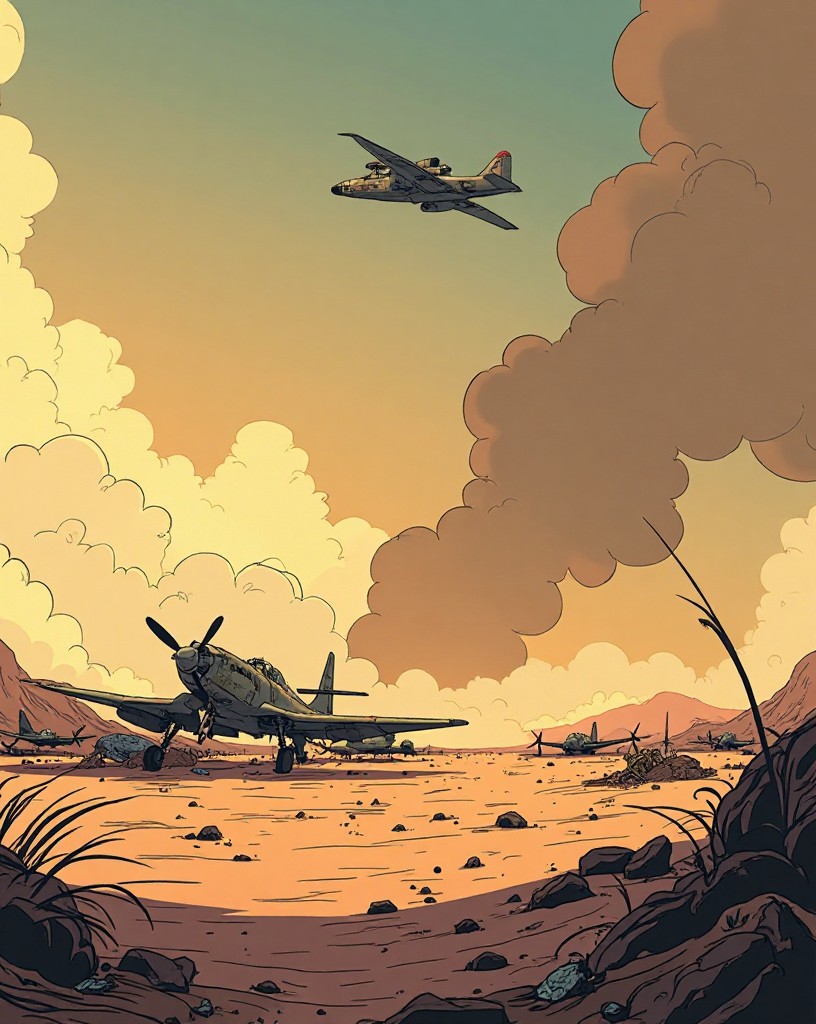
By the end of the first day, the air forces of Egypt — and then Syria and Jordan — lie in ruins. Israel rules the sky completely, and the war is all but decided in a single morning.
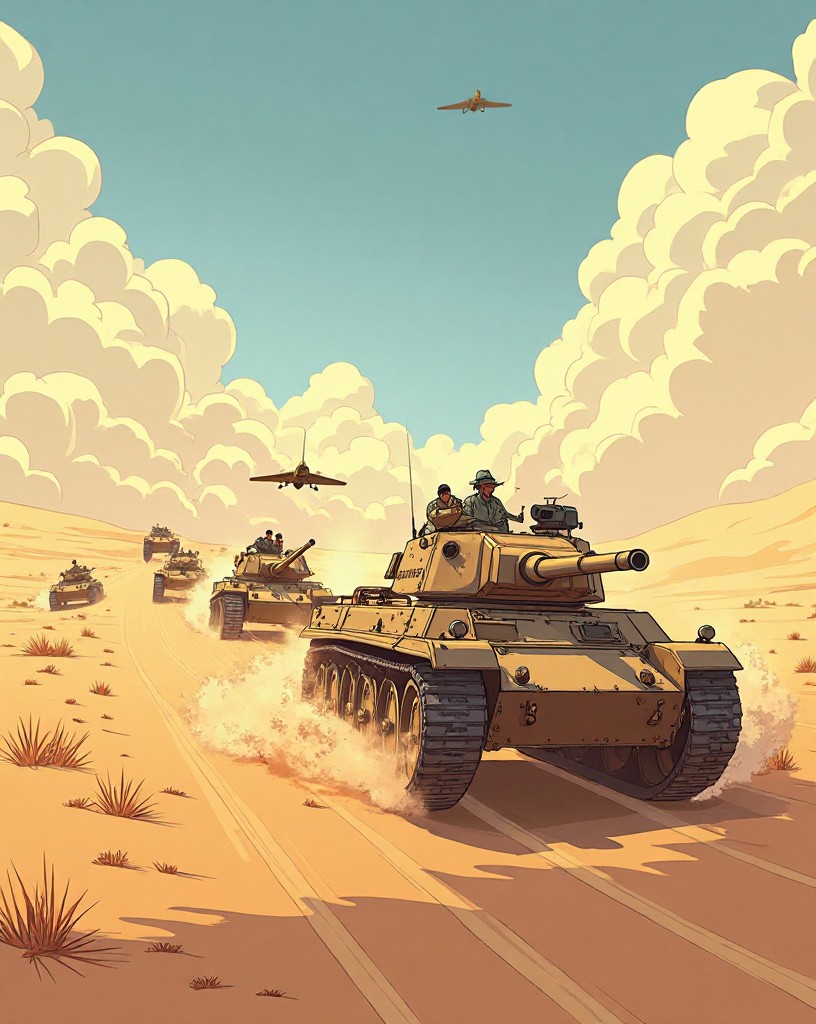
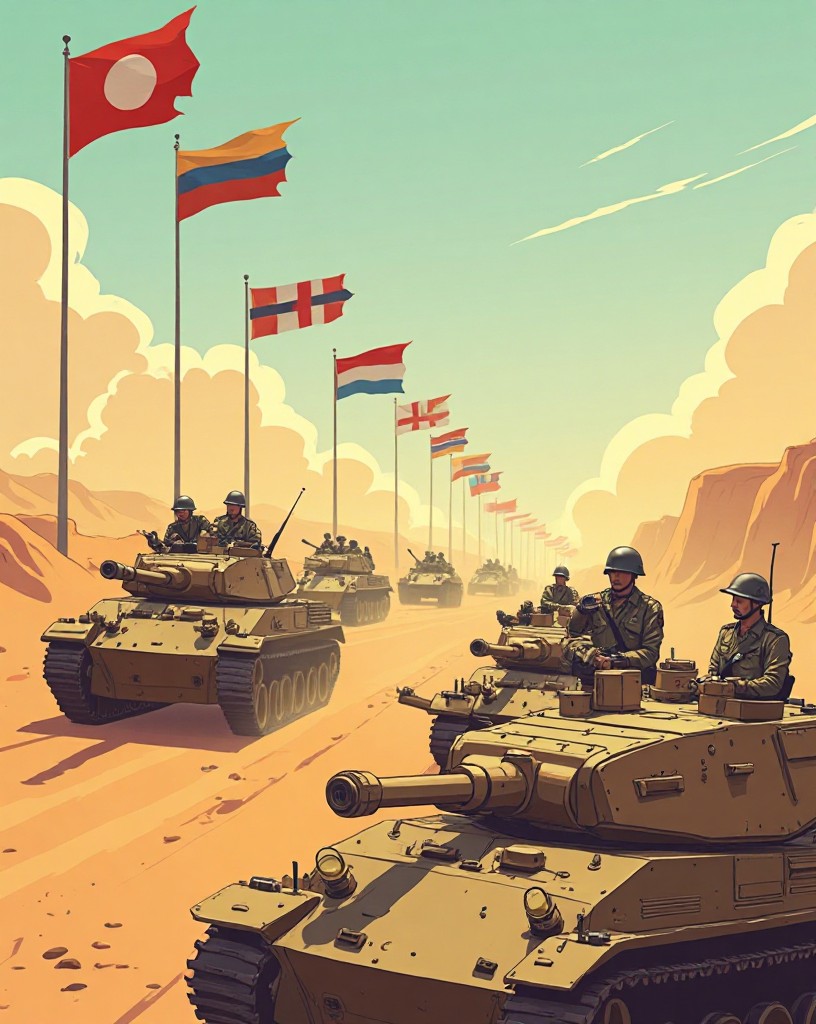
With the skies theirs, Israeli tanks drive into the Sinai, racing across the sand toward the Suez Canal as the Egyptian army — with no air cover — falls back in disorder.
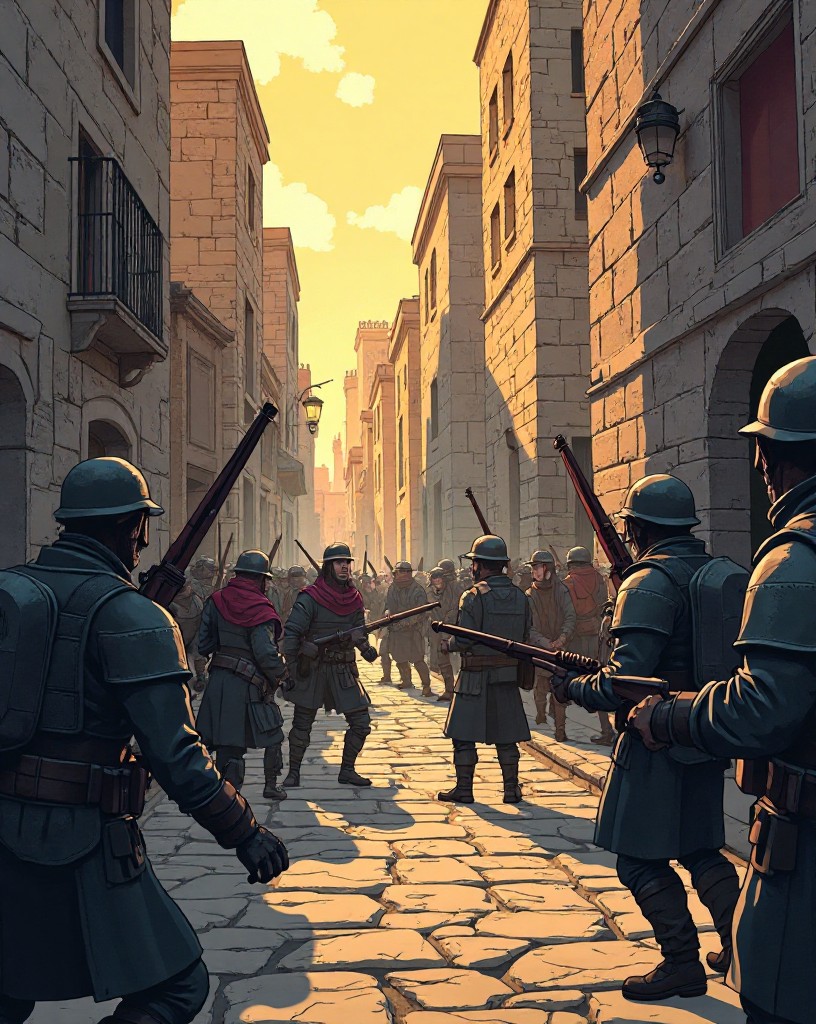
To the east, Jordan enters the war, and the fighting reaches the divided city of Jerusalem.
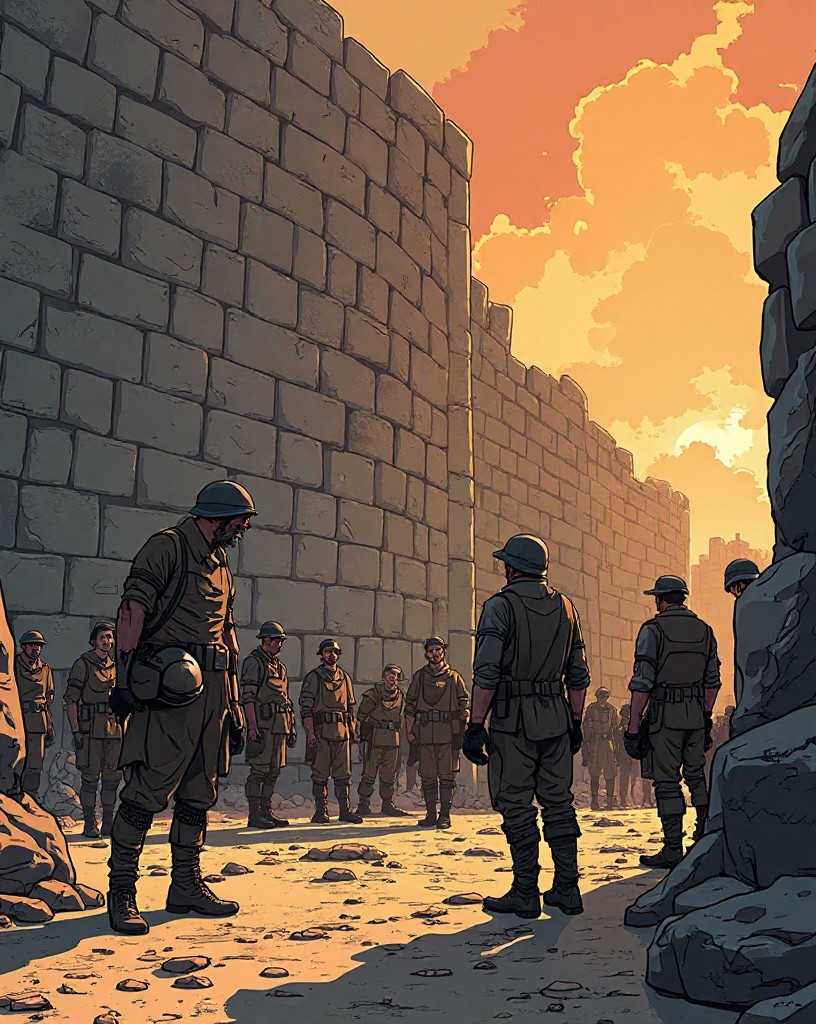
Israeli paratroopers fight through the old city and reach the Western Wall — the holiest site in Judaism, in Jewish hands for the first time in two thousand years. Hardened soldiers weep at the stones.
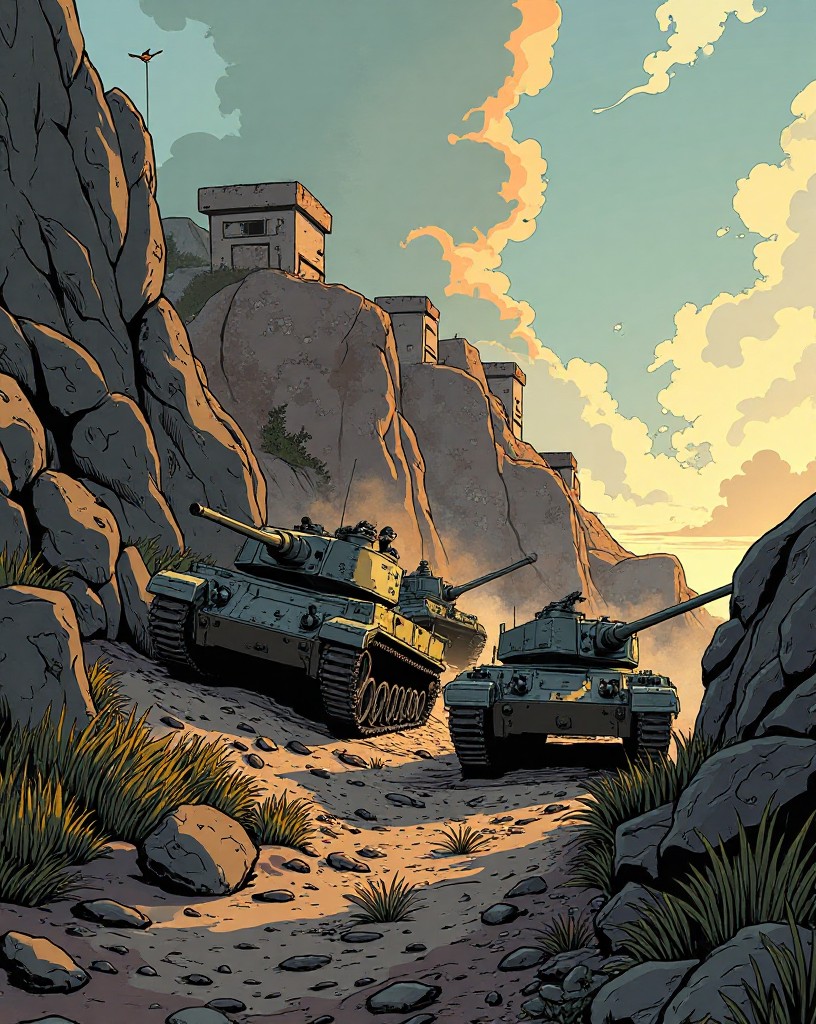
In the north, Israeli troops storm the fortified Golan Heights, climbing into Syrian guns to take the high ground that had overlooked their farms for years.
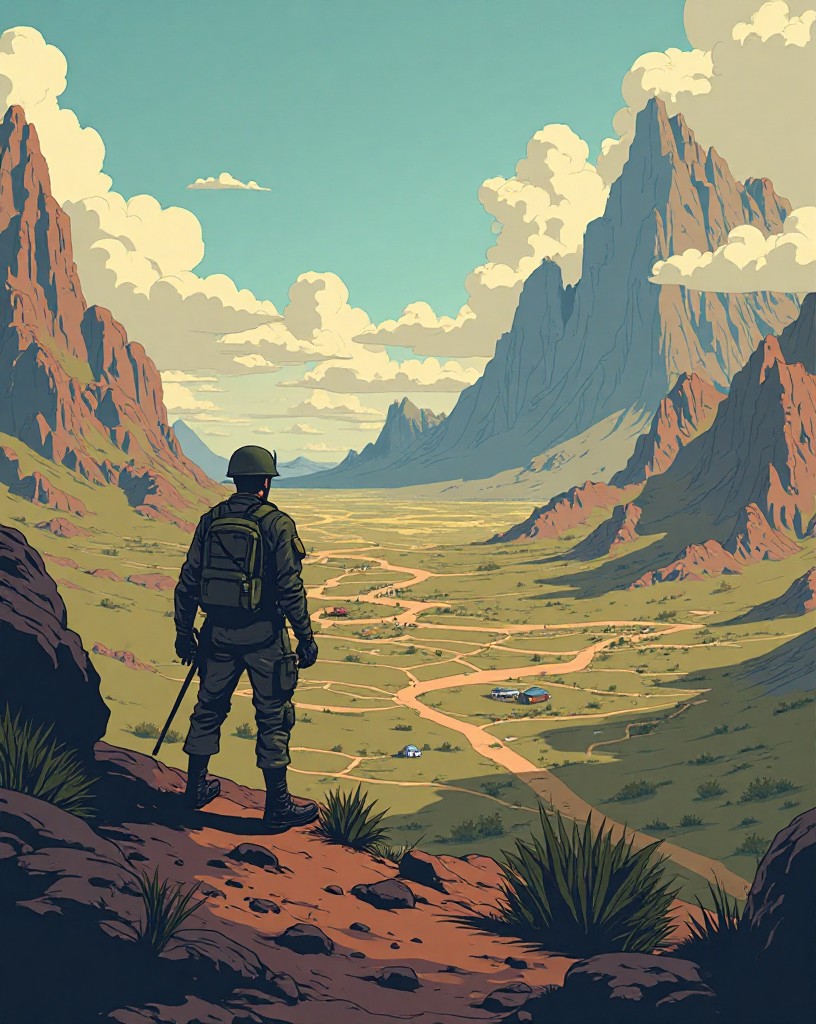
It is over in six days. Israel has multiplied its territory several times over — taking the Sinai, Gaza, the West Bank, East Jerusalem, and the Golan Heights.

It was one of the most lopsided victories in modern military history. But the lands taken in those six days — and the people living on them — would come to define the conflicts of the Middle East for generations, right up to today.
Sources
This story was adapted from the following. The illustrations are stylized depictions, not photographs of the events.
“Six-Day War”, Wikipedia
Overview, the opening airstrike, fronts, and territorial outcome.
Six Days of War: June 1967 and the Making of the Modern Middle East, Michael B. Oren (2002)
Standard scholarly history of the war.
That’s the story.
More are in the studio. Head back to the collection to see what’s coming.