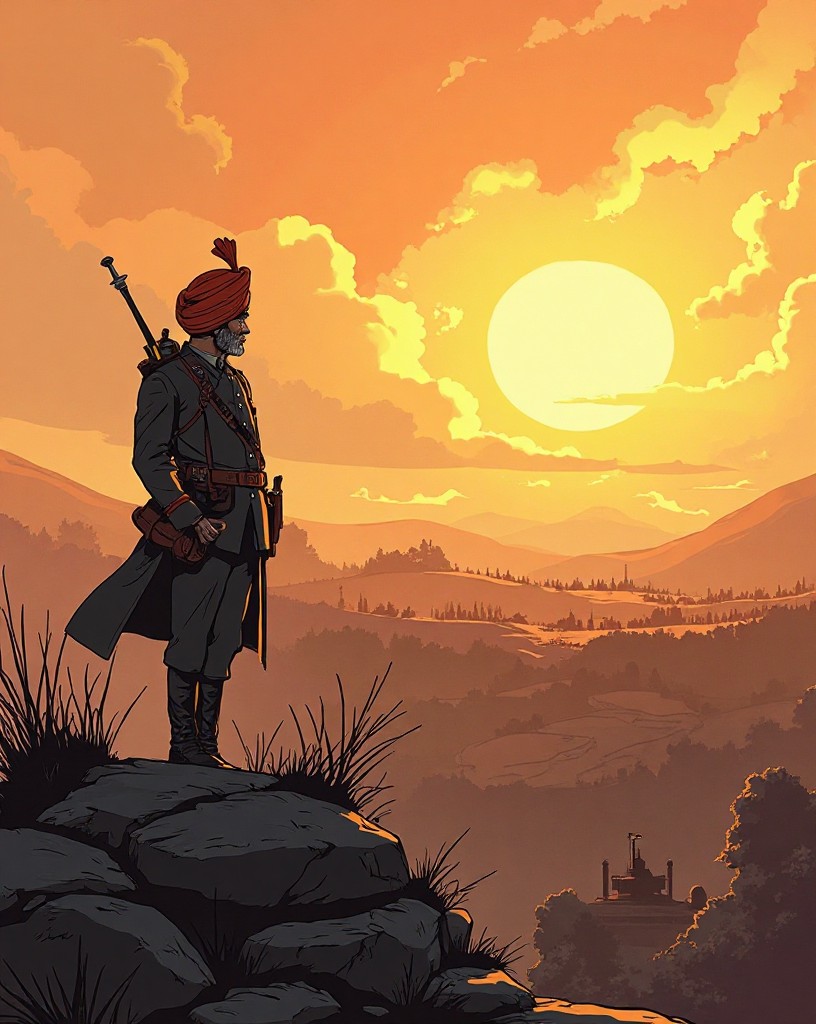
The Twenty-One
A signaling post, twenty-one Sikh soldiers, and an army of thousands.
Saragarhi · 12 September 1897
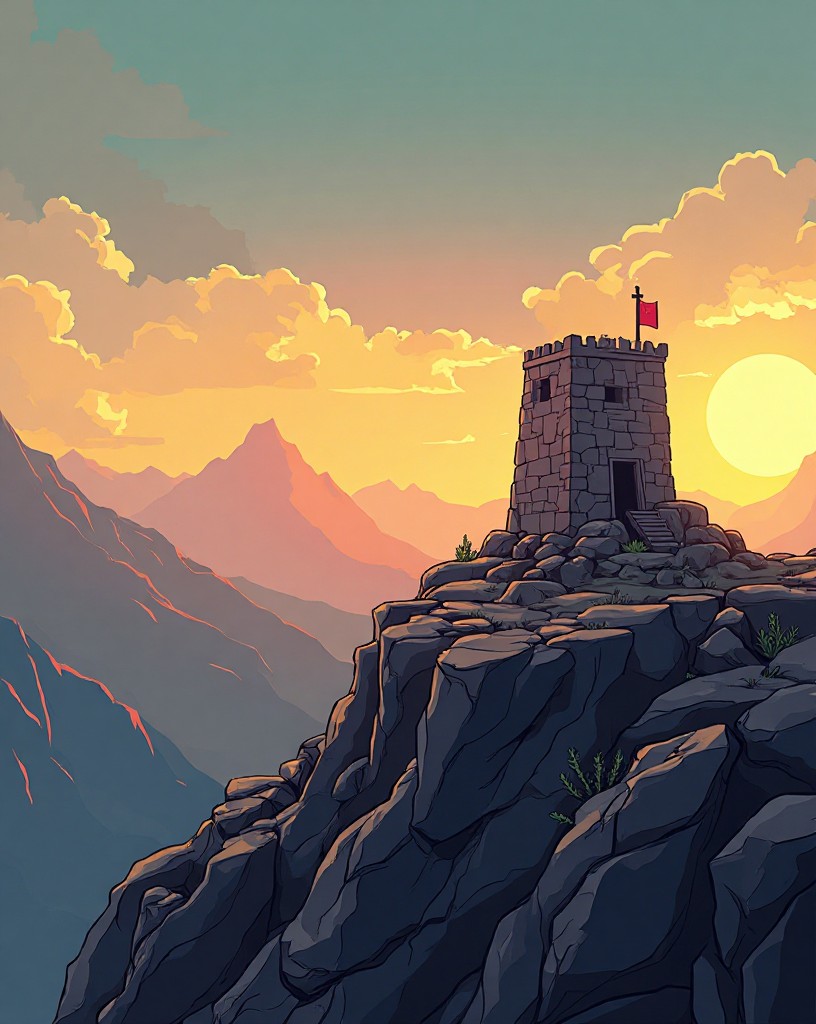
The North-West Frontier, September 1897. Among bare brown ridges, a chain of British forts guards the mountain passes. Between two of them sits a small signaling post called Saragarhi.
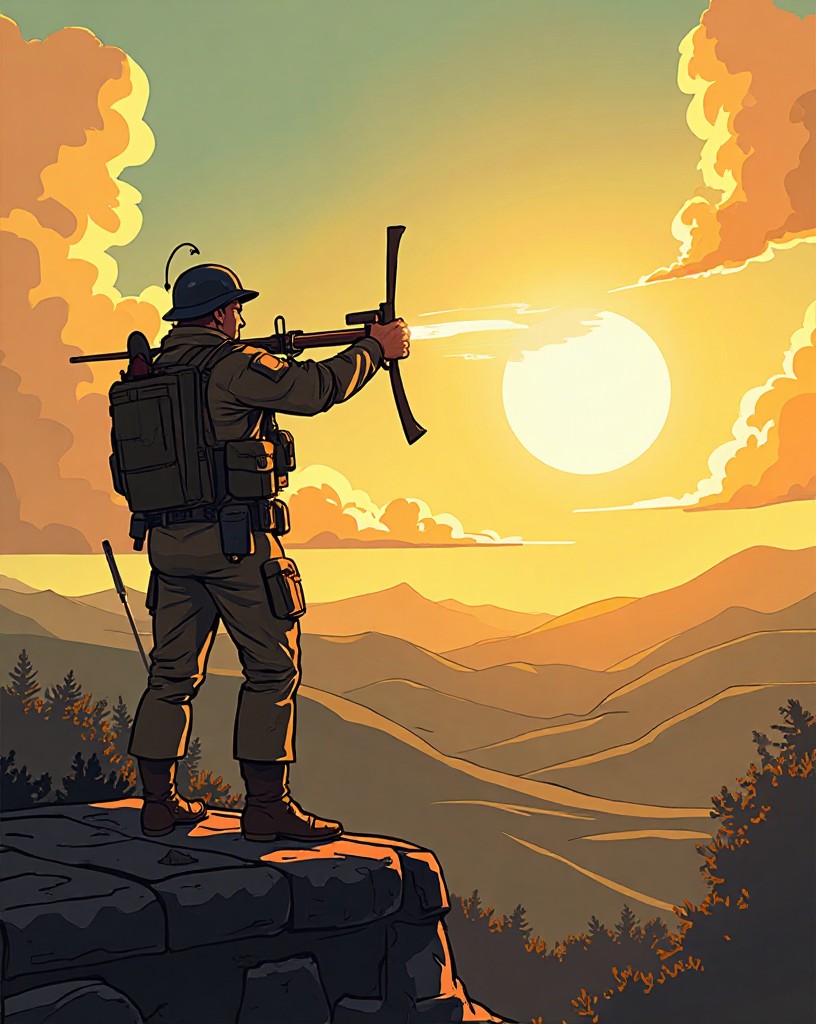
Its job is simple and vital: relay messages by heliograph — flashes of sunlight off a mirror — between Fort Lockhart and Fort Gulistan, which cannot see each other directly.
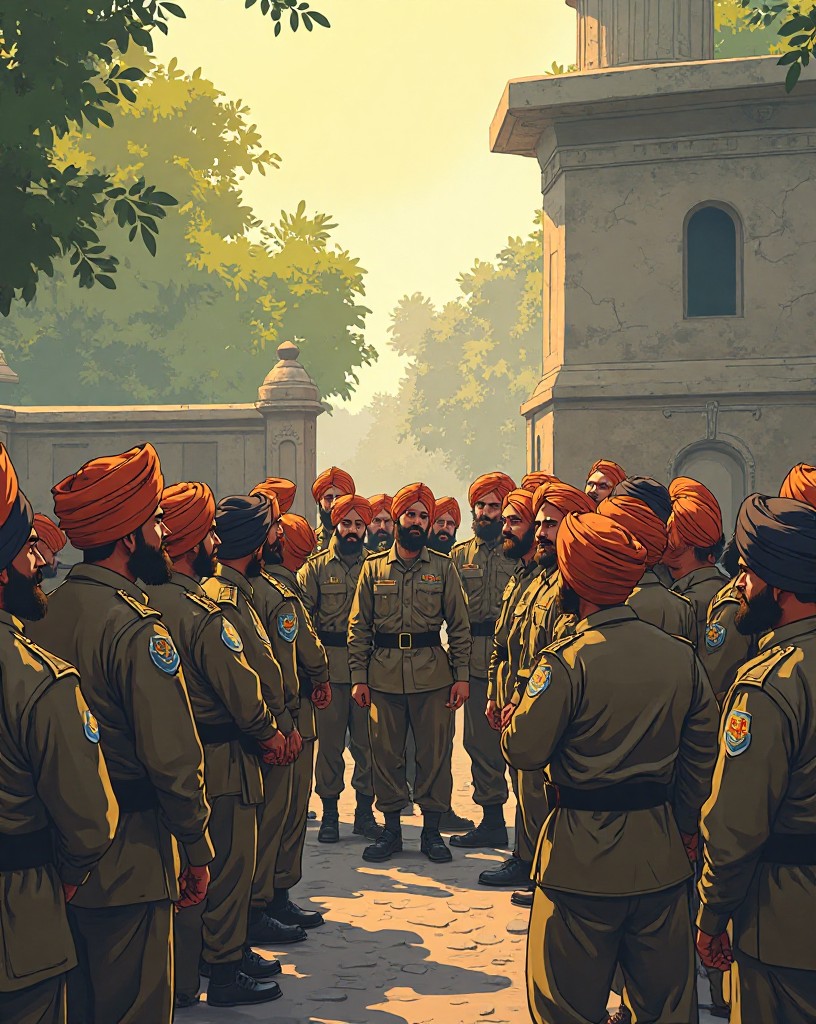
Its garrison is twenty-one soldiers of the 36th Sikhs, under Havildar Ishar Singh. Twenty-one men, on a rock, at the edge of an empire.
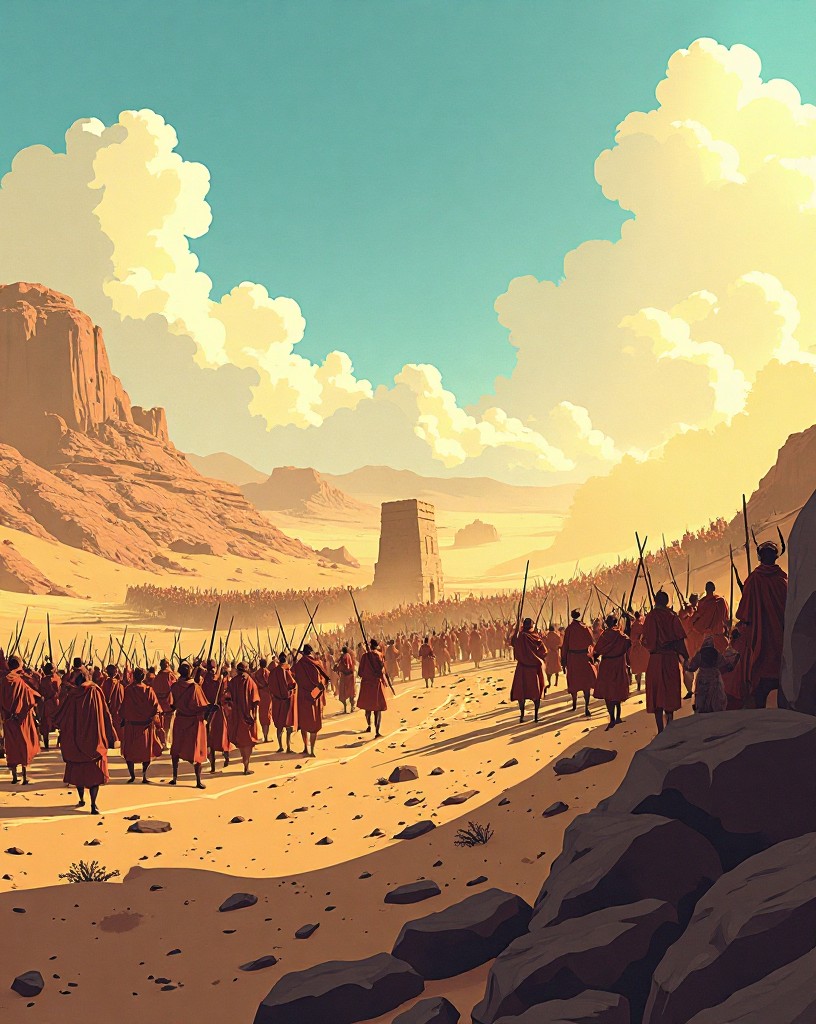
On the morning of the twelfth, the hills come alive with men. An army of Pashtun tribesmen — thousands of them — has risen to sweep the frontier forts away. Saragarhi stands in their path.
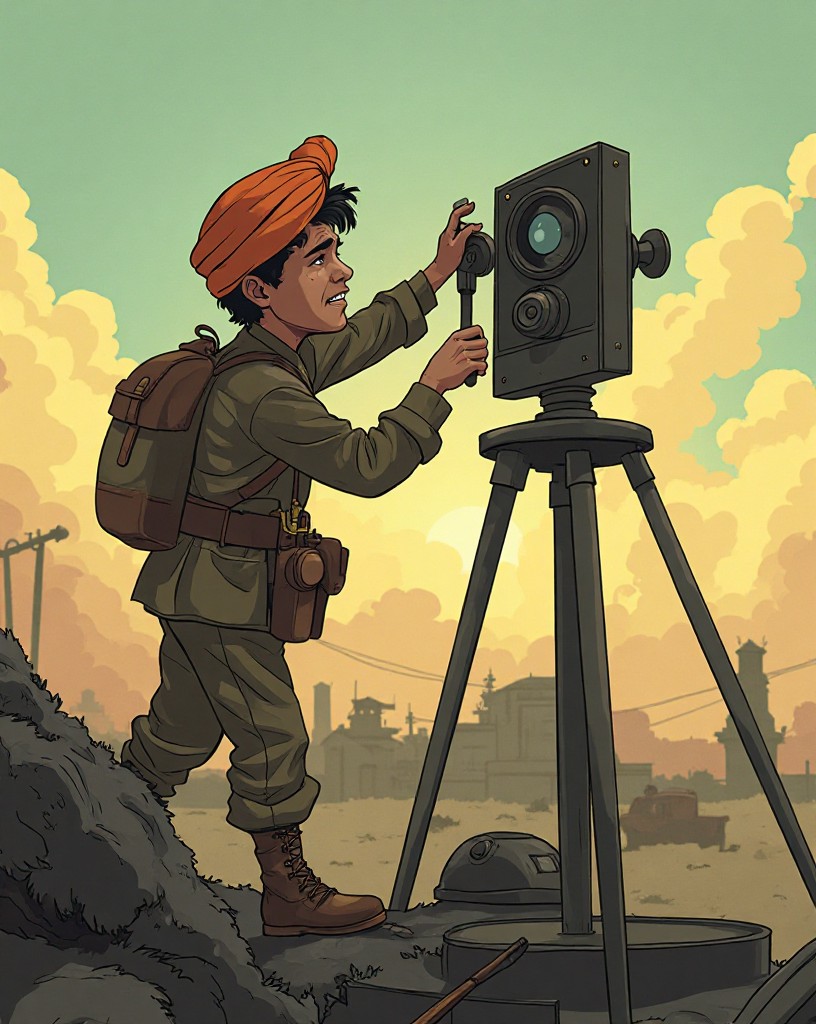
Sepoy Gurmukh Singh
“Enemy in the thousands. They surround the post on every side. Requesting instructions.”
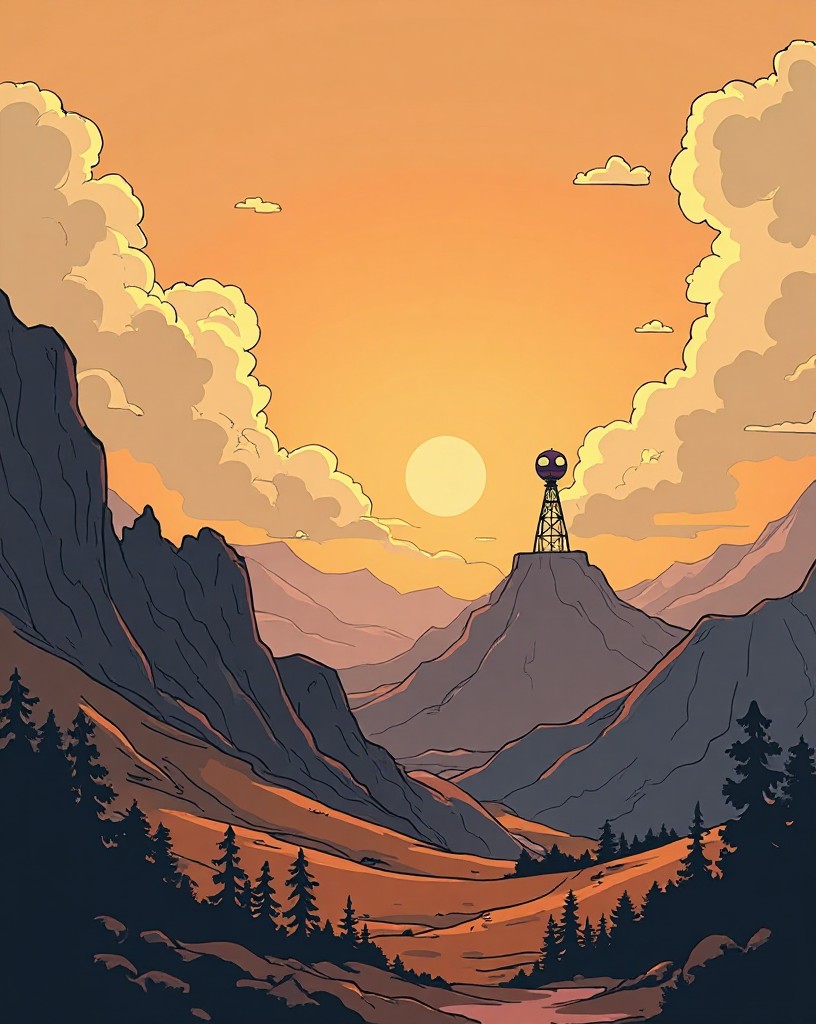
From Fort Lockhart the answer flashes back across the valley: no relief can reach them in time. They are on their own.
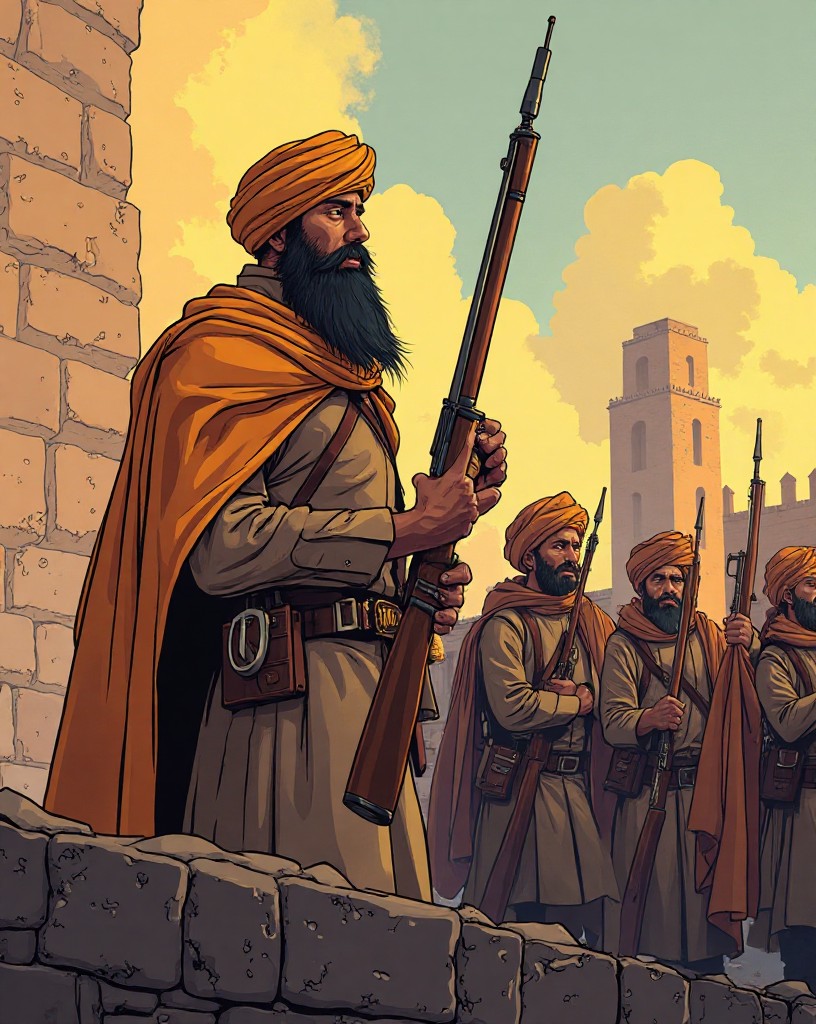
Hav. Ishar Singh
“Then we hold the post. Every man to the walls. Make them pay for every step they take.”
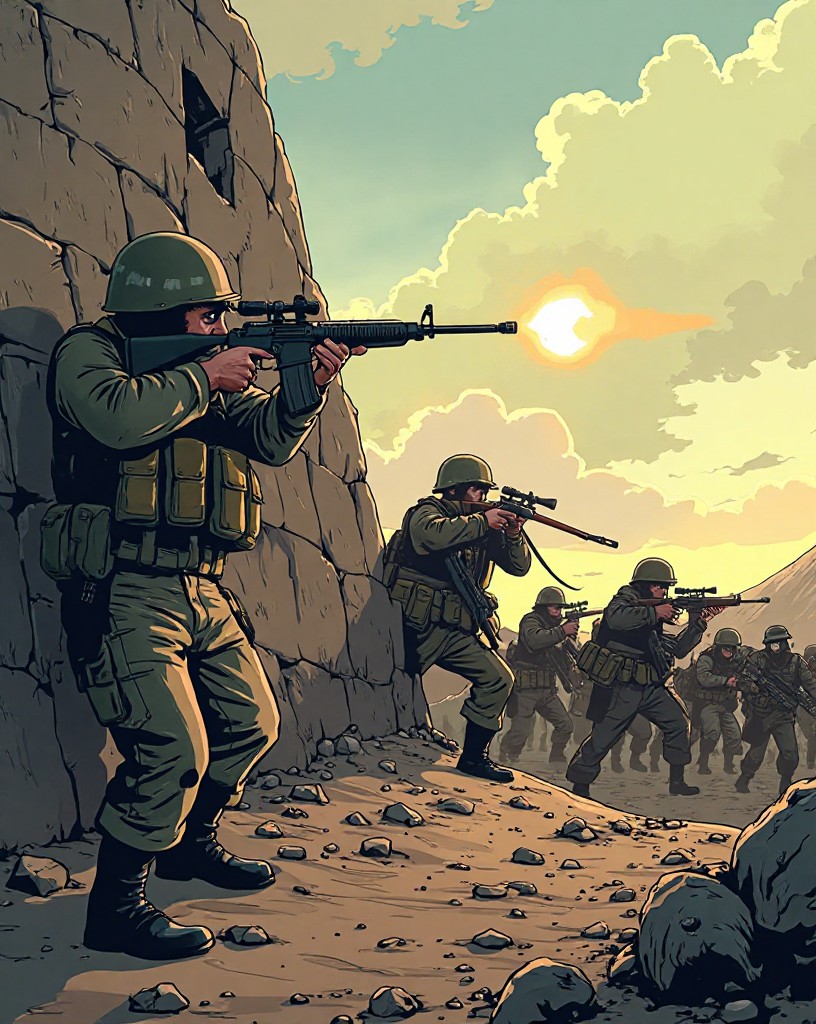
The attackers rush the walls again and again. Twenty-one rifles answer from the loopholes, and the slopes below Saragarhi begin to fill with the fallen.
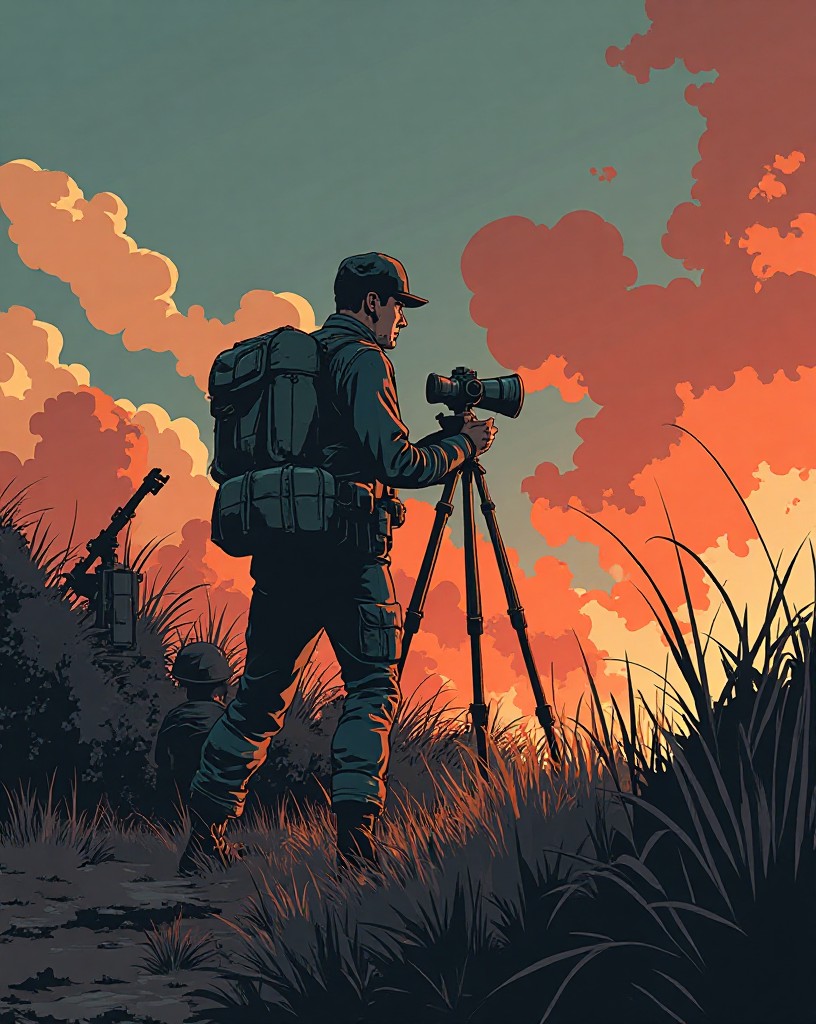
Through every assault, Gurmukh Singh keeps signaling — flash after flash to Fort Lockhart — reporting each charge as it comes, refusing to put the mirror down.
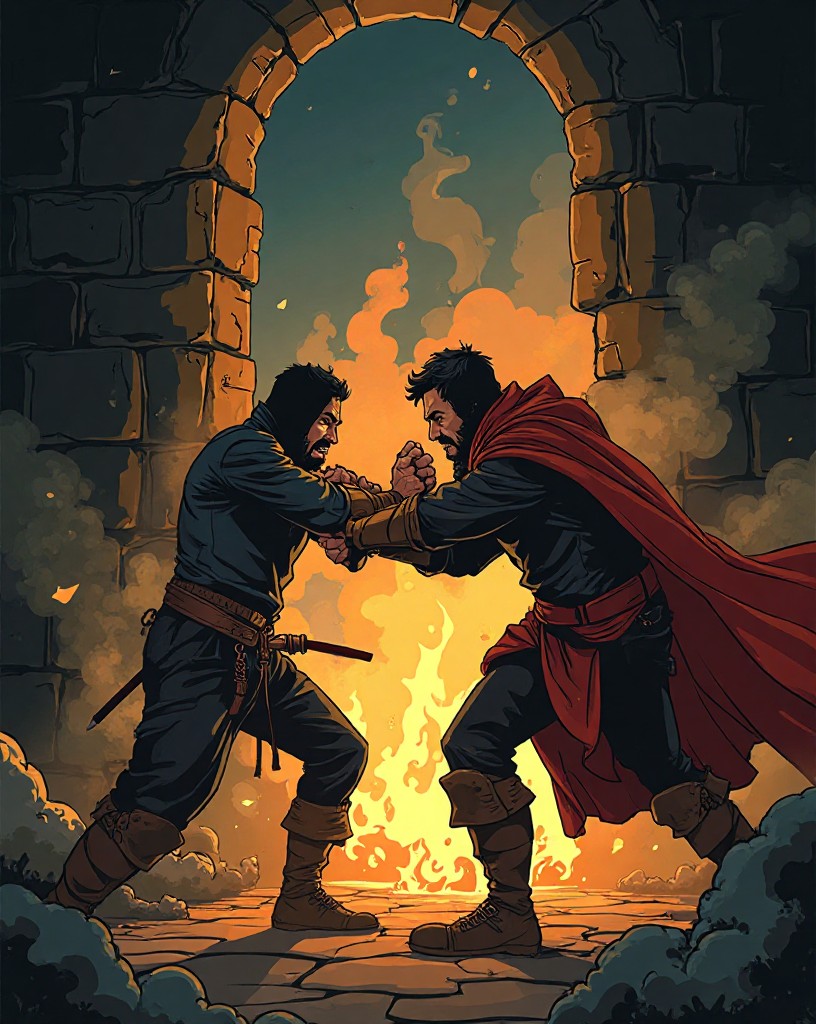
The tribesmen set the brush against the walls alight and force the gate. The fighting moves inside the post — room to room, then hand to hand.
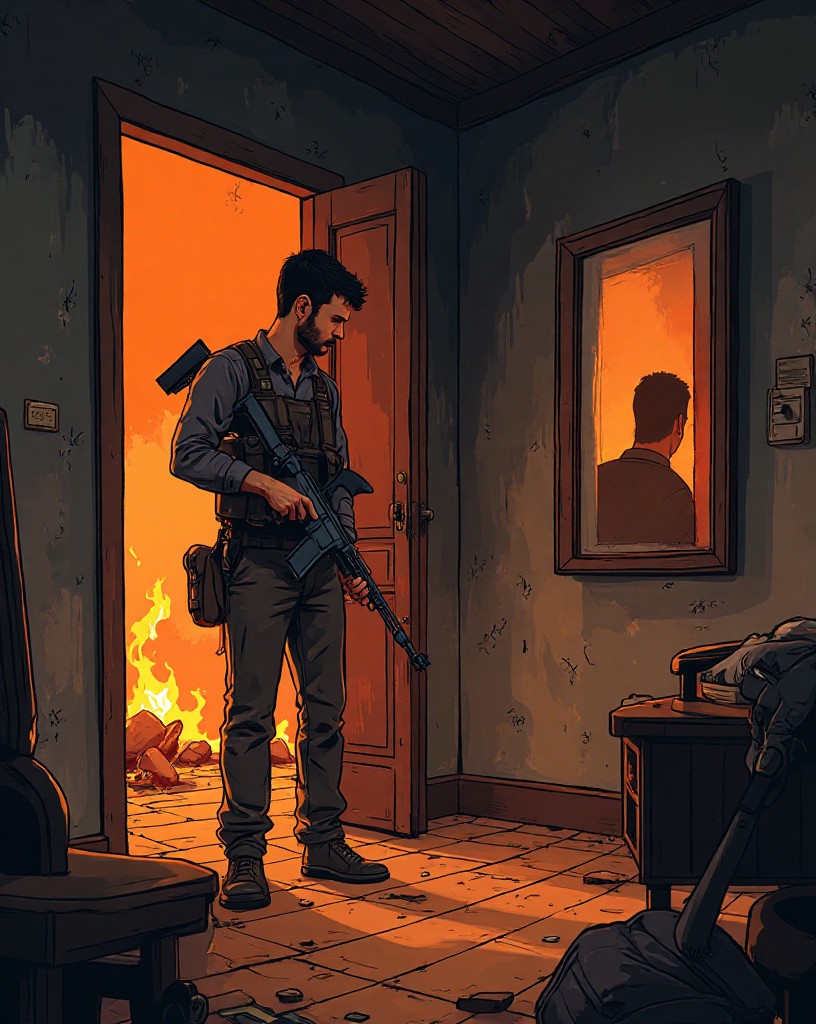
One by one the defenders fall, until only the signaller is left. He sends a last message asking permission to stop signaling and take up his rifle. Permission granted — and then he does.
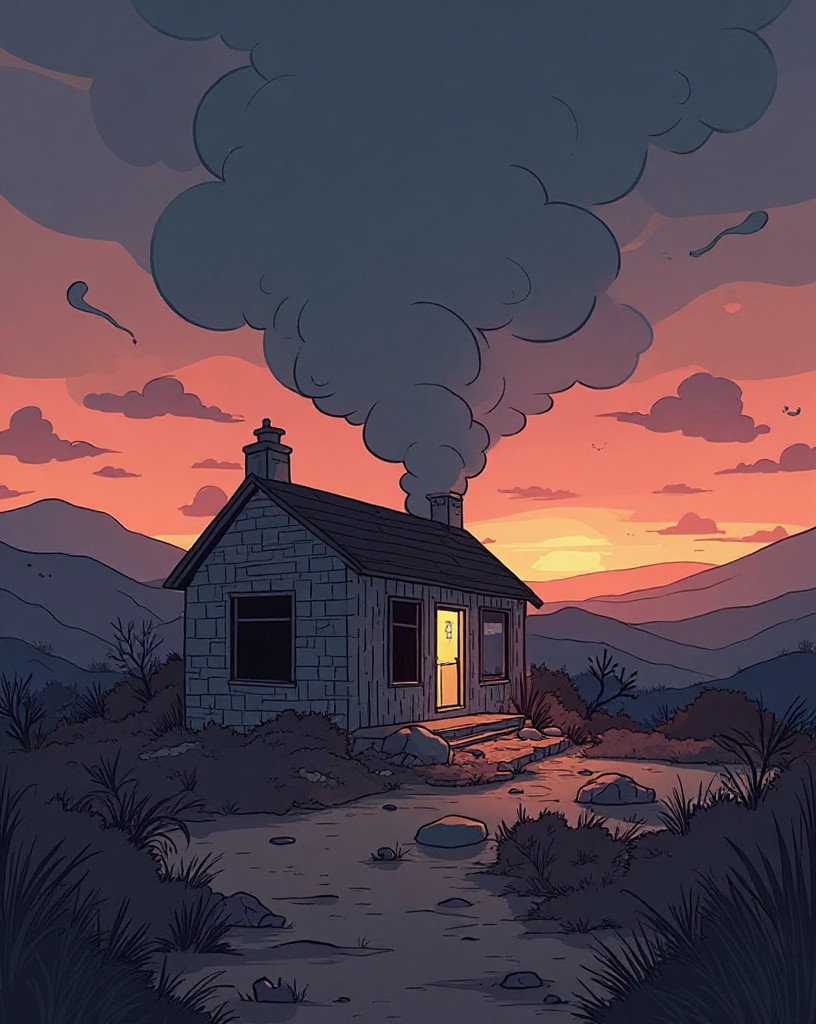
All twenty-one died. Hundreds of attackers lay before the walls, and the hours they bought gave the larger forts the time they needed to hold. Each of the twenty-one was awarded the Indian Order of Merit — the highest gallantry honor then open to them. They are remembered every year on the twelfth of September.
Sources
This story was adapted from the following. The illustrations are stylized depictions, not photographs of the events.
“Battle of Saragarhi”, Wikipedia
Overview, garrison, timeline, and decorations.
Regimental accounts of the 36th Sikhs (Tirah Campaign, 1897), British Indian Army records
Contemporary record of the action and the heliograph signals.
That’s the story.
More are in the studio. Head back to the collection to see what’s coming.