A Bridge Too Far
The boldest airborne gamble of the war, and the one bridge it couldn't reach.
Netherlands · September 1944
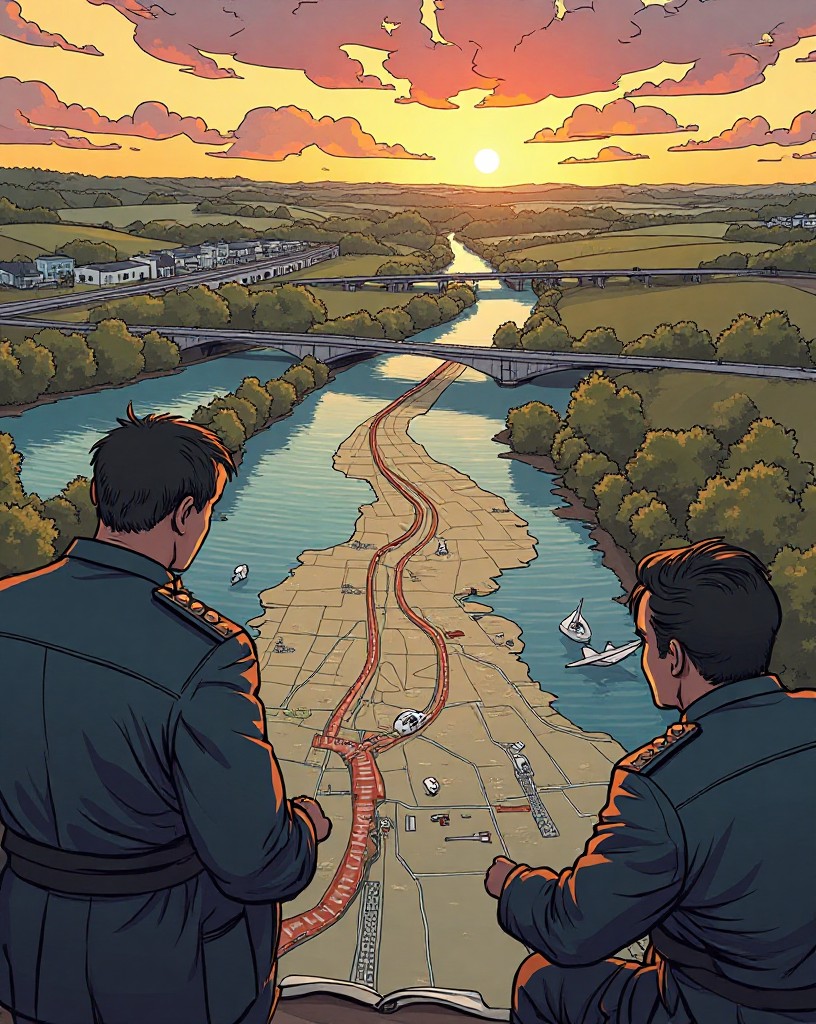
September 1944. The Allies have broken out of Normandy and are racing across France. To end the war by Christmas, Field Marshal Montgomery proposes a daring gamble: drop thousands of paratroopers deep behind enemy lines in Holland to seize a chain of bridges, then race an army up a single road to cross the Rhine into Germany.
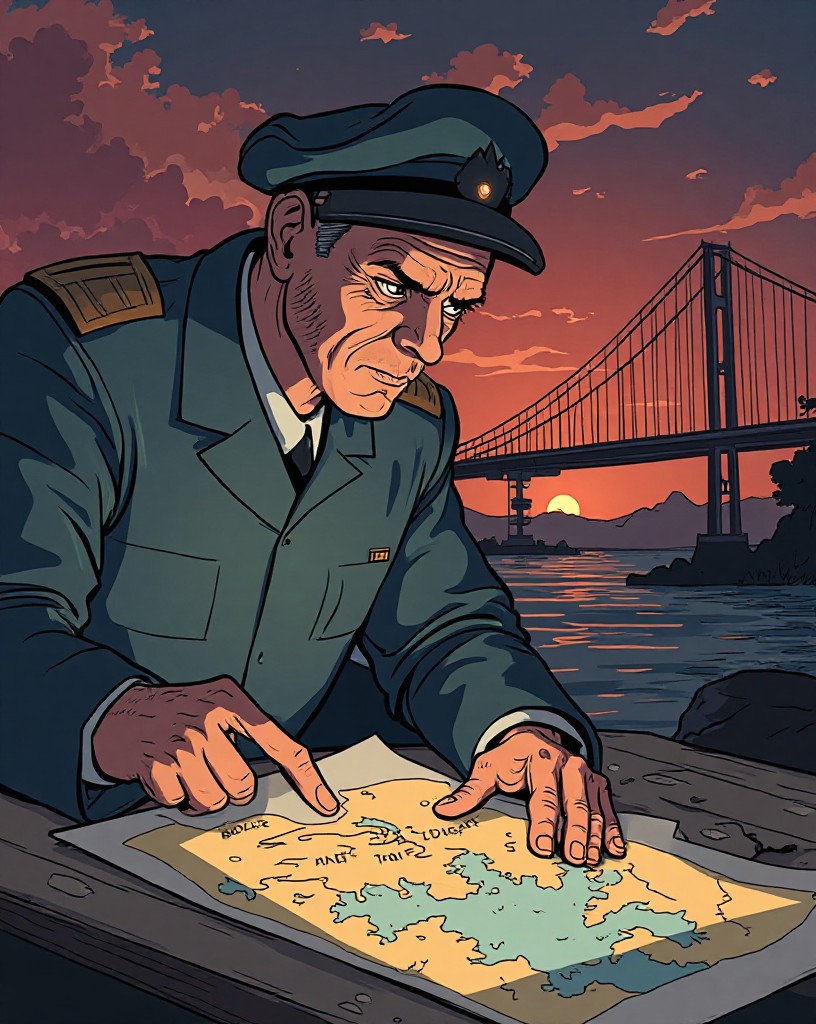
Gen. Browning
“I think we may be going a bridge too far.”
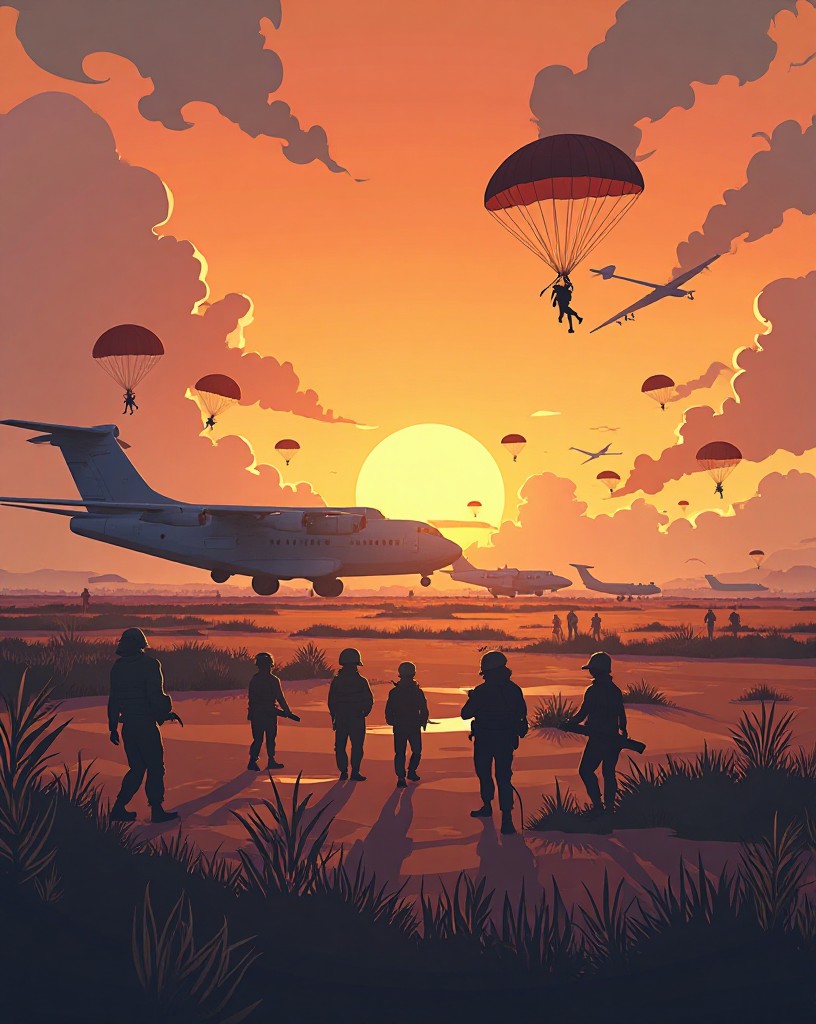
The plan is the largest airborne operation in history. Three divisions of paratroopers will drop from the sky to grab the bridges; an armored column will drive up one narrow road to link them all.
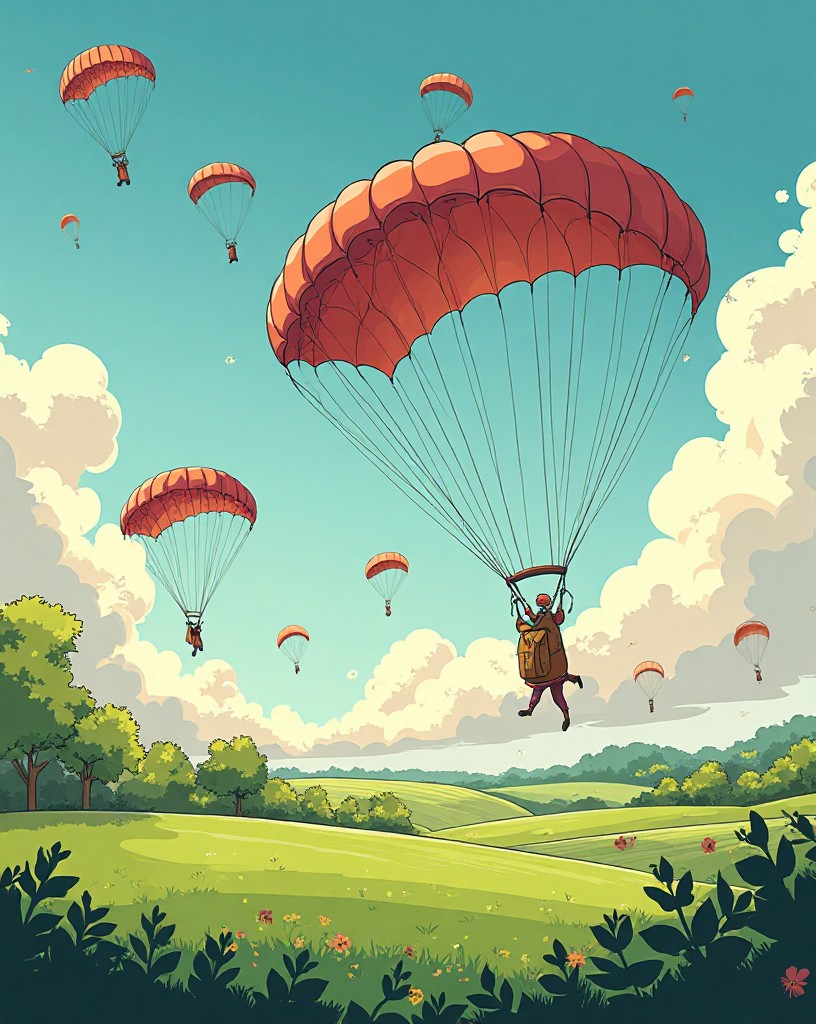
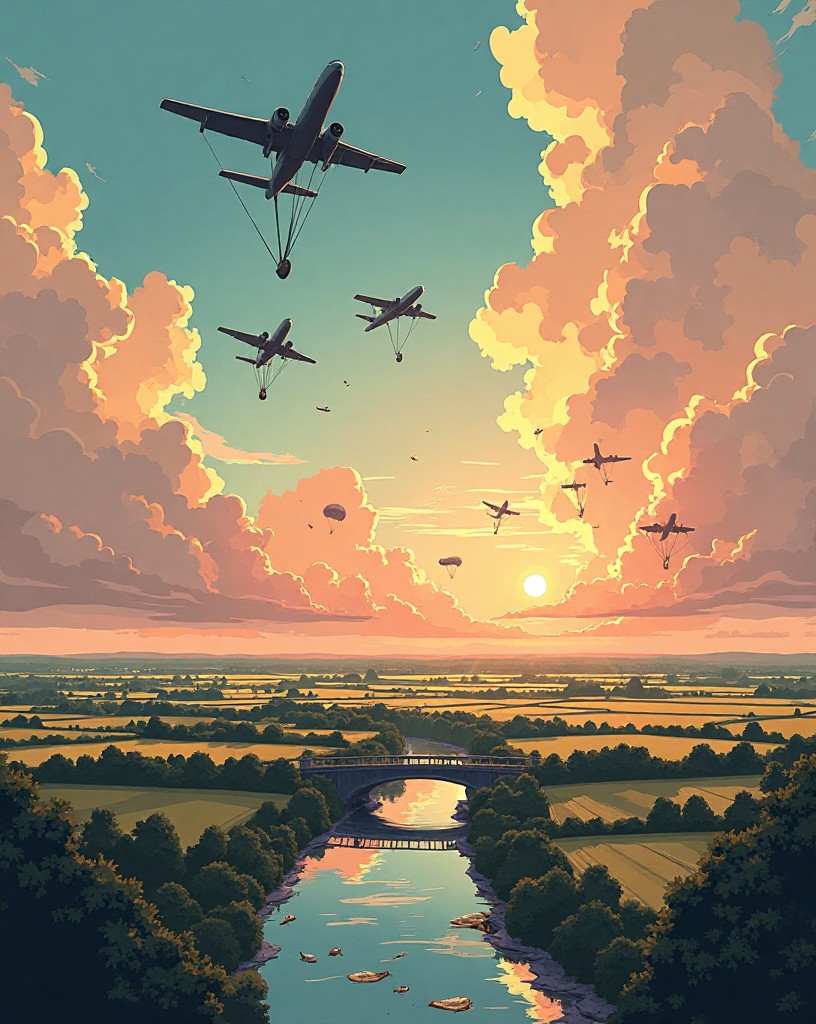
The skies fill with planes and parachutes — an armada blotting out the sun, dropping thousands of men onto Dutch fields in broad daylight.
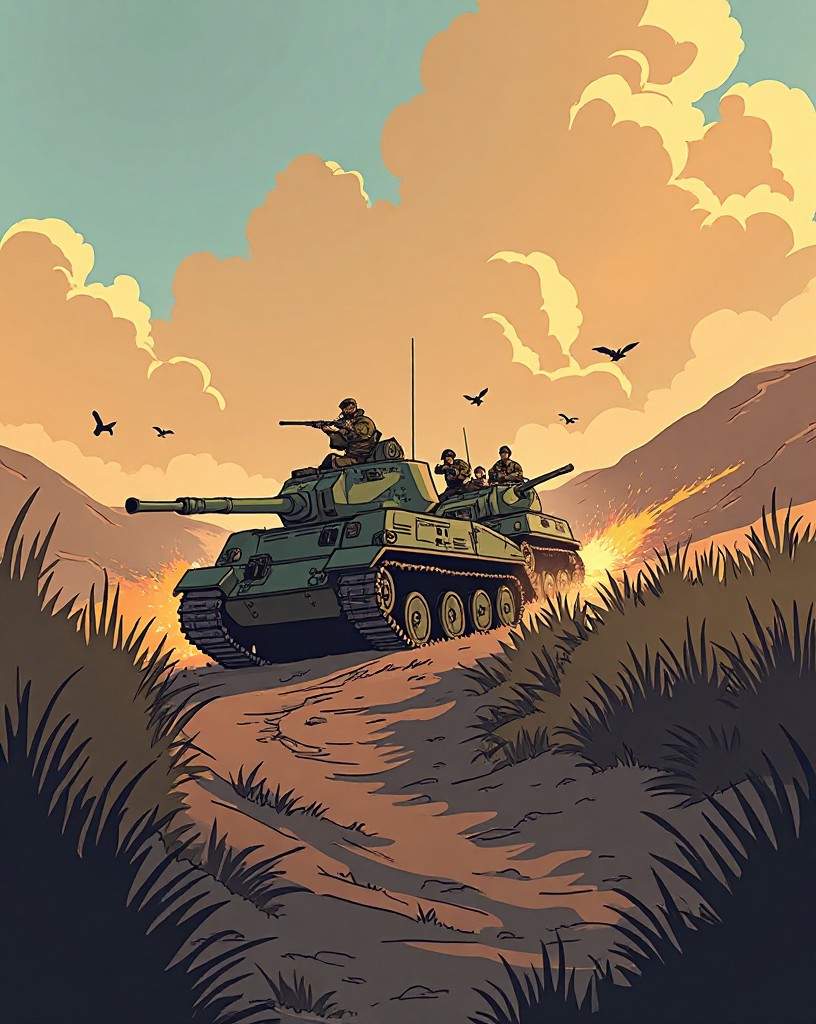
The Americans seize their bridges in hard fighting, and the armored column grinds up the single highway — which the troops nickname Hell's Highway, swept by fire from both sides.
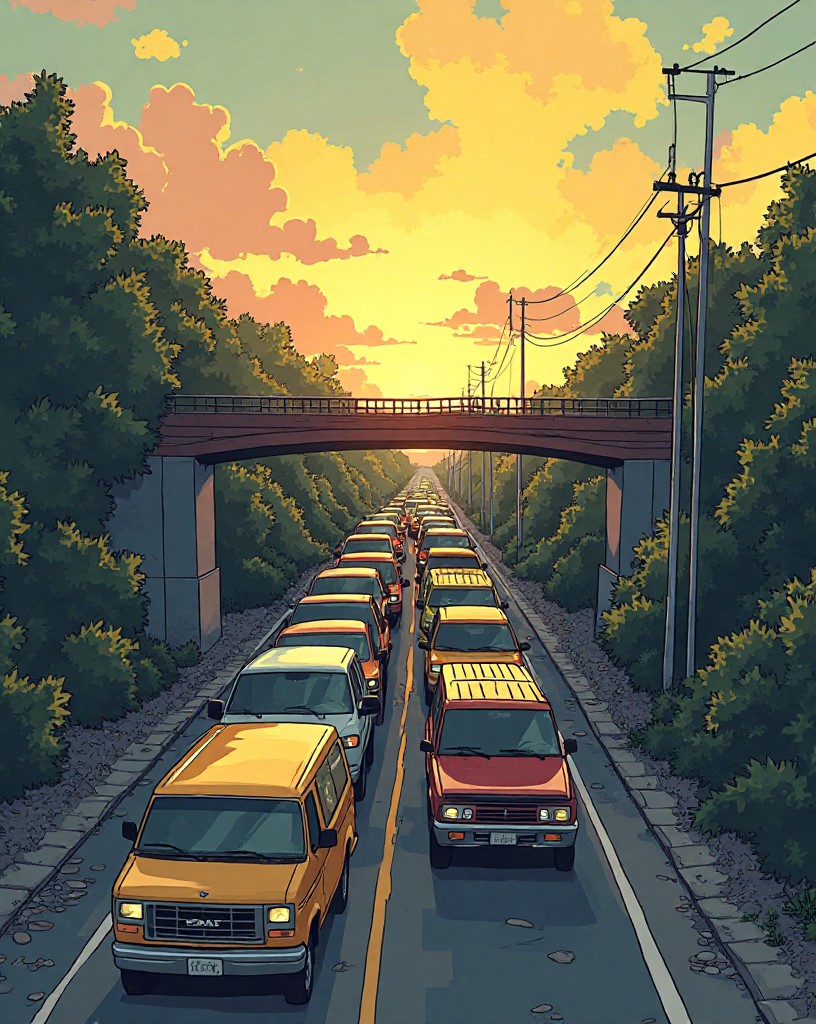
But the plan depends on speed, and everything runs late. The single road becomes a bottleneck; every blown bridge and ambush stalls the advance for precious hours.
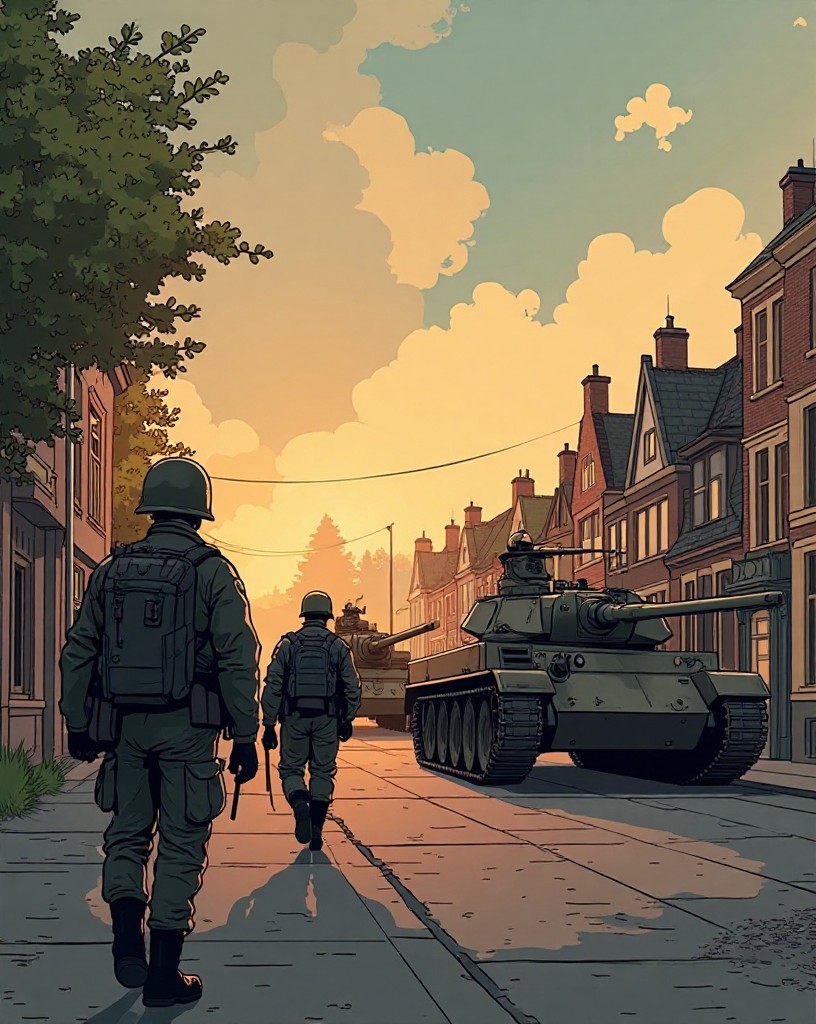
At the far end, at Arnhem, the British 1st Airborne lands — and runs straight into two SS panzer divisions the planners never expected to be there.
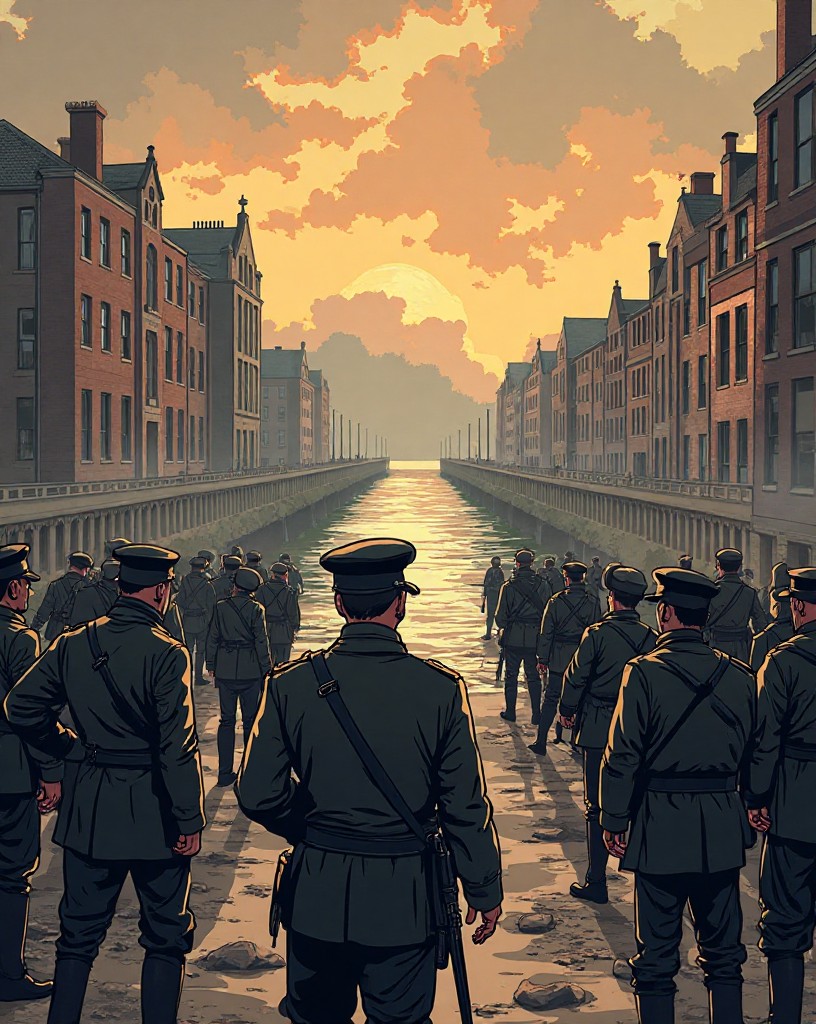
Lt. Col. Frost
“We hold the bridge. However long it takes. The tanks are coming.”
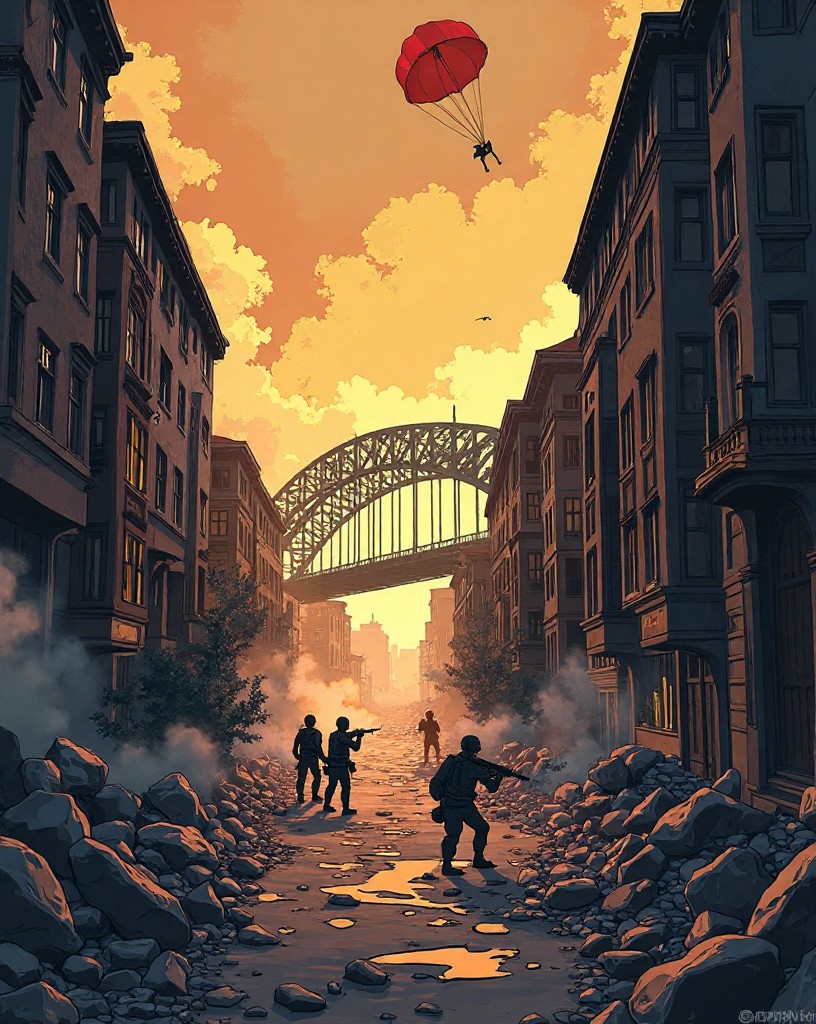
A small force under Colonel Frost seizes the north end of the Arnhem bridge and holds it against tanks and infantry — waiting for a relief that is falling further and further behind.
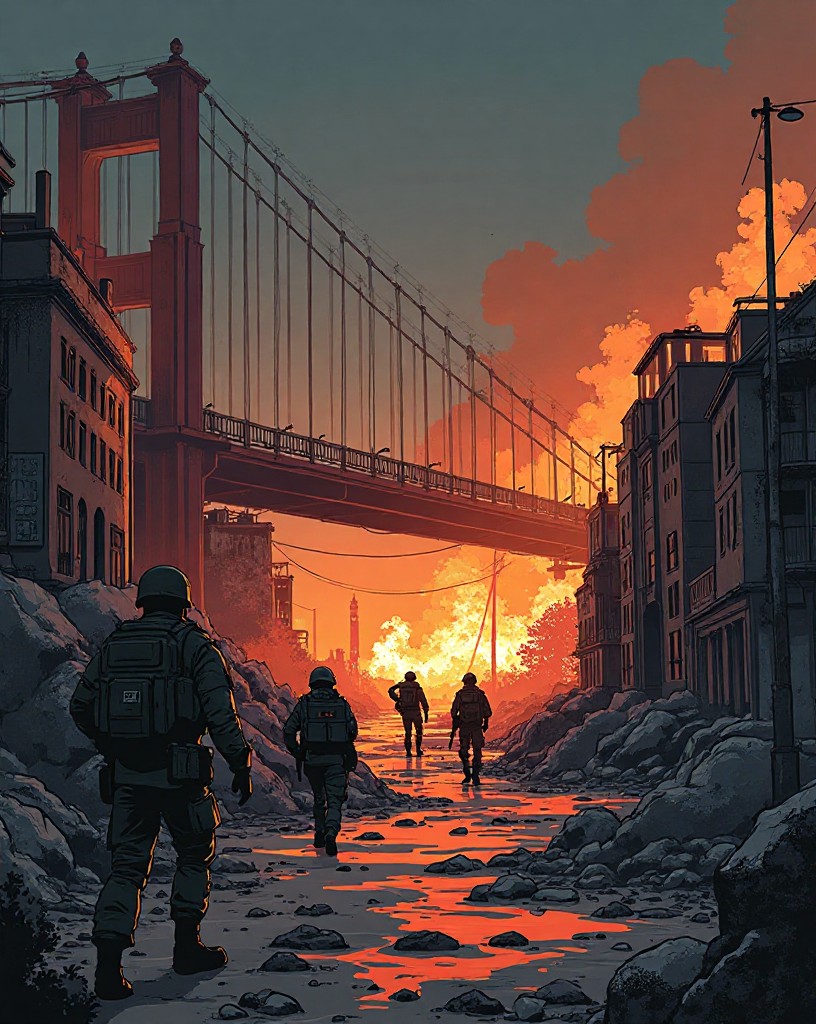
They hold for days — far longer than anyone hoped — running out of ammunition, food, and men, the perimeter shrinking around them.
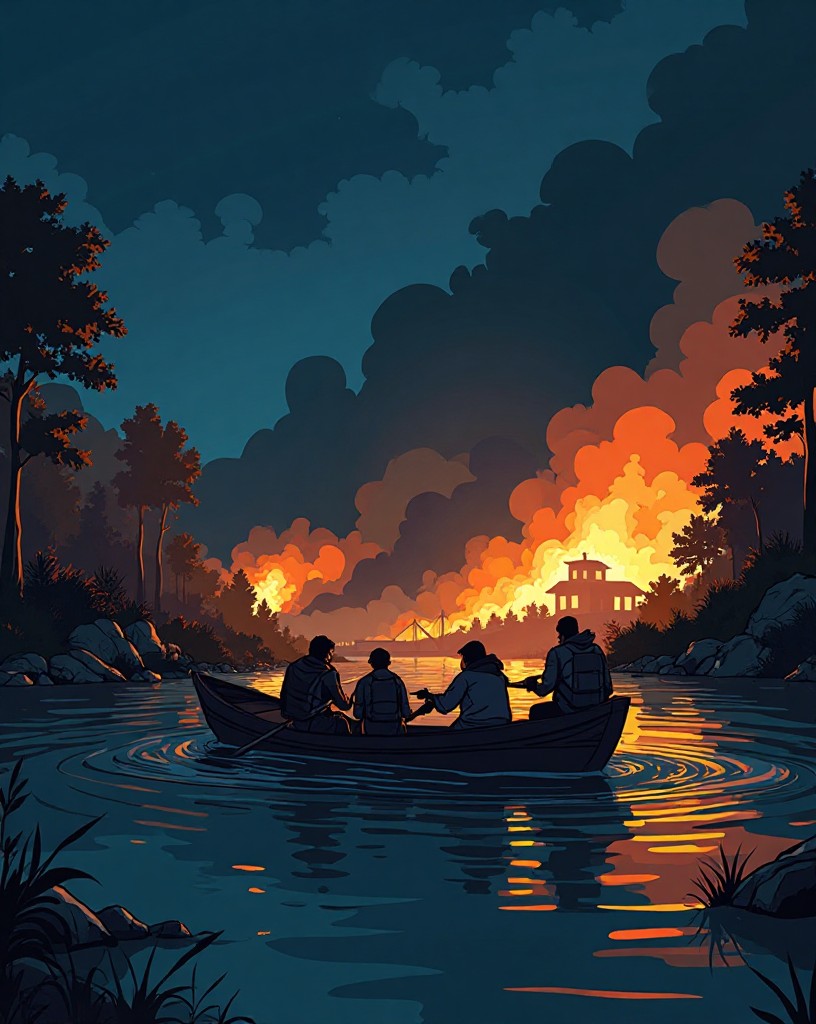
But the armored column cannot break through in time. Arnhem — the last bridge, the bridge too far — is lost. The survivors of the 1st Airborne are pulled back across the river by night; thousands are killed or captured.

The gamble had failed. The war would not end by Christmas — it would grind on into 1945. Market Garden became a byword for a bold plan that reached one bridge too far.
Sources
This story was adapted from the following. The illustrations are stylized depictions, not photographs of the events.
A Bridge Too Far, Cornelius Ryan (1974)
Definitive narrative of Operation Market Garden.
“Operation Market Garden”, Wikipedia
Overview, the plan, Arnhem, and the outcome.
That’s the story.
More are in the studio. Head back to the collection to see what’s coming.