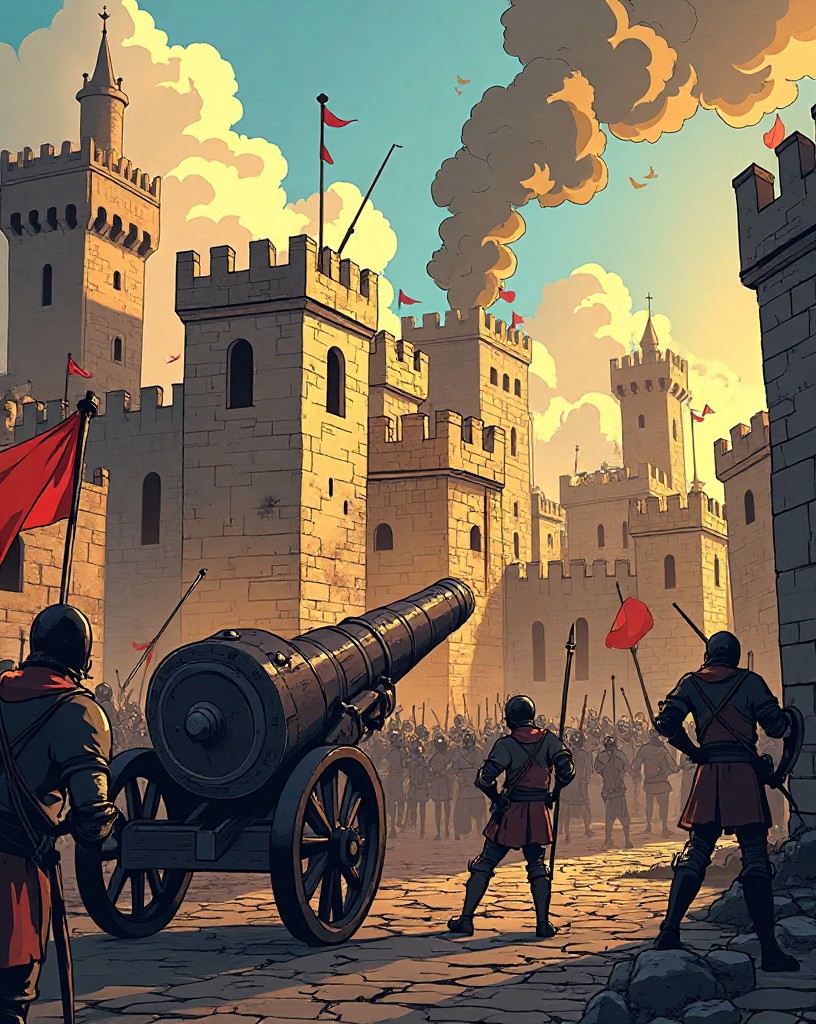
The Fall of Constantinople
The day the cannon ended the age of impregnable walls.
Constantinople · 1453
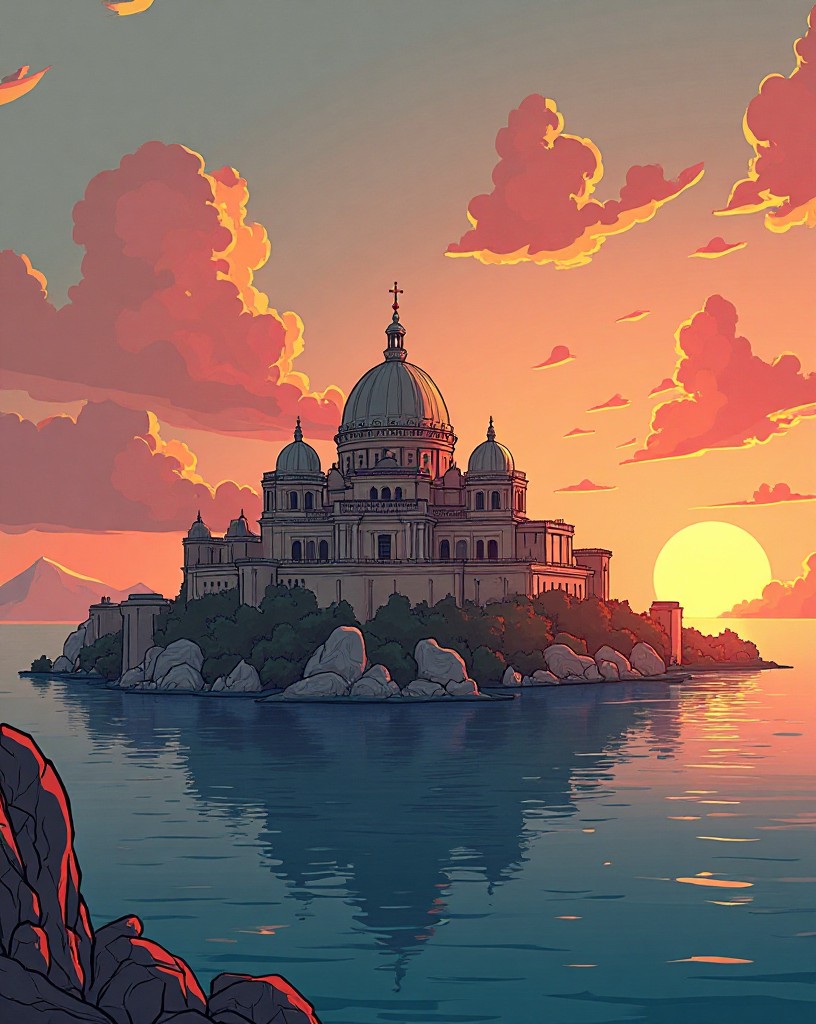
1453. For a thousand years the city of Constantinople has stood as the heart of the Roman Empire's last survivor — Byzantium — guarded by the mightiest walls in the world. But the empire has shrunk to little more than the city itself, and a young, brilliant, ambitious sultan means to take it.
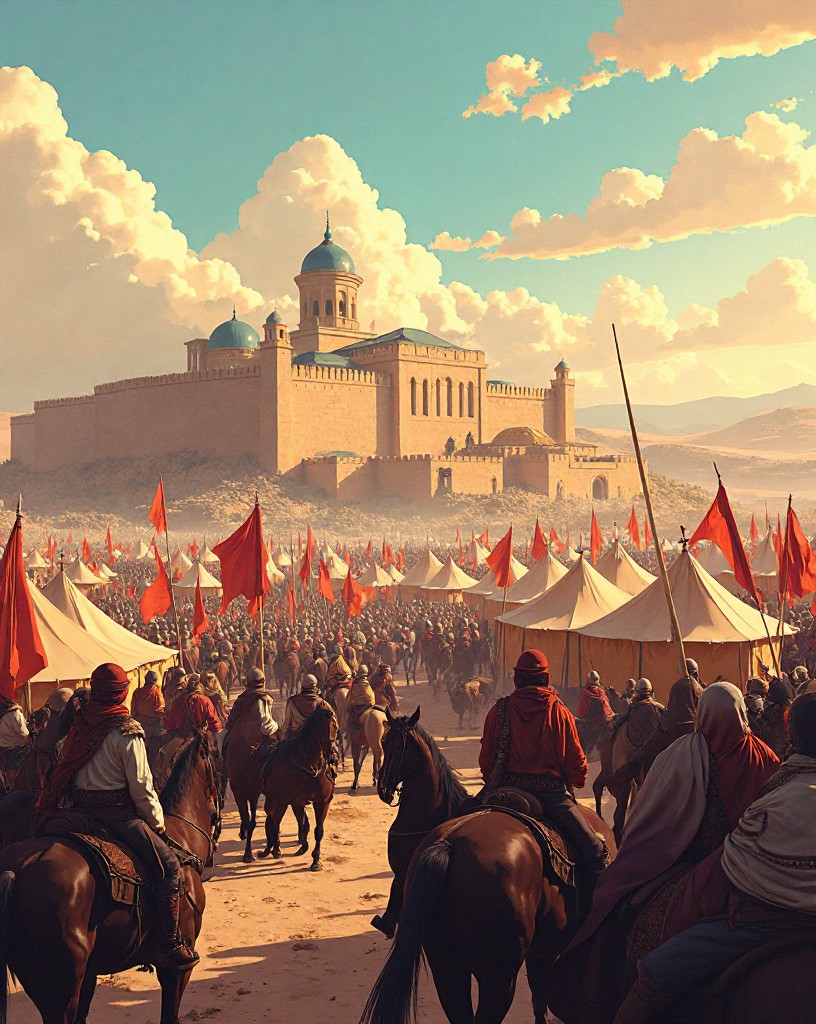
He is Mehmed II, just twenty-one, ruler of the rising Ottoman Empire. He brings an army of perhaps eighty thousand against a city defended by only seven thousand.
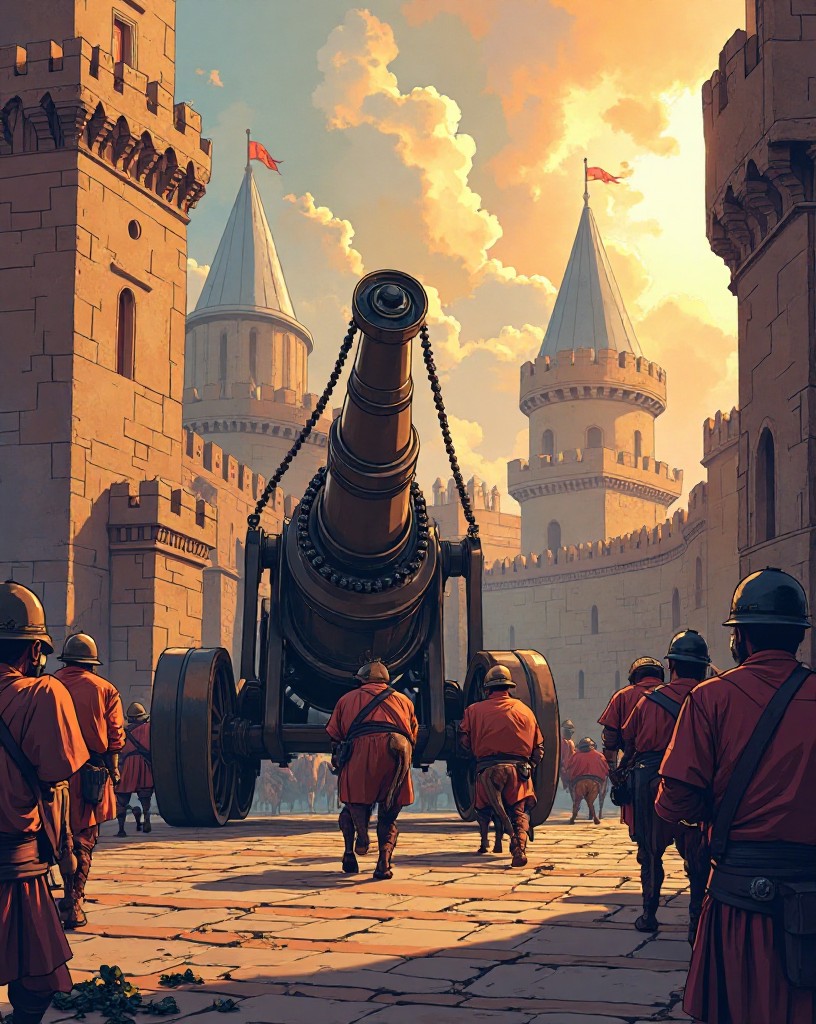
For a thousand years the great Theodosian Walls have turned away every attacker. But Mehmed has something no besieger has had before: enormous cannon, including a monster bombard that hurls stone balls the weight of a man.
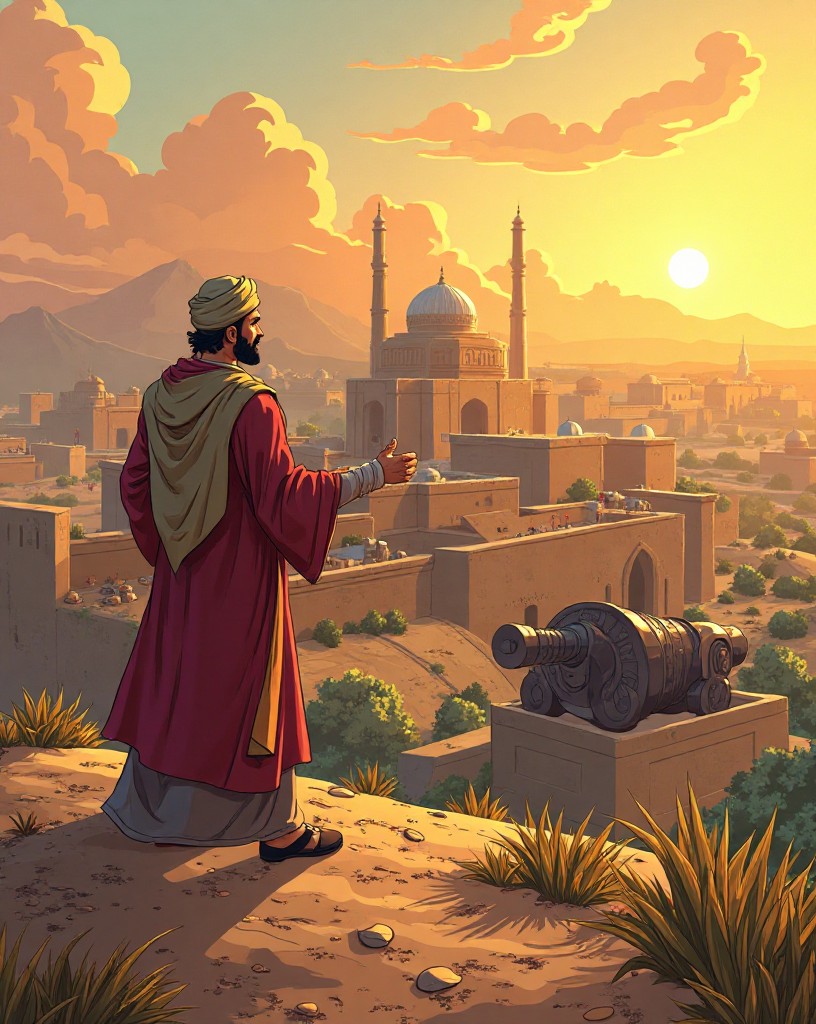
Mehmed II
“The walls have never fallen. They have also never faced these. Begin the bombardment.”
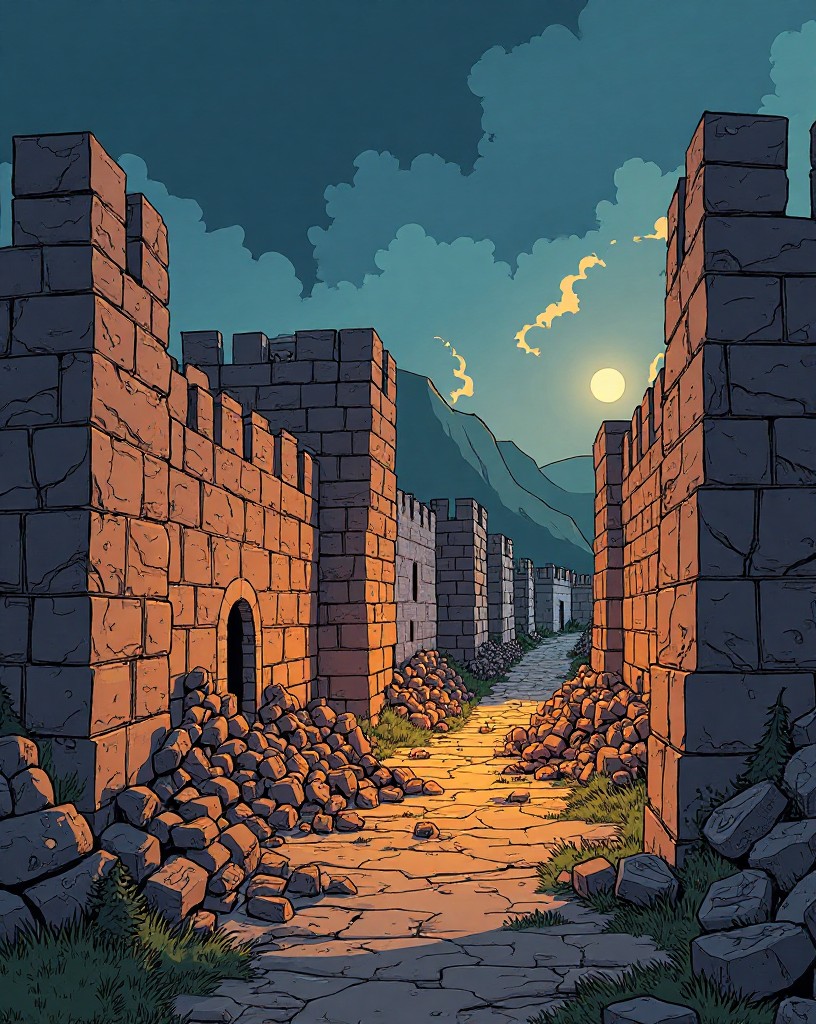
Day after day the great guns pound the ancient walls. The defenders repair the breaches by night as fast as the cannon open them by day.
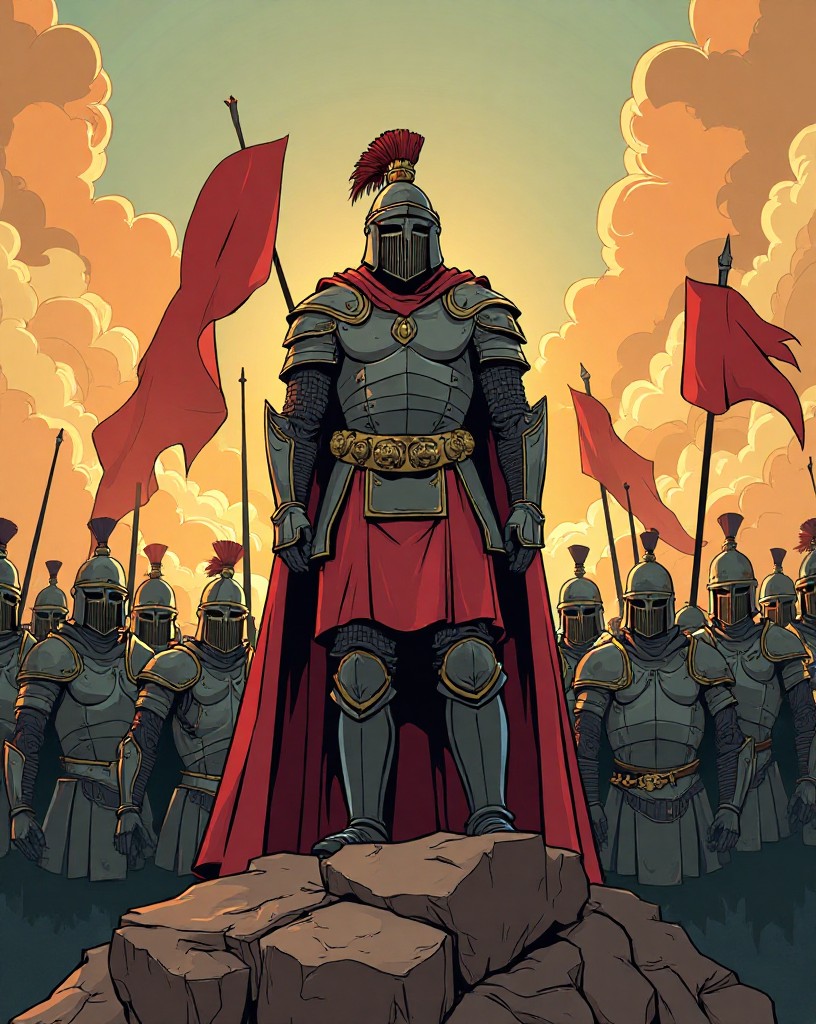
The city's last emperor, Constantine XI, refuses every demand to surrender, and takes his place on the walls beside his soldiers.
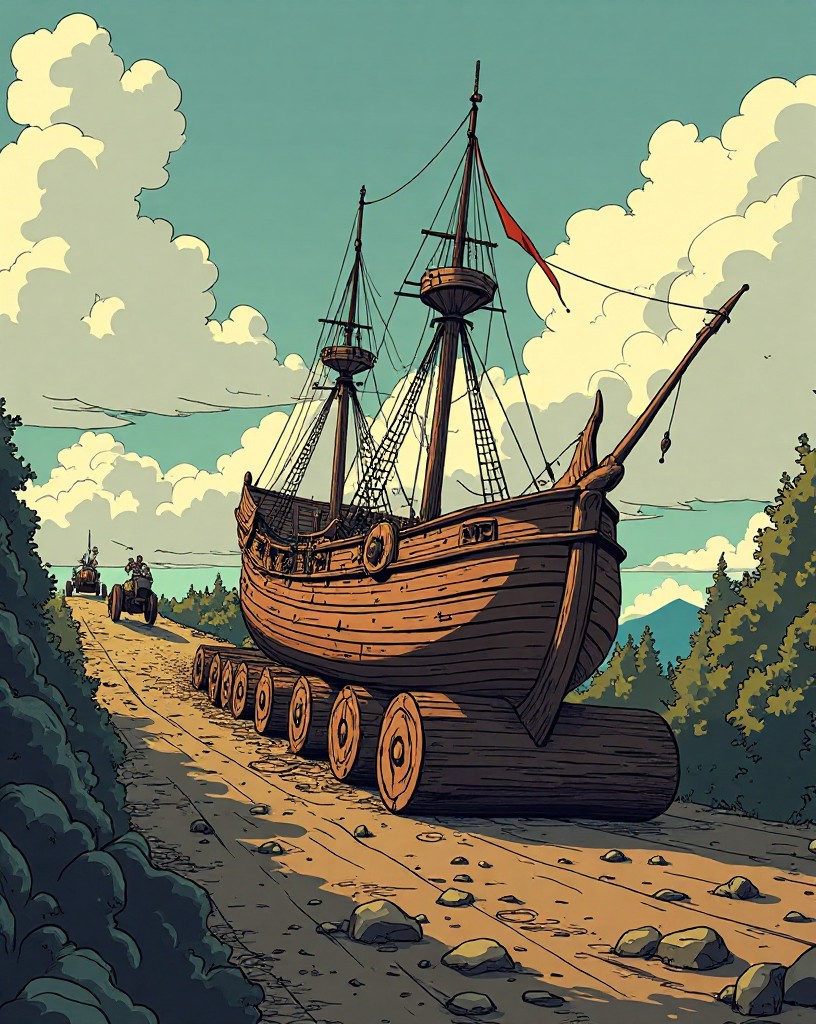
The Byzantines block the harbor, the Golden Horn, with a great chain. So Mehmed does the unthinkable: he has his ships hauled overland on greased logs, around the chain, and into the harbor behind it.
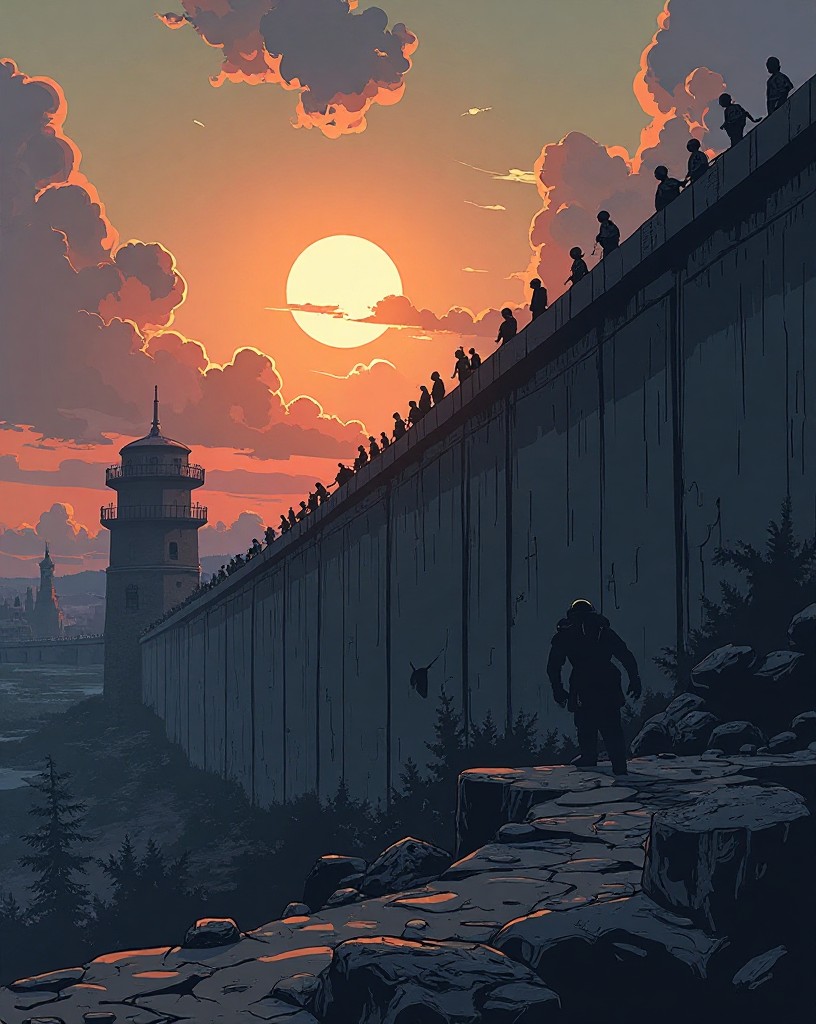
Now the city is pressed from every side. The defenders, exhausted and far too few, are stretched along miles of wall they cannot hope to hold.
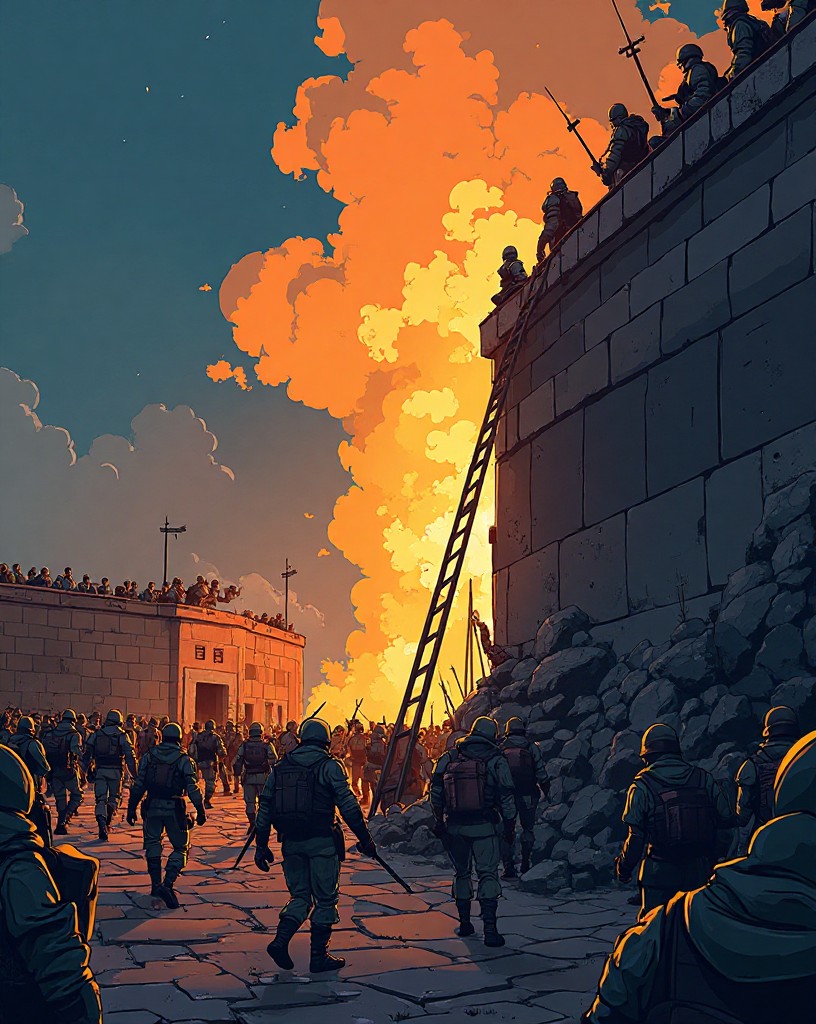
Before dawn on May 29th, Mehmed launches his final, all-out assault — waves of attackers thrown against the battered walls through the night.
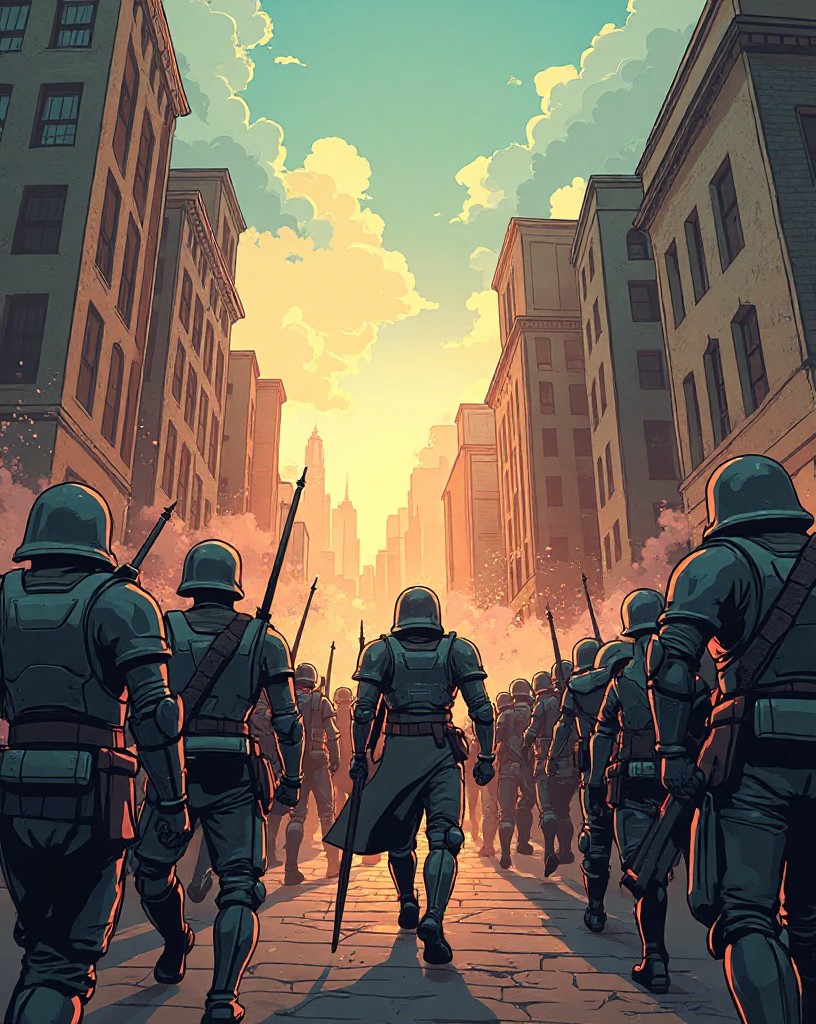
A small gate is found unbarred, and Ottoman soldiers pour through. The defense collapses. The emperor Constantine, last of the Romans, is last seen charging into the fighting — and is never found again.
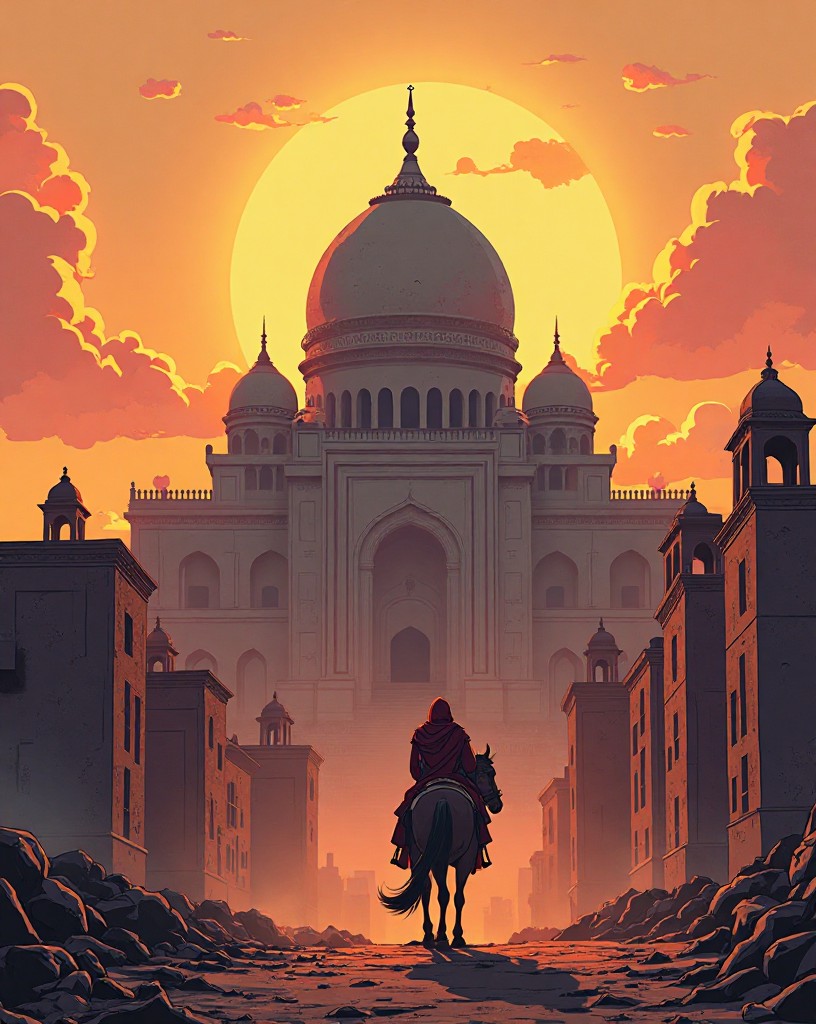
By morning the city is taken. Mehmed rides to the great church of Hagia Sophia. The Roman Empire, after more than a thousand years, has finally fallen.
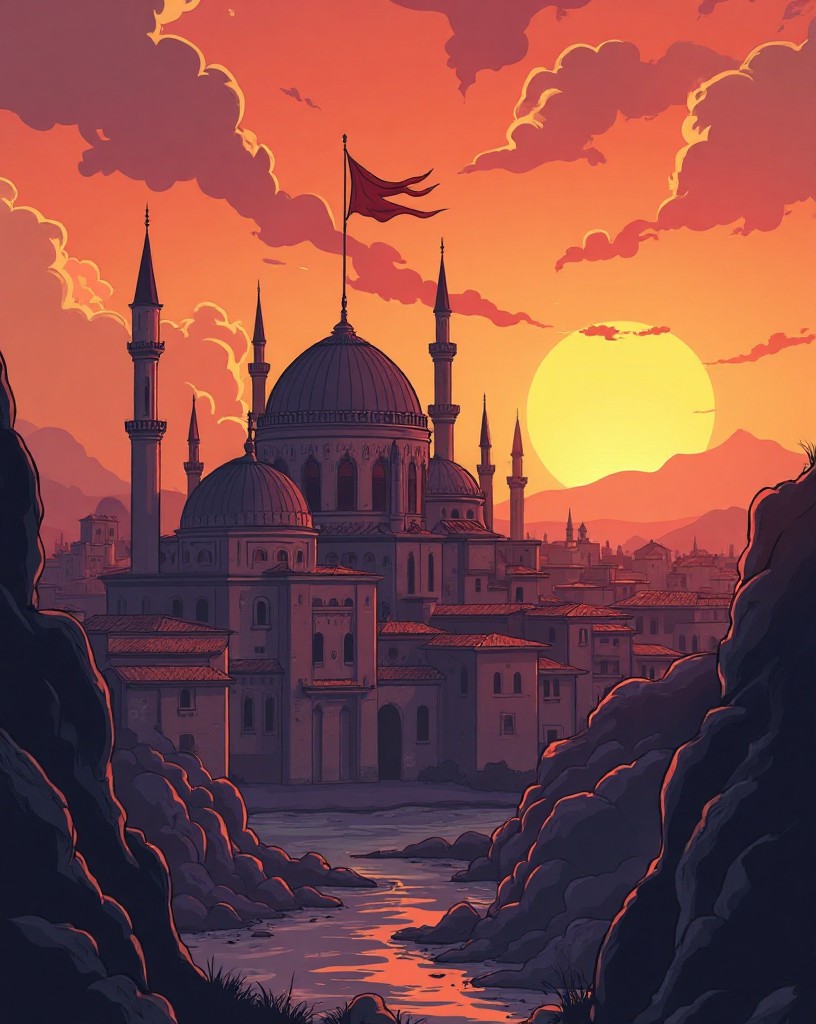
Constantinople became Istanbul, capital of the Ottoman world. And the lesson of those shattered walls echoed across Europe: in the age of the cannon, no fortress was ever safe again.
Sources
This story was adapted from the following. The illustrations are stylized depictions, not photographs of the events.
“Fall of Constantinople”, Wikipedia
Overview, the cannon, the ships overland, and the final assault.
1453: The Holy War for Constantinople, Roger Crowley (2005)
Narrative history of the siege.
That’s the story.
More are in the studio. Head back to the collection to see what’s coming.