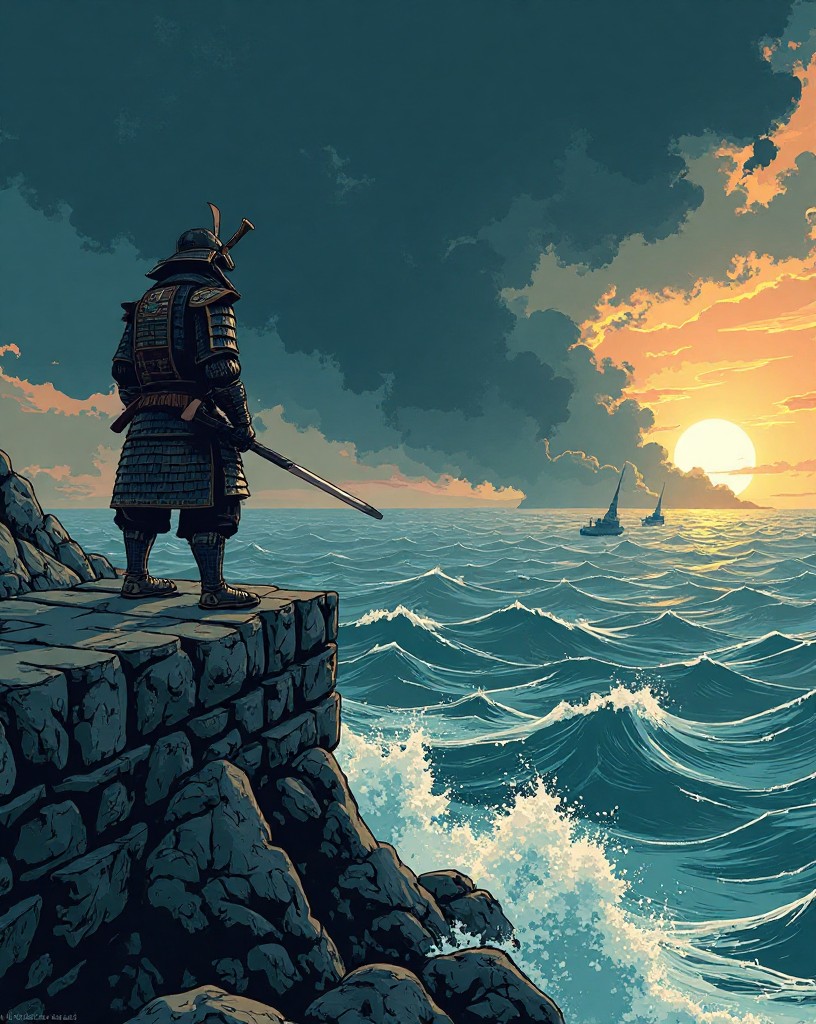
The Divine Wind
Twice the largest fleet on earth came for Japan. Twice the sky answered.
Hakata Bay · 1274 & 1281

The thirteenth century. Kublai Khan rules the largest land empire the world has ever known, stretching from China to the edge of Europe. He turns his gaze to the islands of Japan.
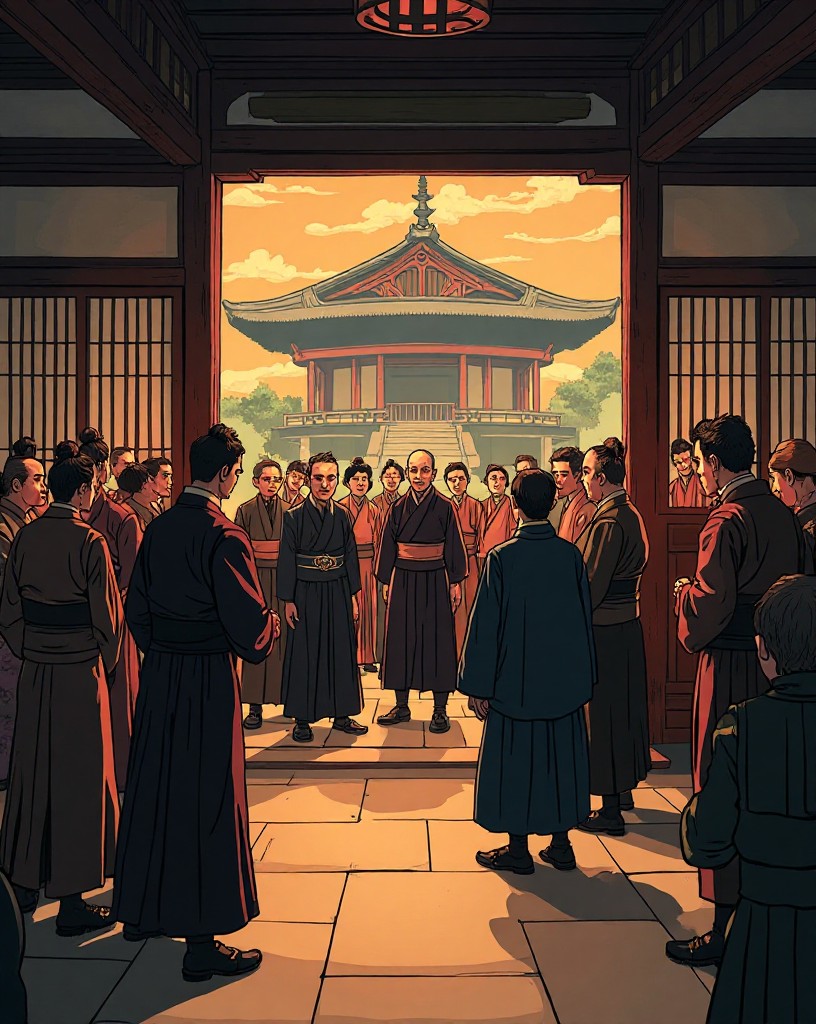
He sends envoys demanding that Japan submit to his rule. The Japanese send them away, and begin to prepare for war.
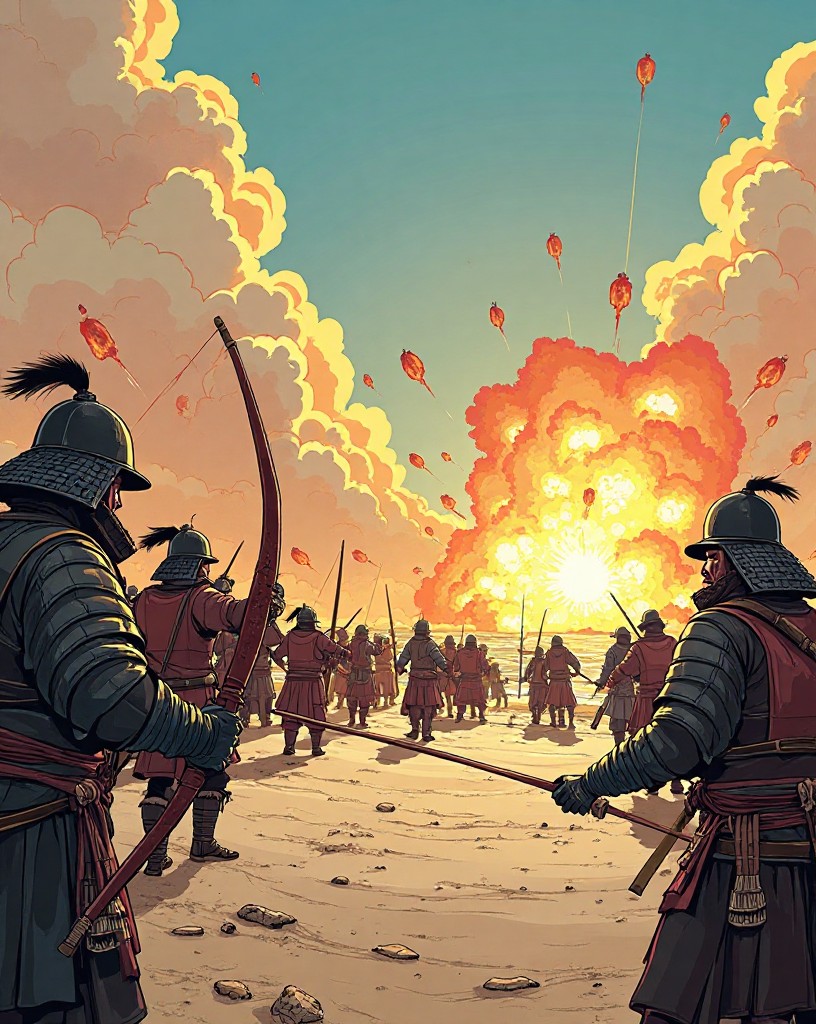
1274. A Mongol fleet crosses from Korea and lands at Hakata Bay. The invaders fight in tight disciplined ranks, with massed archers, poison arrows, and exploding bombs the samurai have never seen.
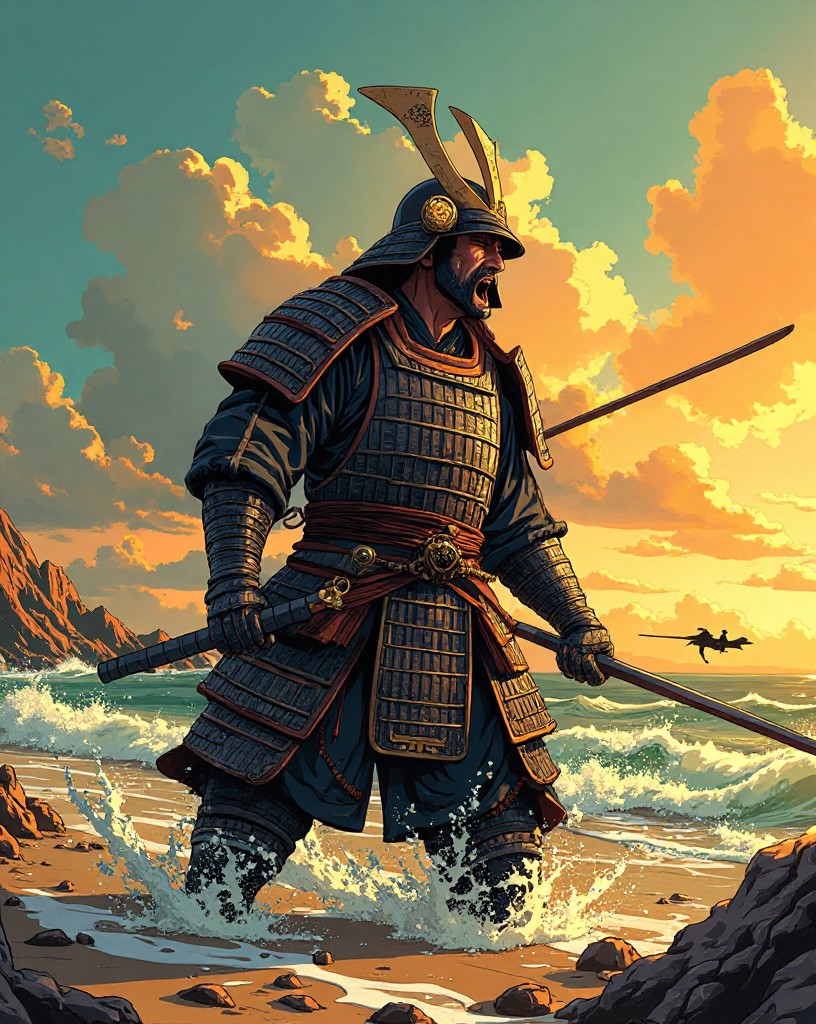
A samurai
“They do not fight as we do — no single challenges, no honor, only the mass. Hold the beach. Hold it until dark.”
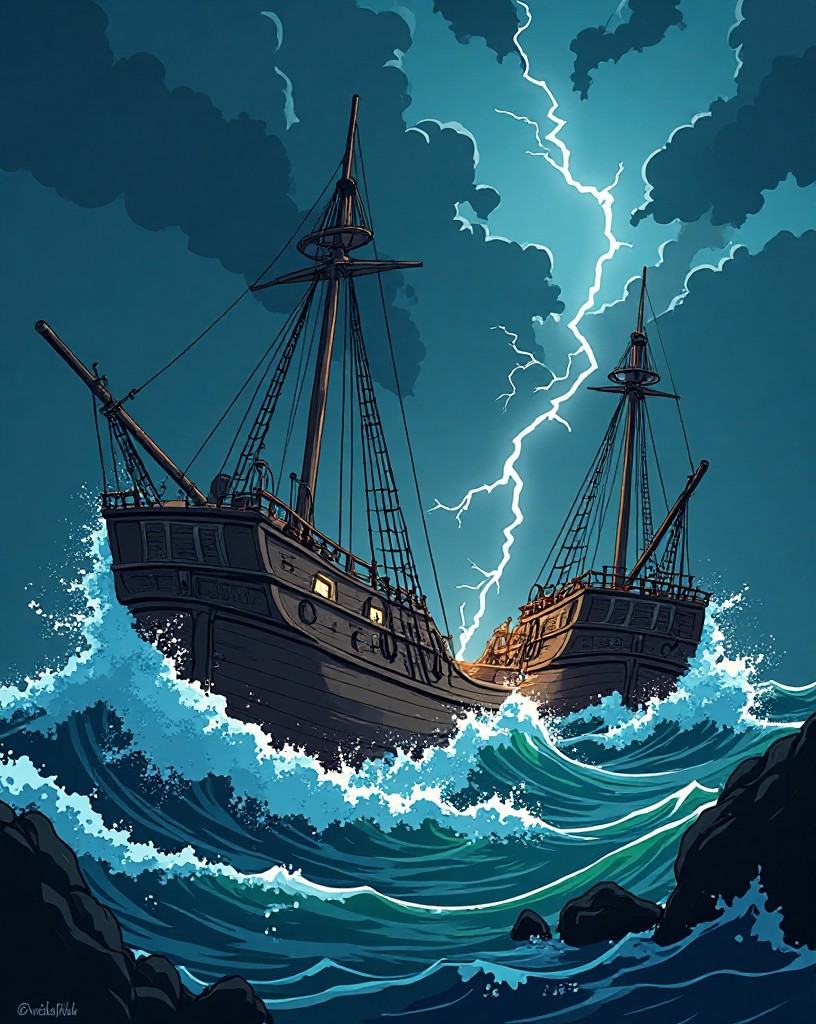
The samurai are pressed hard all day. But that night a storm rises over the bay, and by dawn much of the Mongol fleet is wrecked or scattered. The invaders sail away.
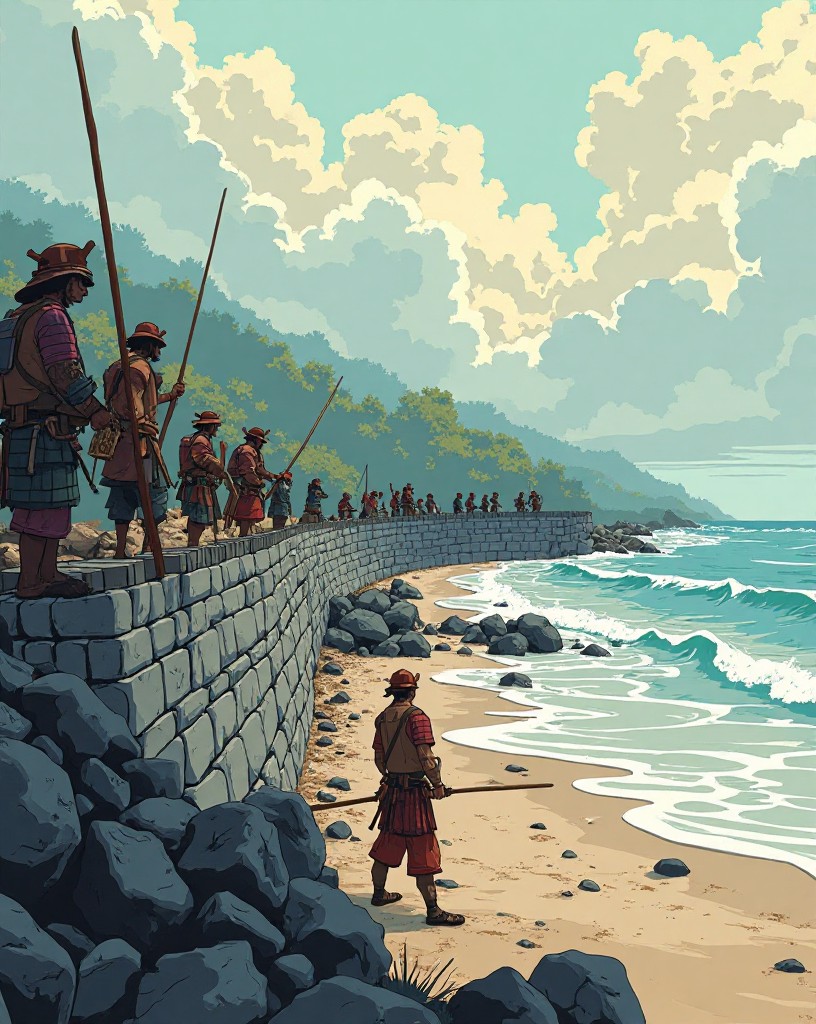
Japan knows they will return. Along the shore of Hakata Bay, they build a great stone wall — miles of it — and they wait.
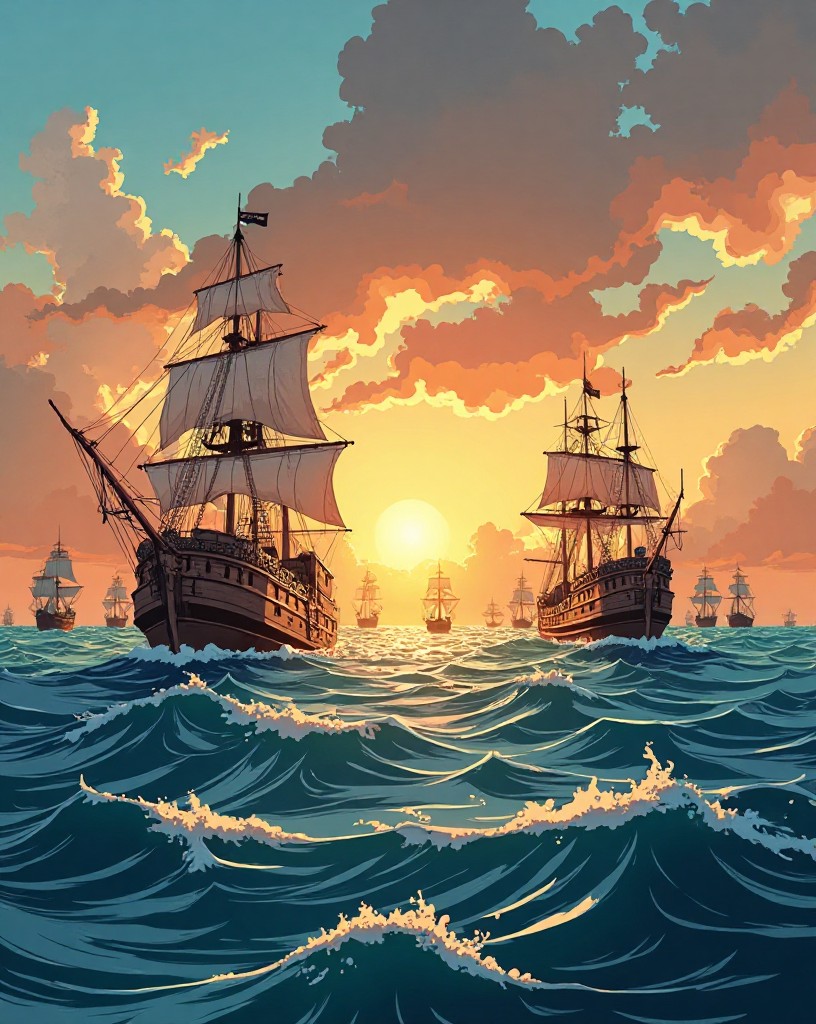
1281. The Khan comes again — this time with the largest seaborne invasion the world will see for seven hundred years: thousands of ships and well over a hundred thousand men.
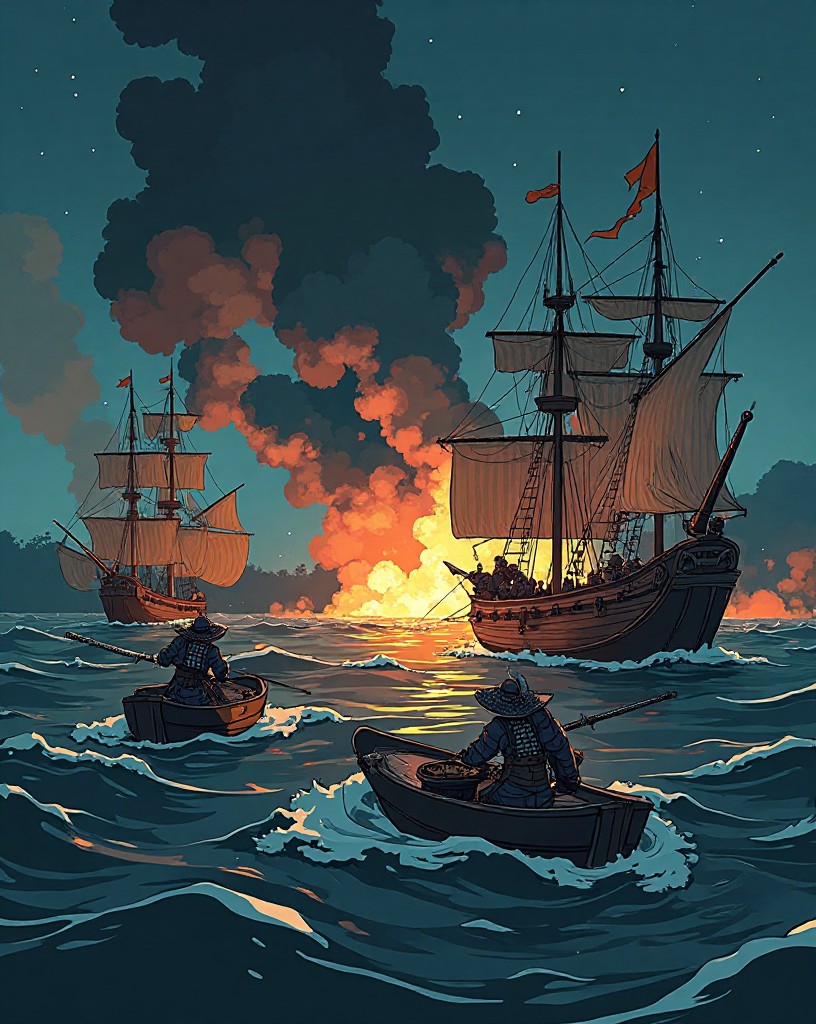
The stone wall denies them the good landing grounds. For weeks the samurai raid the anchored fleet by night in small boats, boarding and burning, never letting the enemy gain a foothold ashore.
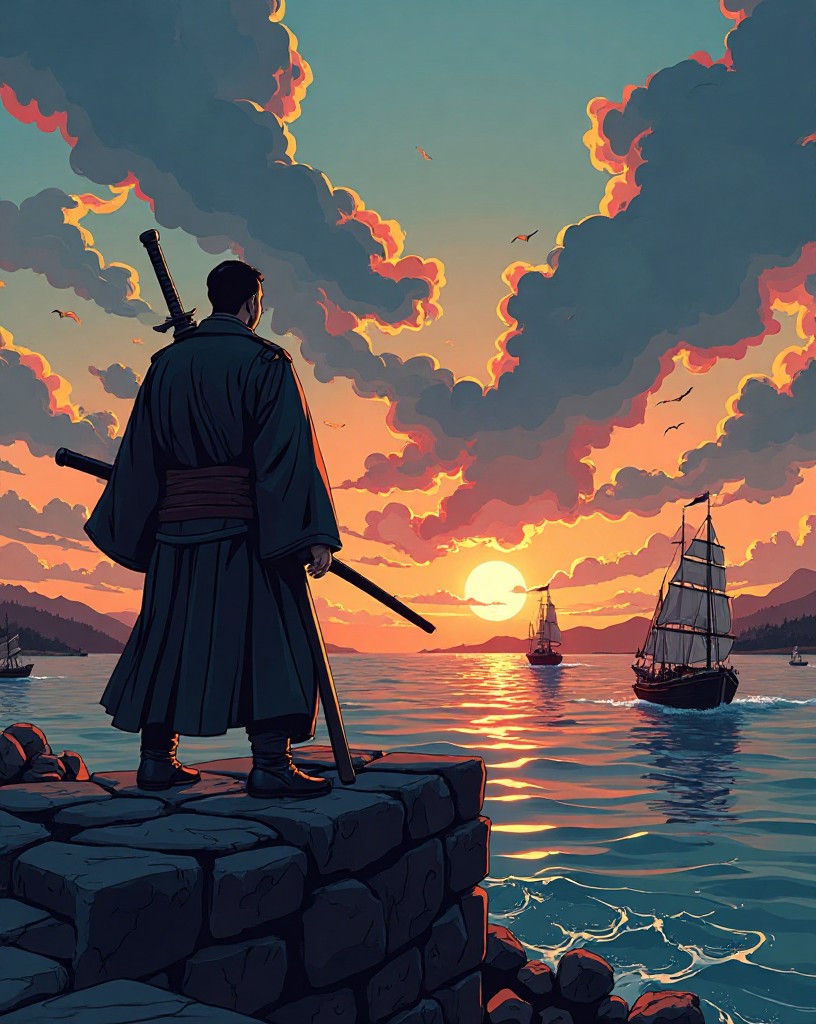
A Japanese commander
“We cannot beat their numbers on open ground. So we give them no ground at all. Keep them on their ships.”
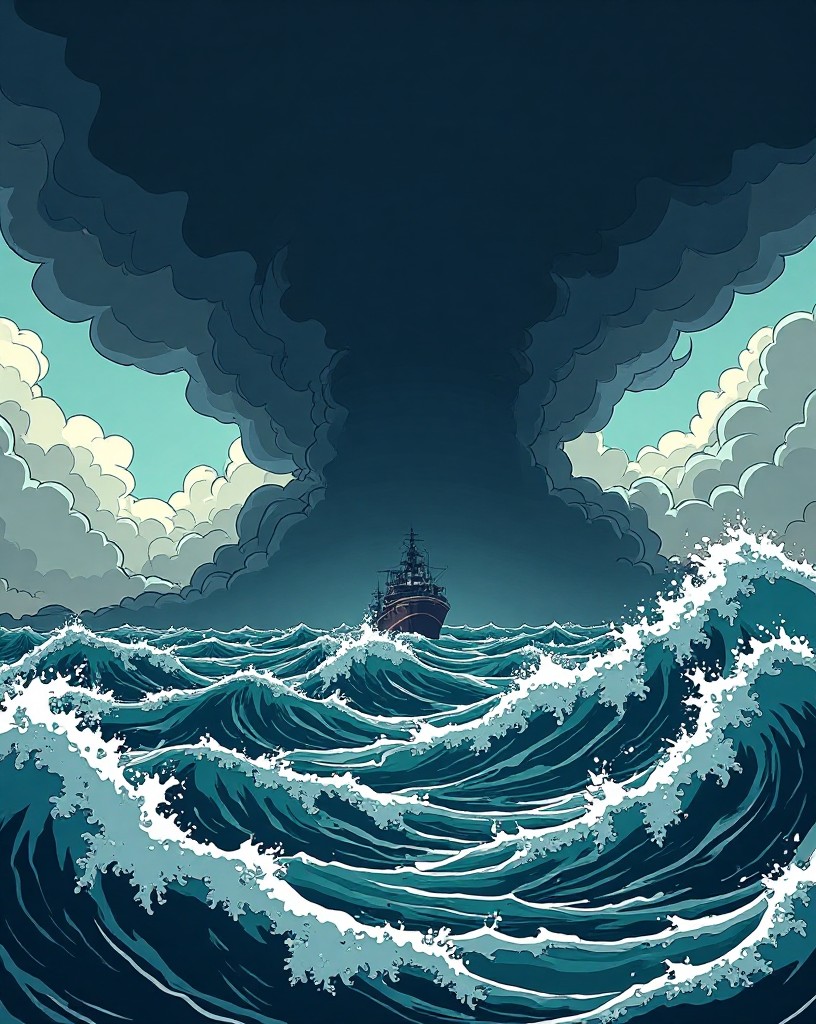
Then, in August, the sky turns. A great typhoon sweeps in from the open sea and falls upon the crowded fleet.
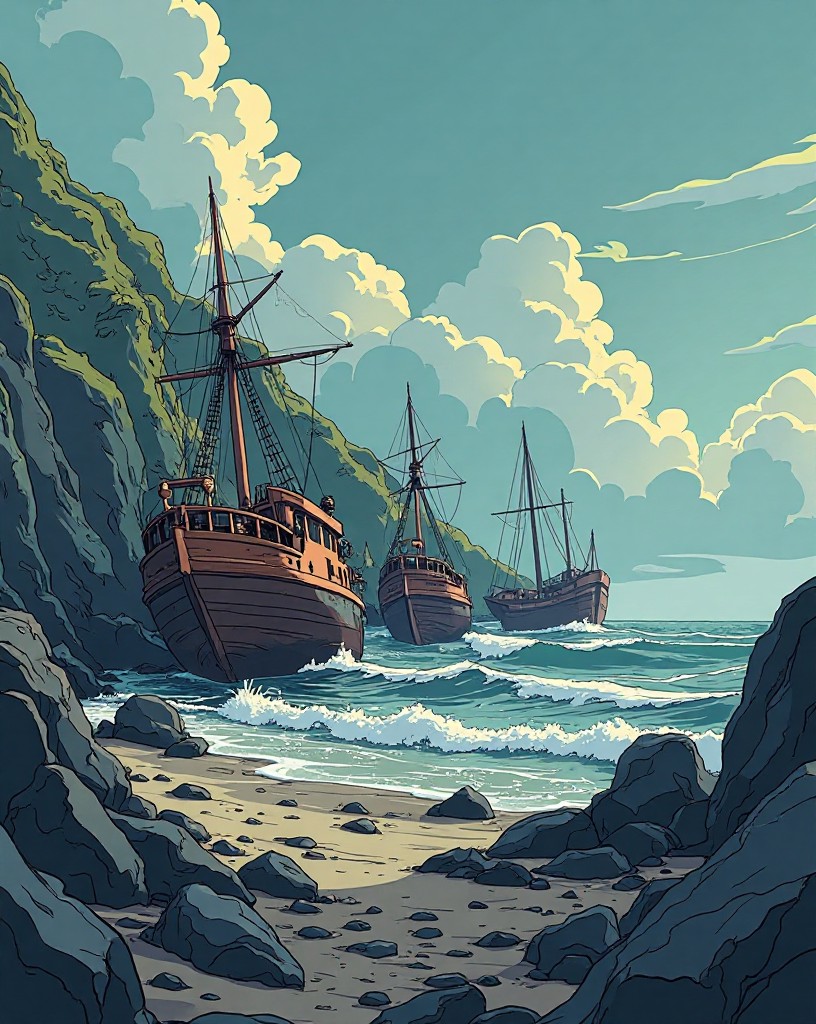
Ships are smashed together and hurled onto the rocks. Tens of thousands of the Khan's men drown or are stranded on the shore and cut down. The invasion is annihilated.
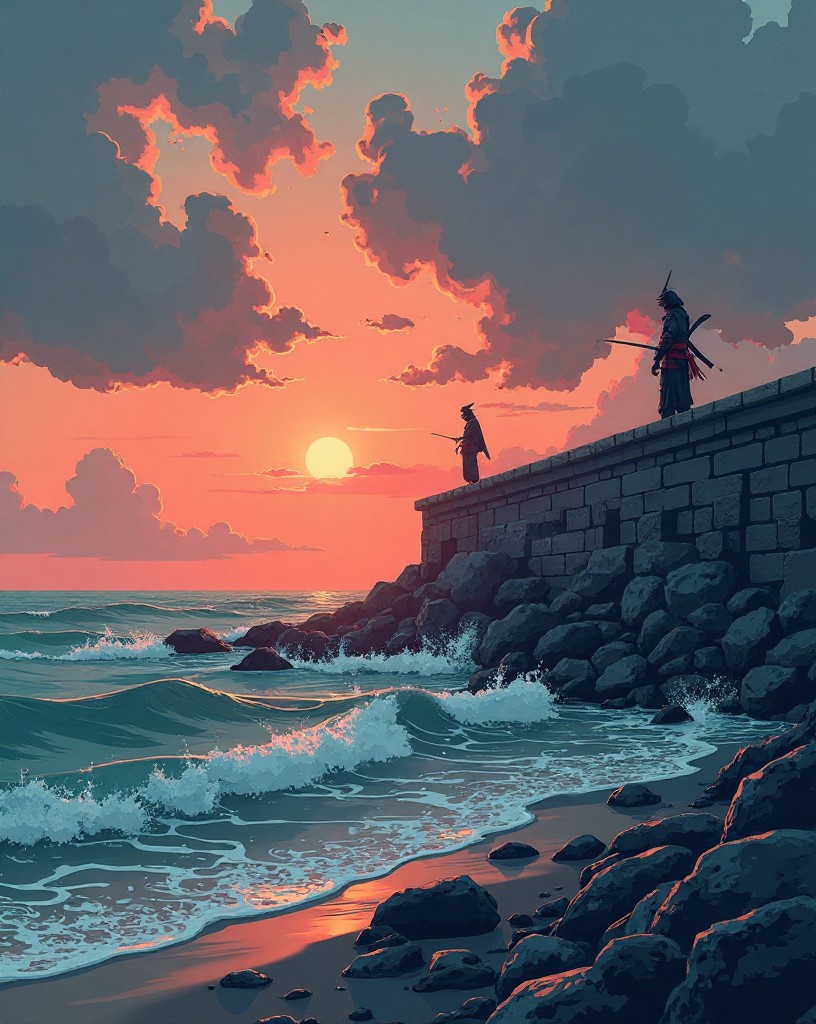
The Japanese called the storms kamikaze — the divine wind — sent to guard the islands. Japan would not face a foreign invasion for centuries. The name itself would echo, darkly, into another war seven hundred years later.
Sources
This story was adapted from the following. The illustrations are stylized depictions, not photographs of the events.
“Mongol invasions of Japan”, Wikipedia
Overview, fleet sizes, and the role of the storms.
In Little Need of Divine Intervention, Thomas D. Conlan (2001)
Scholarly study; cautions that samurai resistance, not only the storms, mattered.
That’s the story.
More are in the studio. Head back to the collection to see what’s coming.