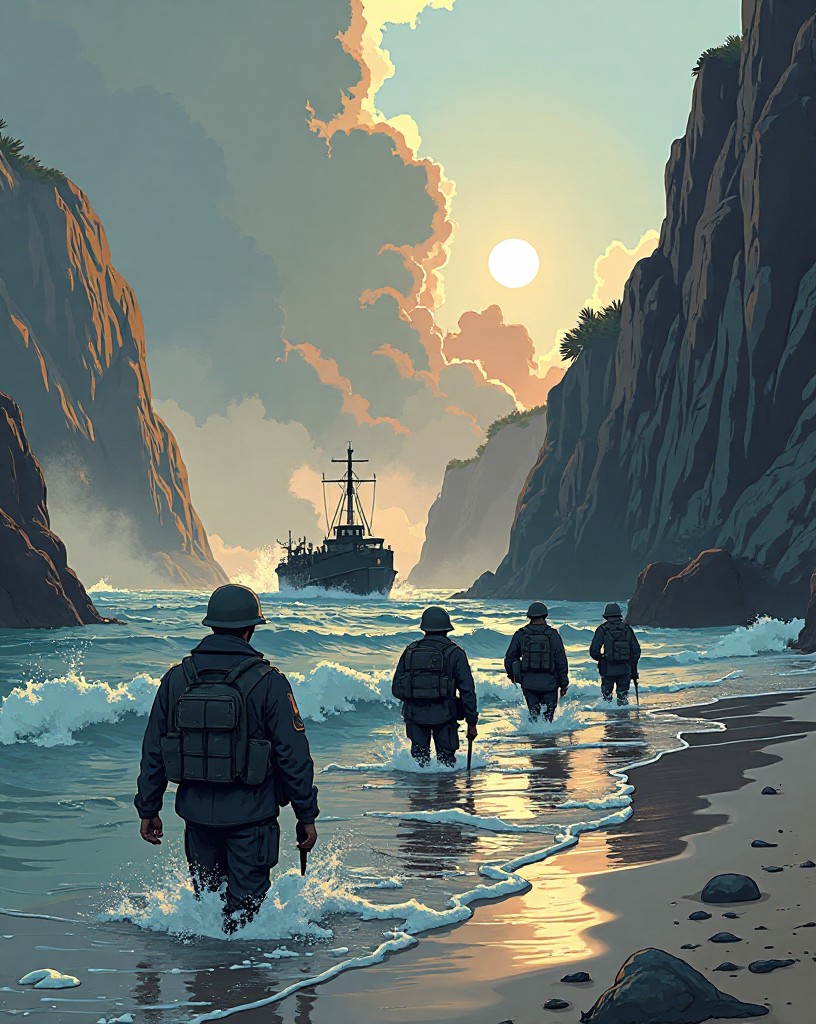
Bloody Omaha
The bloodiest beach of the longest day, taken one yard at a time.
Omaha Beach · 6 June 1944
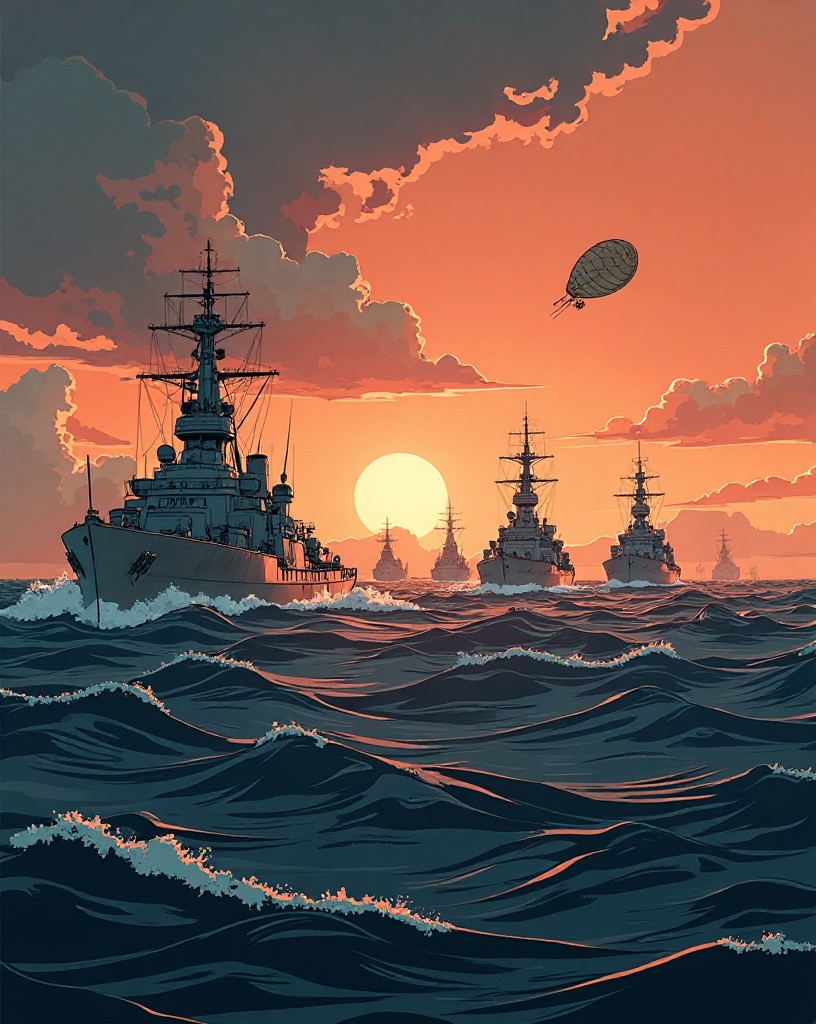
June 6th, 1944. Before dawn, the largest invasion fleet in history crosses the Channel toward occupied France. There are five beaches. The bloodiest will be the one code-named Omaha.
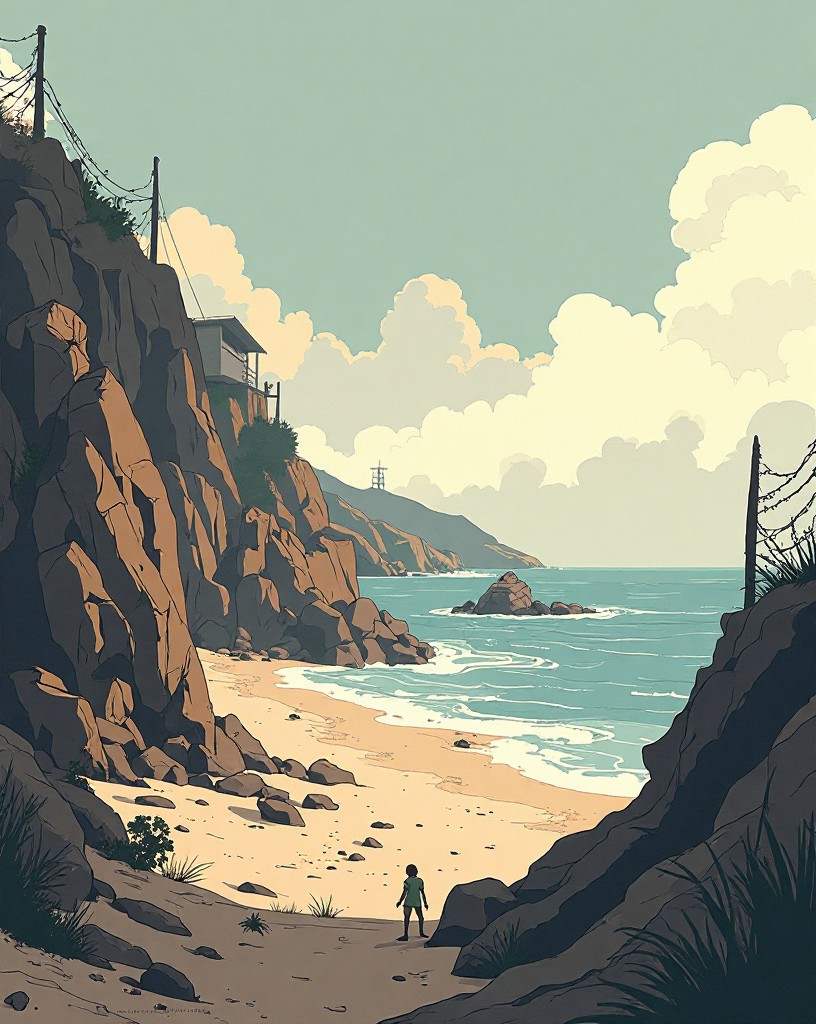
Omaha is a four-mile crescent of sand backed by steep bluffs. The Germans have had years to fortify it — minefields, beach obstacles, concrete bunkers, and machine guns sited to sweep the whole shore.
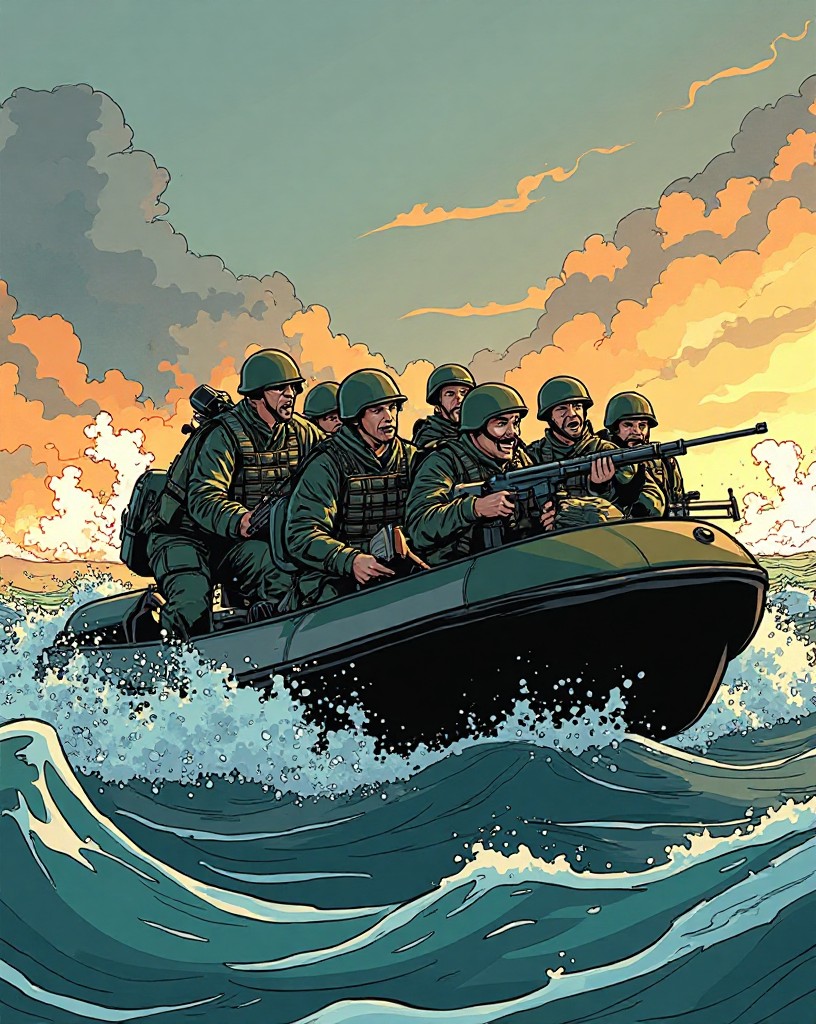
The men go in at first light, packed into flat-bottomed landing craft — soaked, seasick, and silent — as shells throw up columns of water around them.
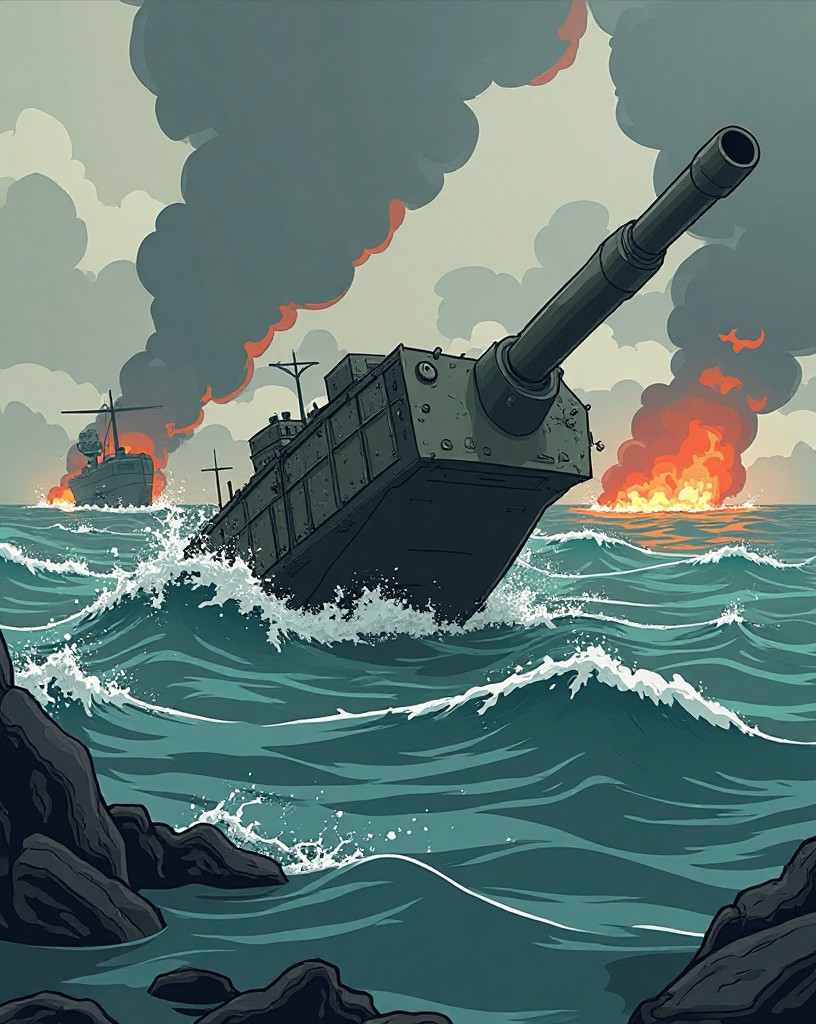
Almost everything goes wrong at once. The current drags the craft off course. Most of the swimming tanks meant to support them founder in the heavy sea. The bombers have overshot, and the defenses stand untouched.
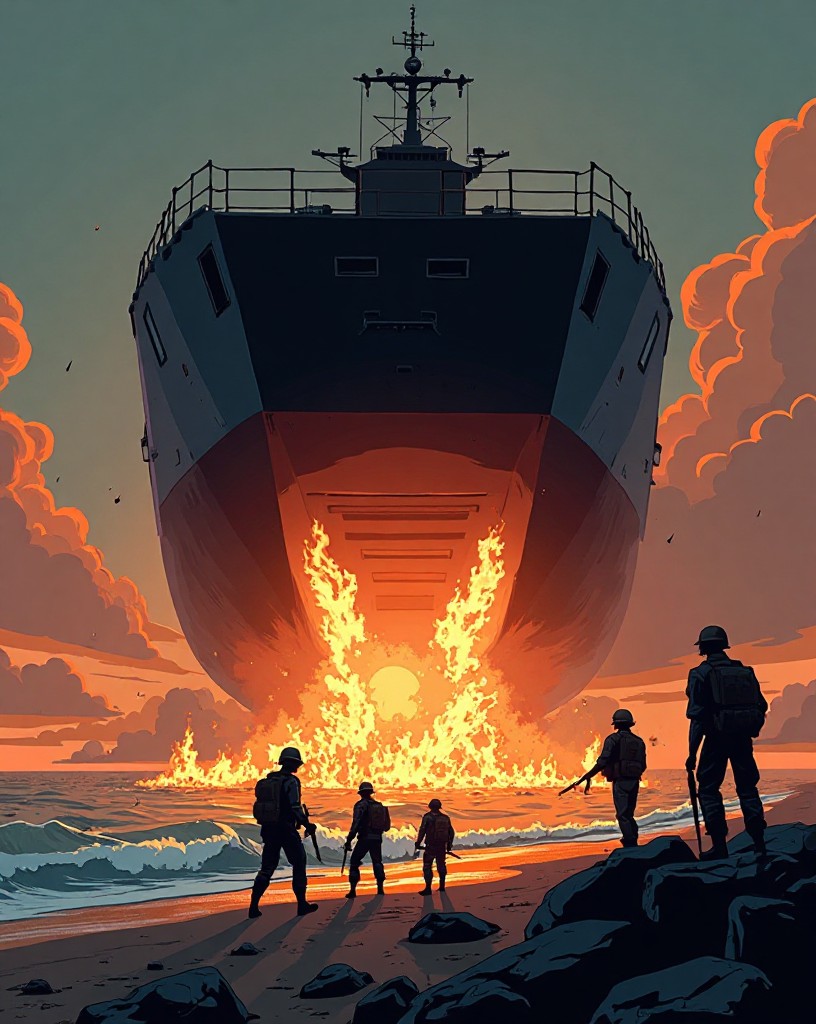
The ramps drop. The machine guns open up.
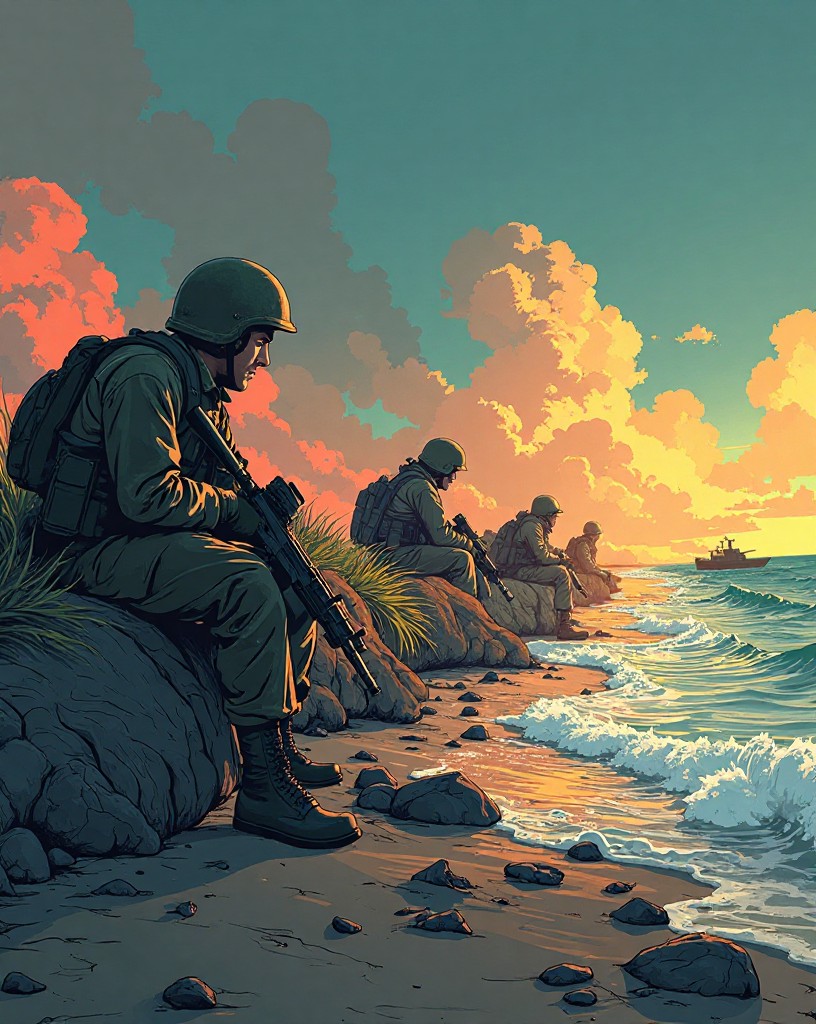
The first waves are cut down in the surf and on the open sand. Survivors press behind steel obstacles and the bodies of the fallen, pinned at the very edge of the water.
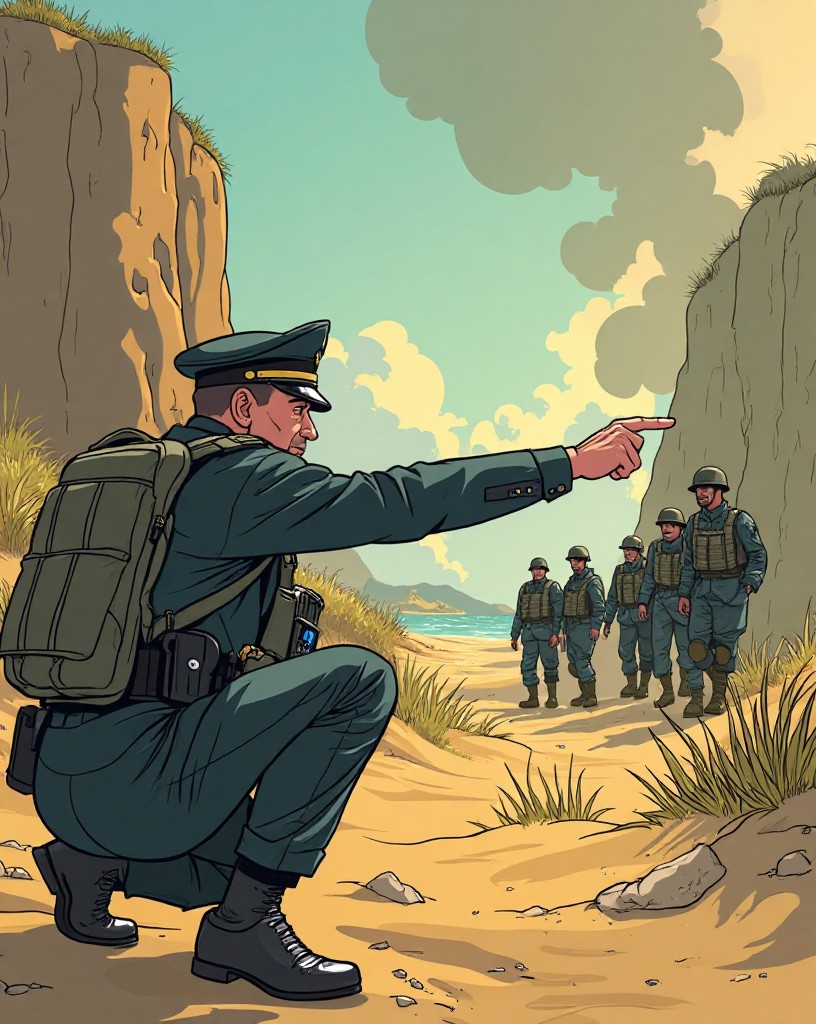
Col. George Taylor
“Two kinds of people are staying on this beach — the dead, and those who are going to die. Now let's get the hell out of here.”
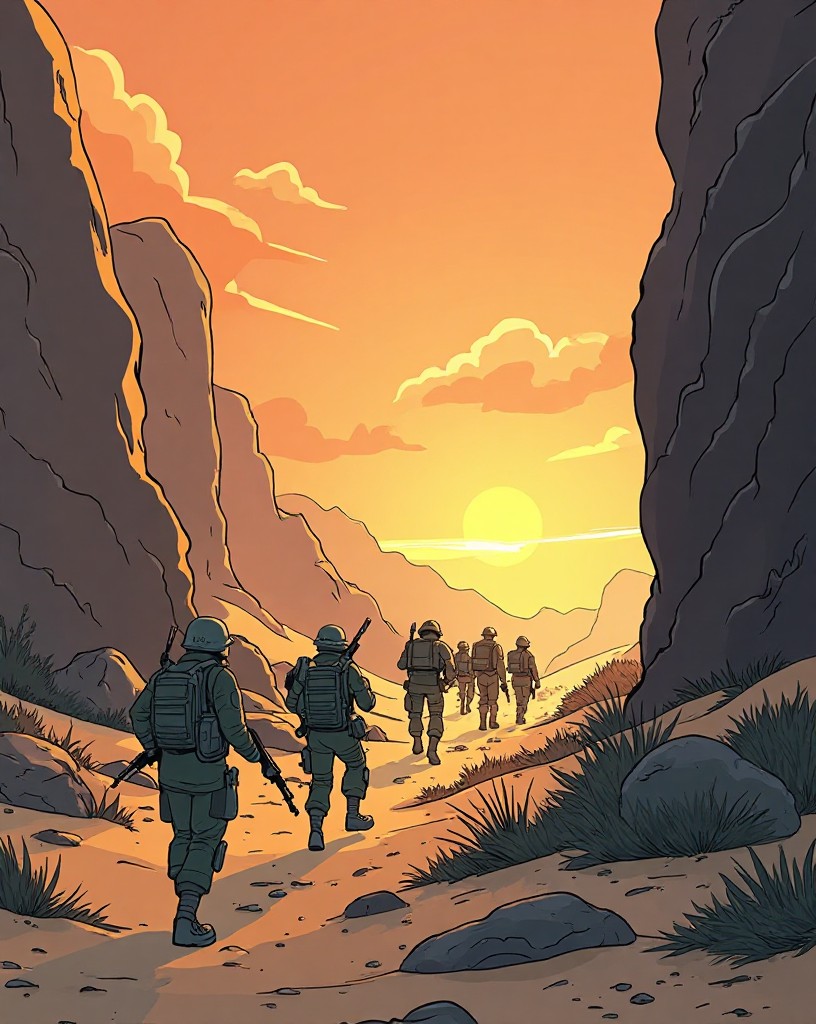
In ones and twos, then in small groups, men begin to move. There is no shelter on the open sand. The only way off the beach is forward, and up.
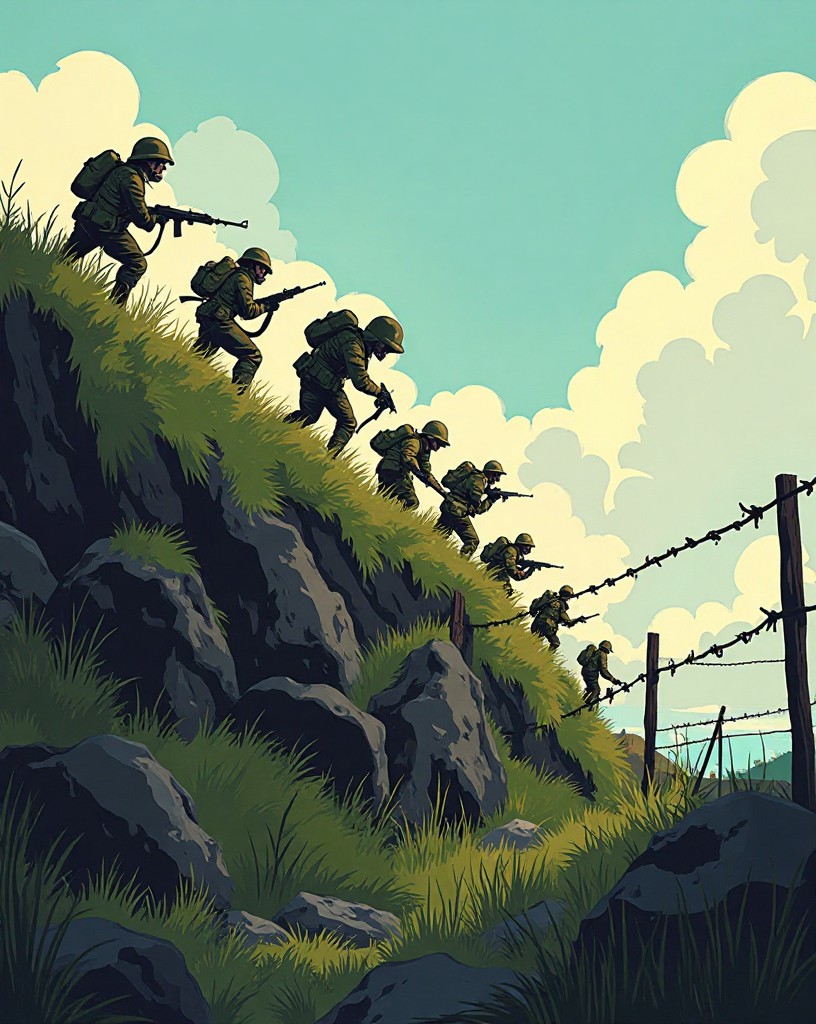
Engineers blow gaps in the wire under fire. Soldiers crawl up the bluffs between the strongpoints, working around the guns that cannot be taken head-on.
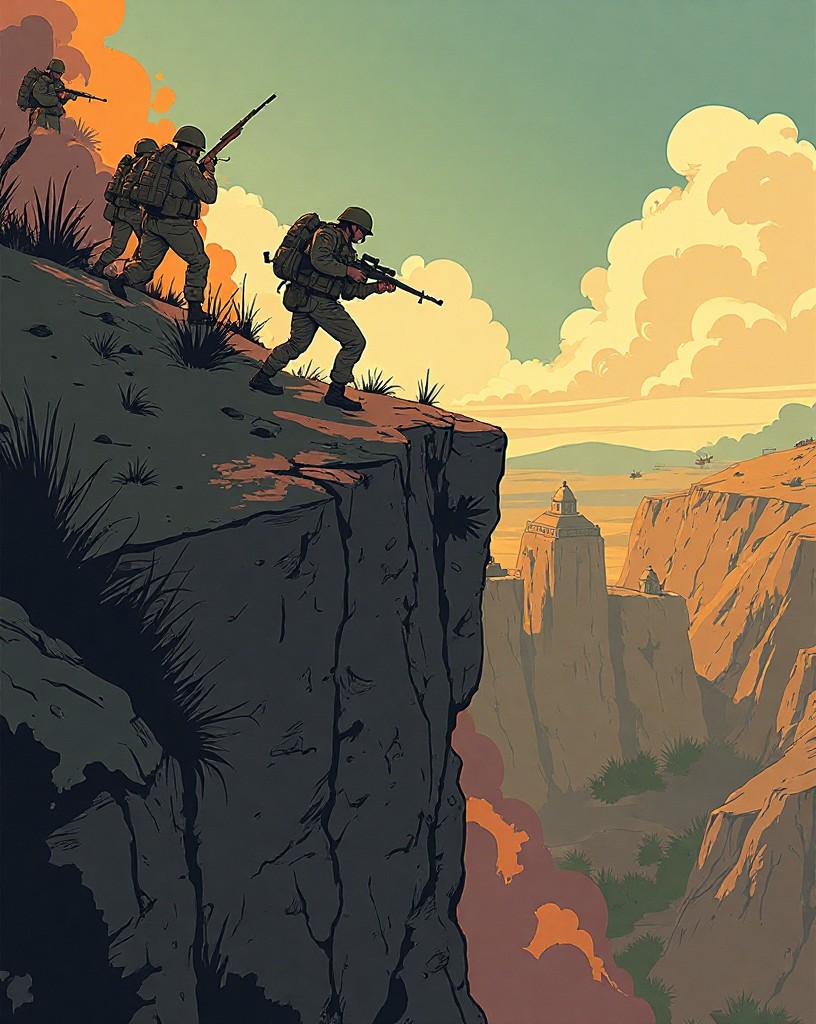
By afternoon, small parties have fought their way to the top and begun to silence the bunkers from behind. Foot by bloody foot, the beach is opening.
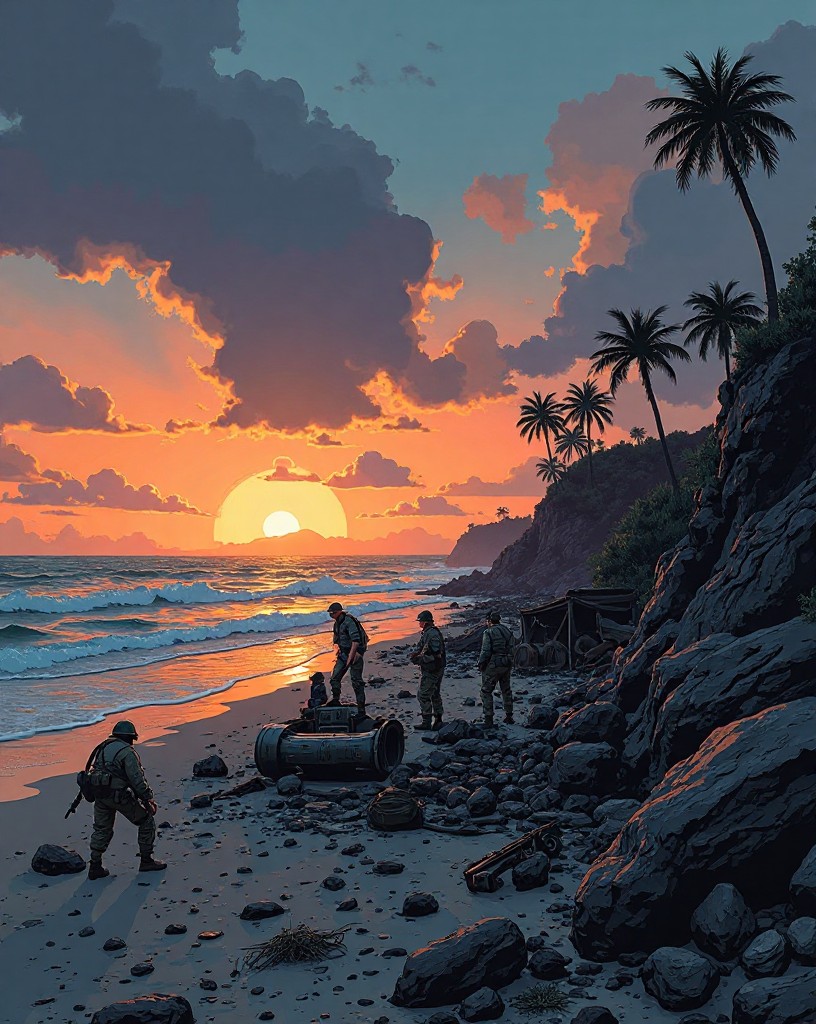
By nightfall the Americans hold a thin, fragile strip of France. The cost is terrible — thousands killed or wounded on this one beach alone.
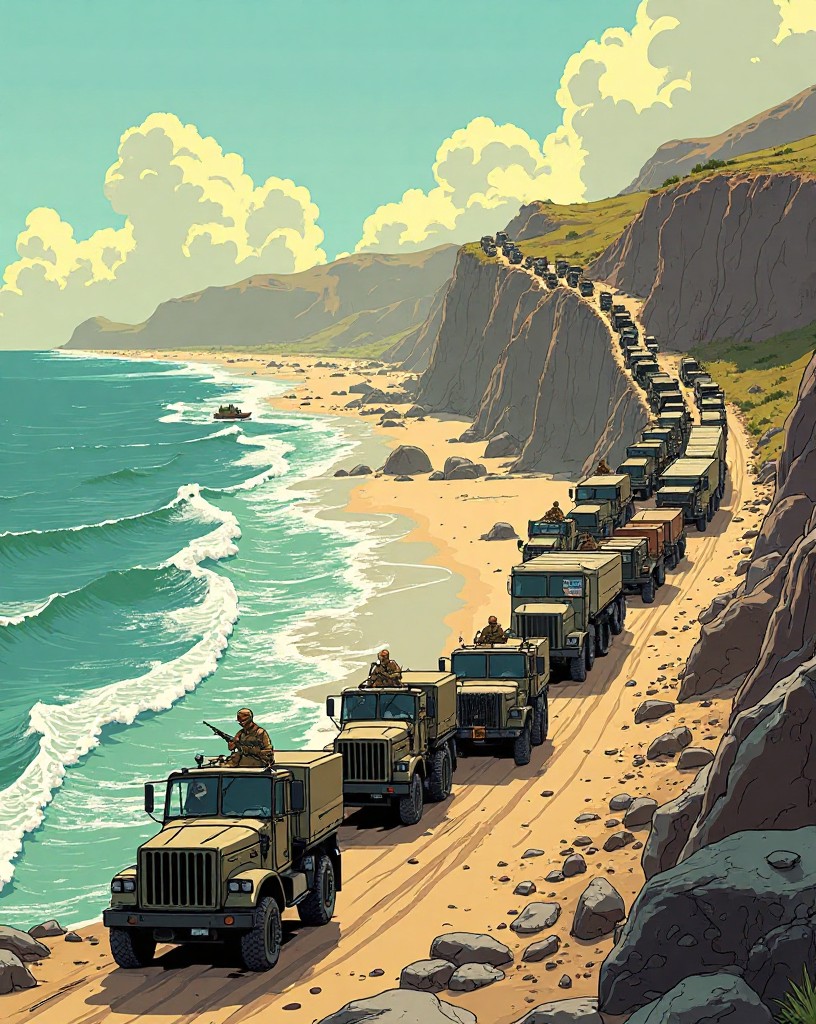
But the line held, and the beach became a door. Through it, in the weeks that followed, poured the armies that would drive across France and into the heart of Germany.
Sources
This story was adapted from the following. The illustrations are stylized depictions, not photographs of the events.
“Omaha Beach”, Wikipedia
Overview, units, defenses, and casualties.
The Longest Day, Cornelius Ryan (1959)
Classic narrative account of D-Day, including Col. Taylor's words.
D-Day, June 6, 1944, Stephen E. Ambrose (1994)
Detailed history of the landings.
That’s the story.
More are in the studio. Head back to the collection to see what’s coming.