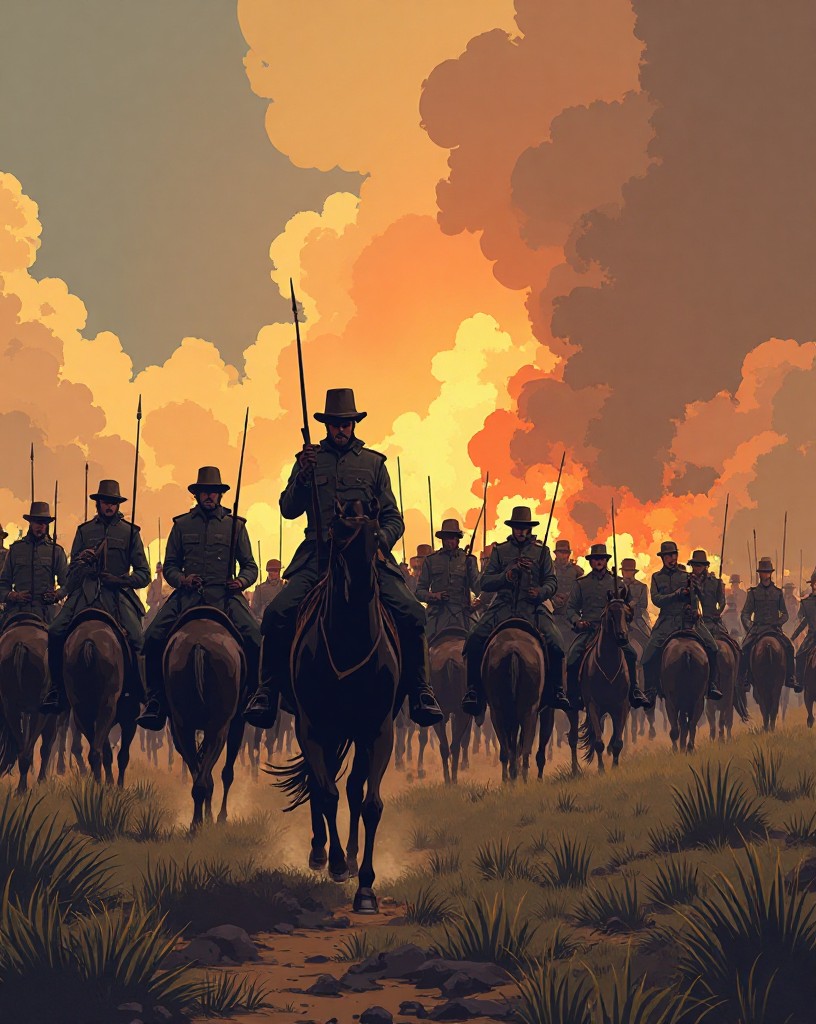
The Charge of the Light Brigade
Into the valley of Death — the most famous blunder in military history.
Balaclava · 1854
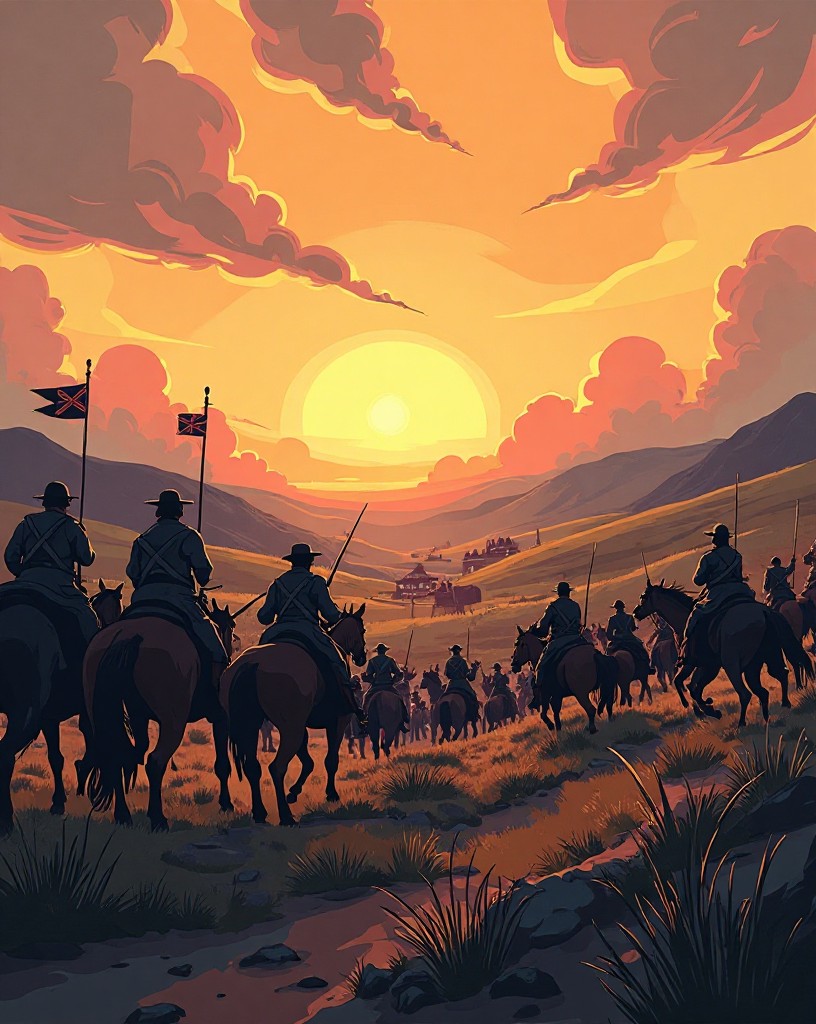
1854. Britain and her allies are at war with Russia in the Crimea. Near the port of Balaclava, the British army faces the Russians across a long valley. What happens next will become the most famous blunder in military history.

The British commander, Lord Raglan, watching from the heights, sees Russians trying to haul away captured British guns from a distant ridge. He scribbles a hurried, vague order: stop them.
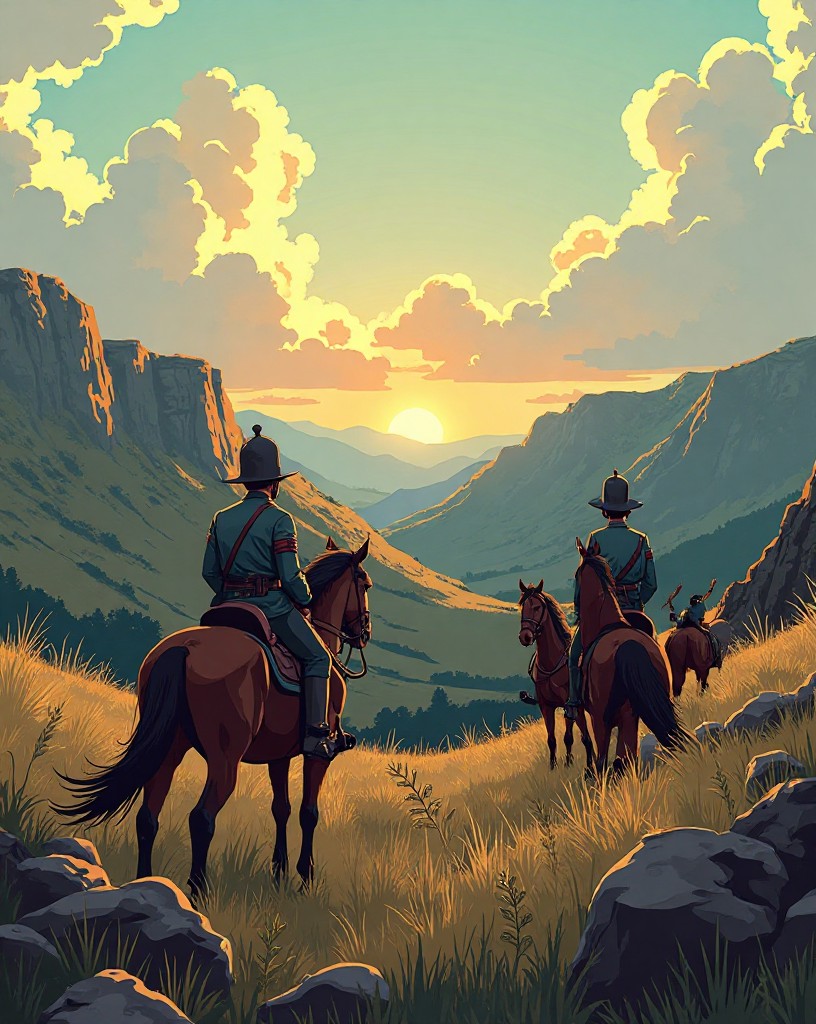
But Raglan can see the whole battlefield from above. The cavalry commanders down in the valley cannot. To them, the order makes no sense — and no one explains which guns.
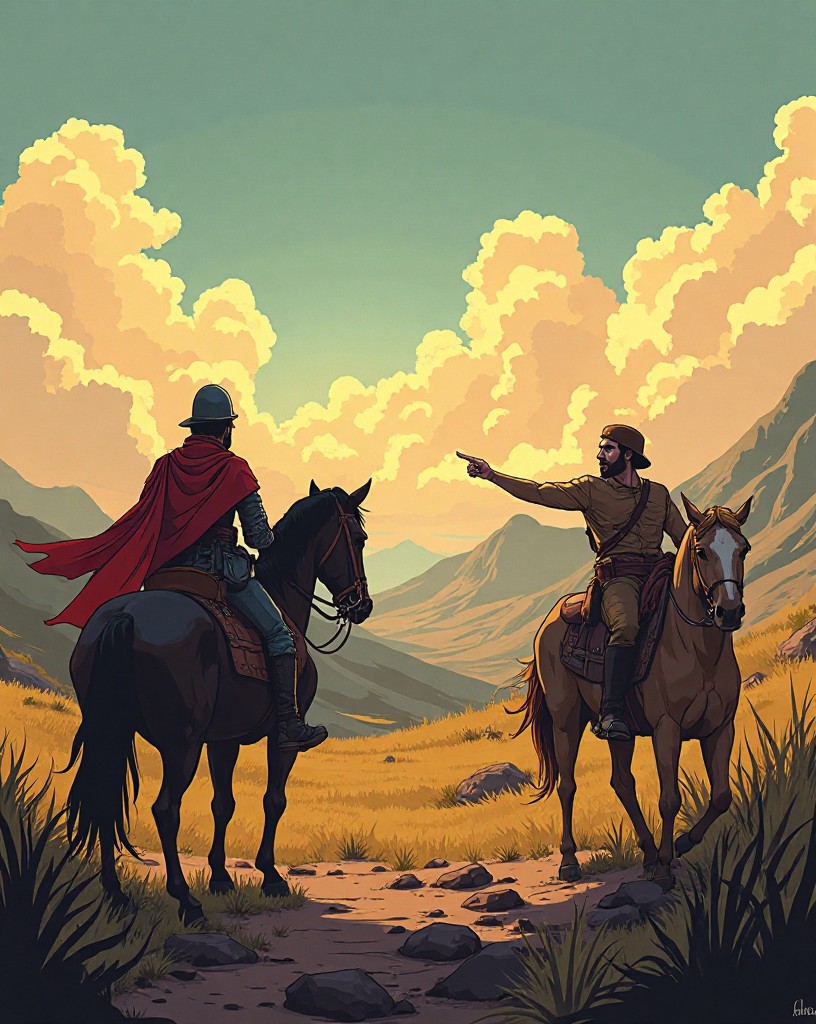
Lord Lucan
“Attack? Attack what? What guns?”

There has been a fatal misunderstanding. Instead of the captured guns on the ridge, the Light Brigade is being sent down a mile-long valley — straight at a wall of Russian cannon, with more guns on the hills to either side.
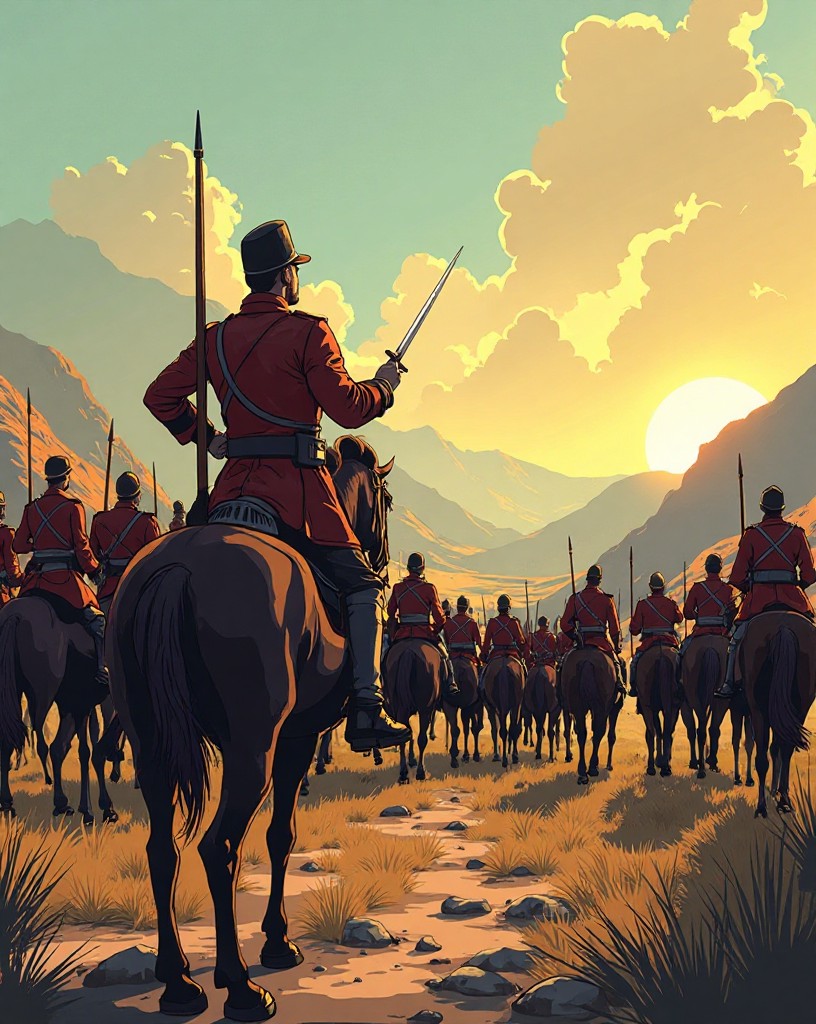
The order is madness, but it is an order. Lord Cardigan forms up his light cavalry — around six hundred horsemen — draws his sword, and leads them forward.
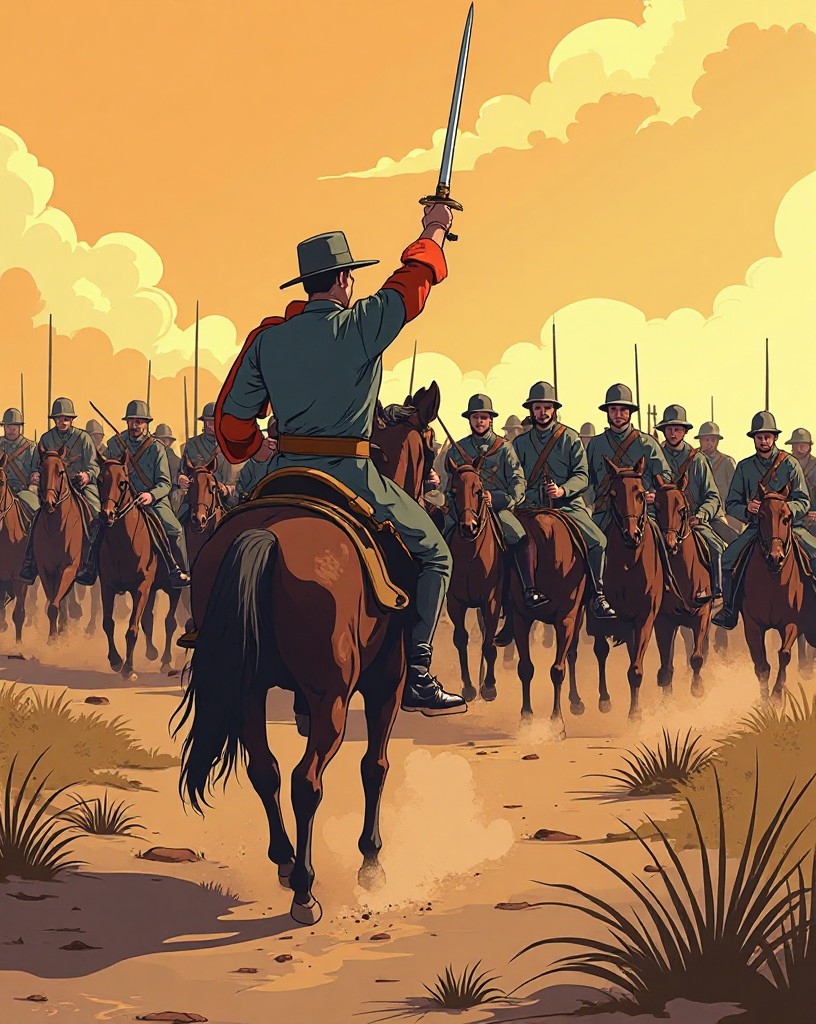
Lord Cardigan
“The Brigade will advance. Walk... trot... charge!”
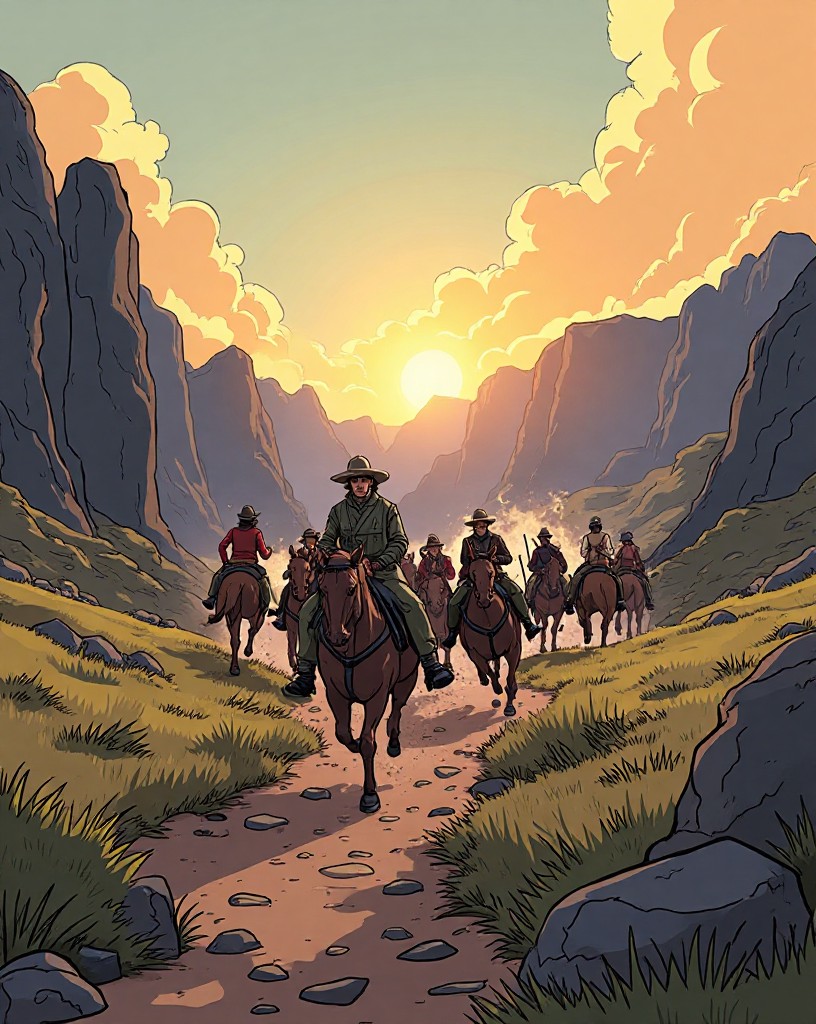
They ride into the valley at a trot, then a gallop — and the Russian guns, ahead and on both sides, open fire into them from three directions at once.
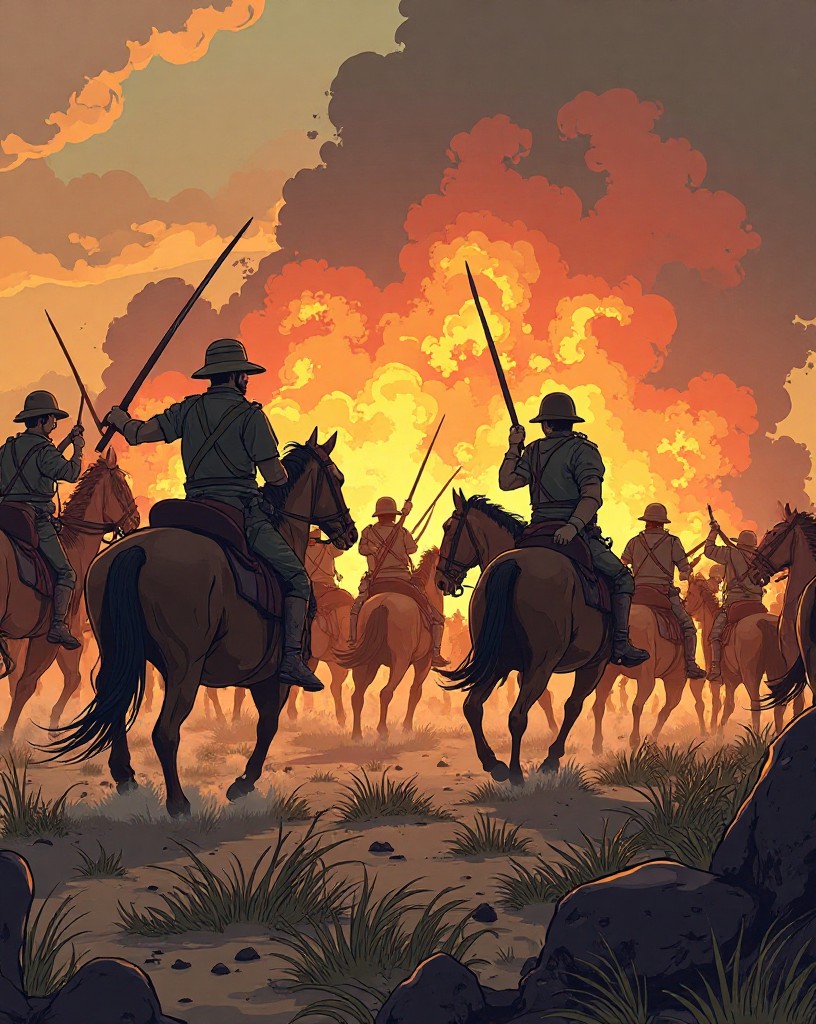
Horses and riders go down in heaps. Still the survivors ride on, into the smoke, all the way to the guns — and astonishingly, they reach them, hacking at the gunners.
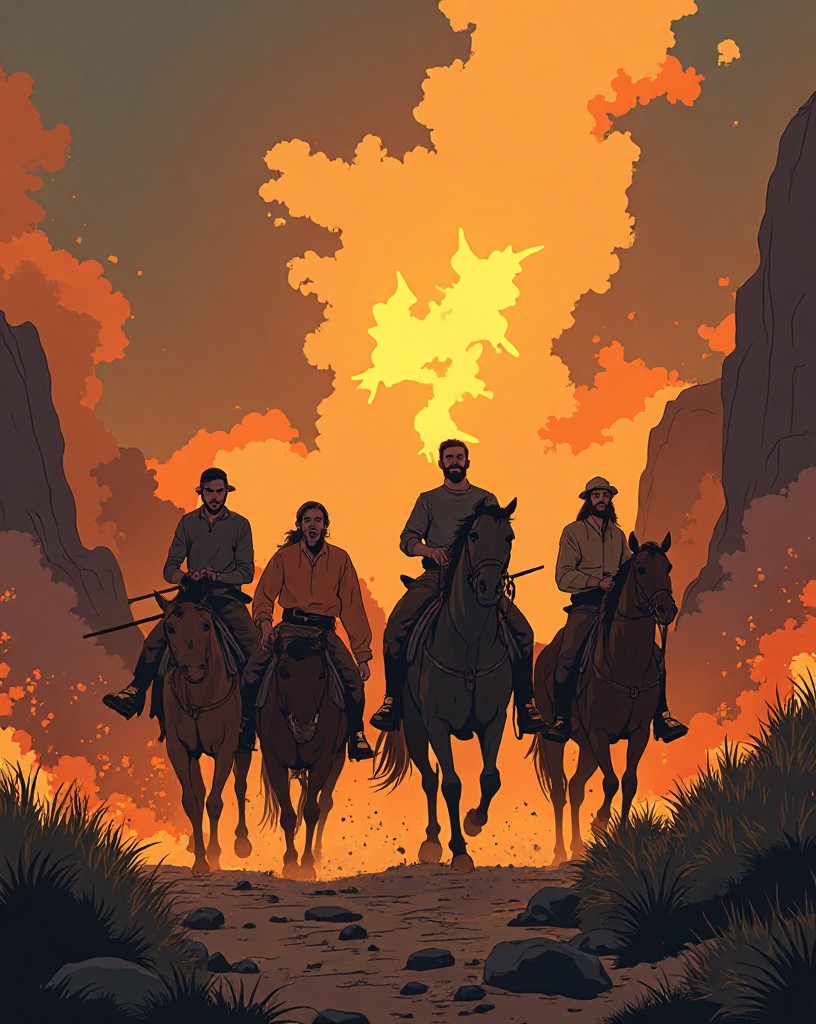
But there are too few of them to hold anything. Those still alive have to turn and ride back up the same valley, through the same crossfire, all over again.
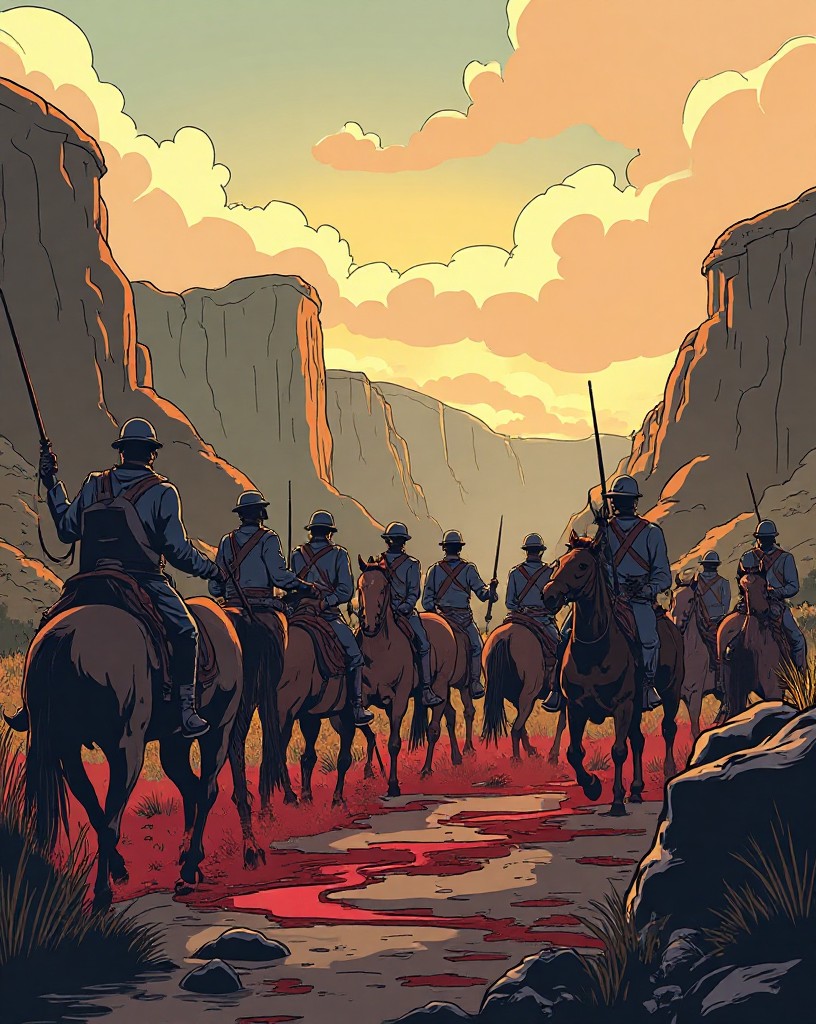
Of the roughly six hundred who charged, barely a third come back fit to fight. The brigade is wrecked — for nothing.
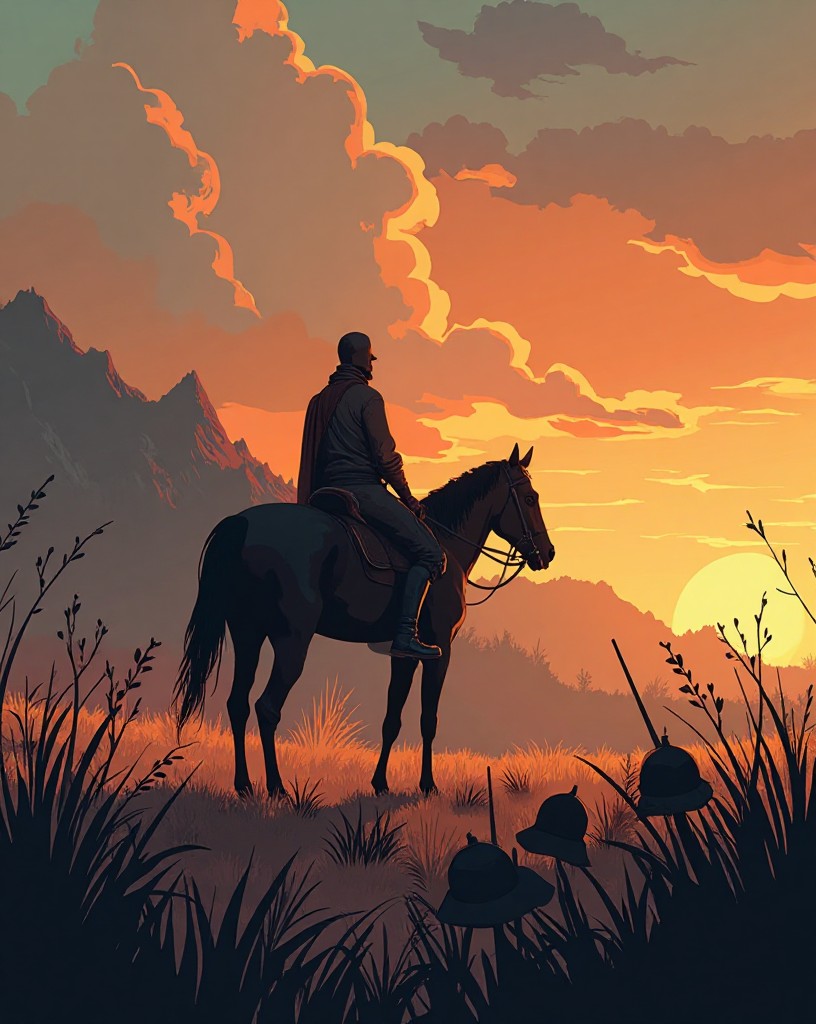
A French general who watched it said: "It is magnificent, but it is not war." The doomed, gallant charge — born of a careless order and obeyed without question — was made immortal by the poet Tennyson: "Into the valley of Death rode the six hundred."
Sources
This story was adapted from the following. The illustrations are stylized depictions, not photographs of the events.
“Charge of the Light Brigade”, Wikipedia
Overview, the confused order, and the charge.
The Reason Why, Cecil Woodham-Smith (1953)
Classic account of the blunder behind the charge.
That’s the story.
More are in the studio. Head back to the collection to see what’s coming.