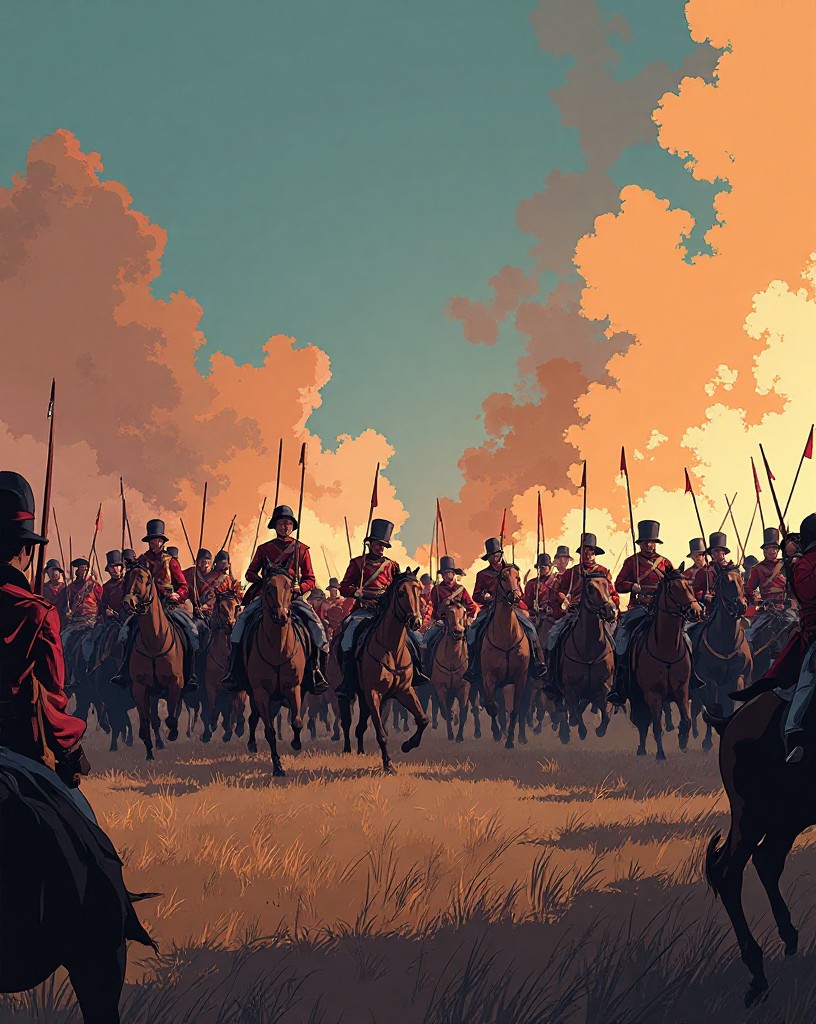
The Last Gamble
One long day in a Belgian field that ended an emperor.
Waterloo · 1815
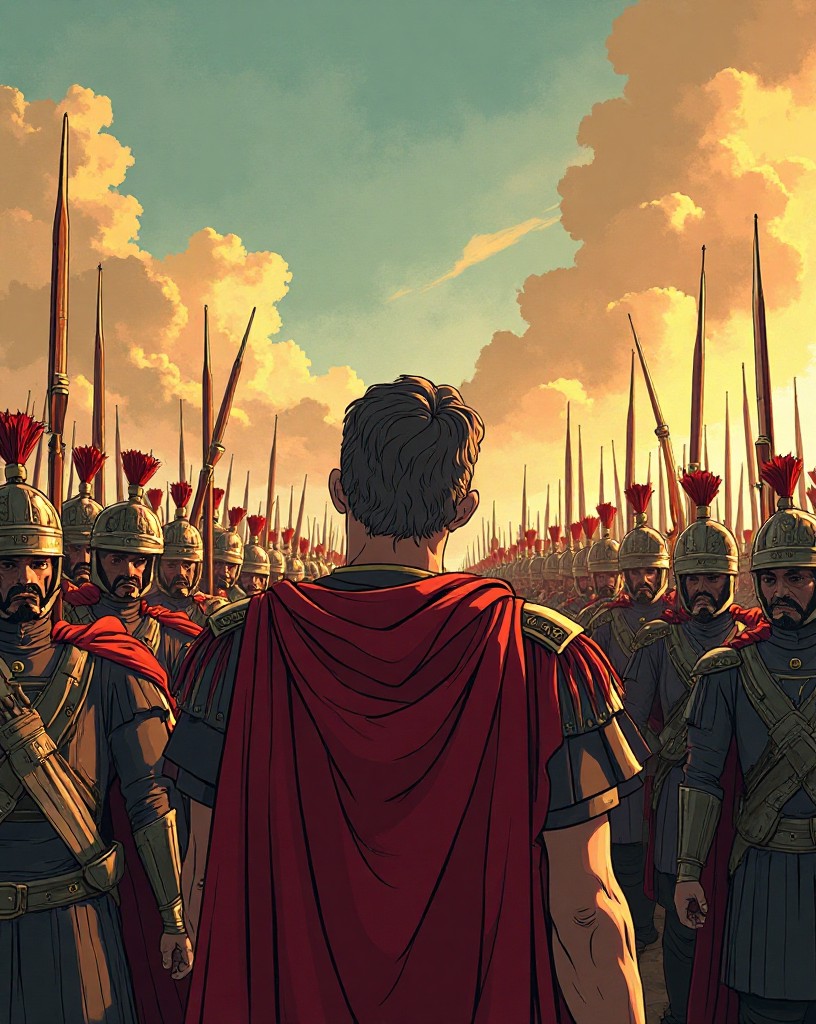
June 1815. Napoleon Bonaparte — once master of Europe, then exiled — has escaped, returned to France, and raised a new army. The nations of Europe unite one last time to bring him down.
He moves fast, as always, to smash his enemies before they can join. Near a Belgian village called Waterloo, he meets a British-led allied army under the Duke of Wellington.
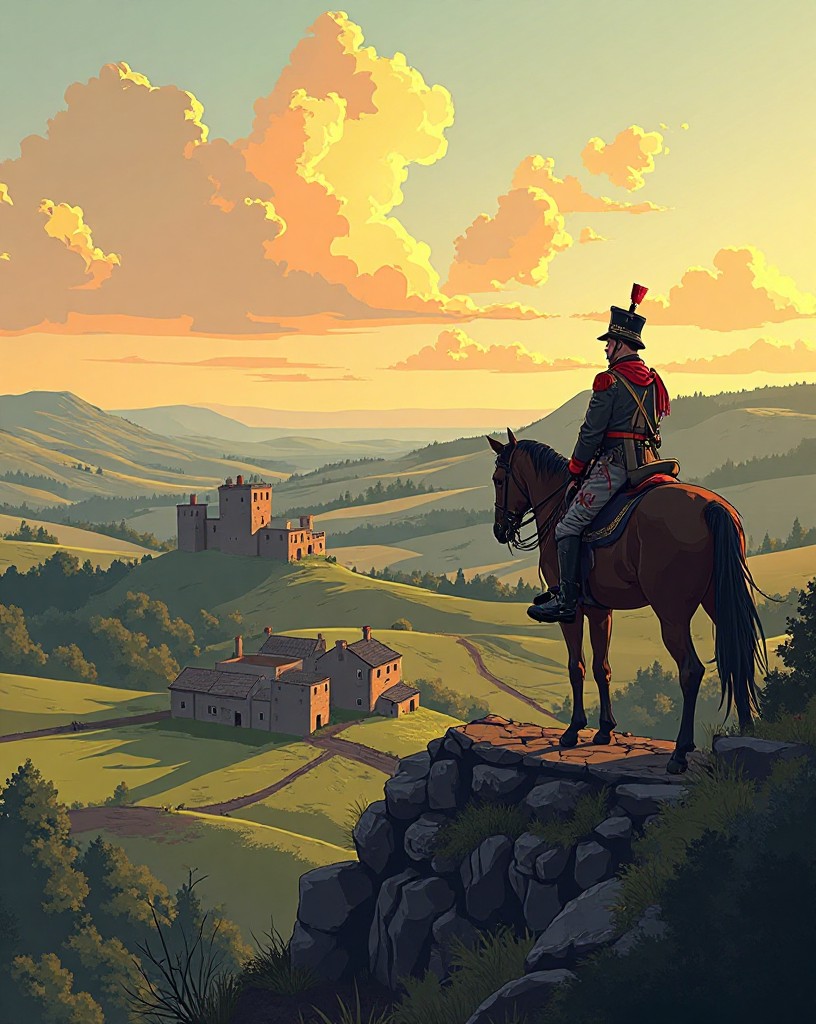
Wellington, a master of defense, sets his men on a low ridge, many hidden behind its crest, and anchors his line on a pair of stout farmhouses. Then he waits — for the Prussians under old Marshal Blücher are marching to join him.
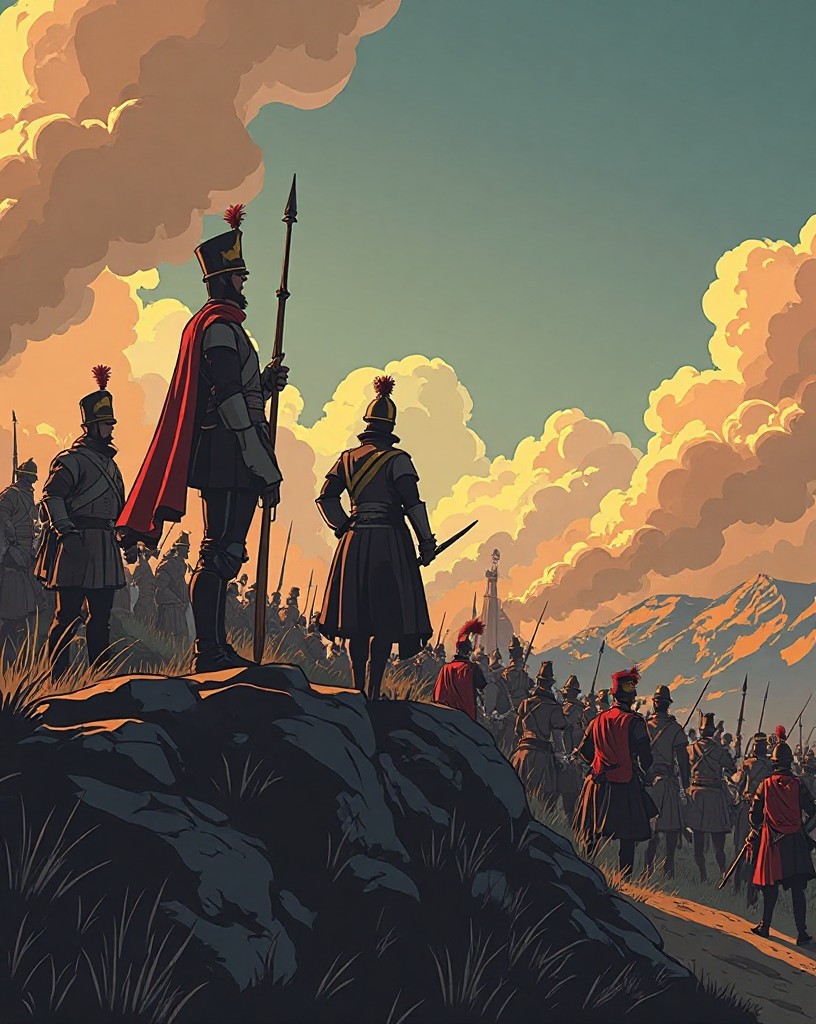
Duke of Wellington
“Hard pounding this, gentlemen. Let us see who can pound the longest. Hold the line — the Prussians are coming.”
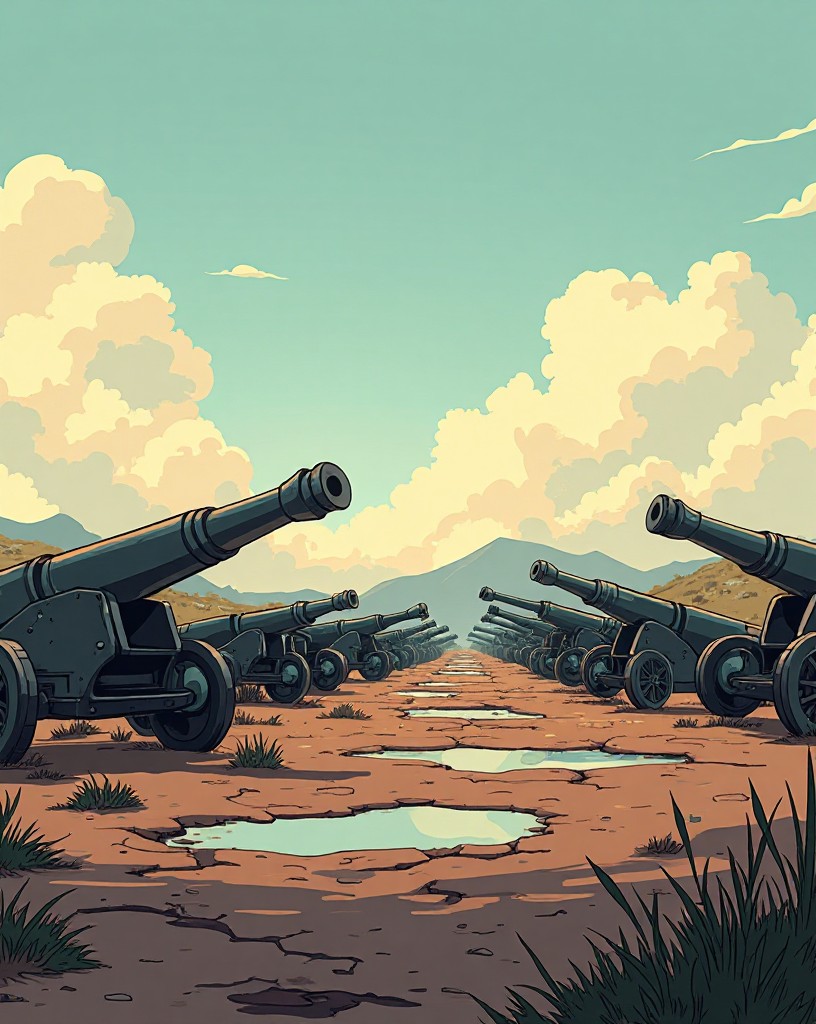
Heavy rain has soaked the ground, so Napoleon waits for it to dry before unleashing his guns — a delay that will cost him dearly.
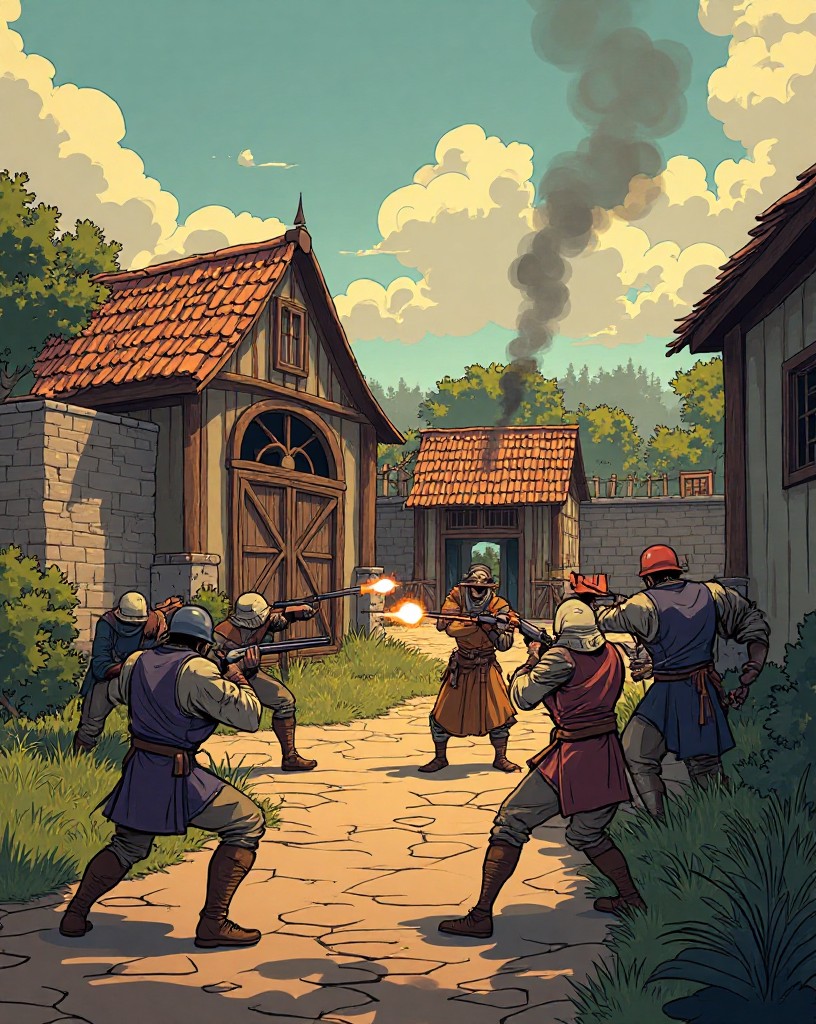
All day the French hurl themselves at the ridge and the farmhouses. At Hougoumont, a few defenders hold a walled garden against assault after assault.
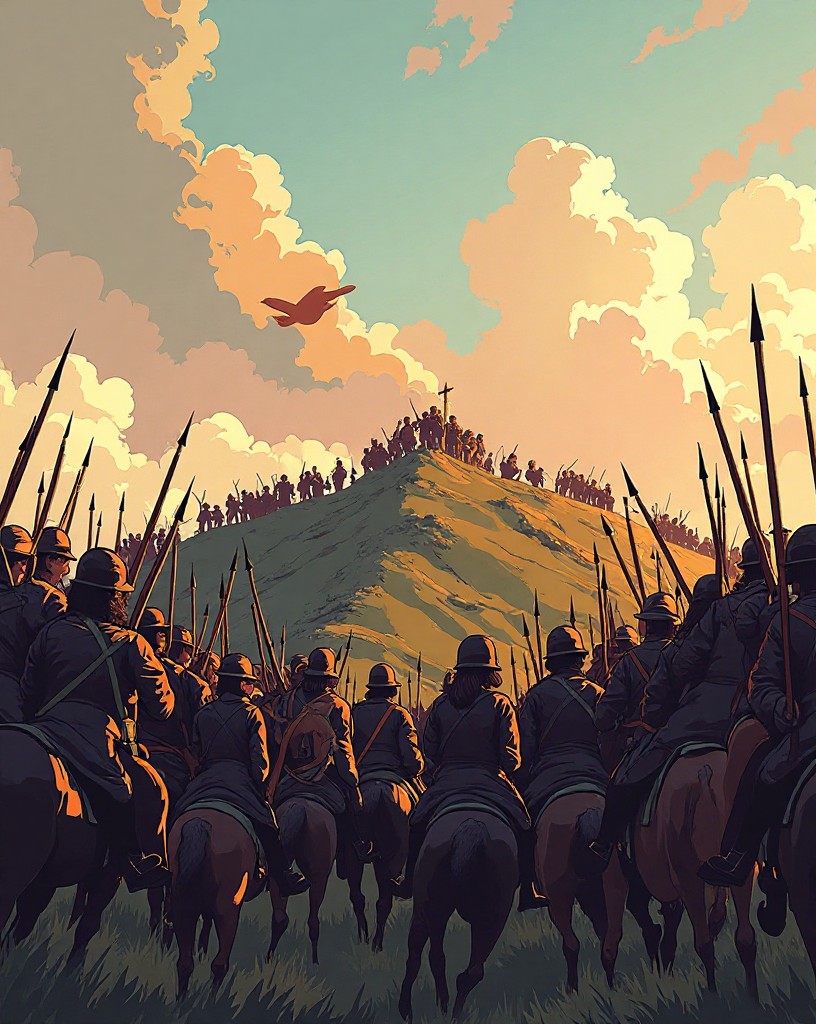
Massed French cavalry — thousands of horsemen — thunder up the slope. The British infantry form hollow squares, hedges of bayonets, and the horses break against them again and again.
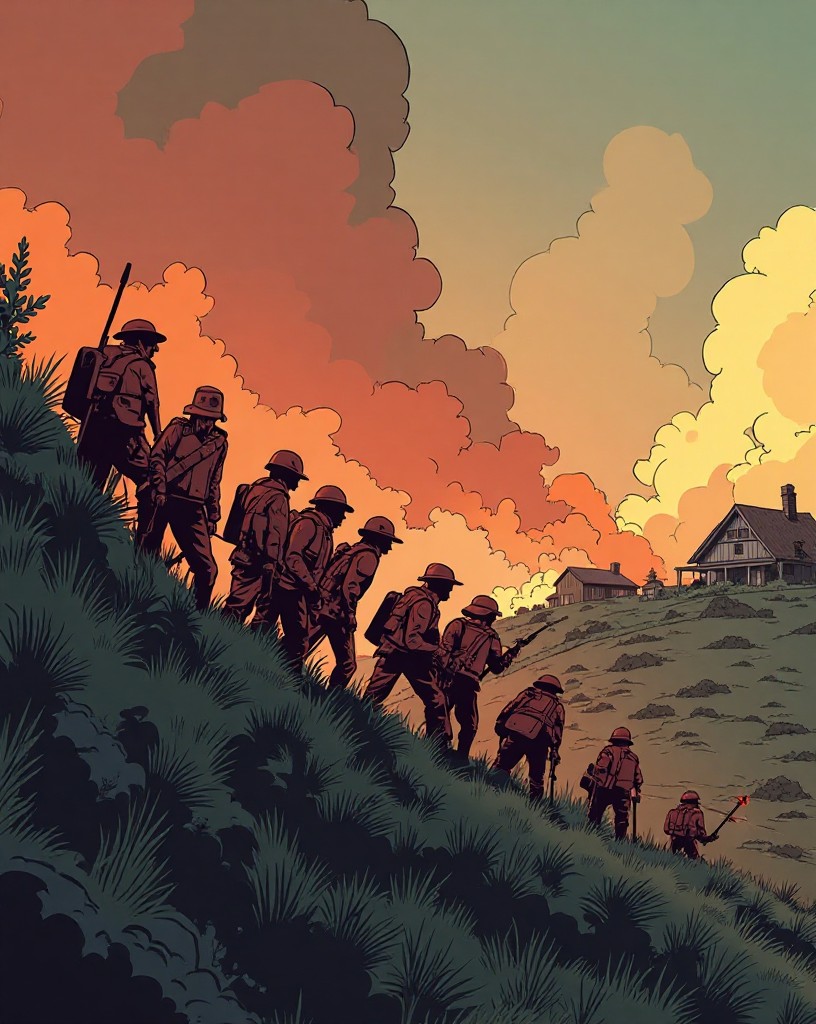
The battle hangs by a thread. The strongpoint of La Haye Sainte falls, and Wellington's center is battered and thinning. One more hard push might break it.
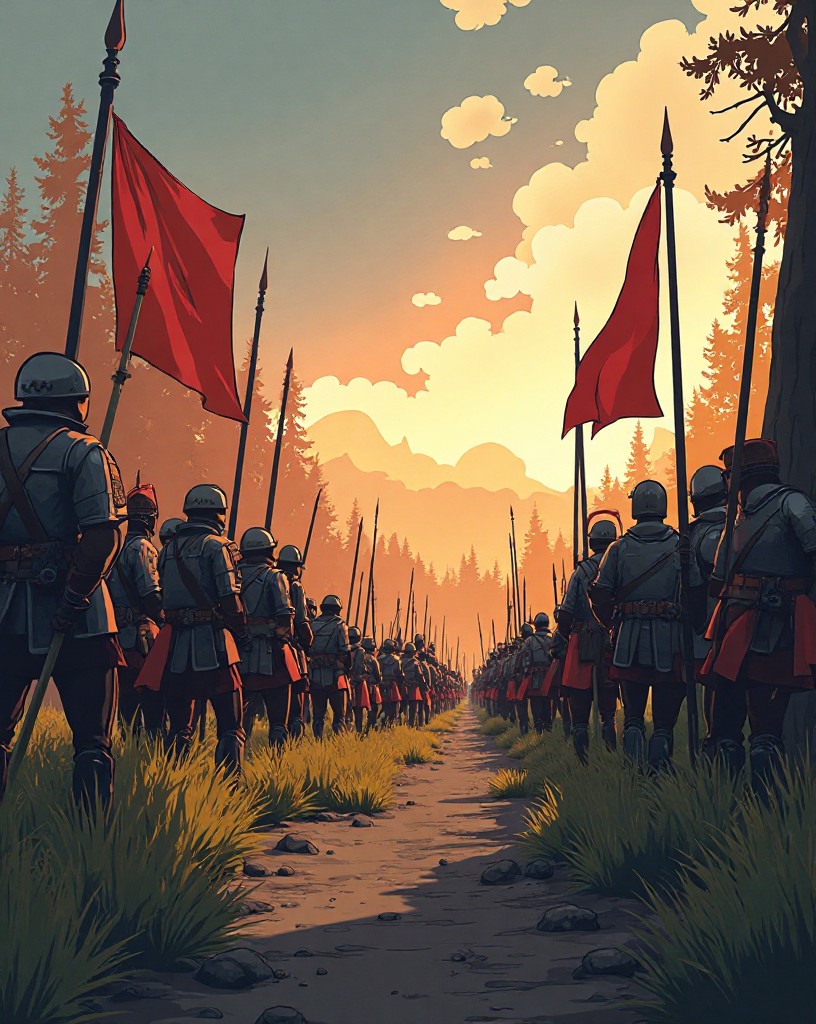
But now, on the French right, dark columns appear out of the woods: Blücher's Prussians, arriving at last, slamming into Napoleon's flank.

With his army now fighting on two fronts, Napoleon plays his last card — the Imperial Guard, the veterans who had never been beaten, sent straight up the center.
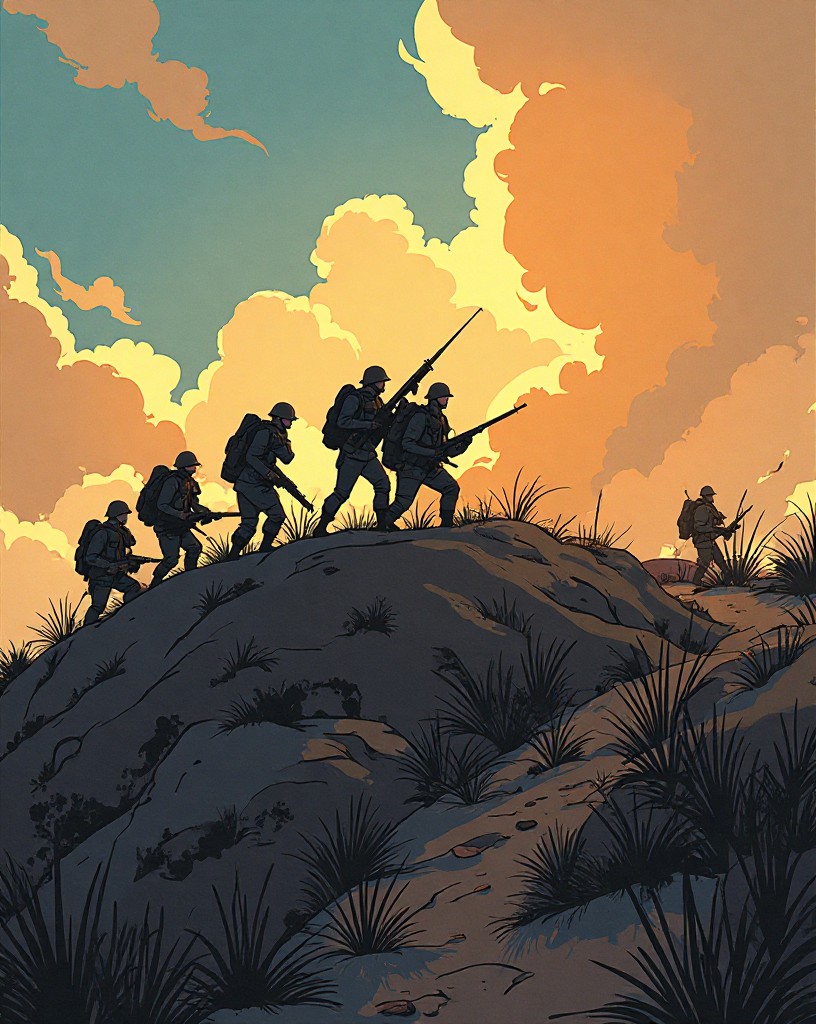
The British line rises from behind the crest and pours fire into them at close range. The unthinkable happens: the Old Guard falters, then breaks. The cry goes up — "The Guard recoils!" — and the French army dissolves.
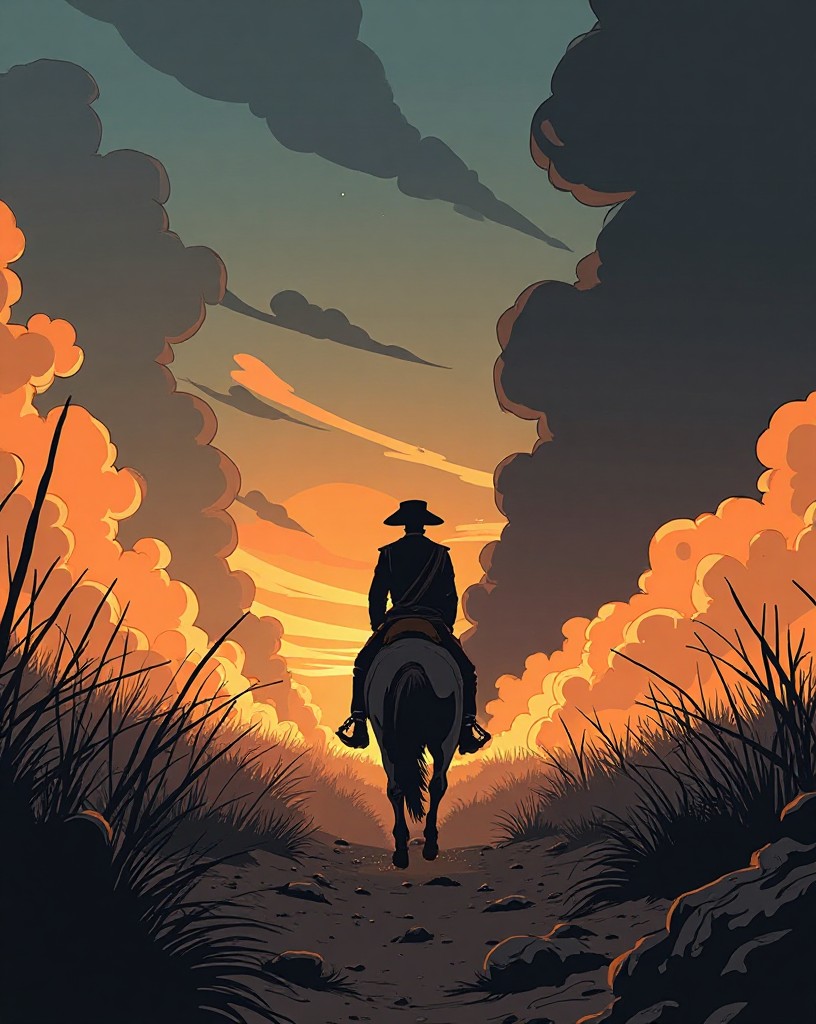
It was the end. Napoleon abdicated days later and was exiled to a remote island in the South Atlantic, never to return. Waterloo closed the book on twenty years of war — and gave a quiet Belgian field a name that means "final defeat" to this day.
Sources
This story was adapted from the following. The illustrations are stylized depictions, not photographs of the events.
“Battle of Waterloo”, Wikipedia
Overview, the farmhouses, the cavalry charges, and the Prussian arrival.
Waterloo: The History of Four Days, Three Armies, and Three Battles, Bernard Cornwell (2014)
Narrative history of the campaign.
That’s the story.
More are in the studio. Head back to the collection to see what’s coming.