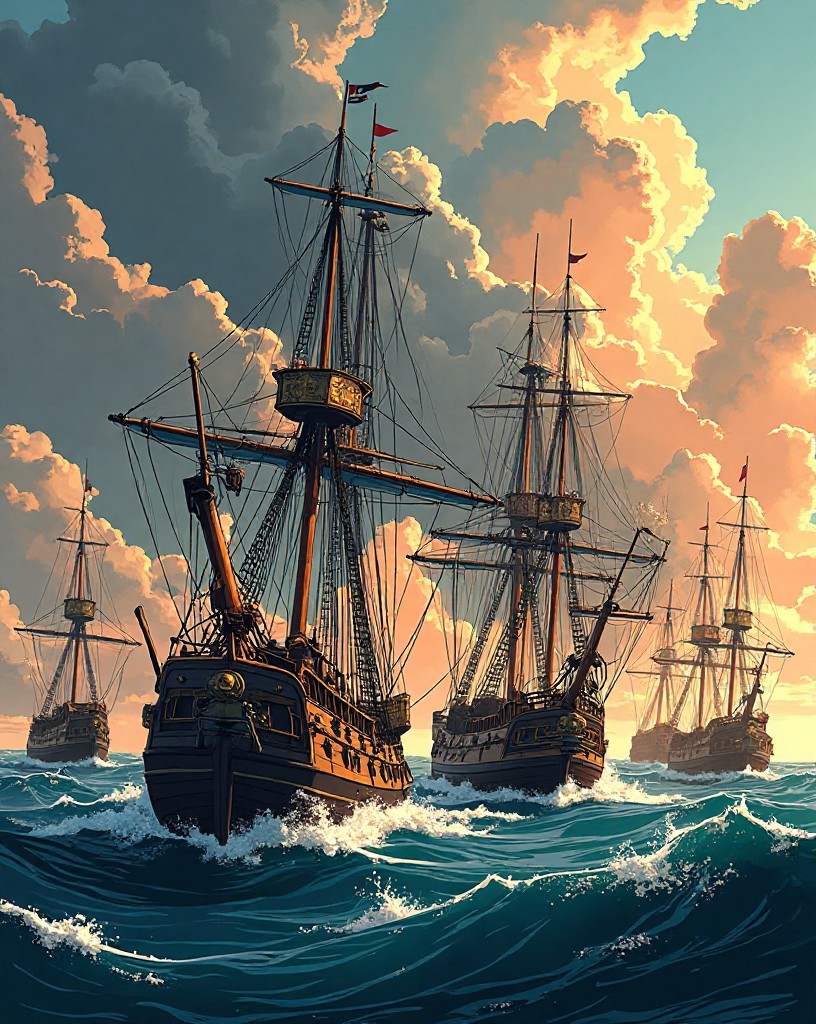
Trafalgar
England expects — and Nelson's last, greatest victory.
Cape Trafalgar · 1805
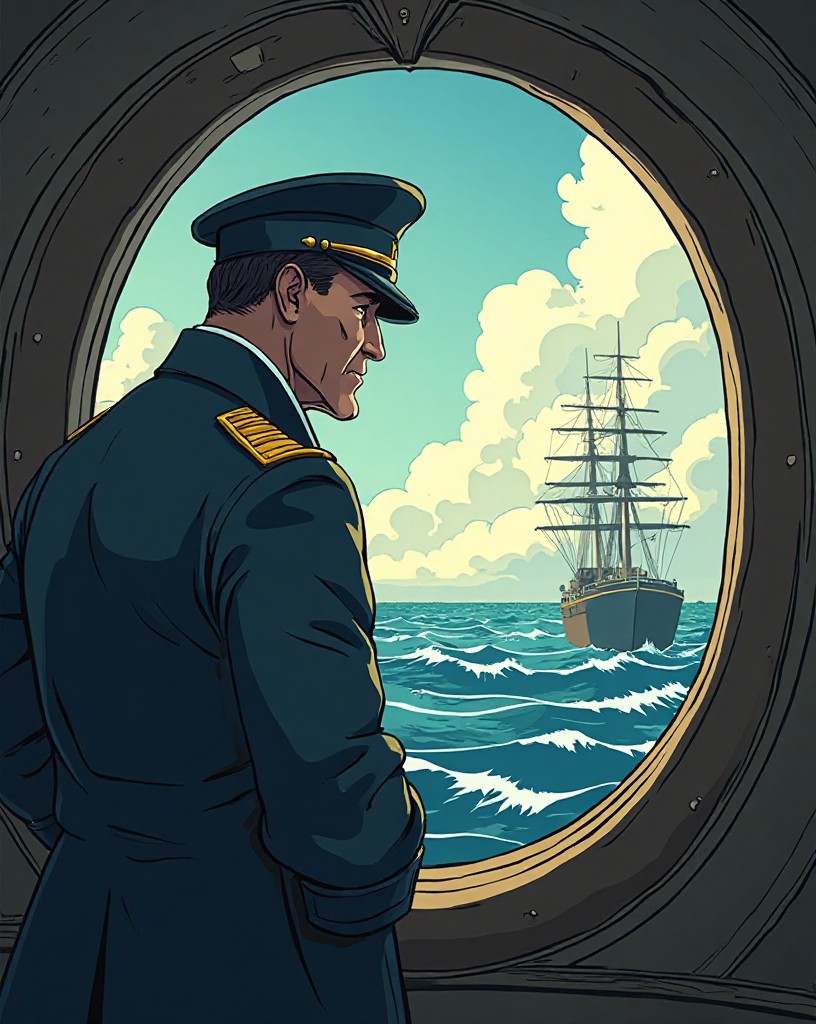
1805. Napoleon dominates Europe and dreams of invading Britain — but between his army and England lies the Royal Navy. To clear the way, a combined fleet of France and Spain must defeat the British at sea. The man sent to stop them is Britain's greatest admiral: Horatio Nelson.
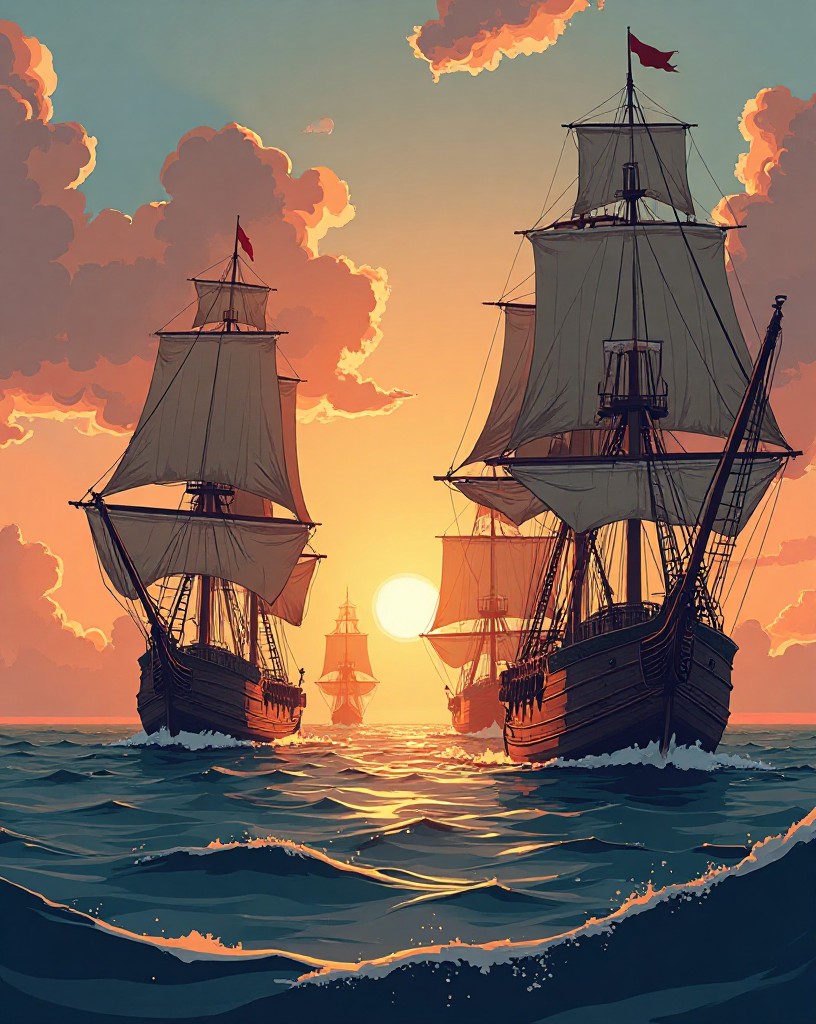
Off the coast of Spain, near Cape Trafalgar, the two great fleets sight each other — thirty-three enemy ships against Nelson's twenty-seven.
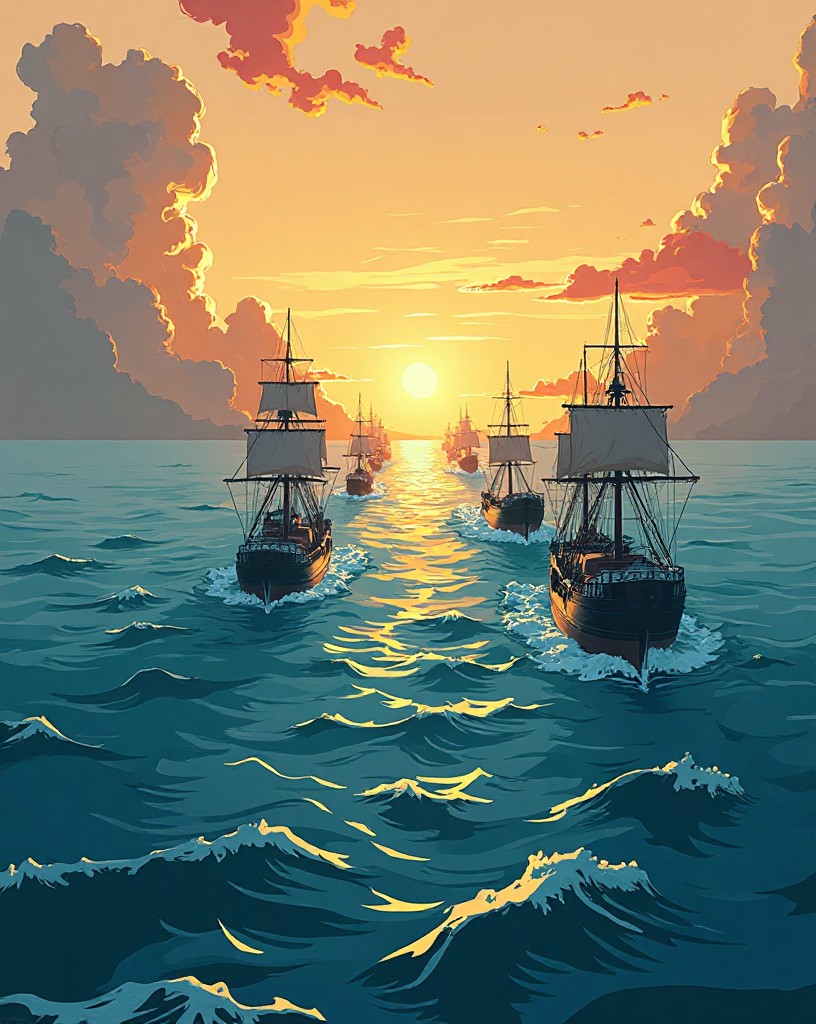
For centuries, fleets fought in long parallel lines, trading broadsides. Nelson plans something reckless and brilliant: to drive his fleet straight at the enemy line in two columns, punching through it and breaking it apart.
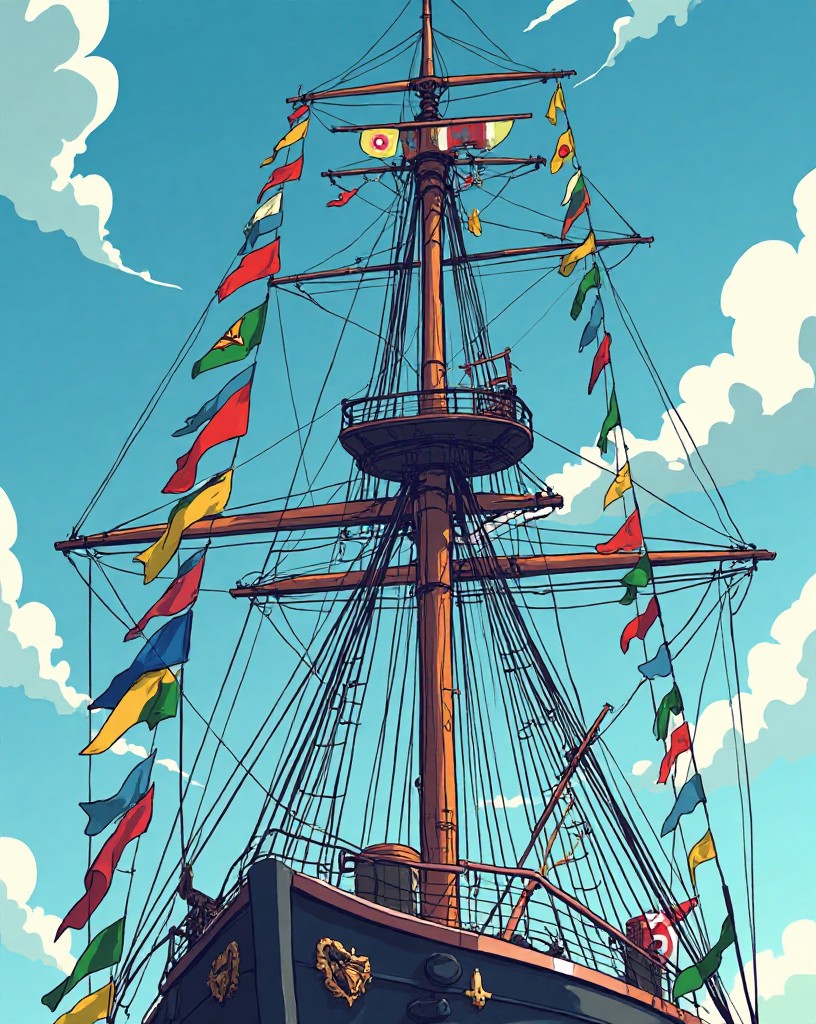
Before the battle, Nelson sends a signal up the masts of his flagship, HMS Victory, to be read by every ship in the fleet.
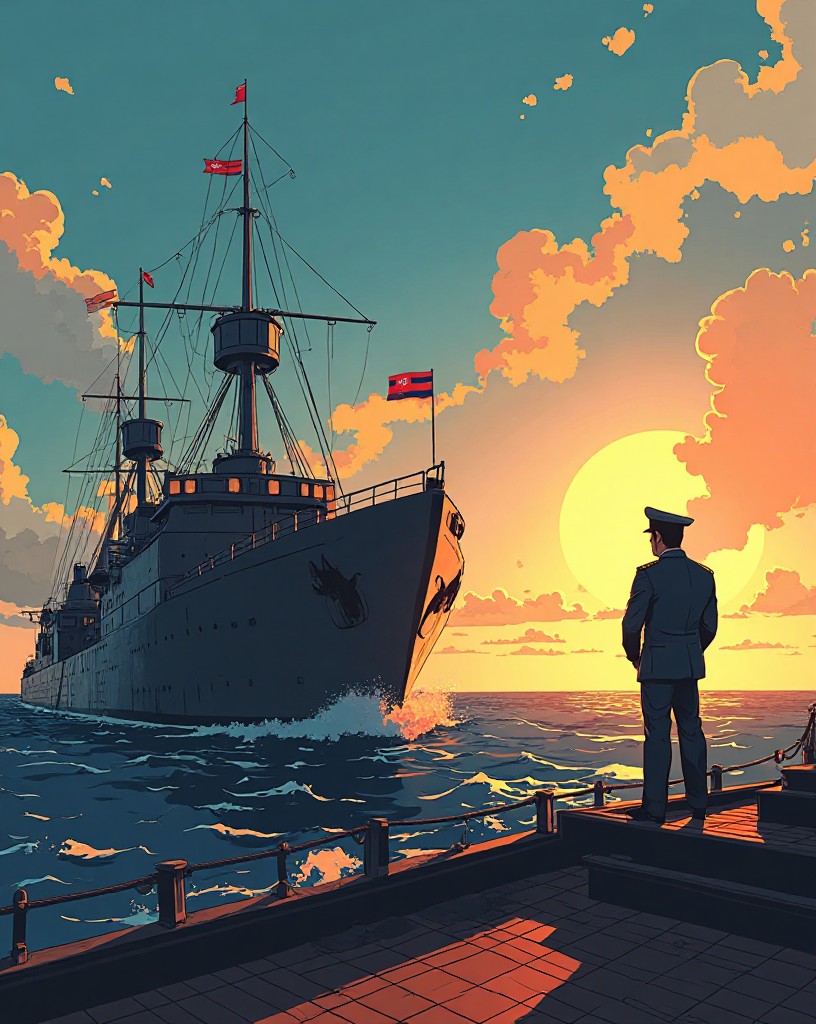
Lord Nelson
“England expects that every man will do his duty.”
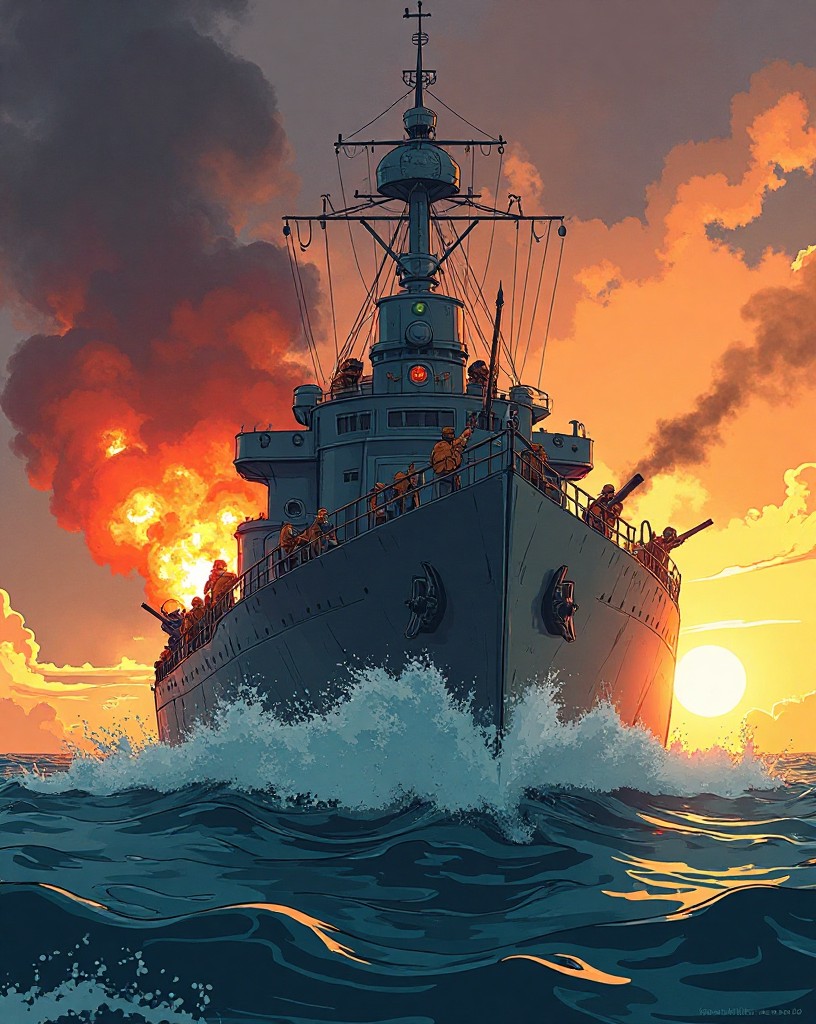
The two British columns sail slowly toward the enemy, taking fire for long minutes before they can reply, the men holding their nerve as cannonballs tear through the decks.
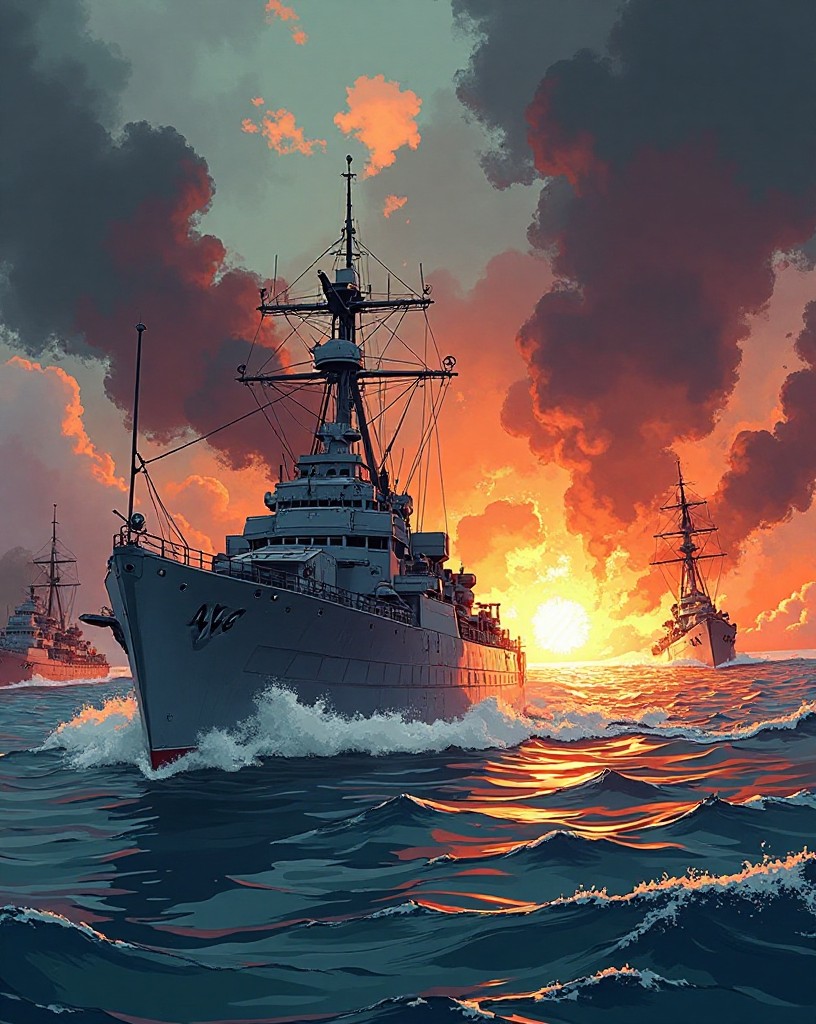
Then they pierce the line. The British pour devastating fire down the length of the enemy ships as they break through, and the orderly battle dissolves into a storm of close, ship-to-ship combat.
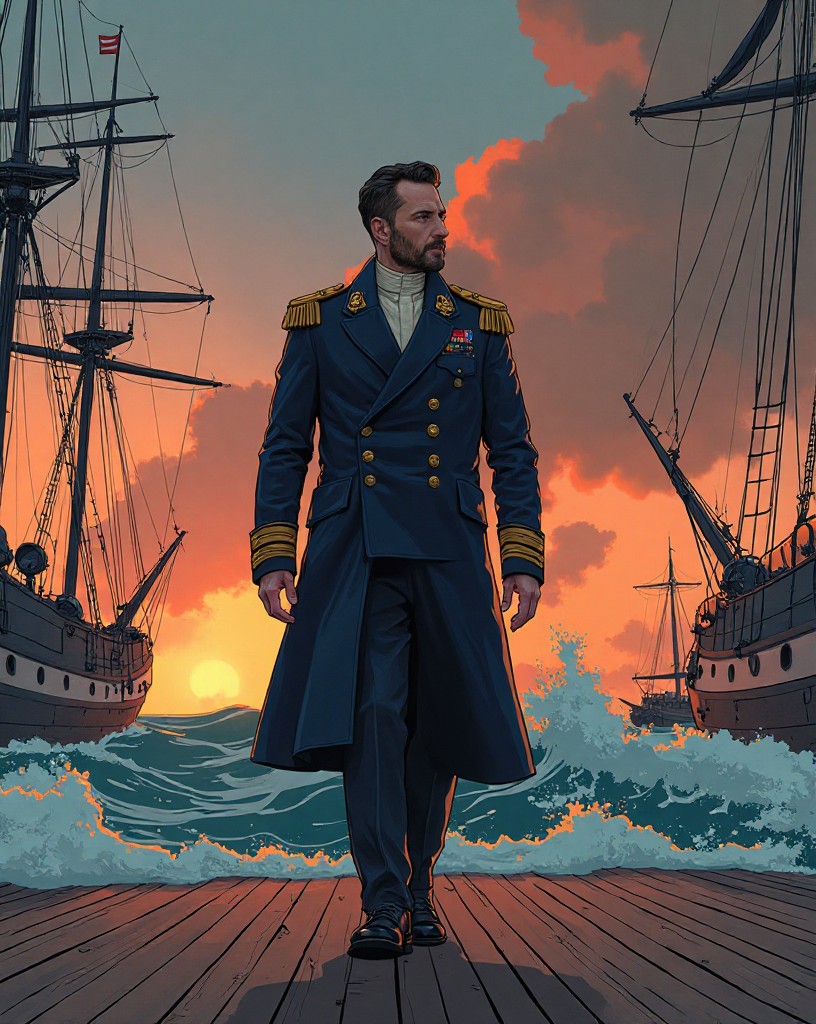
In the chaos, Nelson paces the deck of the Victory in his admiral's coat, glittering with medals — a clear target.
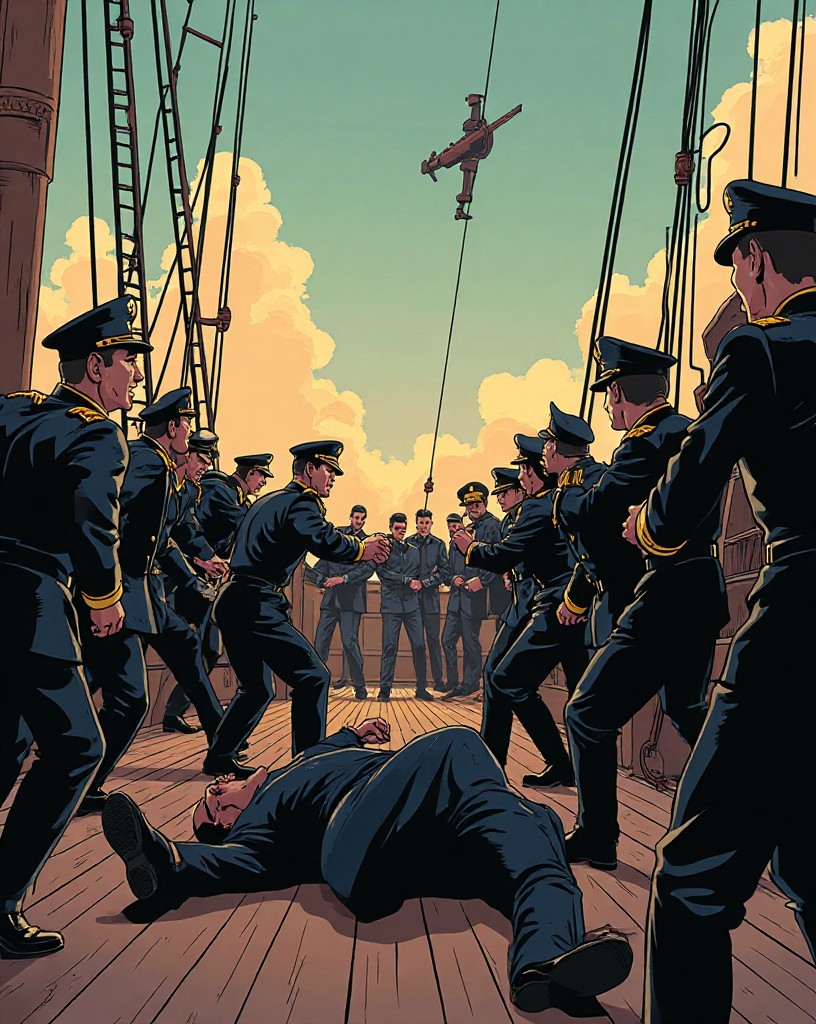
A French sniper in the rigging of a nearby ship takes aim and fires. Nelson falls, mortally wounded, and is carried below decks as the battle rages on above him.
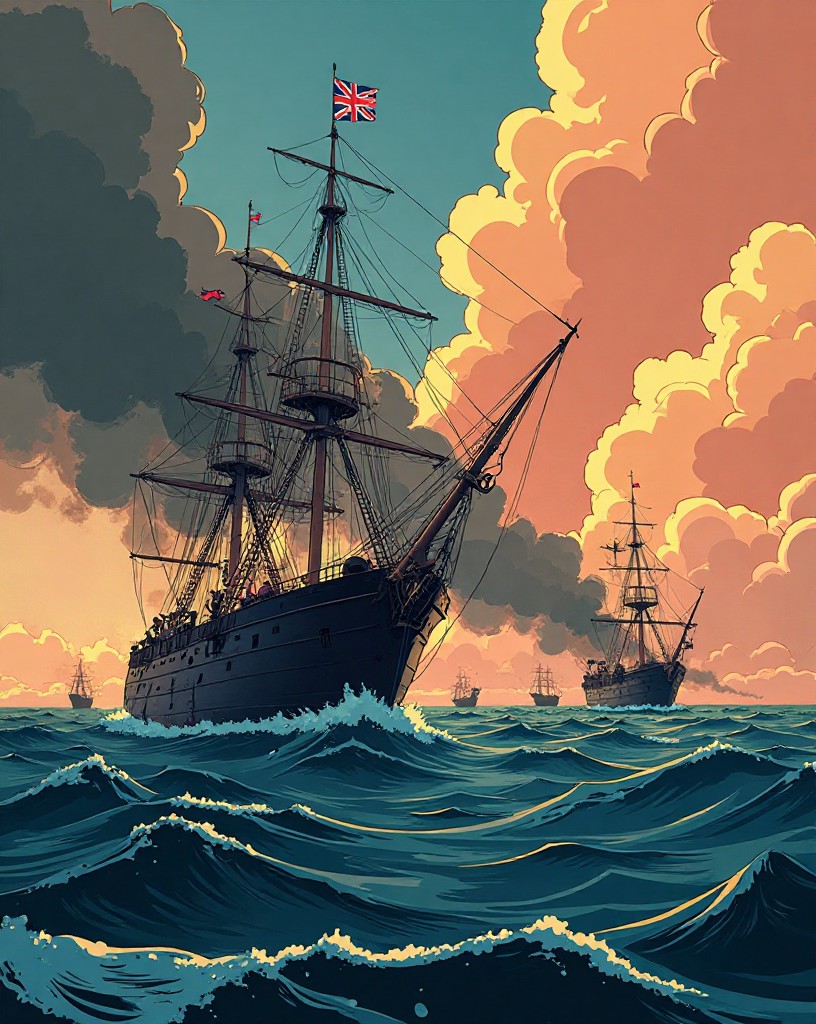
The British win an overwhelming victory — capturing or destroying around twenty enemy ships without losing a single one of their own. The combined fleet is shattered.
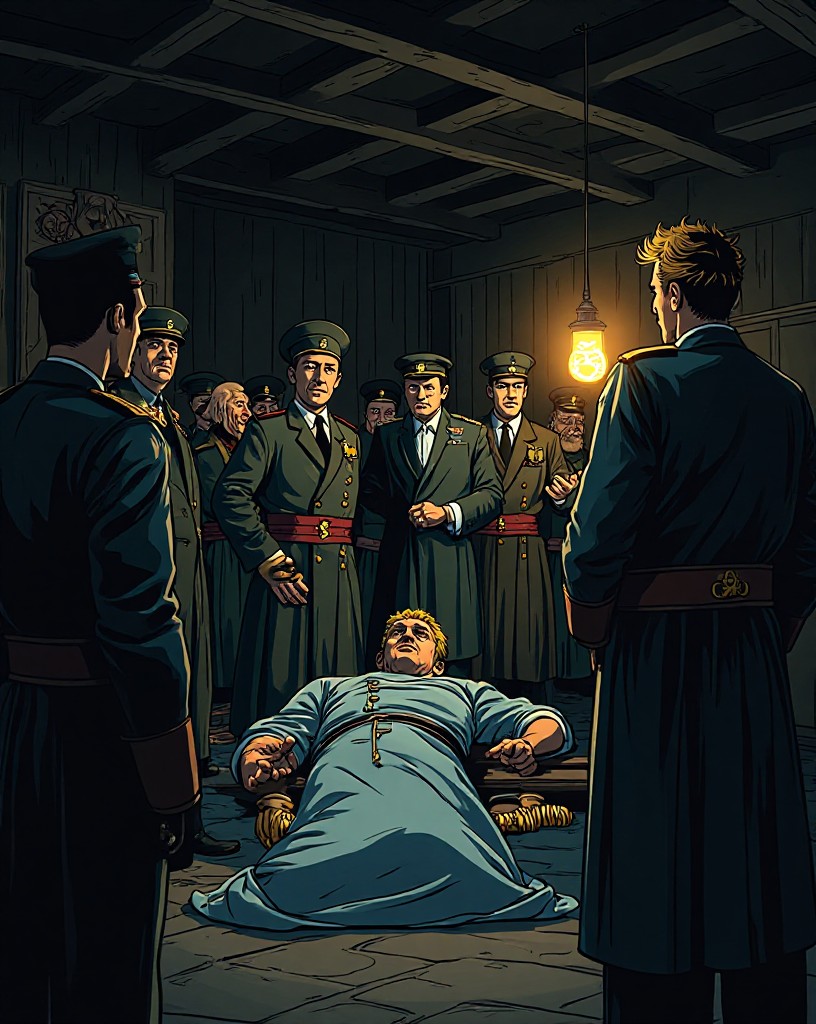
Below decks, Nelson lives just long enough to learn the battle is won. His reported last words: "Thank God I have done my duty."
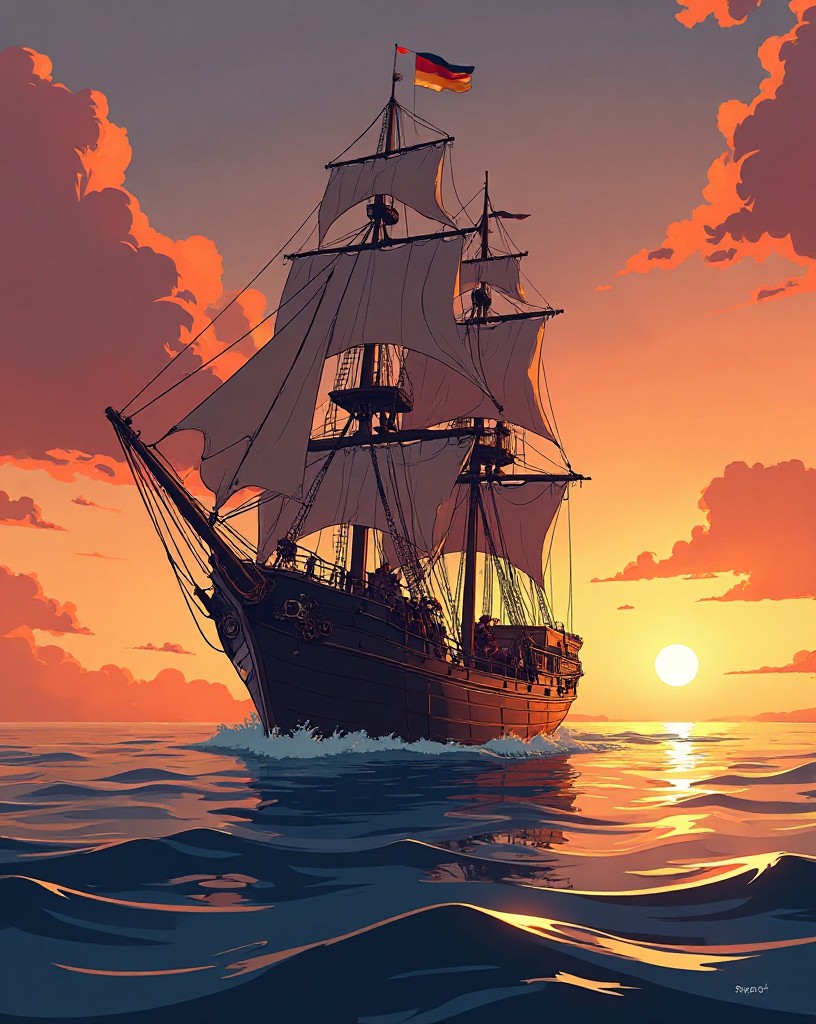
Trafalgar ended Napoleon's hopes of invading Britain and gave the Royal Navy command of the seas for a hundred years. Nelson died in his greatest victory — and became the most celebrated hero in British history.
Sources
This story was adapted from the following. The illustrations are stylized depictions, not photographs of the events.
“Battle of Trafalgar”, Wikipedia
Overview, Nelson's tactics, the signal, and his death.
Seize the Fire: Heroism, Duty, and the Battle of Trafalgar, Adam Nicolson (2005)
Narrative history of the battle.
That’s the story.
More are in the studio. Head back to the collection to see what’s coming.