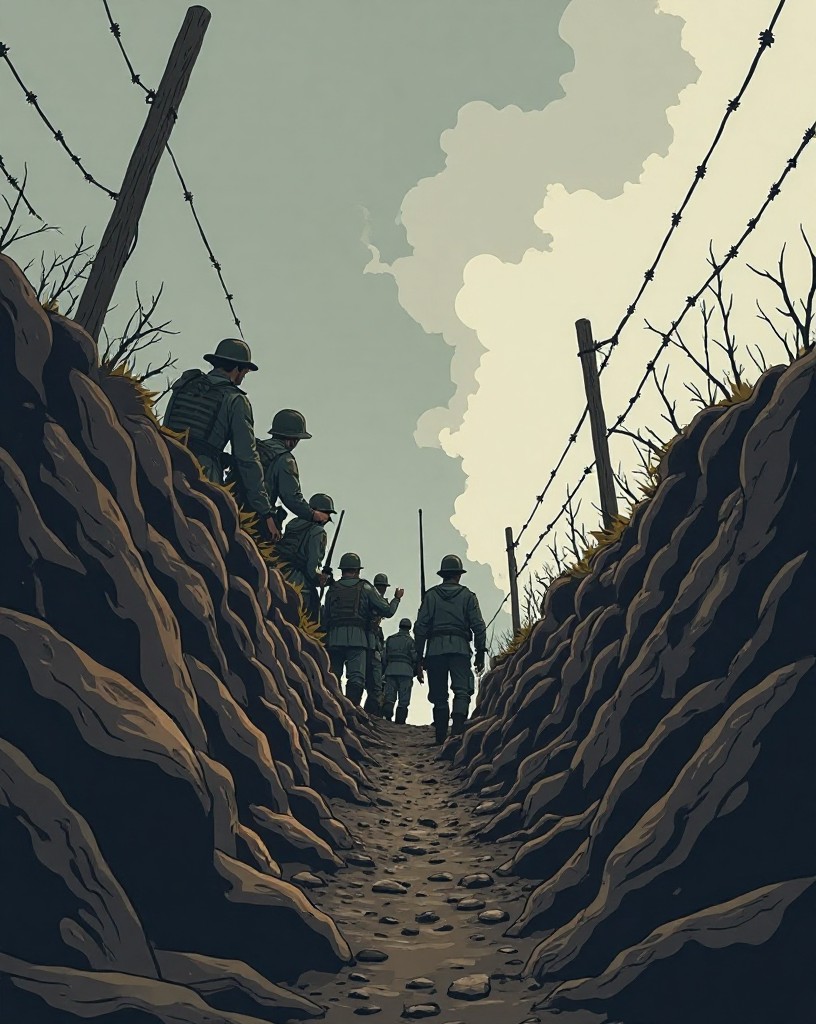
The Somme
The bloodiest day in British history, and the months that followed.
Western Front · 1916
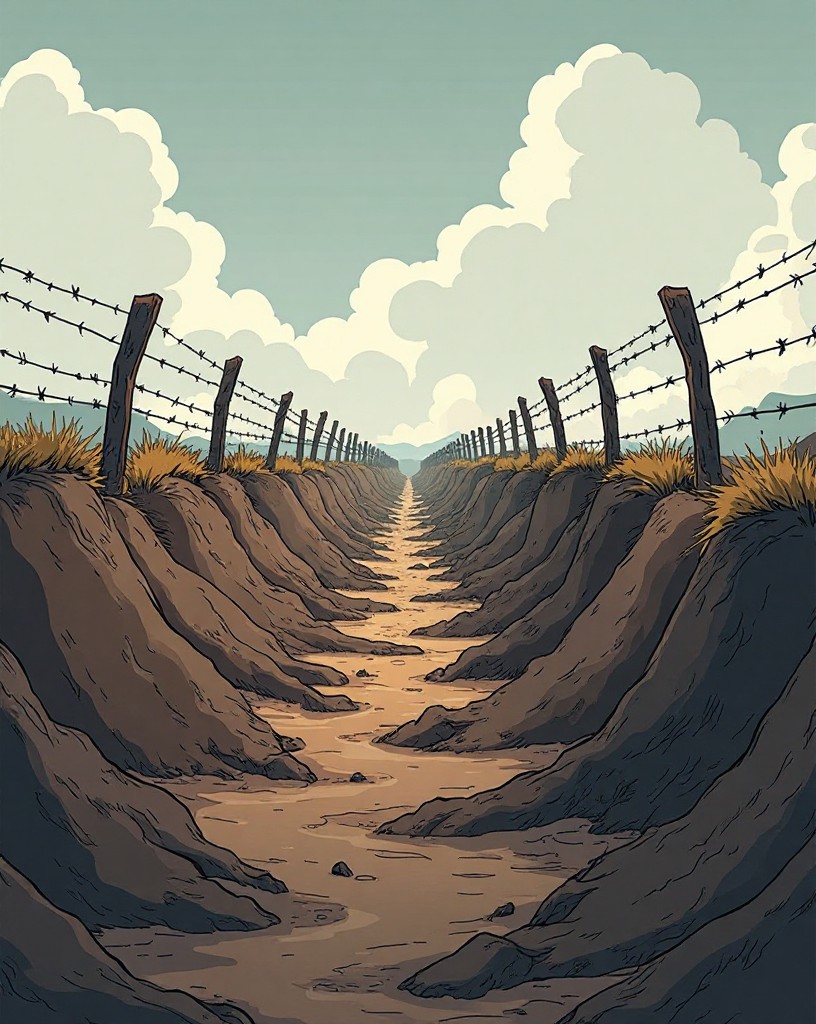
1916. On the Western Front of the First World War, two vast armies have been locked in trenches for nearly two years, the front frozen in mud and barbed wire. To break the deadlock, the British plan a massive blow along a river called the Somme.
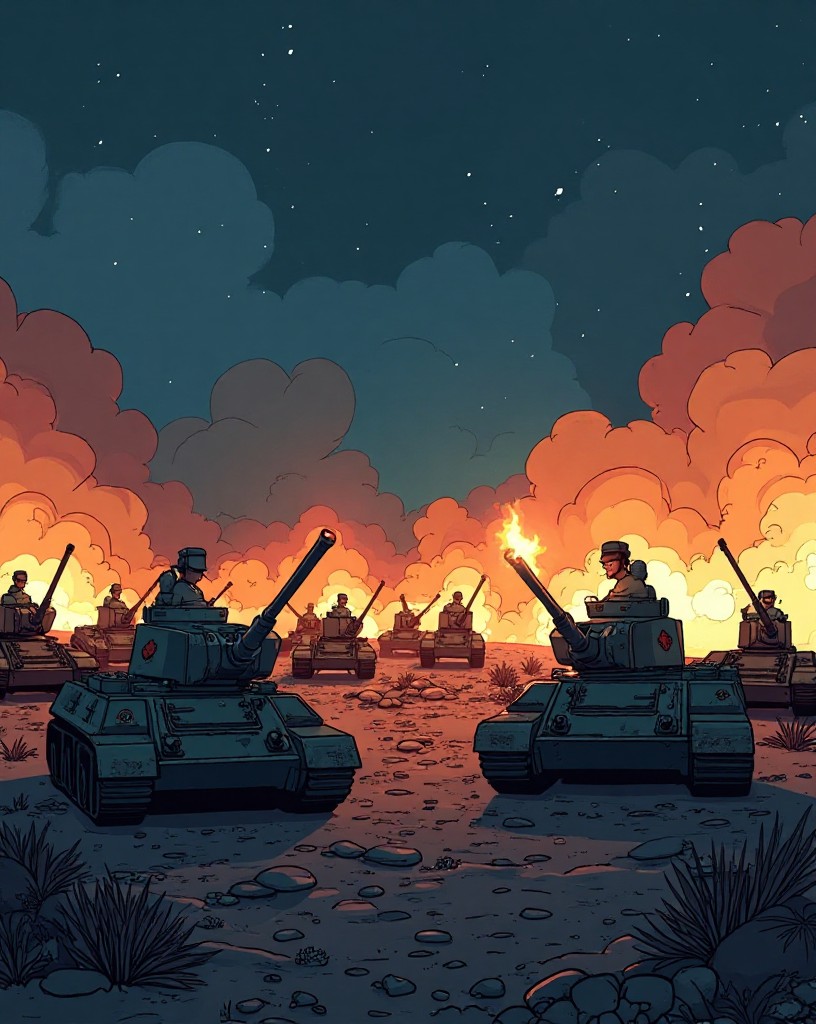
For a week, nearly two thousand guns pour a million and a half shells onto the German lines. The roar is heard across the Channel in England. Surely, the generals believe, nothing could survive it.
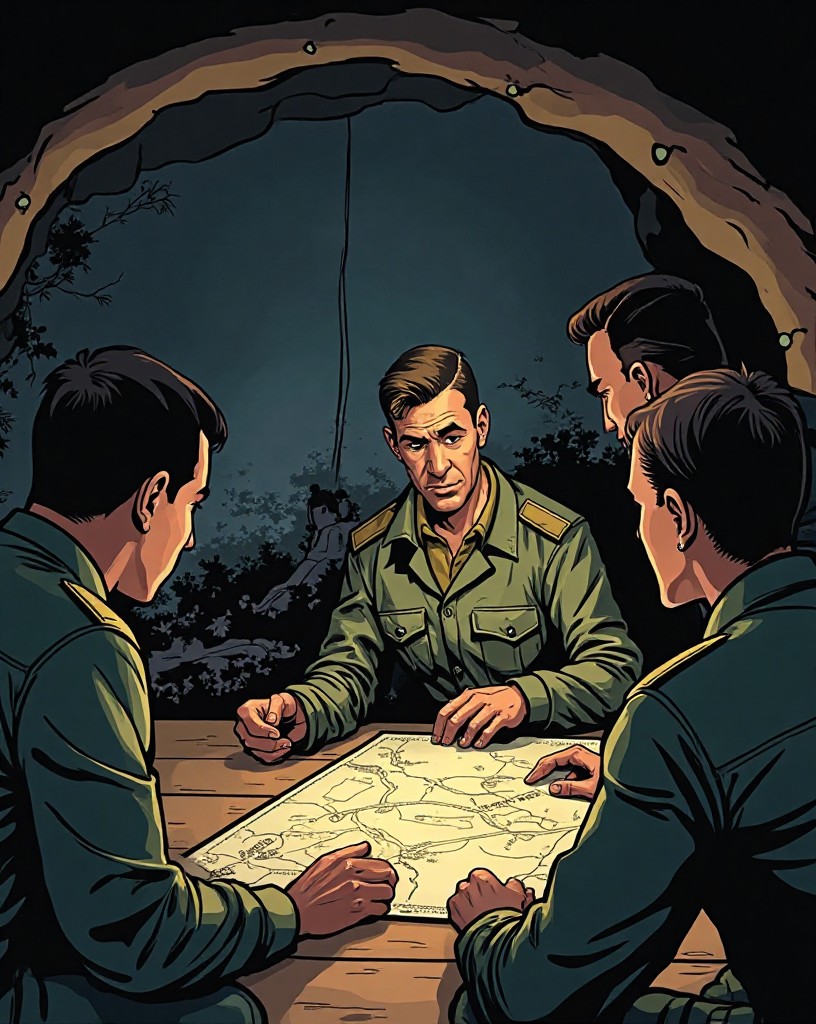
A British general
“The wire will be cut, the trenches destroyed. You will walk across and take their line. There will be nothing left alive to stop you.”
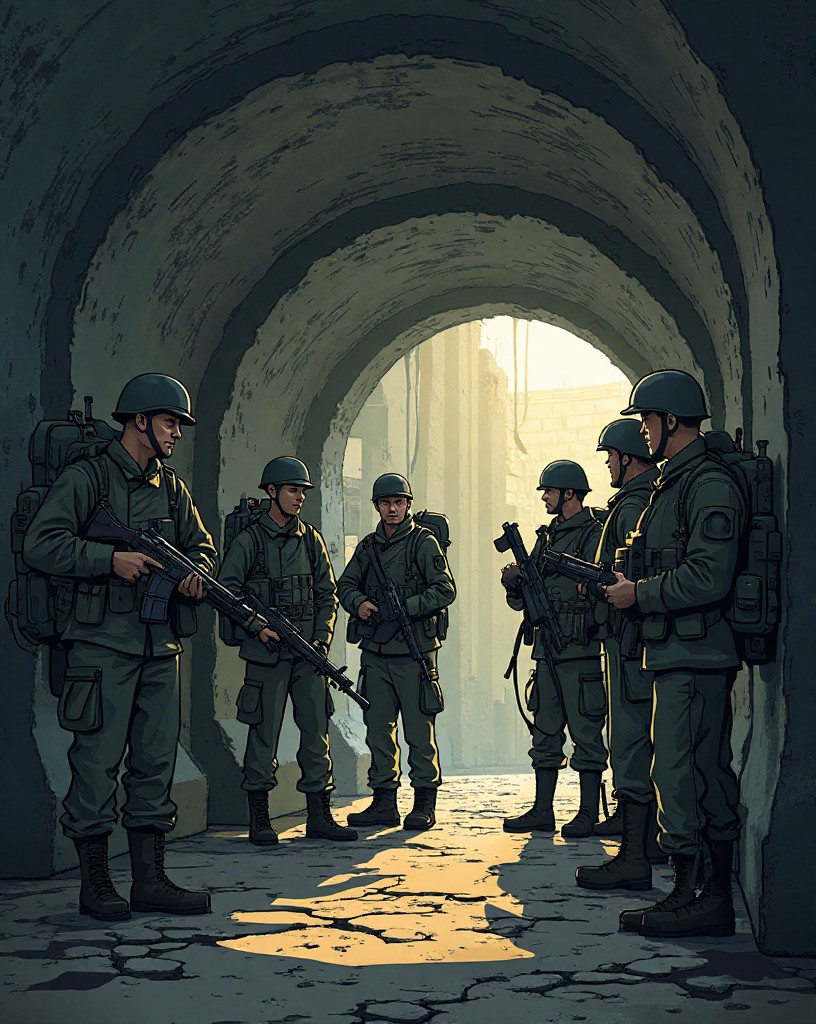
But the Germans have dug deep — bunkers carved far underground, where they wait out the shelling. And in many places the barbed wire is not cut at all.
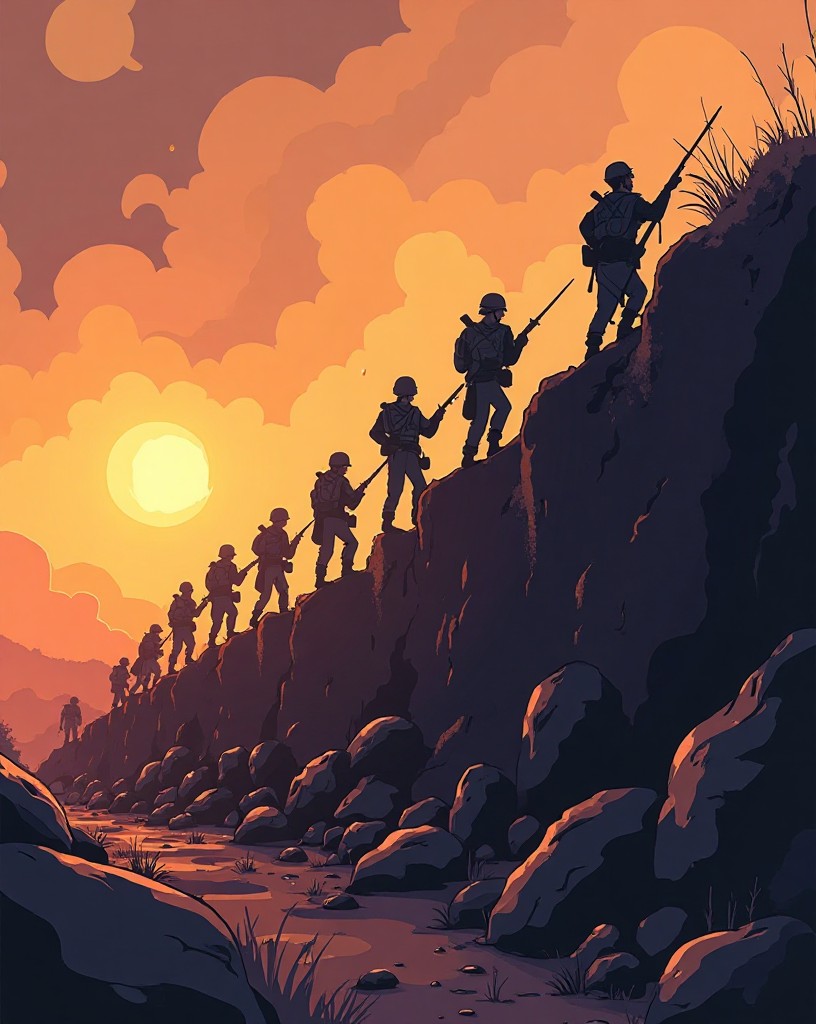
The morning of July 1st, 1916. Whistles blow along the line, and tens of thousands of British soldiers climb out of their trenches and walk, in long even waves, into no man's land.
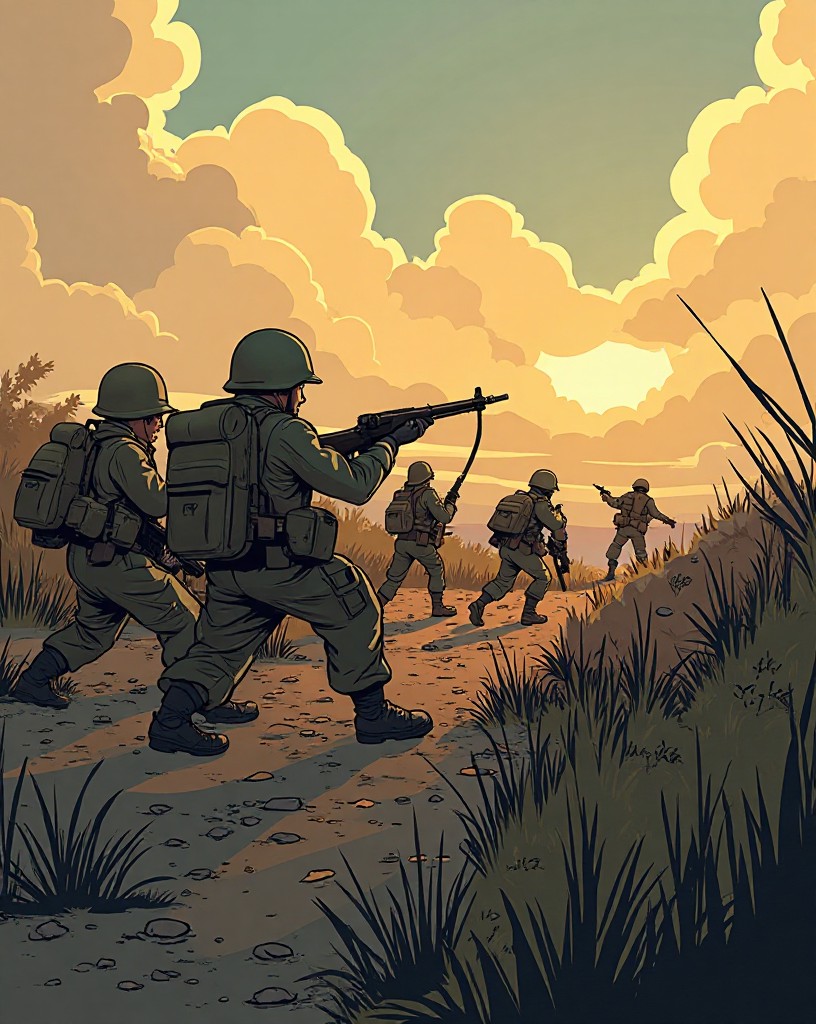
The Germans climb out of their deep bunkers, set up their machine guns — and open fire into the advancing rows.
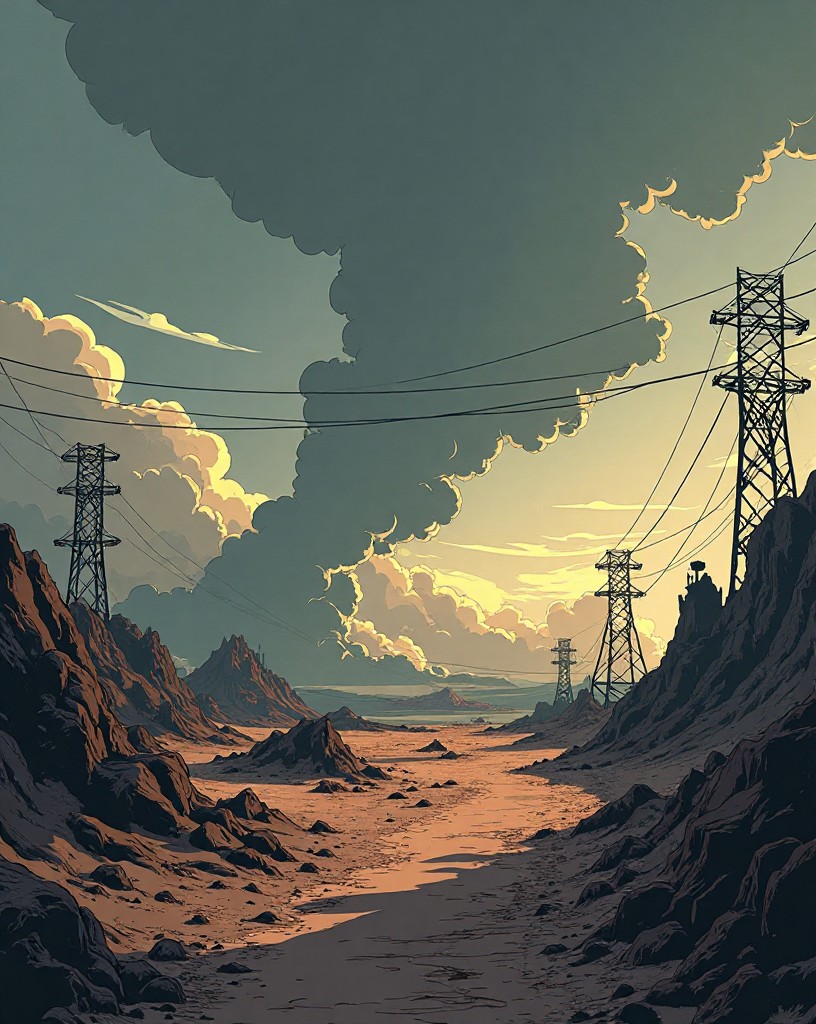
The result is catastrophe. The lines are cut down in the open, tangled in the uncut wire. By the end of that single day, the British suffer nearly sixty thousand casualties — the bloodiest day in the history of their army.
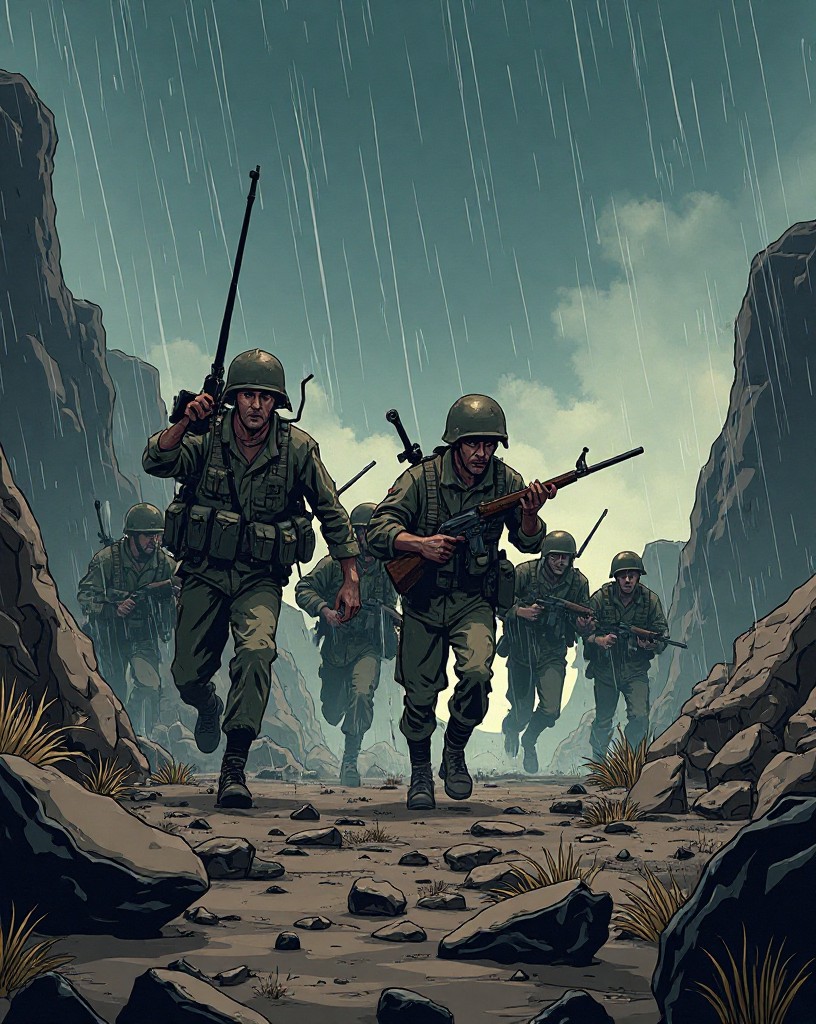
And yet the battle does not stop. It grinds on for months, attack after attack, for a few hundred yards of churned mud at a time.
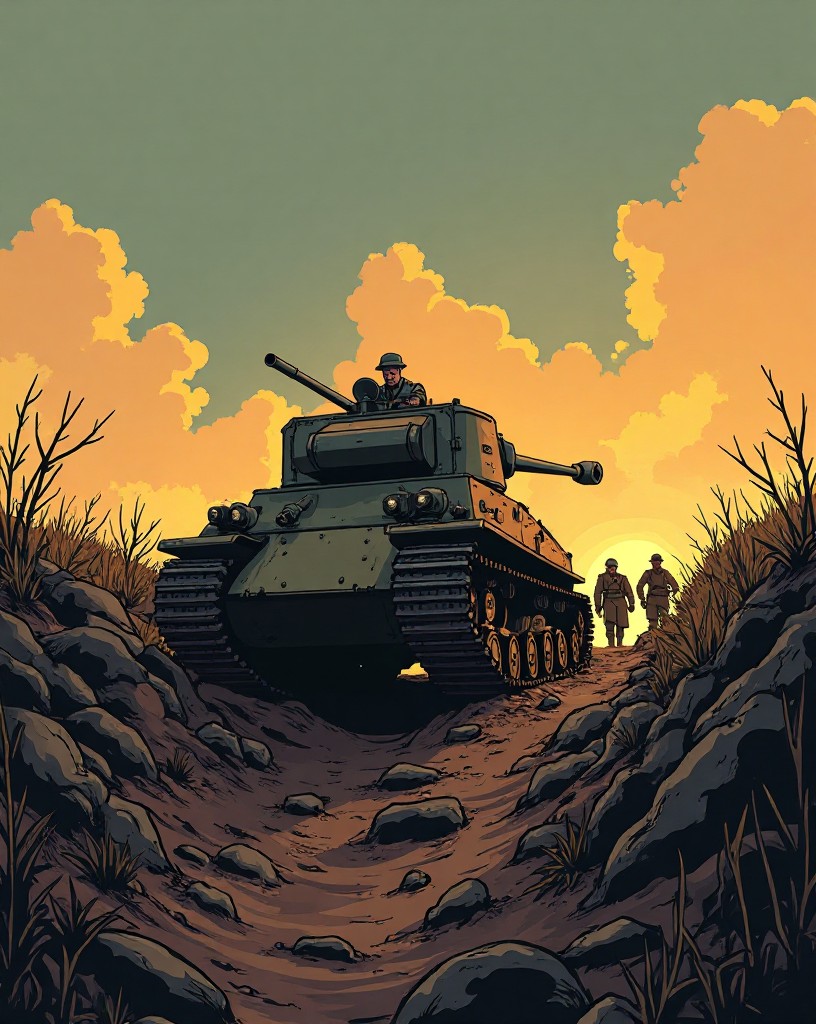
In September, a strange new weapon crawls onto the battlefield for the first time in history: the tank — slow, clumsy, but unstoppable by rifle fire. It is a glimpse of the future of war.
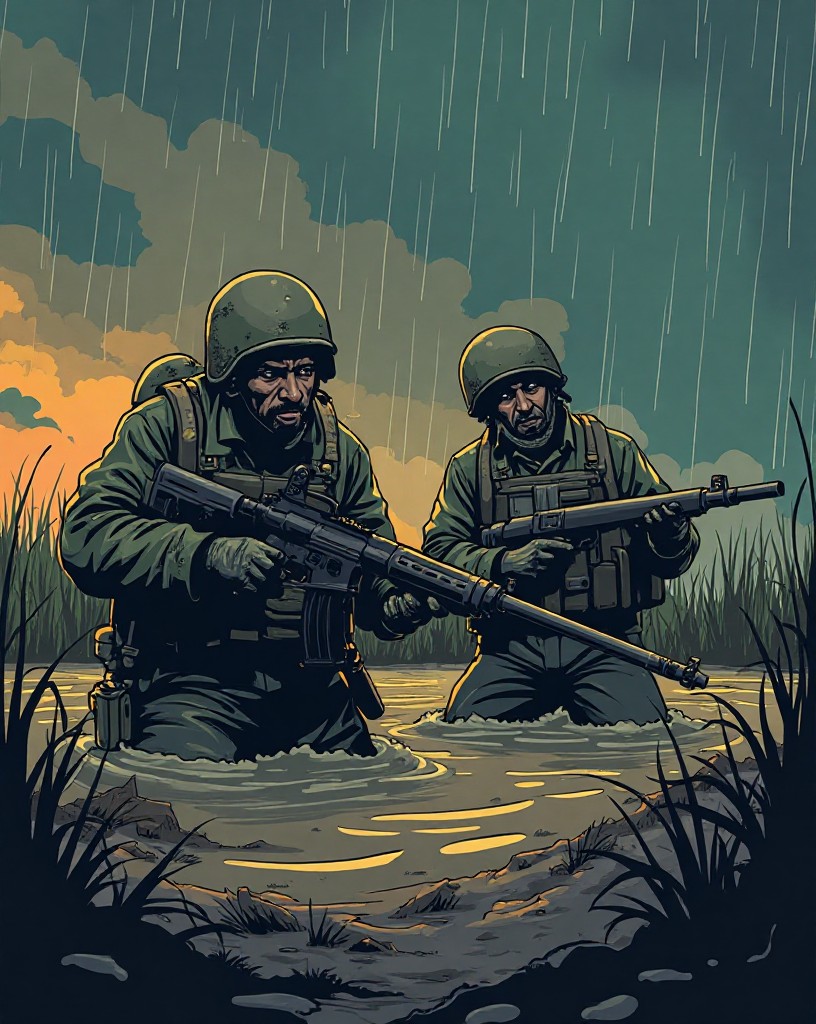
The rain comes, and the battlefield dissolves into a sea of mud that swallows men, horses, and guns alike.
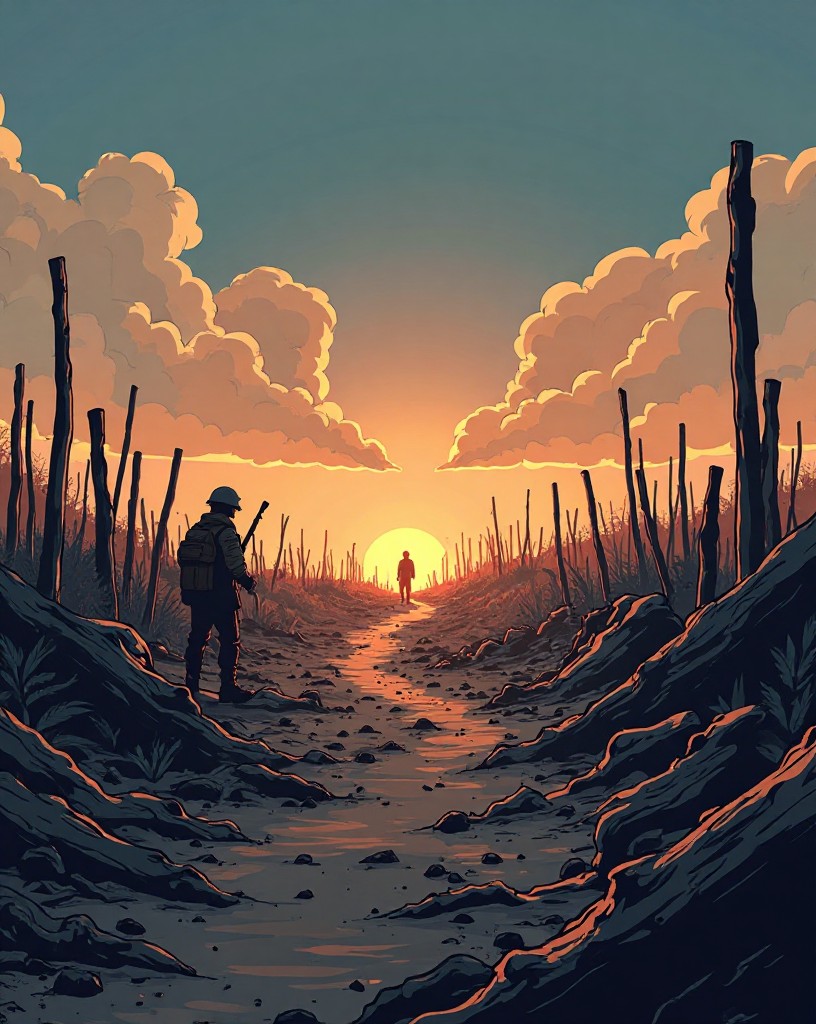
When the offensive finally ends in November, the two sides together have suffered over a million casualties — for an advance of about six miles.
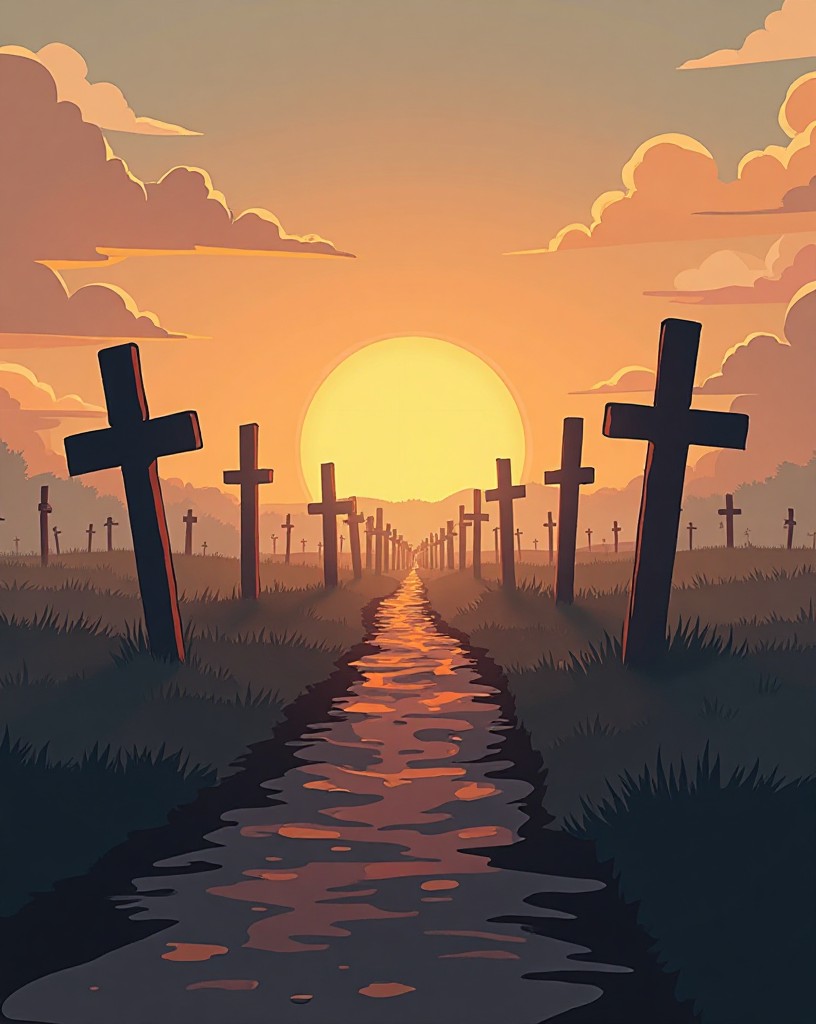
The Somme became the symbol of the whole war: immense sacrifice for almost no ground, a generation of young men fed into the guns. It is remembered less for what was won than for what was lost.
Sources
This story was adapted from the following. The illustrations are stylized depictions, not photographs of the events.
“Battle of the Somme”, Wikipedia
Overview, the first day, tanks, and casualties.
Somme, Lyn Macdonald (1983)
History told through soldiers' accounts.
That’s the story.
More are in the studio. Head back to the collection to see what’s coming.