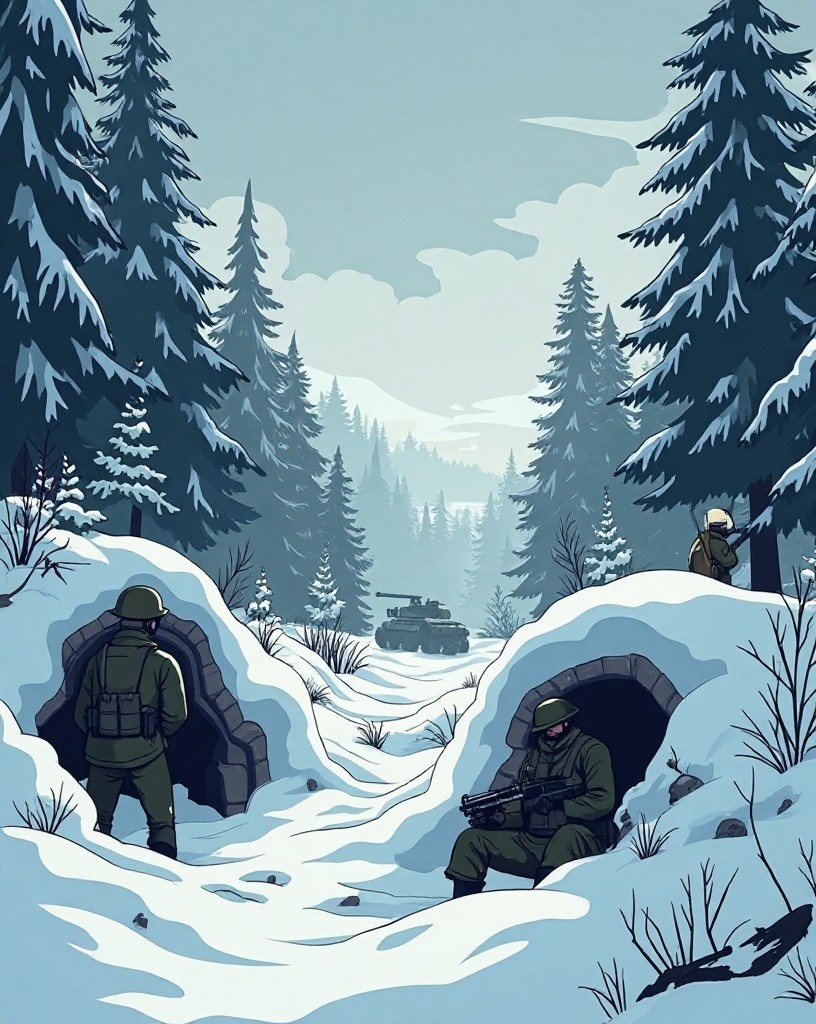
Nuts
Hitler's last gamble, a surrounded town, and a one-word reply.
Belgium · Dec 1944 – Jan 1945
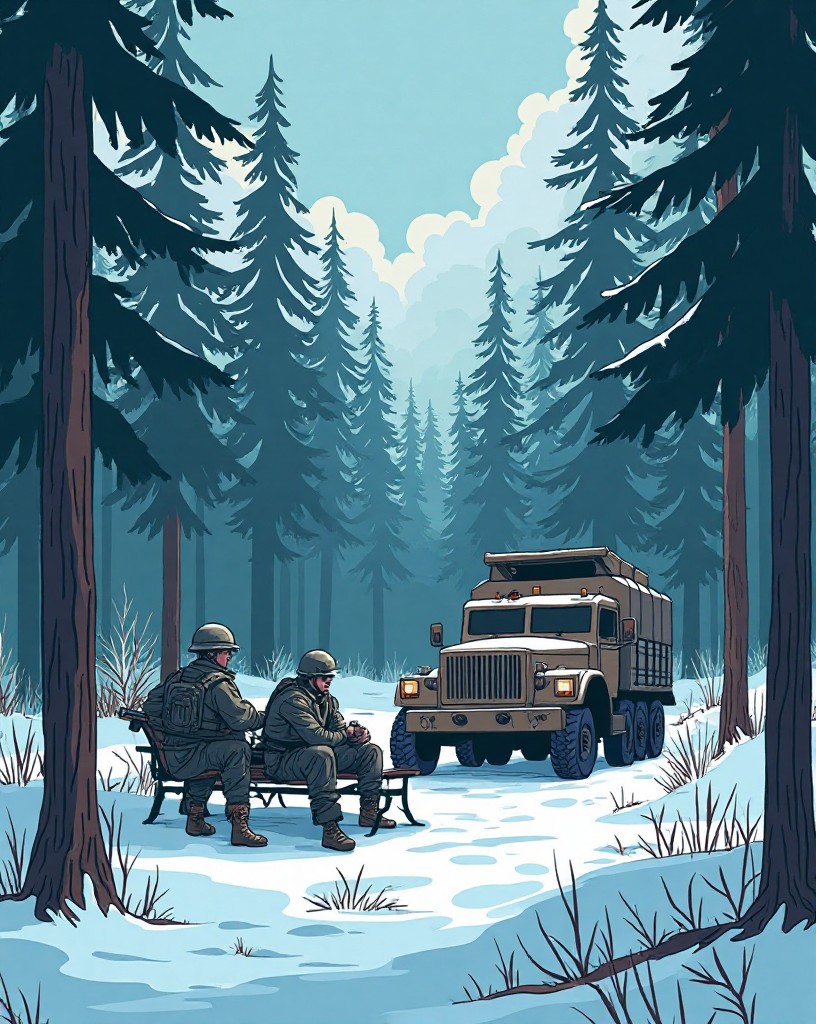
December 1944. The Allies have driven across France and believe Germany is all but finished. Along a quiet, forested stretch of the Ardennes, exhausted American units are spread thin, expecting nothing.
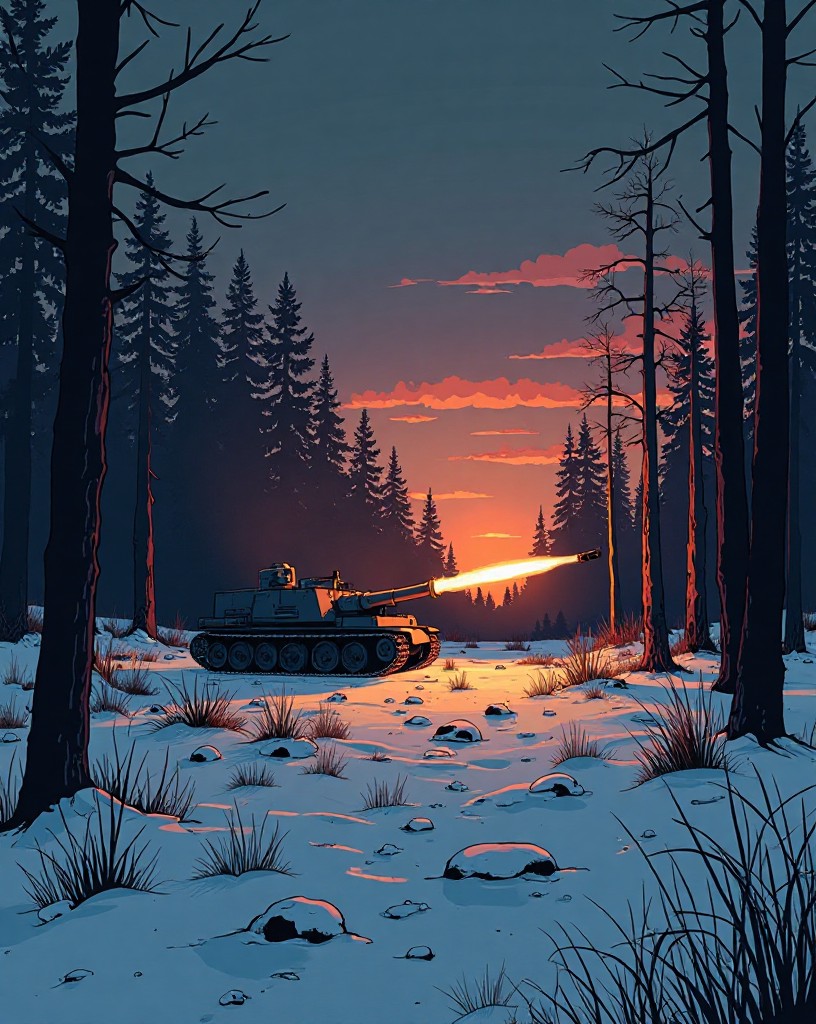
Before dawn on the 16th, the forest erupts. Hitler has gathered his last reserves for one desperate gamble: punch through the weak point, race to the port of Antwerp, and split the Allied armies in two.
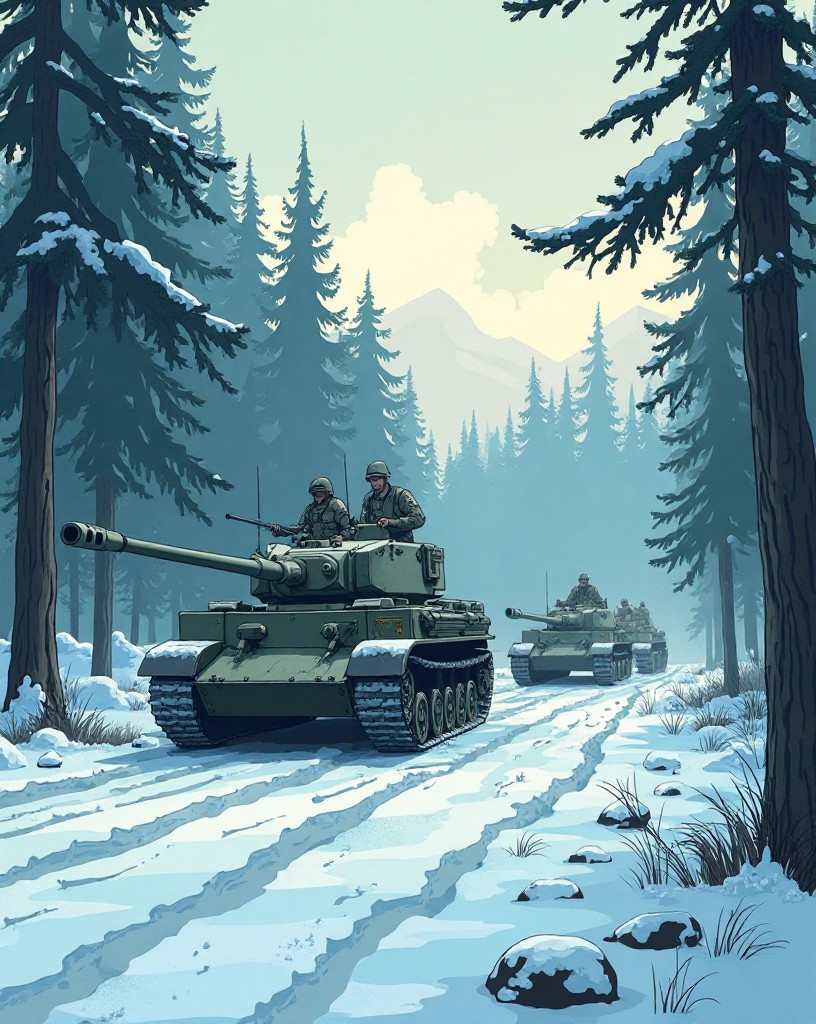
German tanks and infantry pour through the snow under low cloud that grounds the feared Allied air forces. The American line buckles, and a great bulge swells westward into the map.
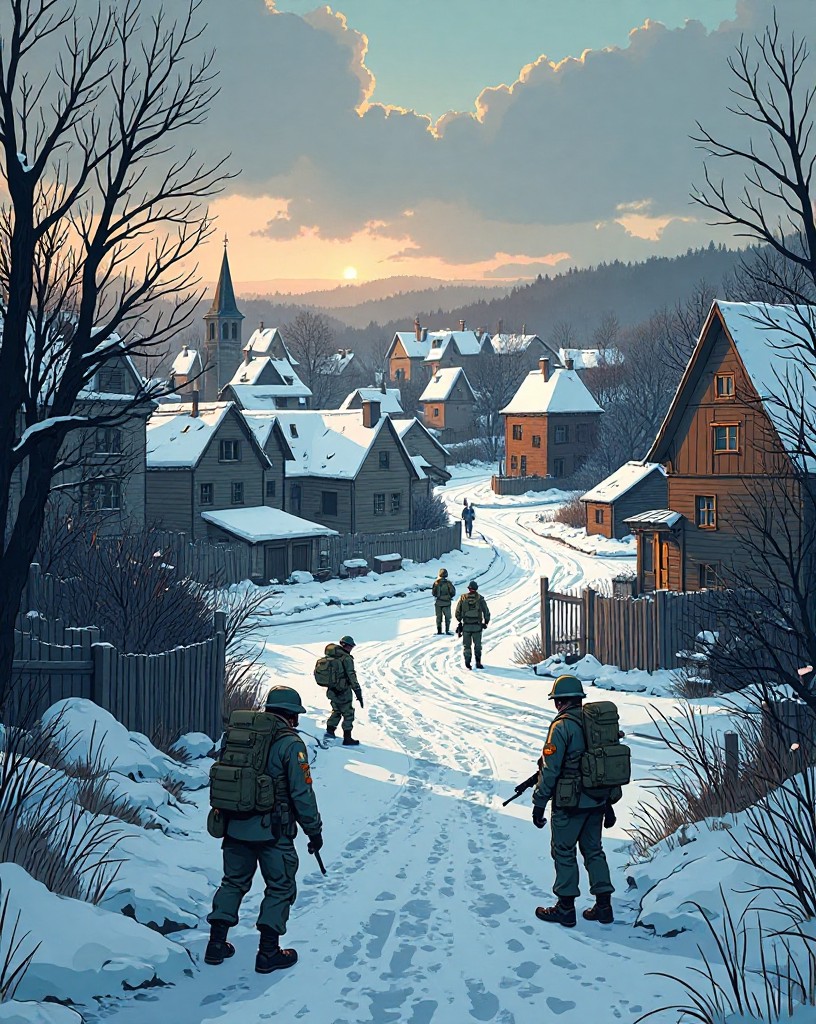
At the crossroads town of Bastogne, every road the Germans need converges. American paratroopers and others rush in to hold it — and are quickly surrounded, low on ammunition, food, and winter clothing.
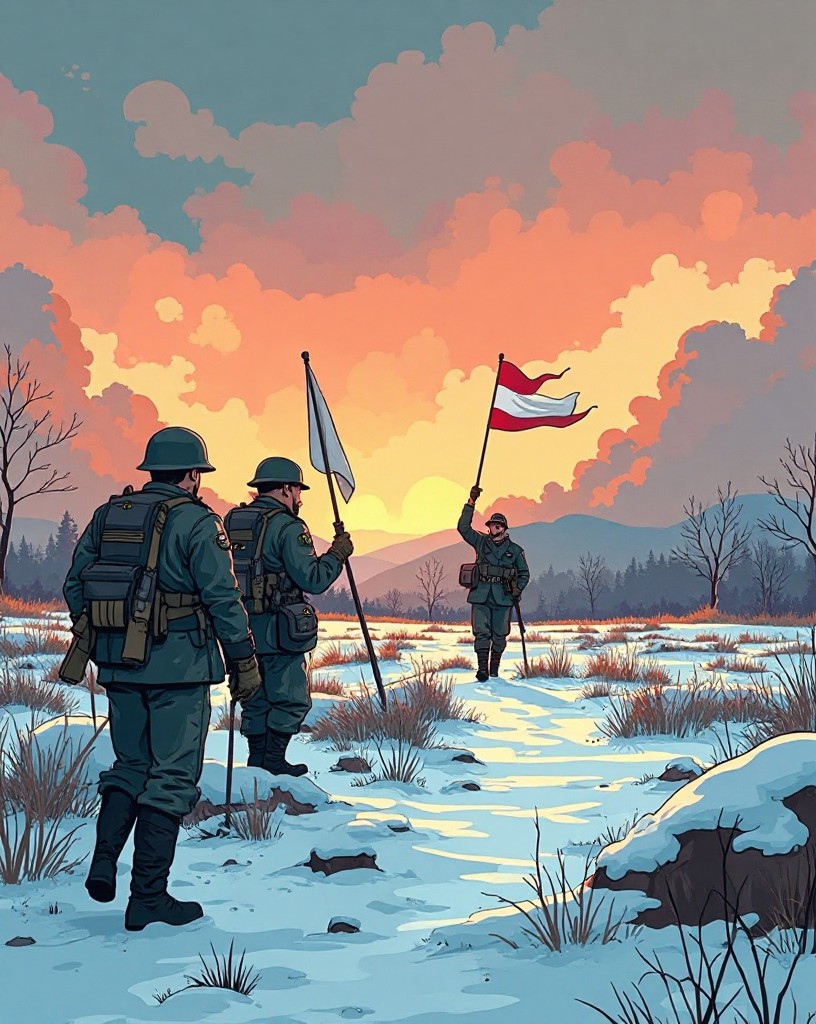
The Germans send officers forward under a white flag, demanding surrender.
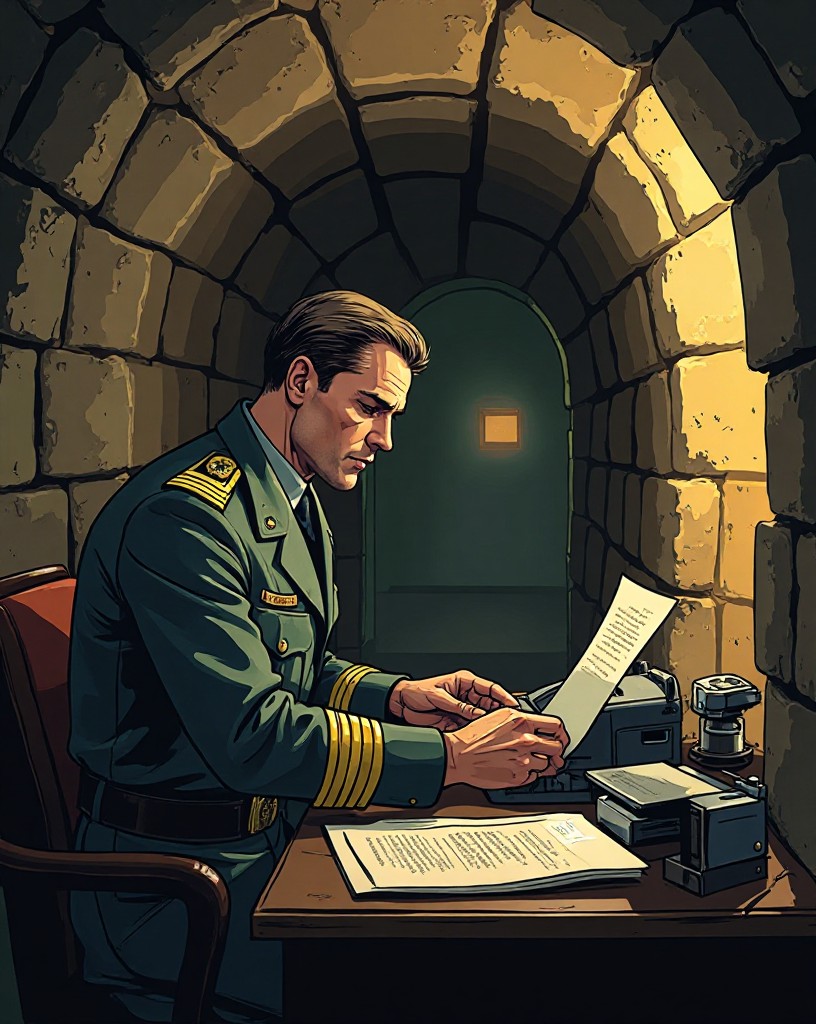
Gen. McAuliffe
“Nuts!”
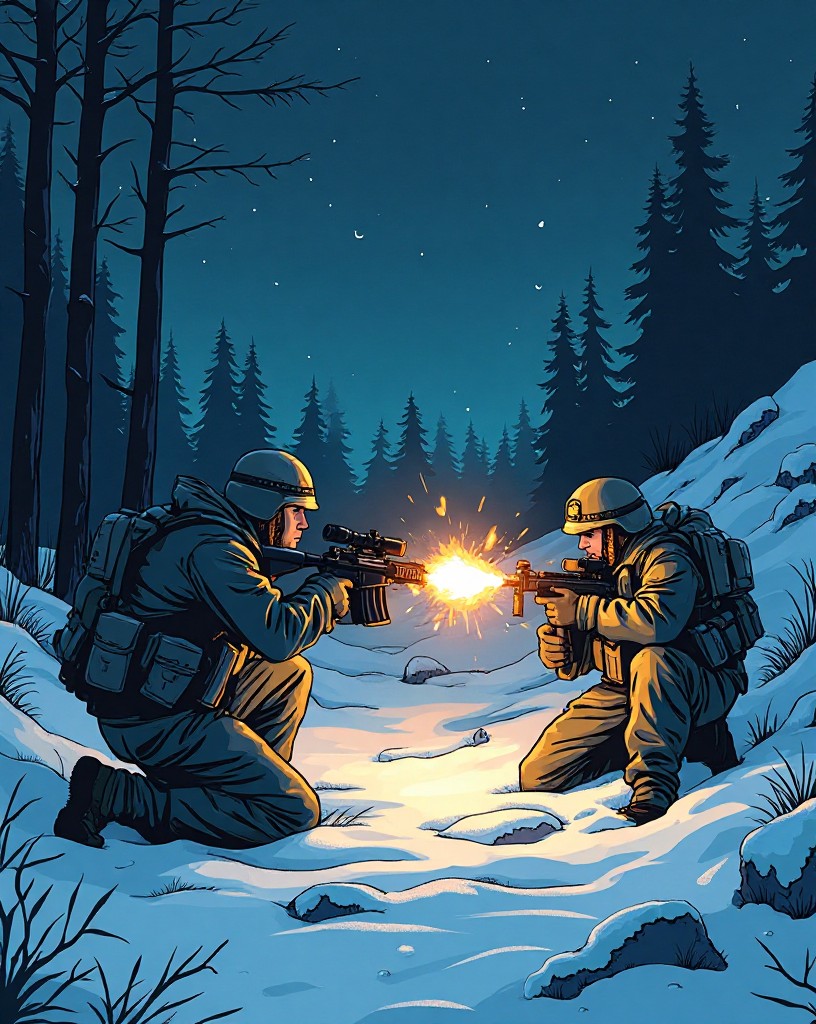
The baffled Germans are told plainly what it means: go to hell. The defenders fight on, ringed by enemy armor in the freezing dark.
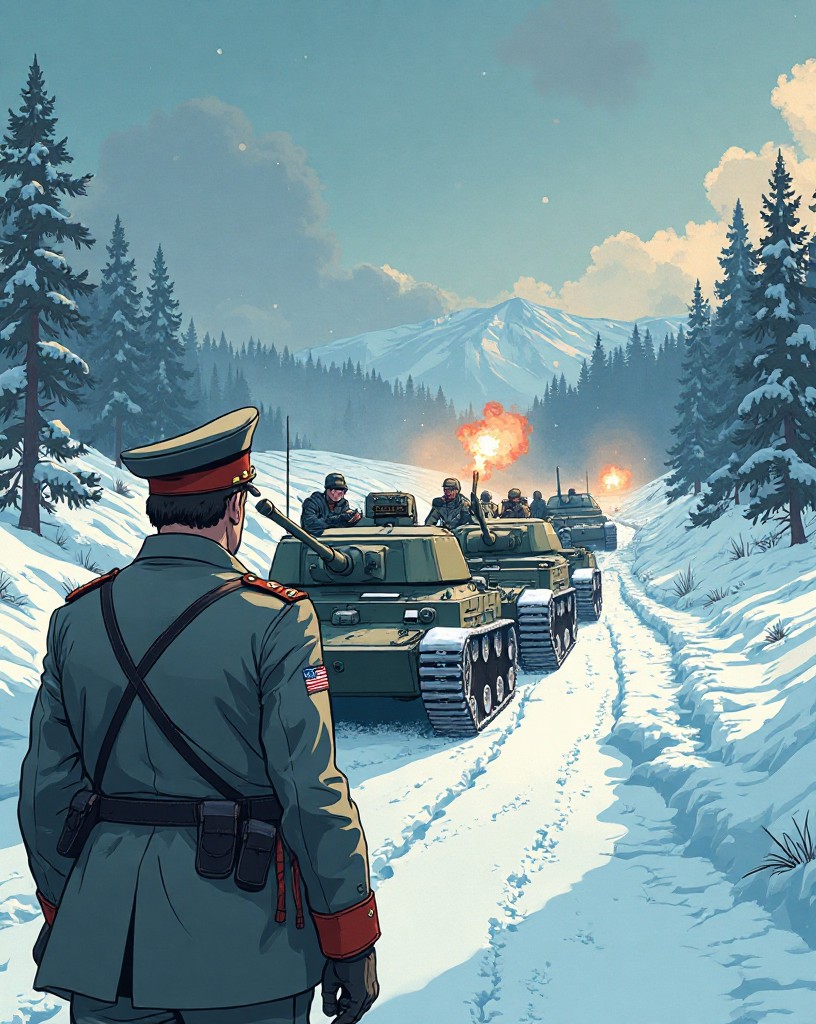
To the south, General Patton does something armies are not supposed to do. He wheels his Third Army ninety degrees in the dead of winter and drives north to break through to Bastogne.

Then, two days before Christmas, the sky clears.
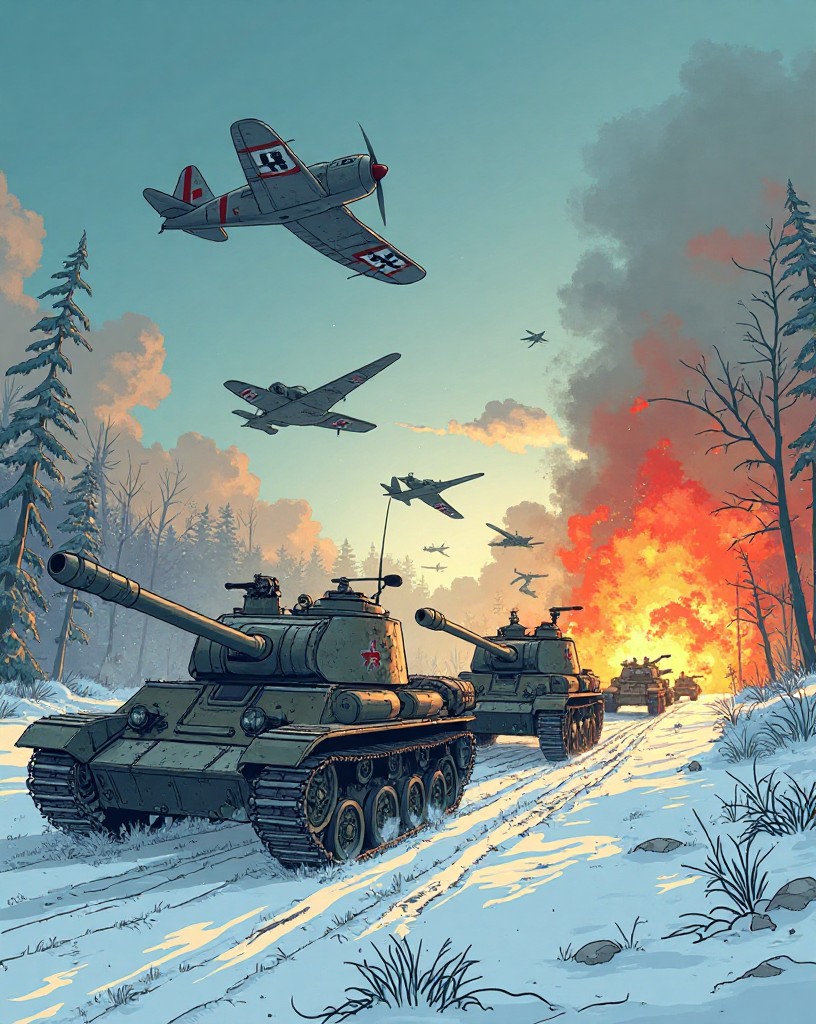
Allied planes swarm over the battlefield at last, smashing the German columns strung out along the icy roads. The offensive, already running out of fuel, begins to die.
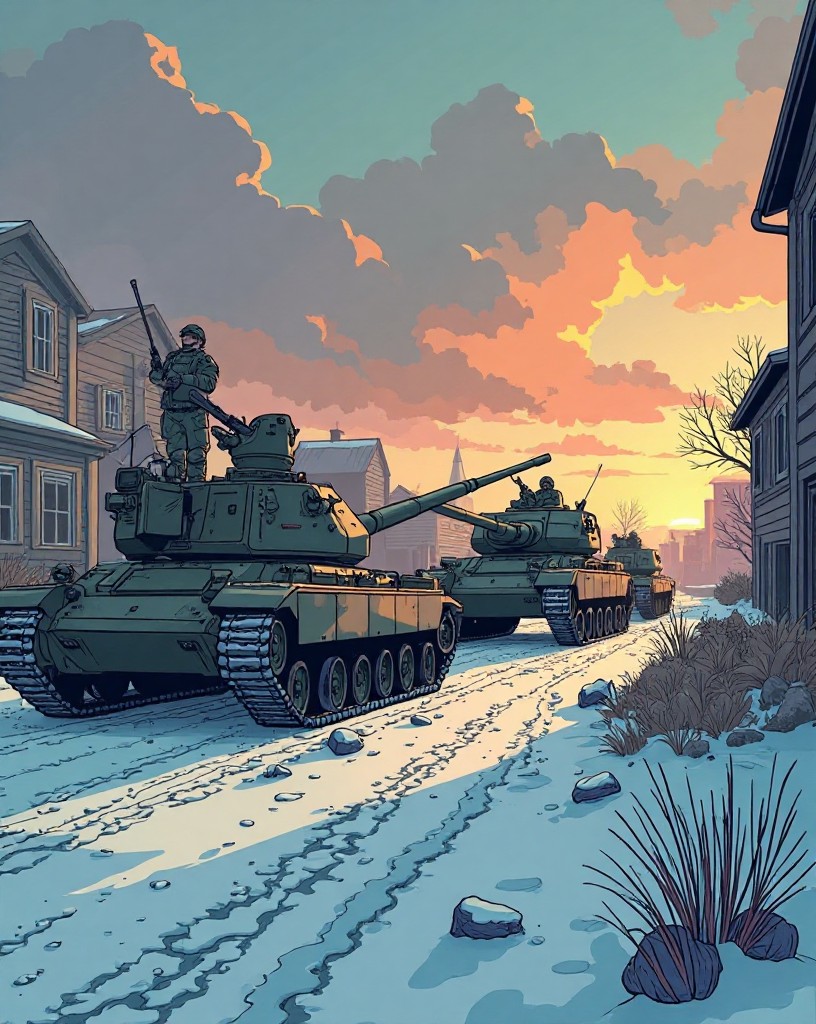
On the 26th, Patton's tanks punch through to Bastogne. The siege is broken, and over the following weeks the bulge is slowly hammered flat.
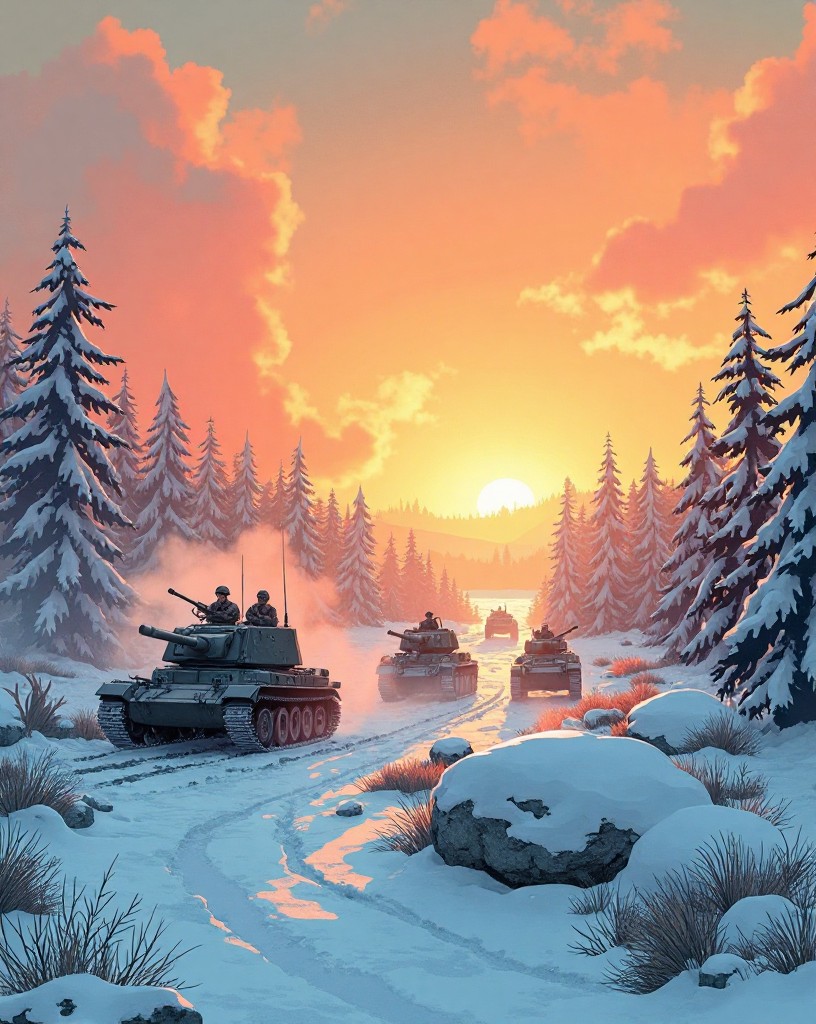
It was the largest and bloodiest battle the US Army fought in the war. Hitler's last gamble had failed — and with it went Germany's final hope of changing the outcome in the West.
Sources
This story was adapted from the following. The illustrations are stylized depictions, not photographs of the events.
“Battle of the Bulge”, Wikipedia
Overview, timeline, Bastogne, and casualties.
Battle: The Story of the Bulge, John Toland (1959)
Narrative history of the campaign.
That’s the story.
More are in the studio. Head back to the collection to see what’s coming.