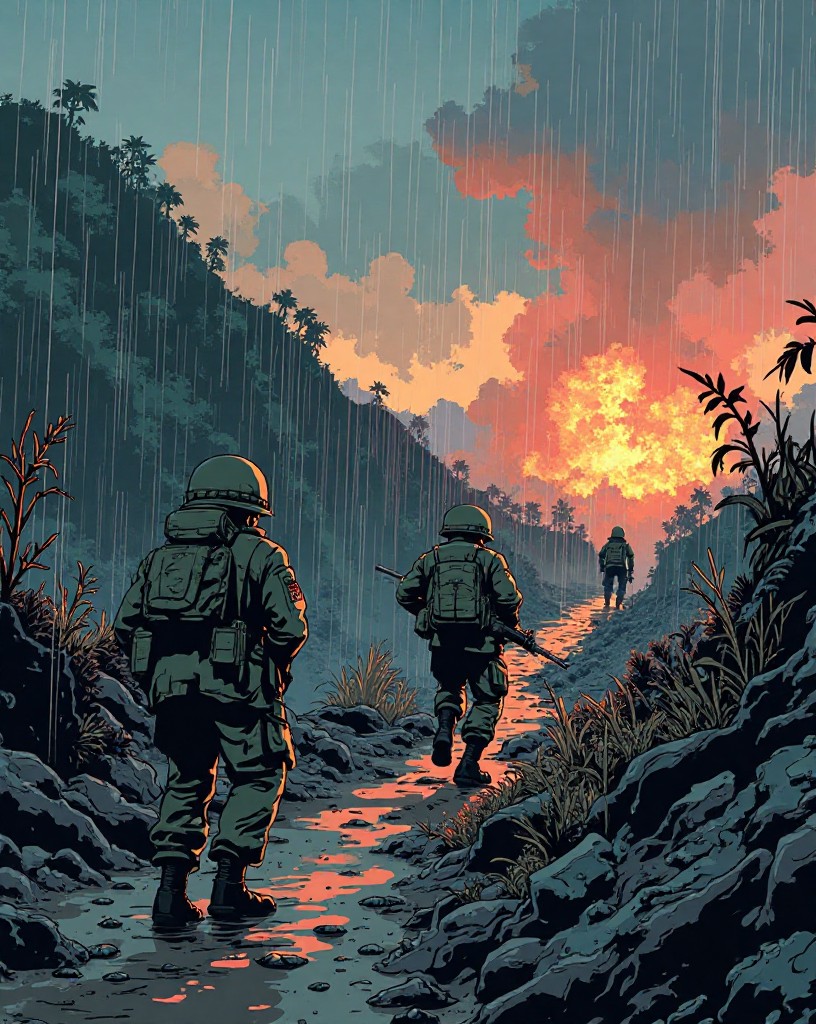
The Typhoon of Steel
The last great battle of the Pacific, and the shadow it cast.
Okinawa · 1945
Spring 1945. The war in Europe is ending, but in the Pacific the worst may be yet to come. The next stop on the road to Japan is Okinawa — a long island just 350 miles from the Japanese mainland.
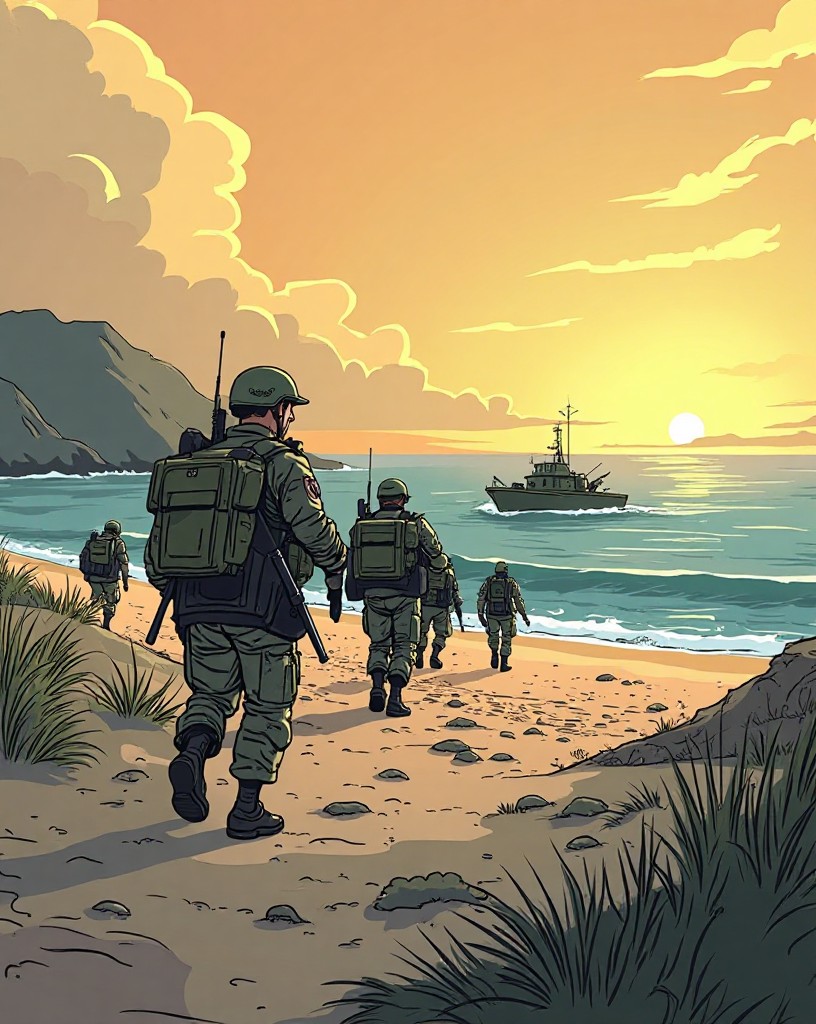
On the 1st of April, the largest amphibious force of the Pacific war storms the beaches — and meets almost no one. The landing is eerily, ominously easy.
The Japanese have learned. Rather than die at the water's edge, they have dug deep into the island's ridges and caves — a hidden maze of tunnels and guns — and they wait.
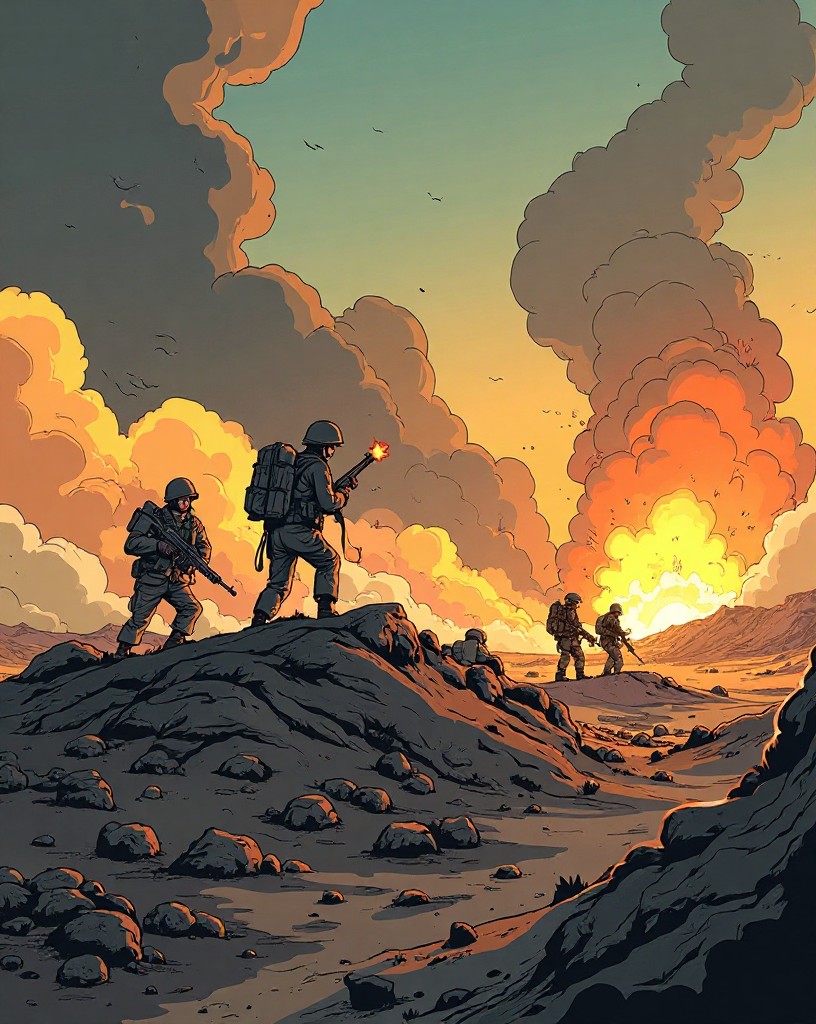
When the Americans push inland, the island erupts. From fortified ridges with names like Sugar Loaf, the defenders pour fire into every advance.
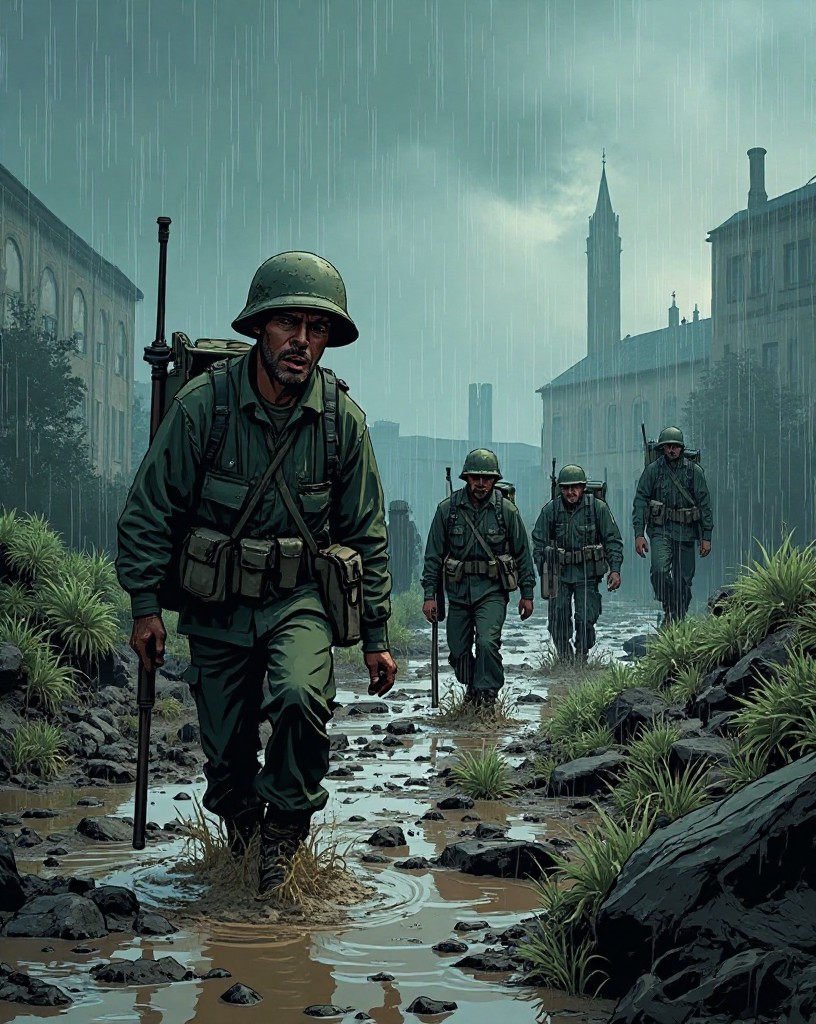
The fighting grinds on for weeks in mud and endless rain, ridge by ridge, cave by cave — among the most savage and costly of the entire war.
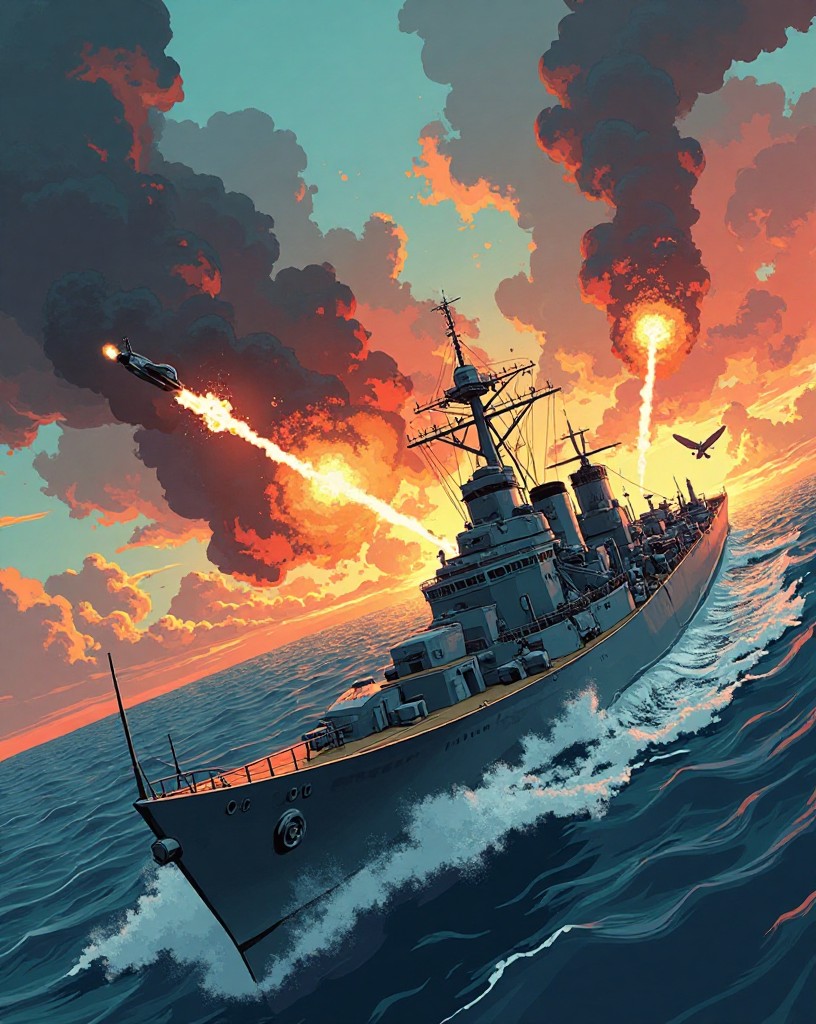
Out at sea, a new terror falls from the sky. Wave after wave of kamikaze — pilots flying their planes deliberately into the ships — strike the American fleet.
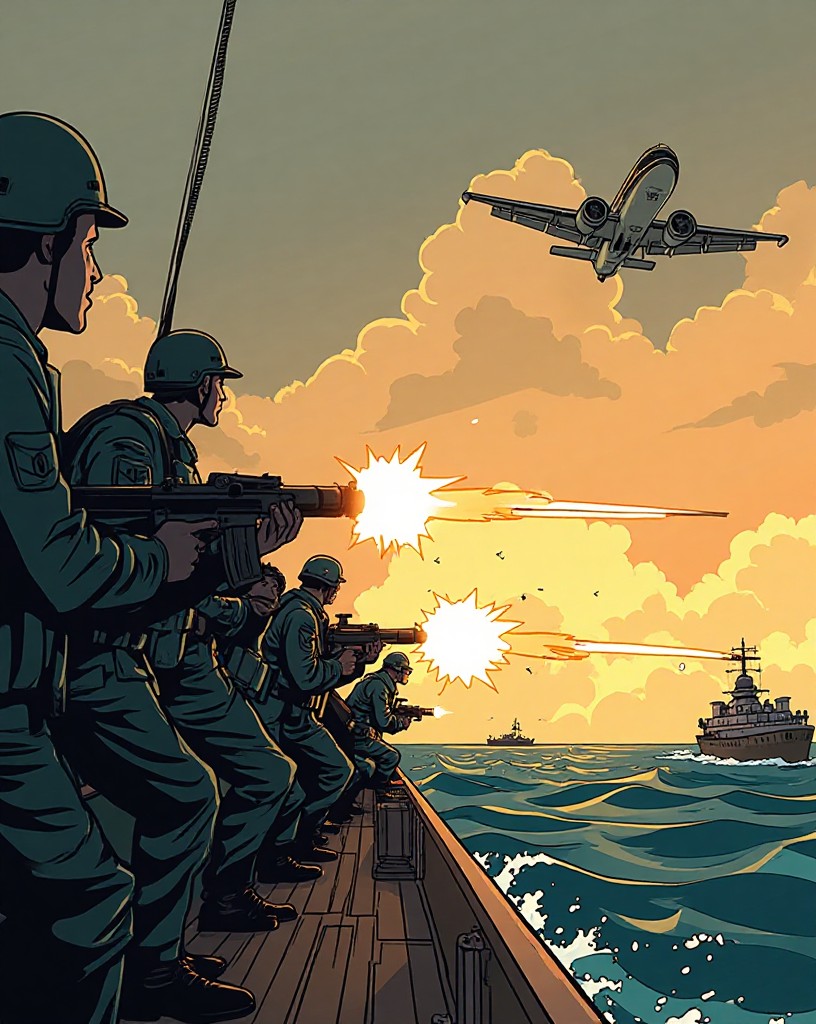
A sailor
“They're not trying to bomb us — they are the bomb. Here comes another one. Hold fire till he's close!”
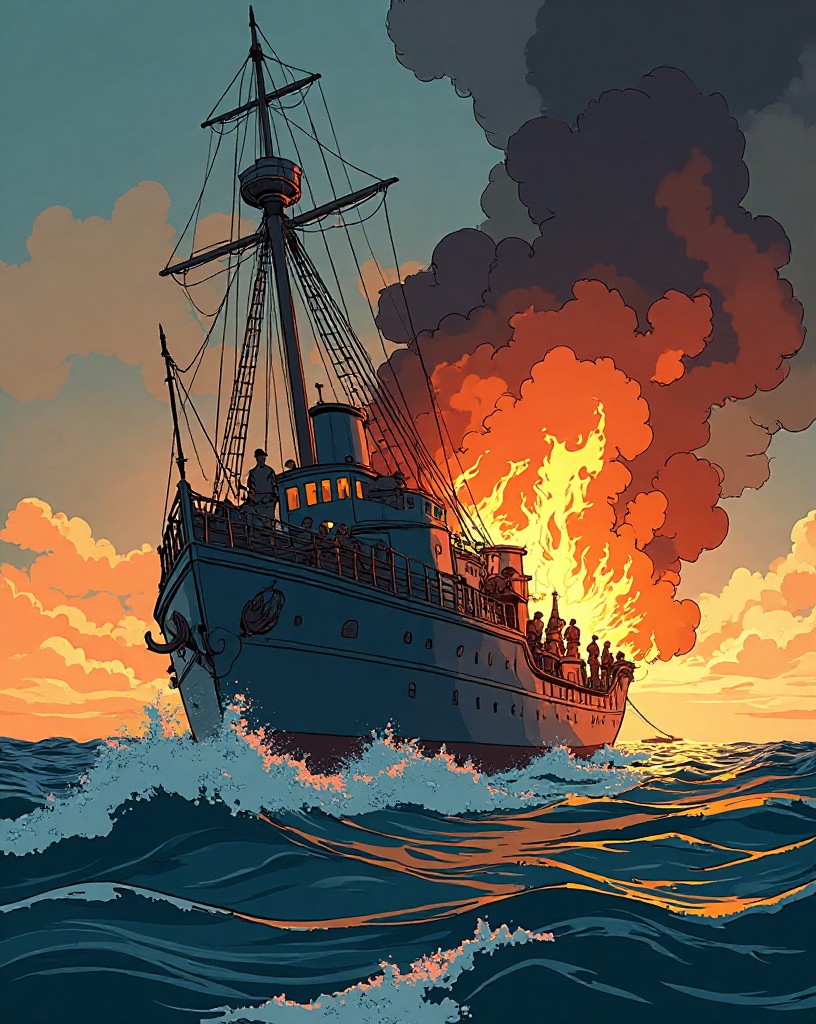
Hundreds of kamikaze hit the fleet, sinking dozens of ships and killing thousands of sailors. The navy suffers some of its worst losses of the war just offshore.
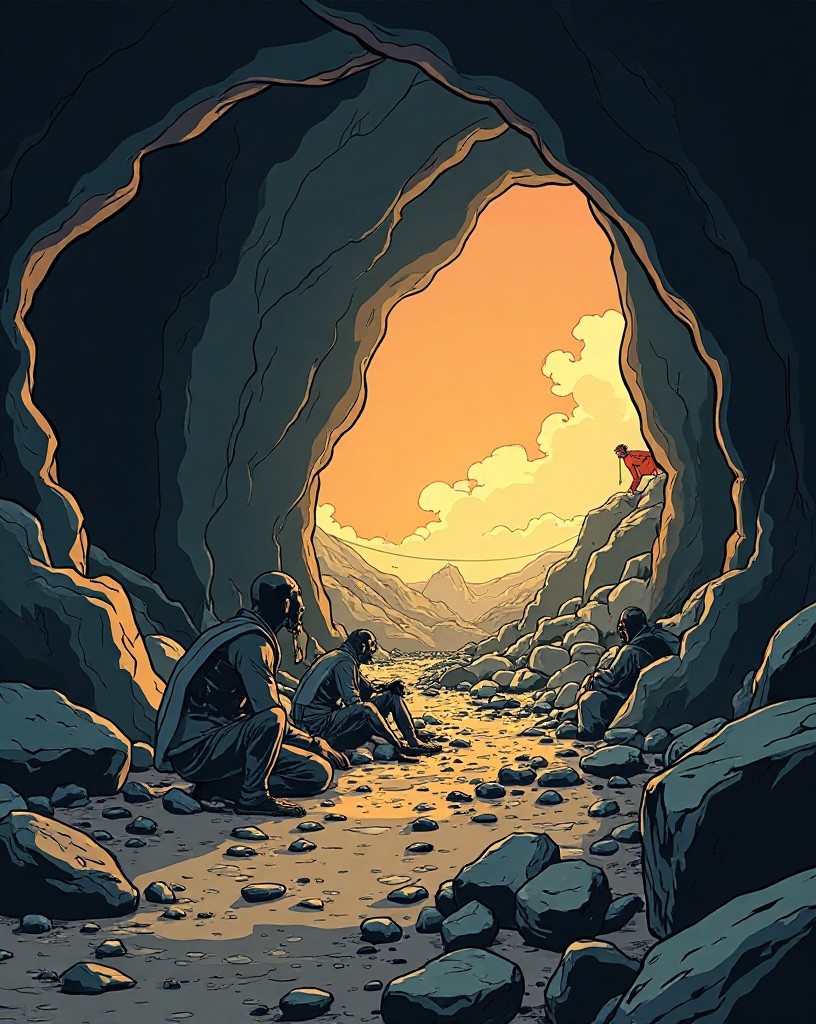
Caught in the middle are the people of Okinawa. Tens of thousands of civilians die in the crossfire, in the caves, and in the ruin of their homeland — a tragedy within the battle.
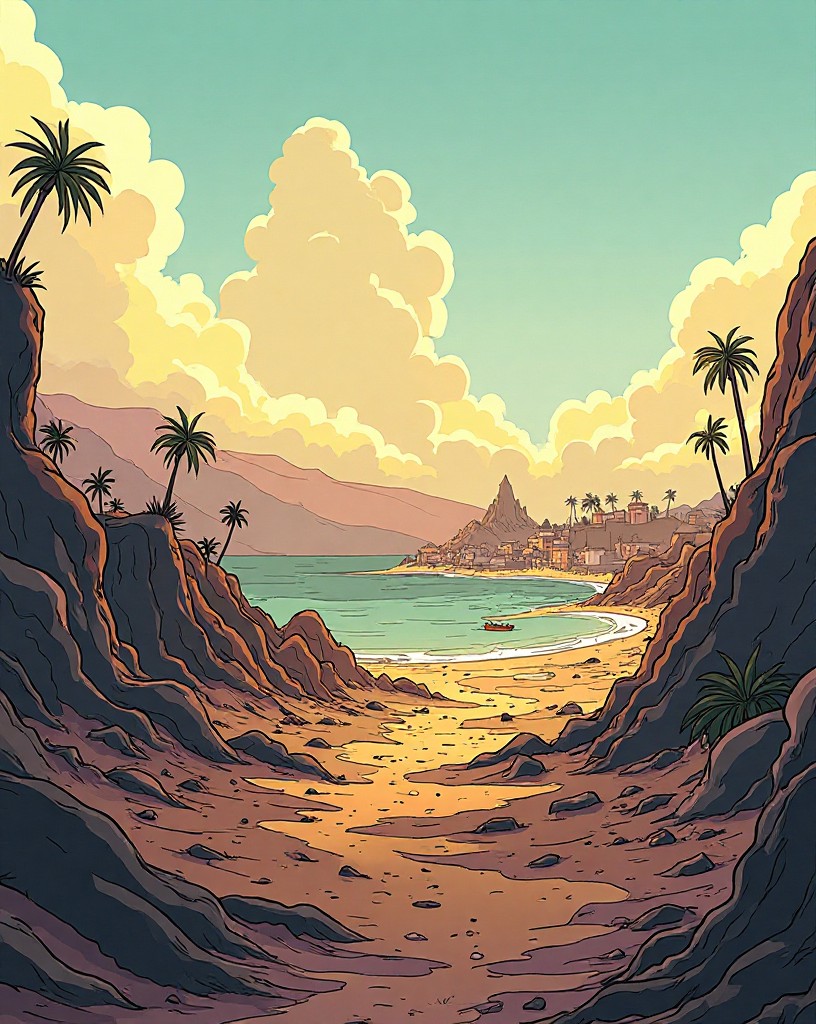
After nearly three months, the island is finally taken. The cost is staggering: tens of thousands of soldiers and well over a hundred thousand civilians dead.
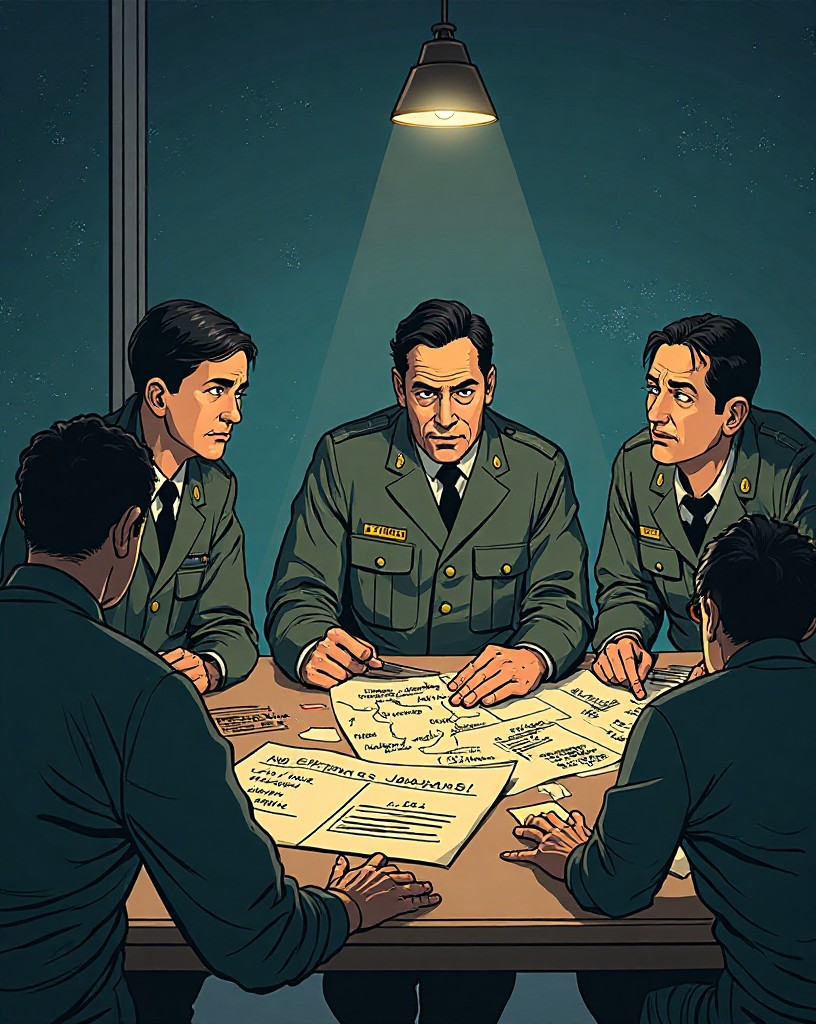
To American planners, Okinawa was a terrifying preview. If a single island cost this much, what would invading Japan itself cost? The estimates ran into the hundreds of thousands.
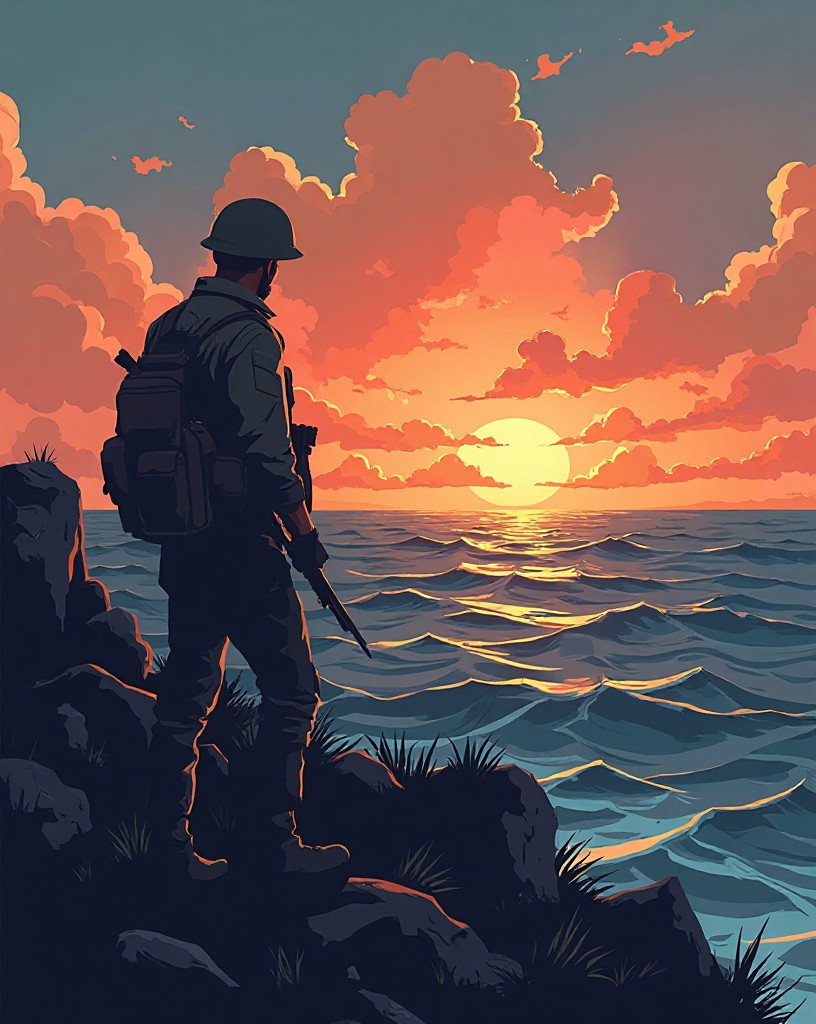
That question hung over every leader in the summer of 1945. The horror of Okinawa weighed directly on the decision that came next — to end the war from the air, without ever setting foot on Japan's home islands.
Sources
This story was adapted from the following. The illustrations are stylized depictions, not photographs of the events.
“Battle of Okinawa”, Wikipedia
Overview, the defense in depth, kamikaze, and civilian losses.
With the Old Breed, E. B. Sledge (1981)
First-hand memoir of the Pacific fighting.
That’s the story.
More are in the studio. Head back to the collection to see what’s coming.