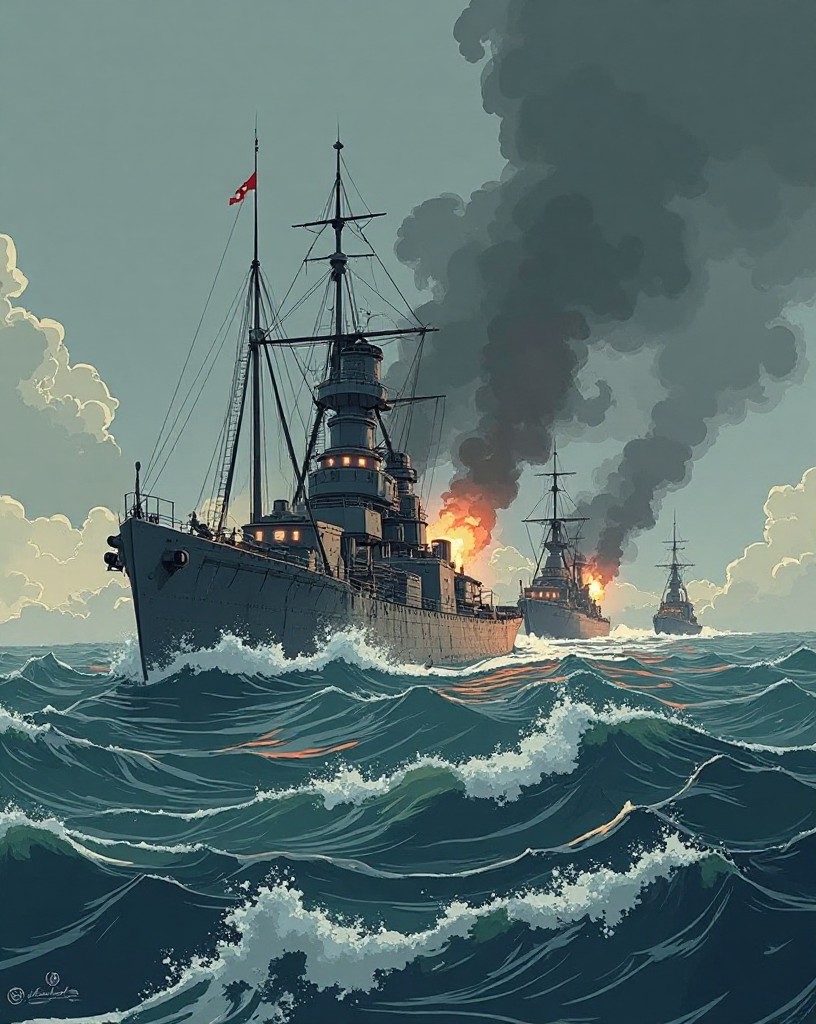
Jutland
The clash of the dreadnoughts — a draw that won the war at sea.
North Sea · 1916
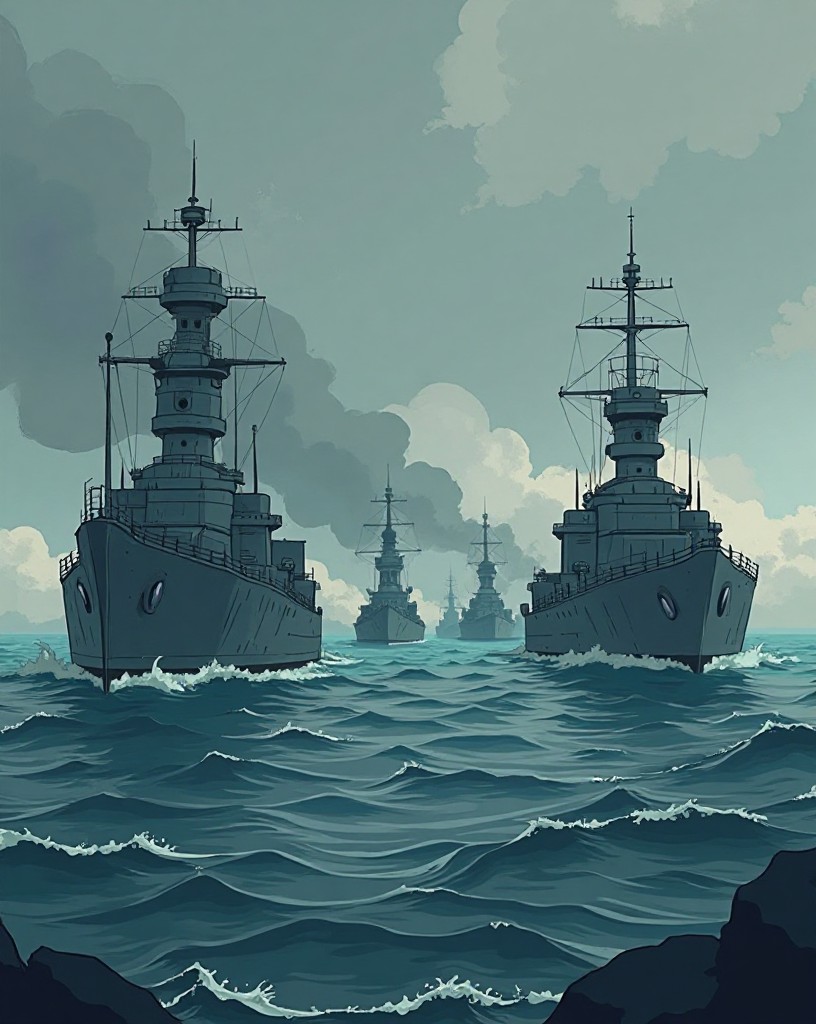
1916. For two years of world war, the two greatest navies on earth — Britain's Grand Fleet and Germany's High Seas Fleet — have circled each other warily in the North Sea, neither risking everything. The British blockade is slowly strangling Germany. The Germans need to break it.
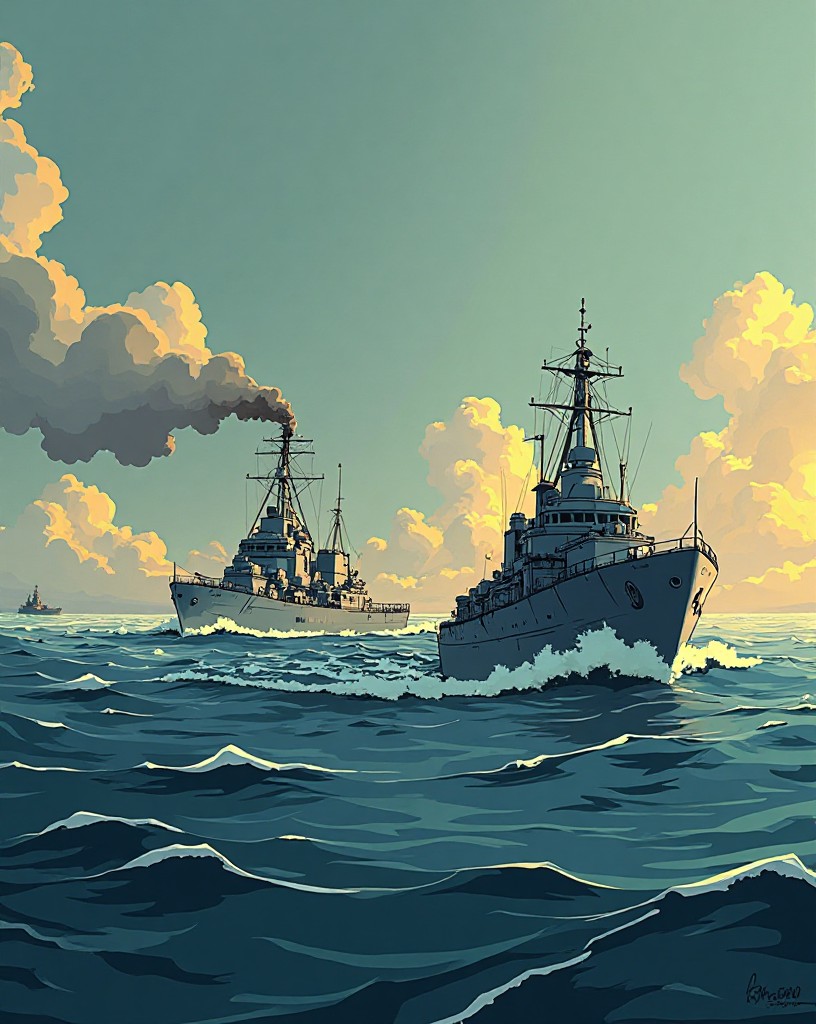
The German plan: lure out a part of the British fleet and destroy it before the rest can arrive. Instead, both vast fleets put to sea at once — hundreds of ships, the biggest naval battle the world has ever seen.
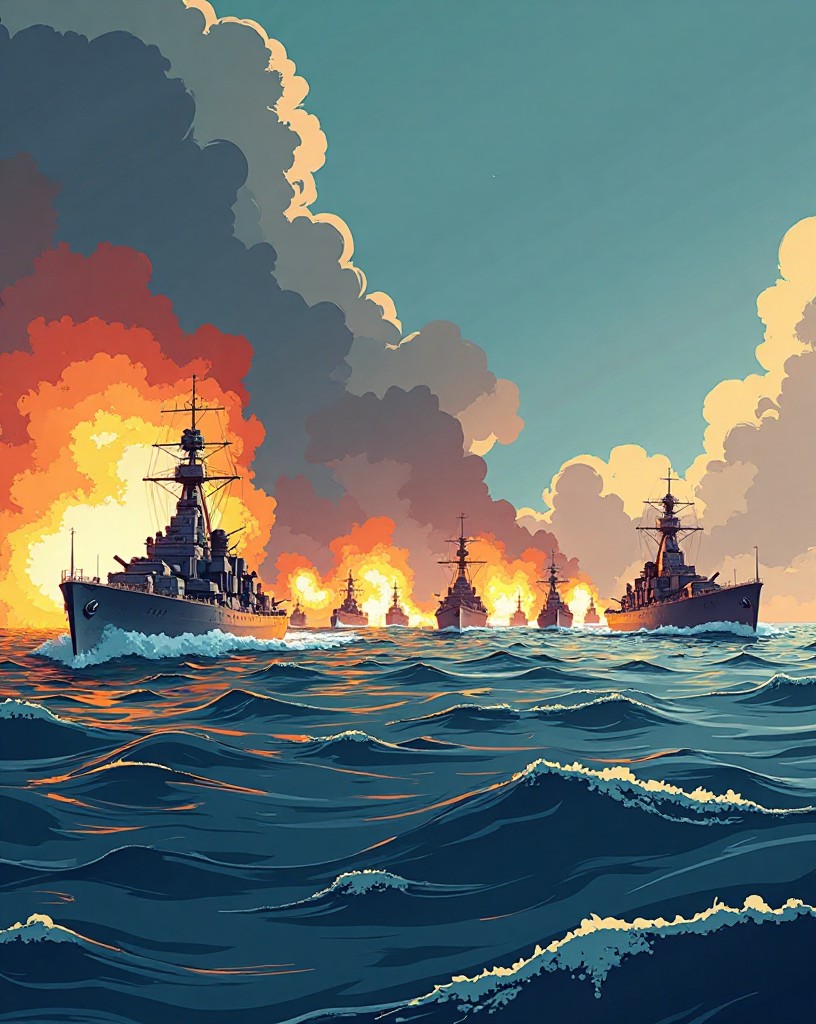
The fast battlecruisers meet first. In a running fight, British and German giants trade salvos at enormous range — shells the size of men screaming across the sea.
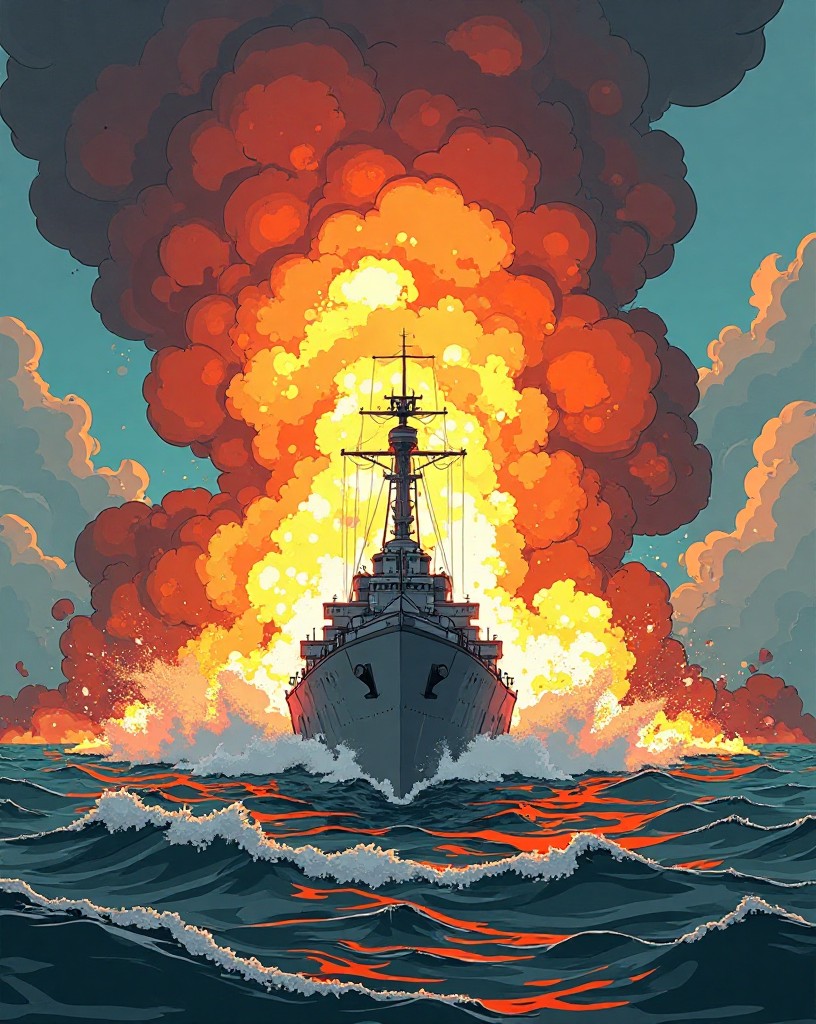
Then disaster. British battlecruisers, their magazines poorly protected, blow up one after another — vanishing in vast explosions, taking a thousand men down in seconds each.
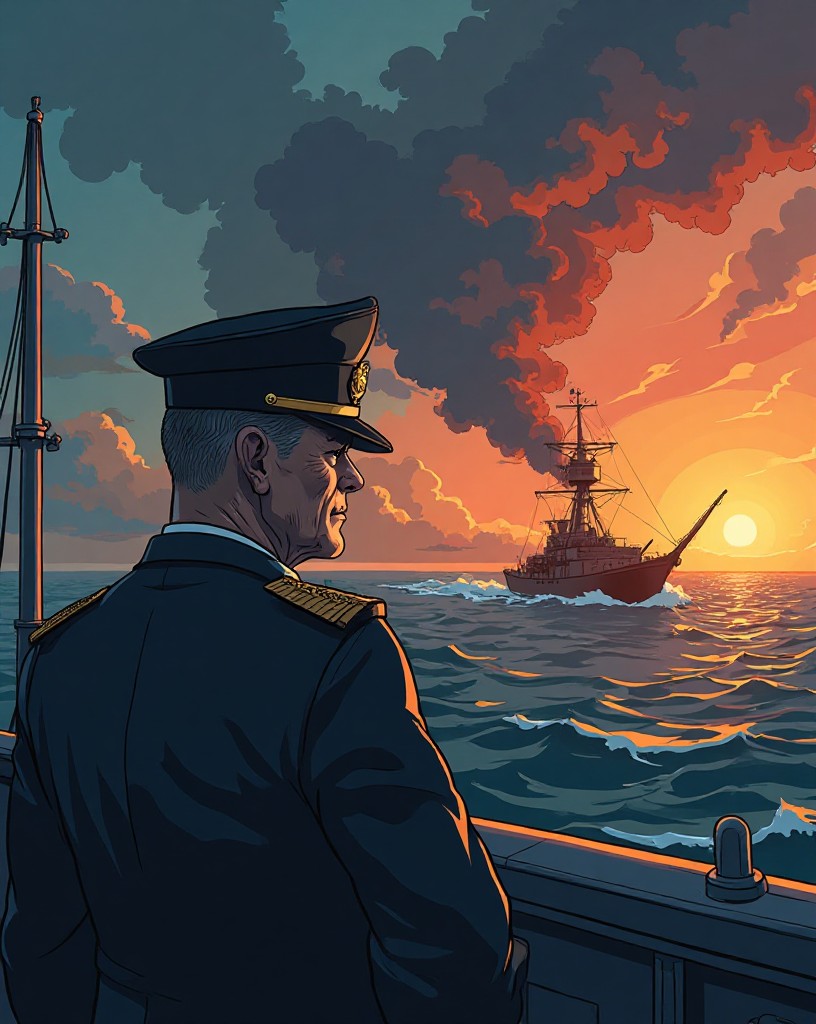
Adm. Beatty
“There seems to be something wrong with our bloody ships today.”
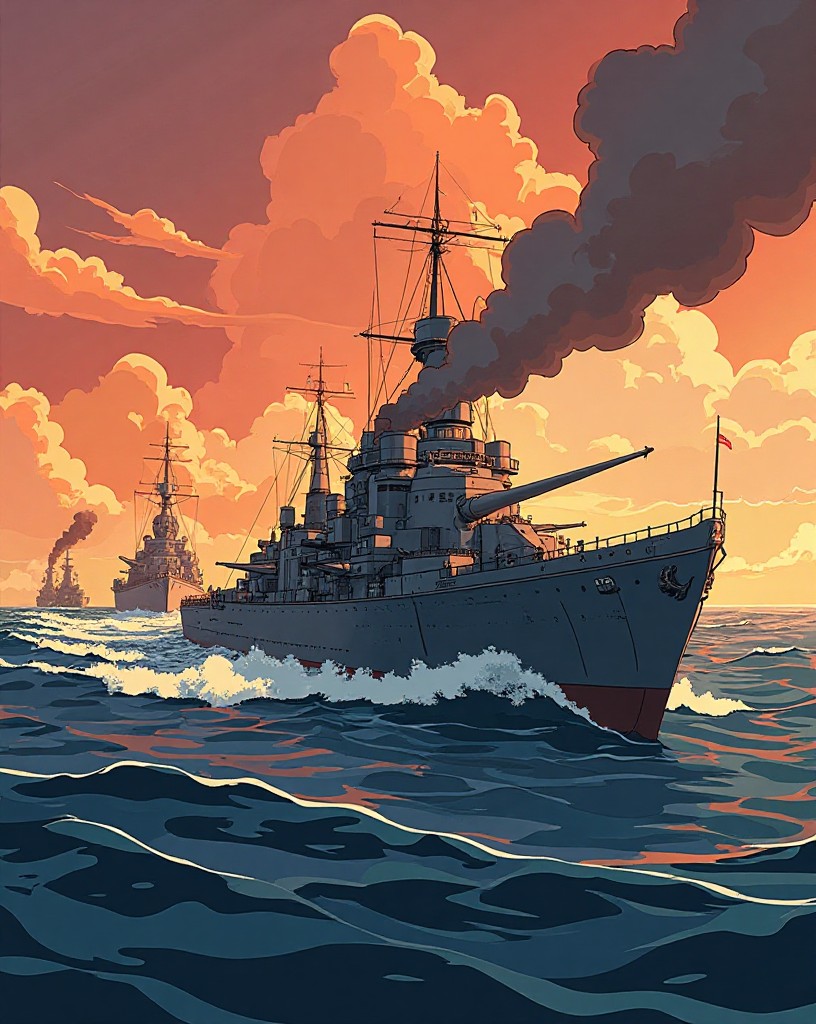
The British battlecruisers fall back — luring the Germans straight toward the main British battle fleet, hidden over the horizon.
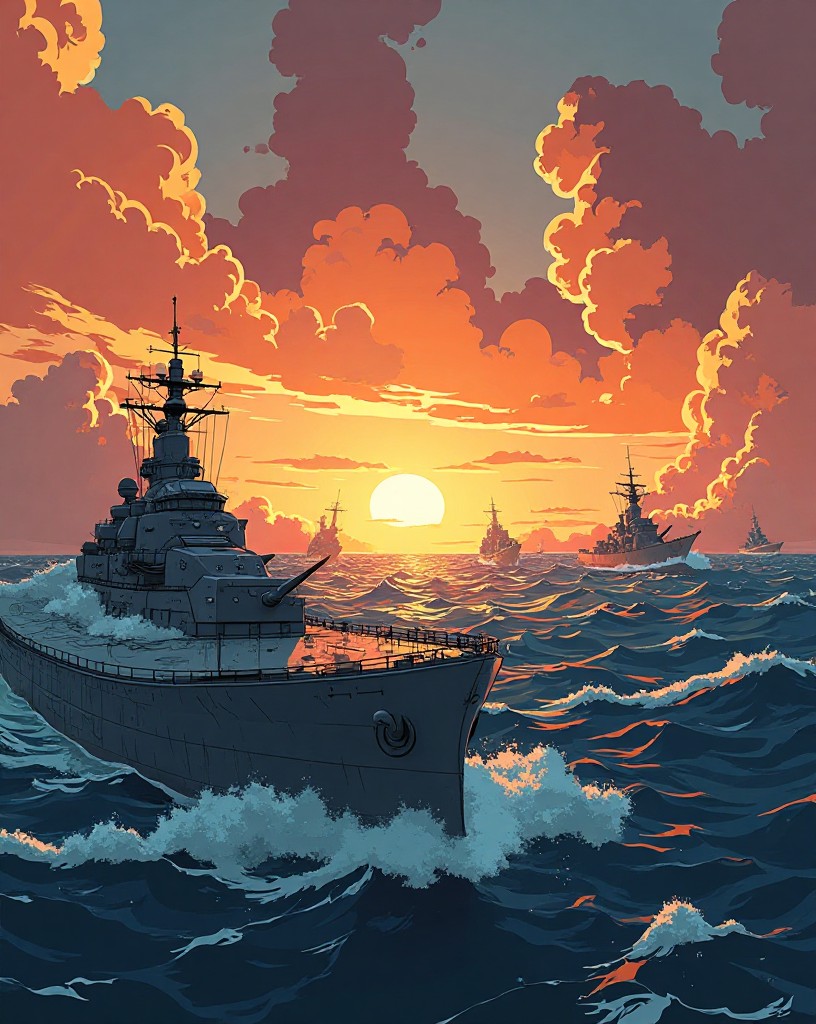
Then the trap closes. The entire British Grand Fleet swings into a line miles long, crossing the German path, and pours fire down onto the head of the German column.
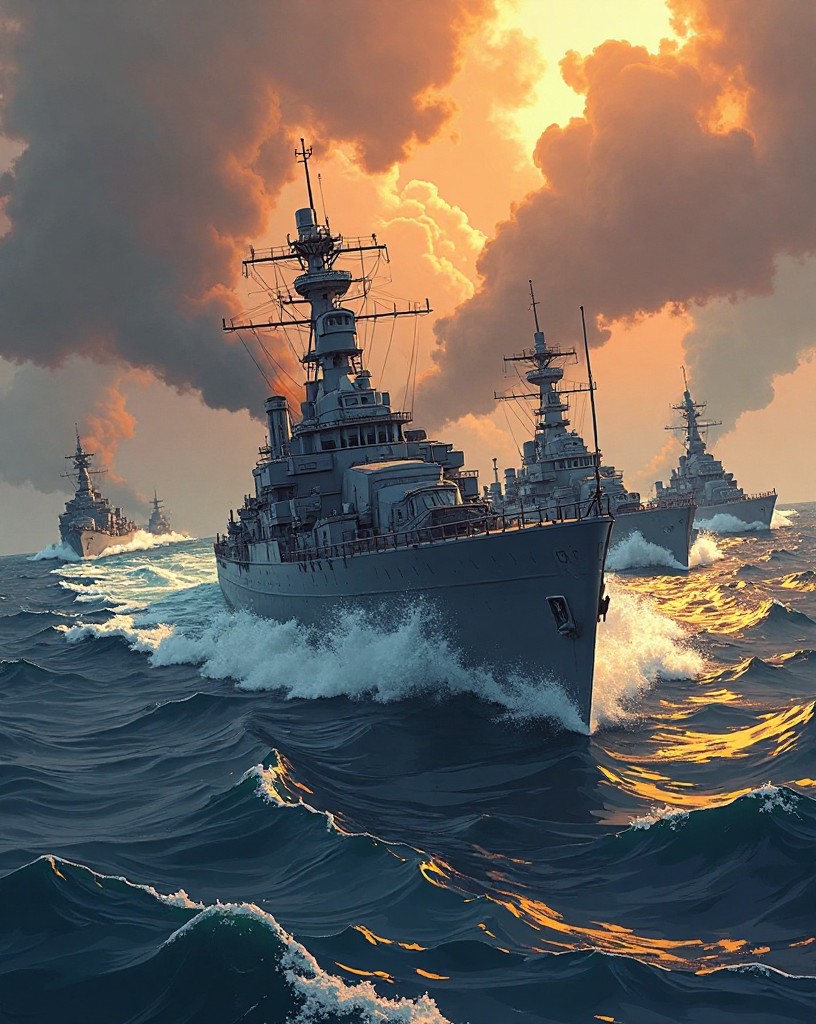
Caught in a storm of shells, the German admiral, Scheer, executes a brilliant emergency turn — his whole fleet reversing course at once to escape into the smoke and mist.
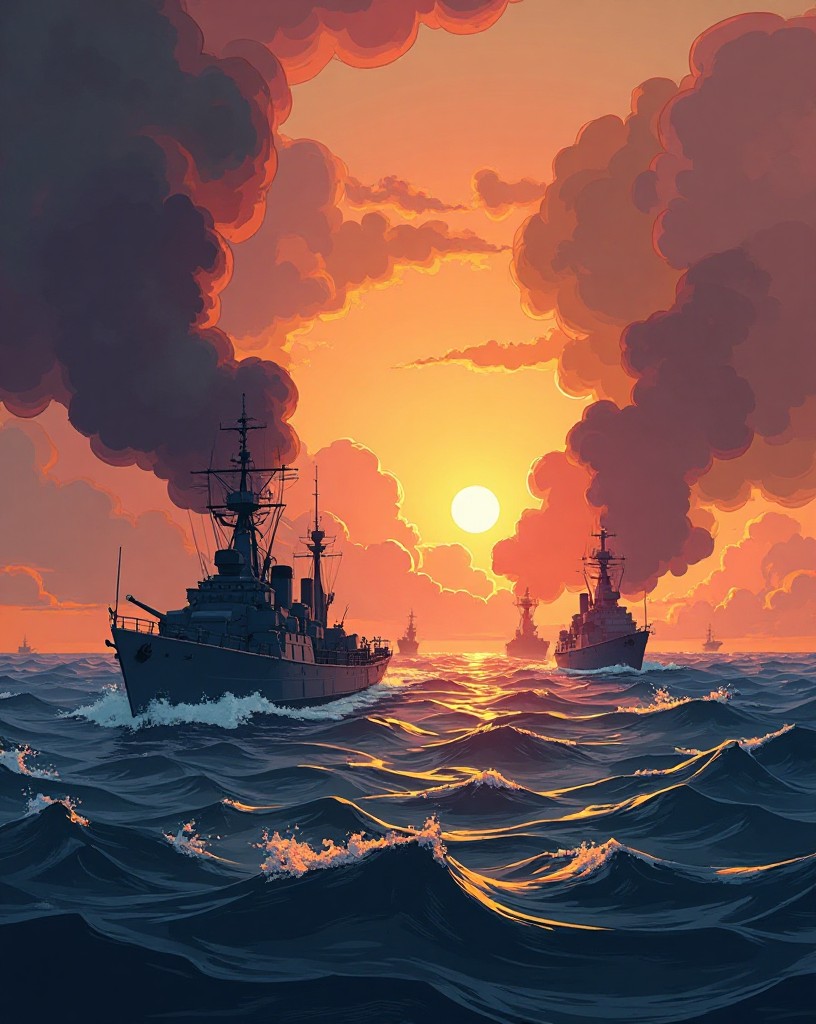
Twice the fleets clash and twice the Germans slip away, screened by destroyers and the falling dark.
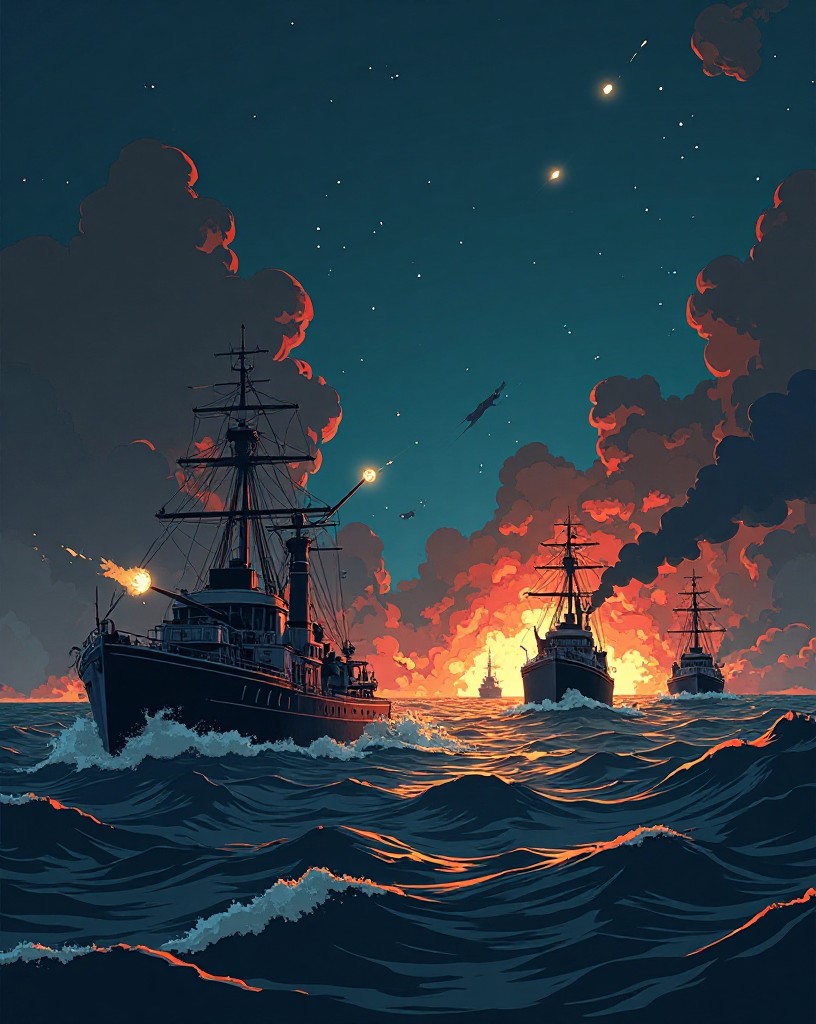
Under cover of night, the German fleet crosses behind the British and runs for home port, fighting through the screen in confused, deadly close-range night actions.
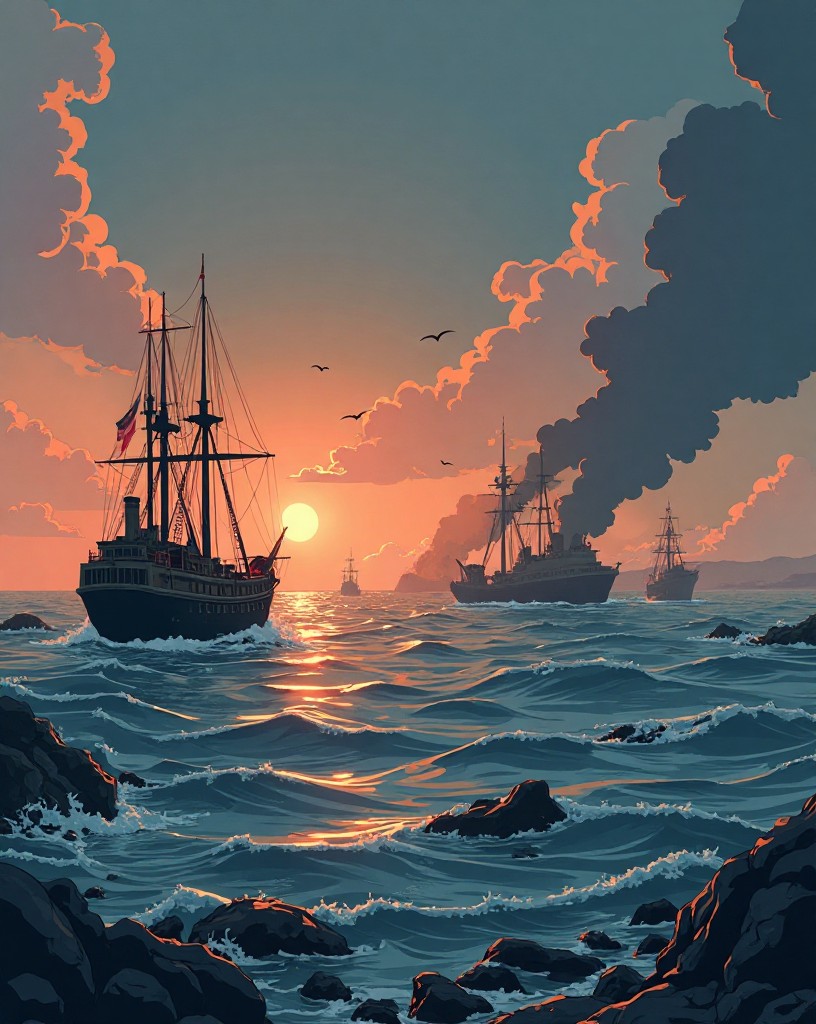
By morning the Germans are gone. On paper they have won — they sank more ships and killed more men than they lost.
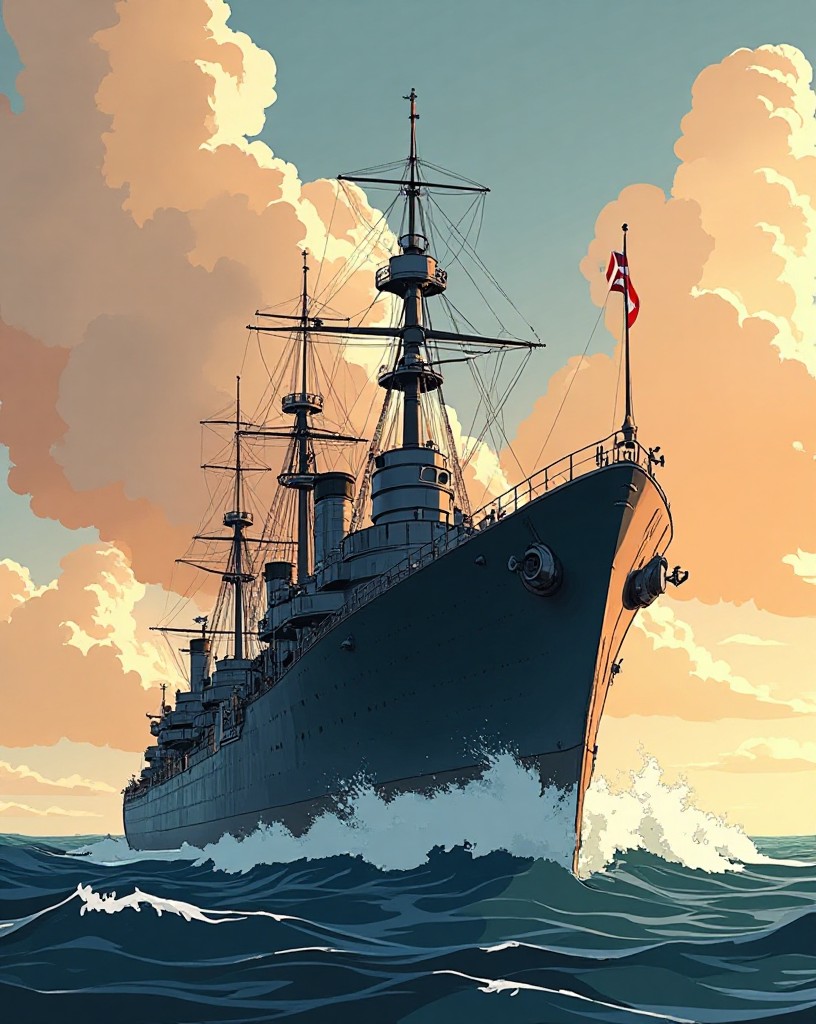
But it was the British who held the sea. The German fleet had looked into the abyss and would never again seriously challenge it; the blockade held, and tightened, for the rest of the war. Jutland was a tactical draw that was a strategic British victory.
Sources
This story was adapted from the following. The illustrations are stylized depictions, not photographs of the events.
“Battle of Jutland”, Wikipedia
Overview, the battlecruiser action, Scheer's turns, and the outcome.
The Rules of the Game: Jutland and British Naval Command, Andrew Gordon (1996)
Detailed analysis of the battle.
That’s the story.
More are in the studio. Head back to the collection to see what’s coming.