Uncommon Valor
Eight square miles of ash, and a flag the whole world remembers.
Iwo Jima · 1945
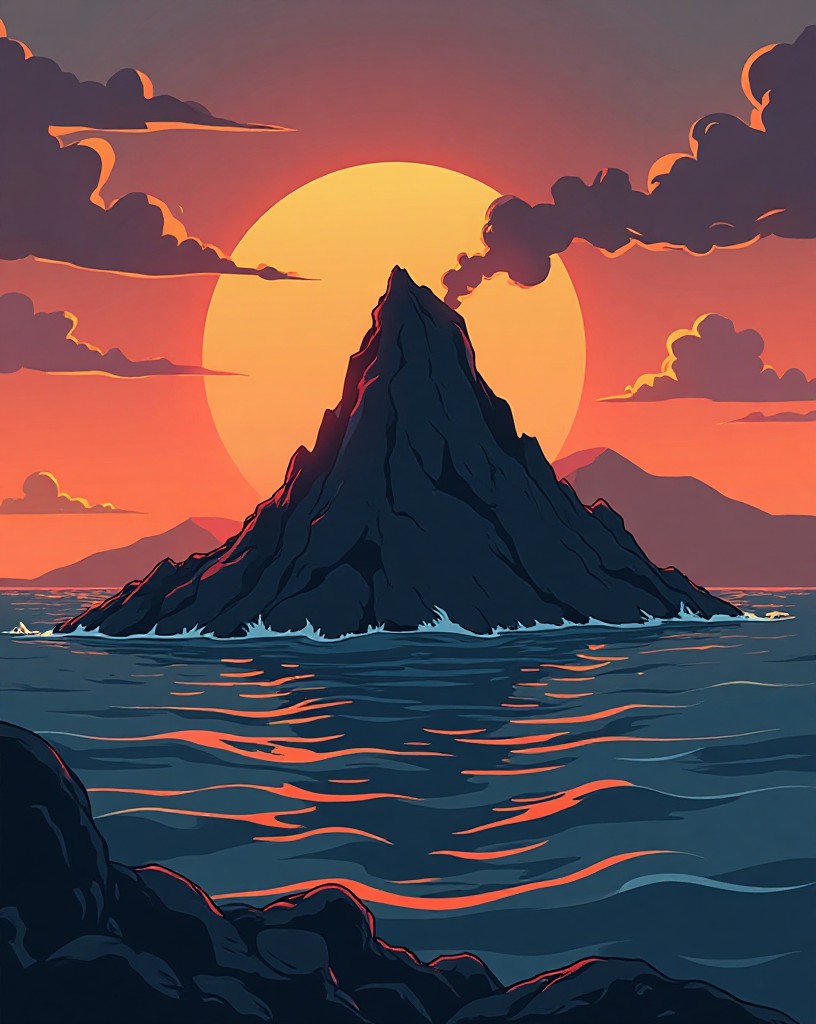
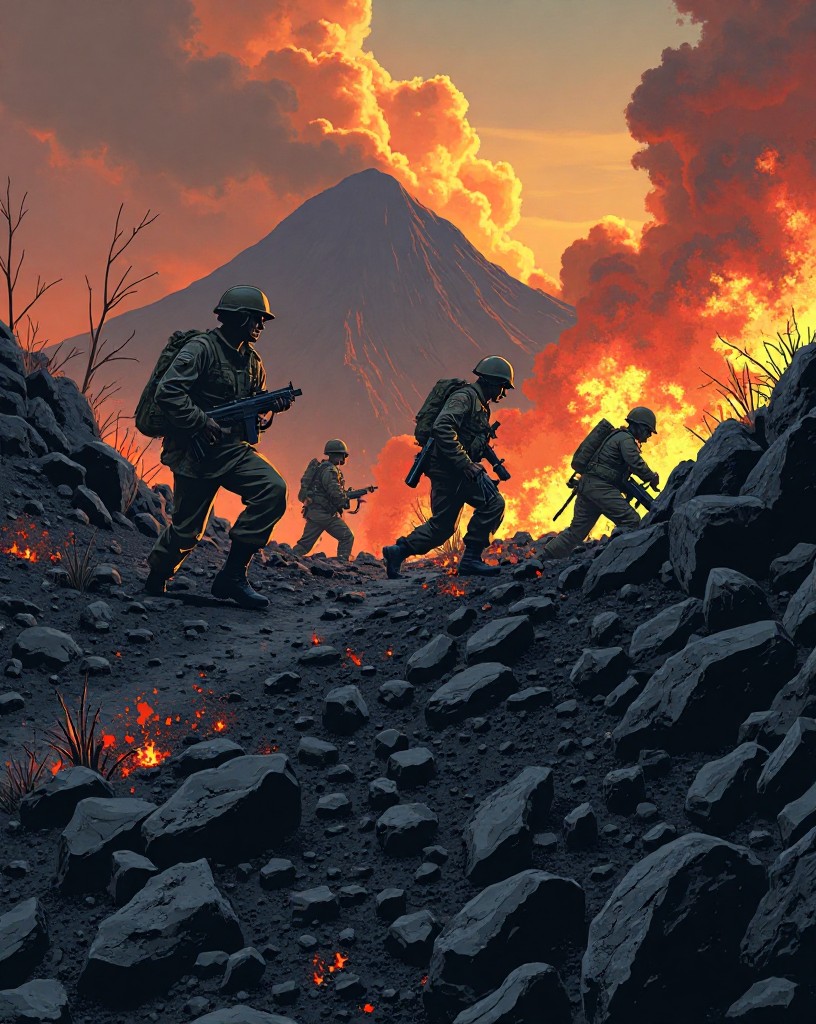
February 1945. A speck of volcanic rock in the Pacific — eight square miles of black ash and stone: Iwo Jima. Its airfields sit halfway between American bombers and Japan itself, and both sides know it must be taken.
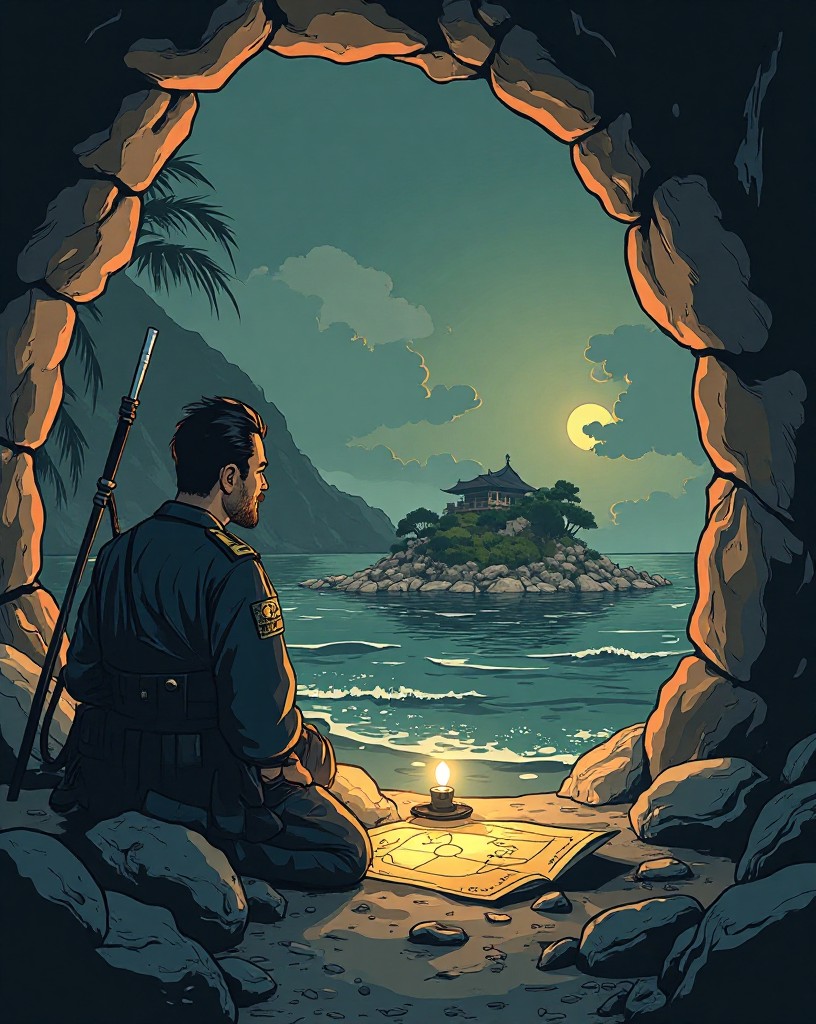
The Japanese commander, General Kuribayashi, knows he cannot win. So he chooses a different goal: to make the island so costly that America loses its stomach for invading Japan.
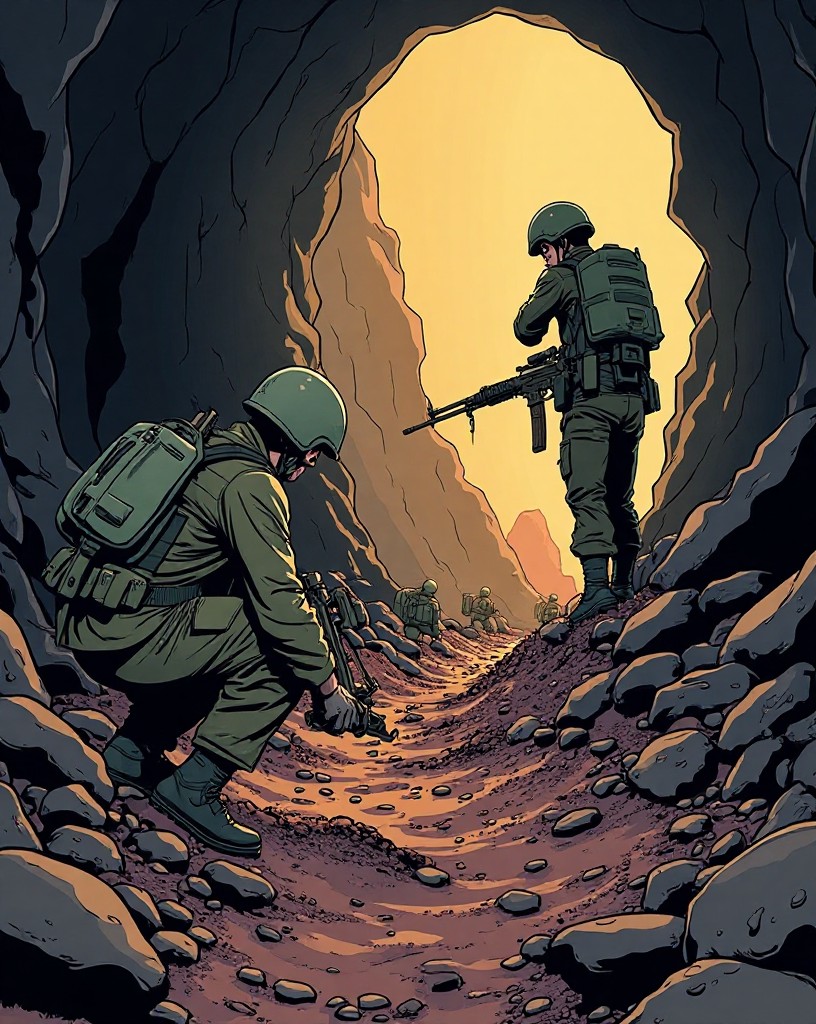
He turns Iwo Jima into a fortress beneath the earth — eleven miles of tunnels, hidden gun positions, and bunkers carved into the rock. His order to his men: each is to kill ten Americans before he dies.
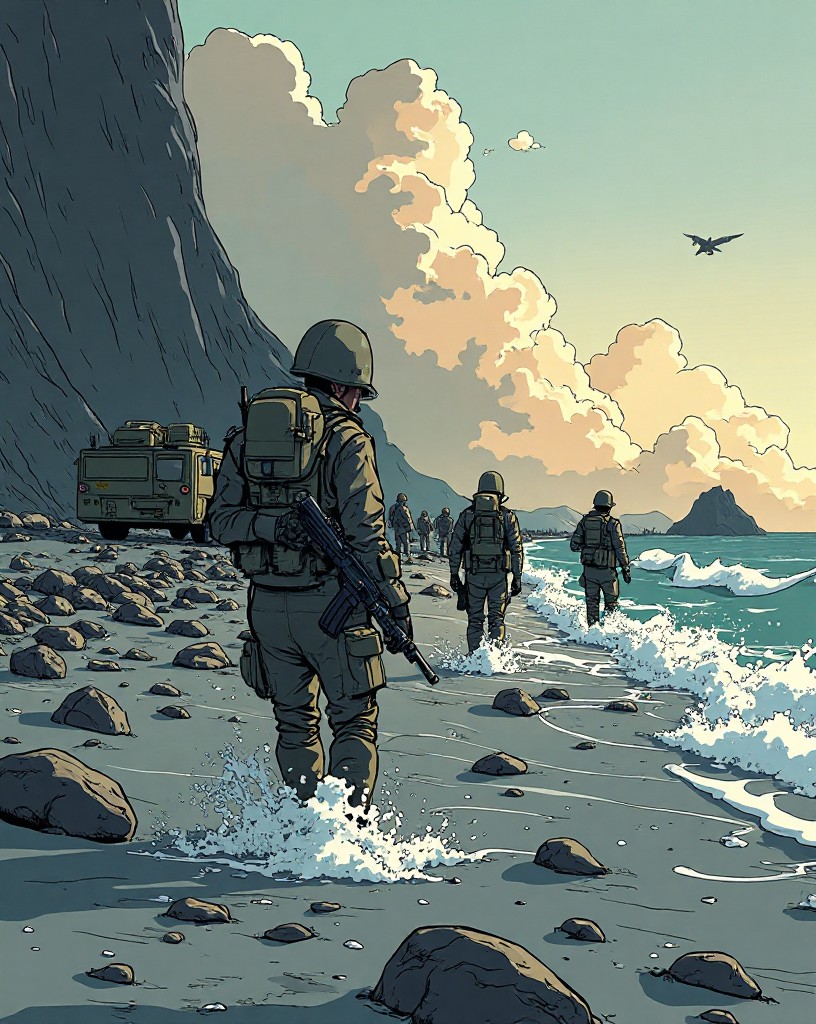
The Marines land on beaches of soft volcanic ash that swallows their boots and stalls their vehicles. For a few minutes, it is strangely, eerily quiet.
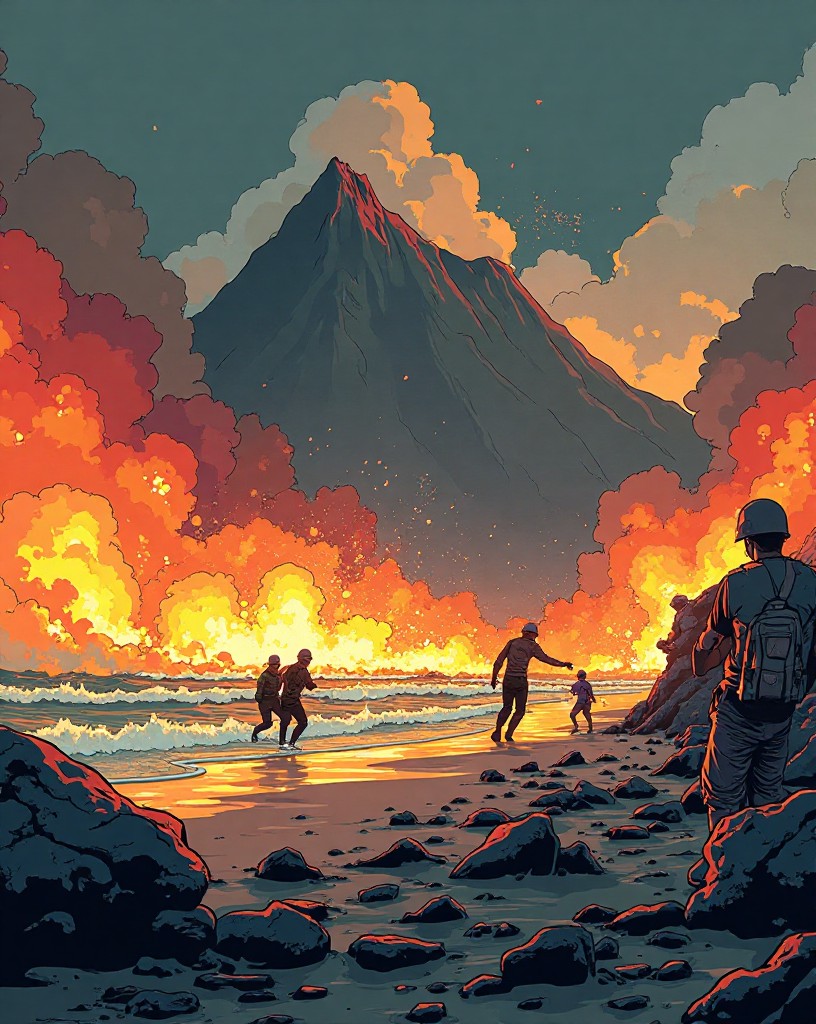
Then Kuribayashi opens fire. From the high ground and the dominating peak of Mount Suribachi, hidden guns rake the crowded beaches. There is almost no cover anywhere.
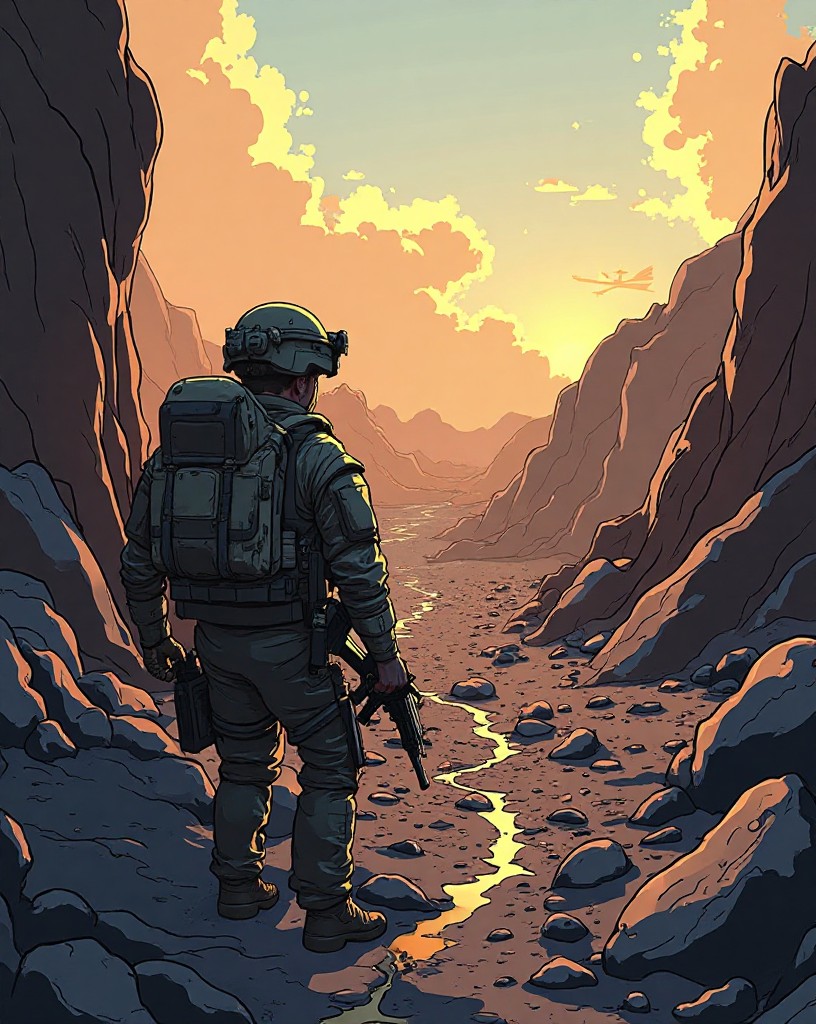
A Marine
“You can't see them. There's nothing to shoot back at — it's like the whole island is shooting at us.”
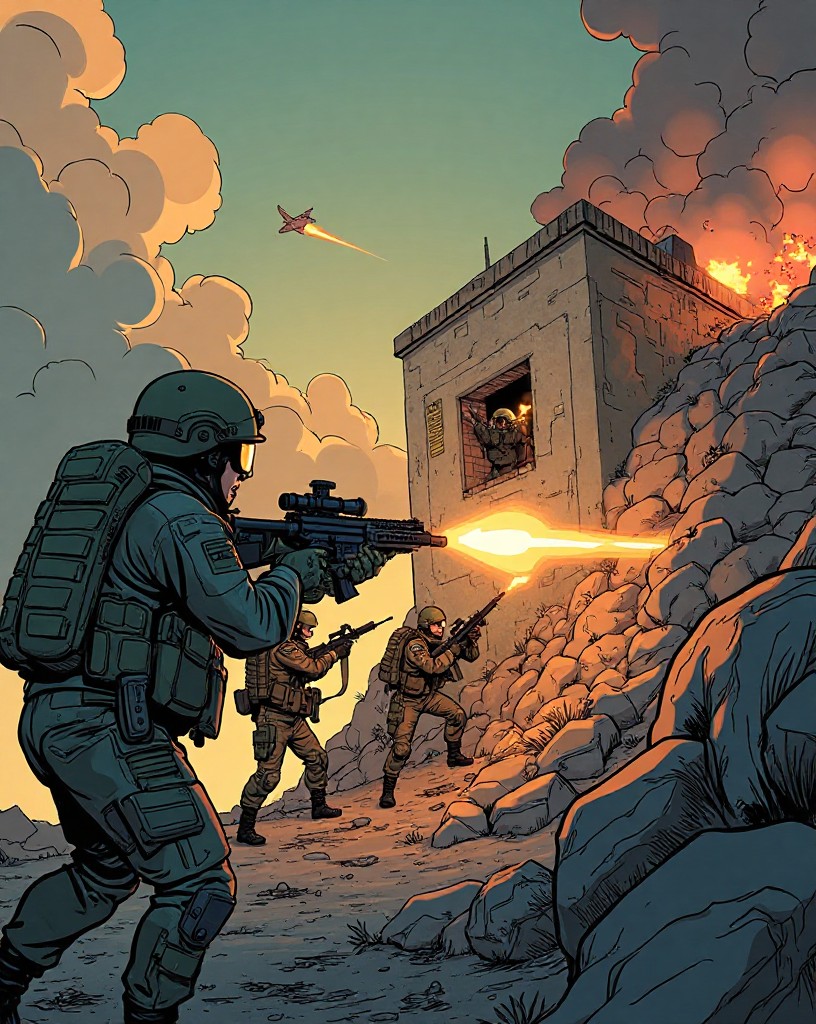
The Marines claw forward yard by yard, taking the tunnels and bunkers one at a time — with grenades, flamethrowers, and demolition charges. Each position has to be sealed by hand.
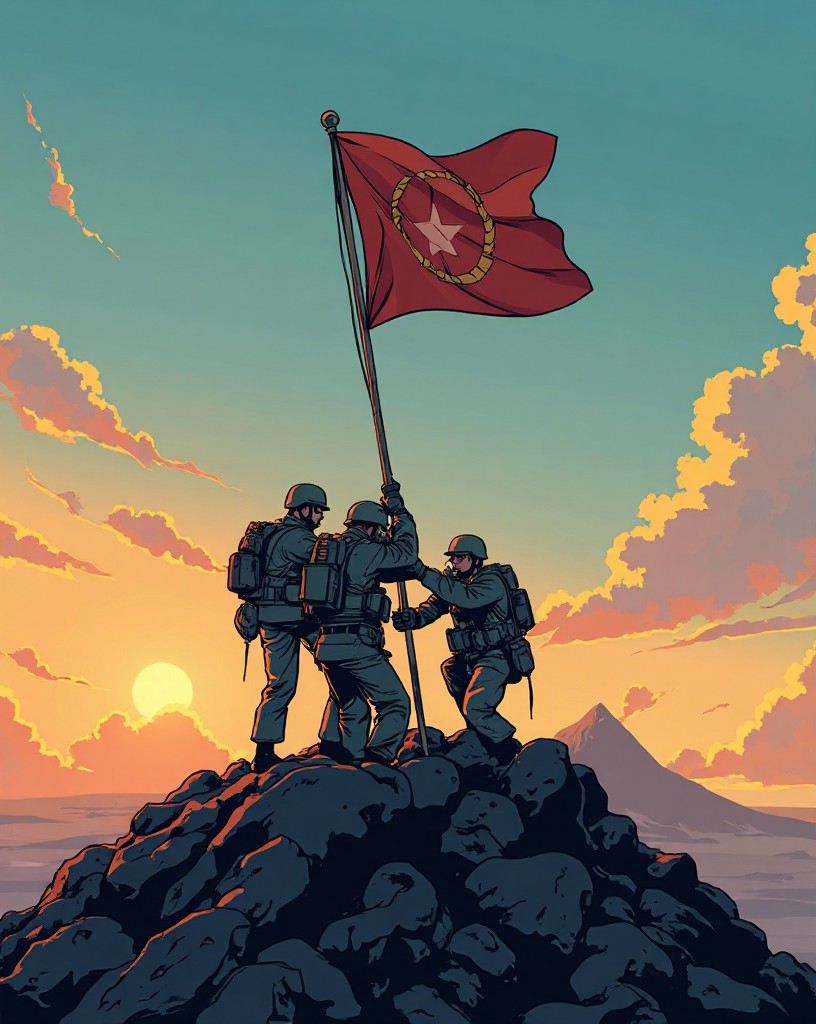
On the fifth day, a patrol fights its way to the top of Suribachi and raises a flag. A photographer catches the second, larger flag going up — and the image becomes the most famous photograph of the war.
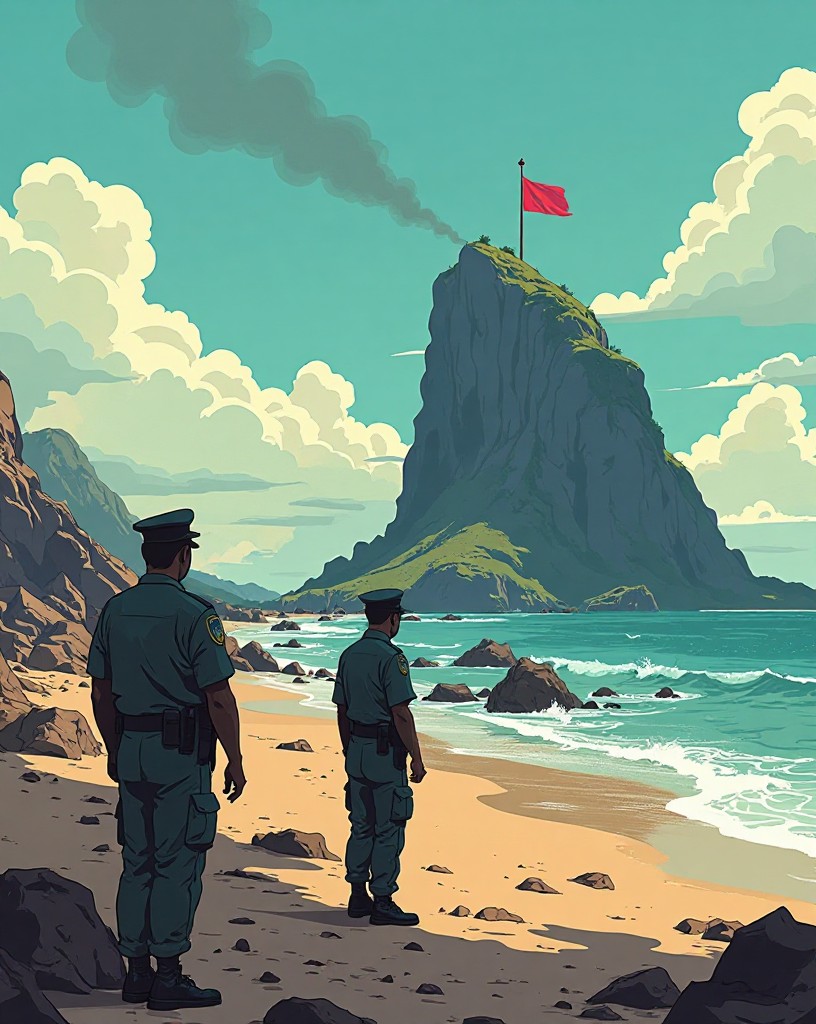
Sec. Forrestal
“The raising of that flag means a Marine Corps for the next five hundred years.”
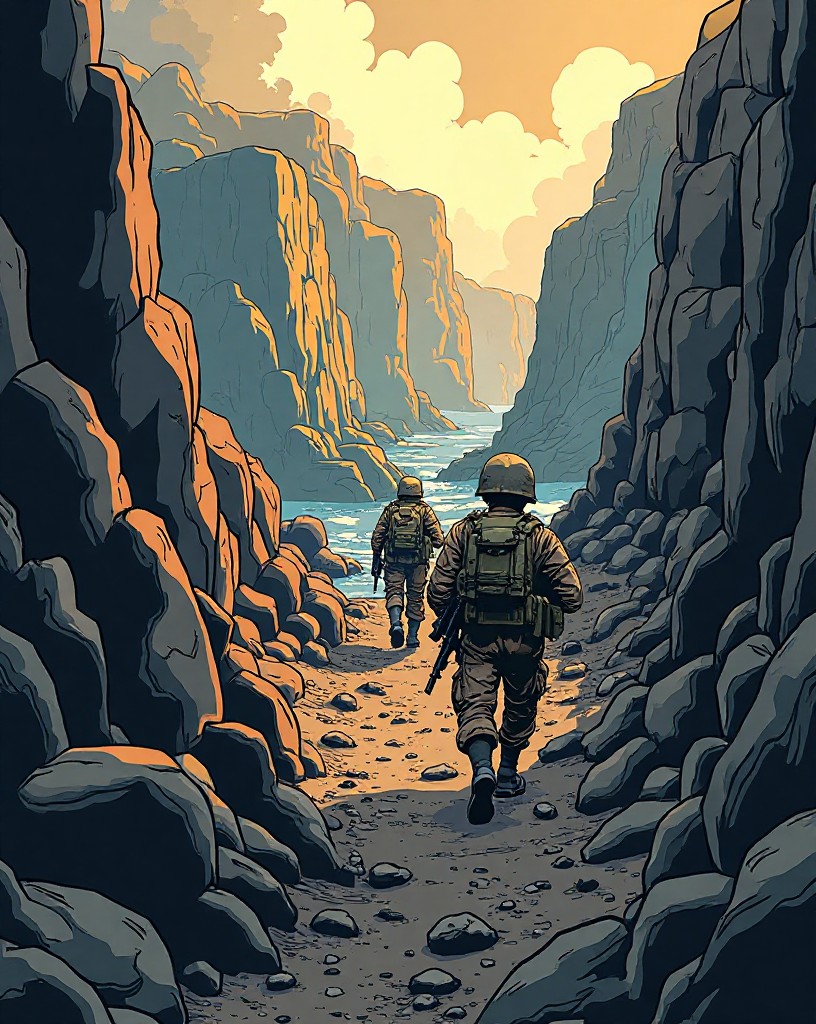
But the flag did not mean the battle was won. The hardest fighting was still to come, in the broken rock of the island's north, and it would grind on for weeks.
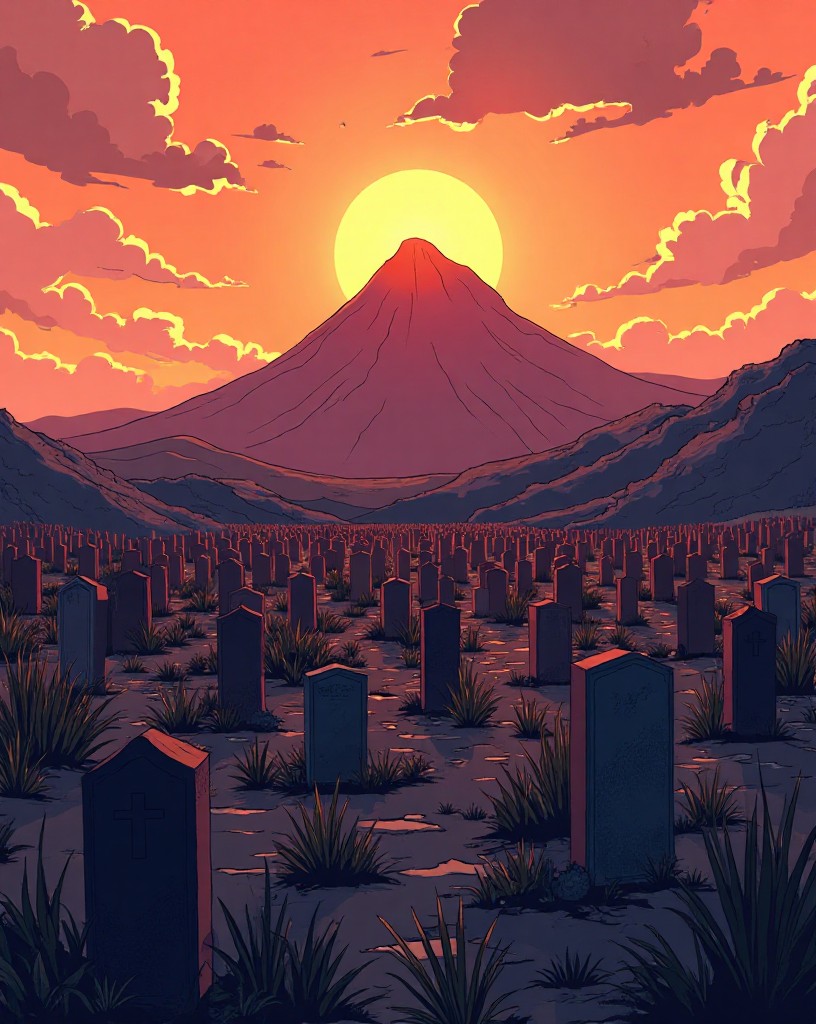
When it ended, nearly seven thousand Americans were dead and thousands more wounded. Of the island's twenty-one thousand defenders, almost none surrendered — nearly all died.
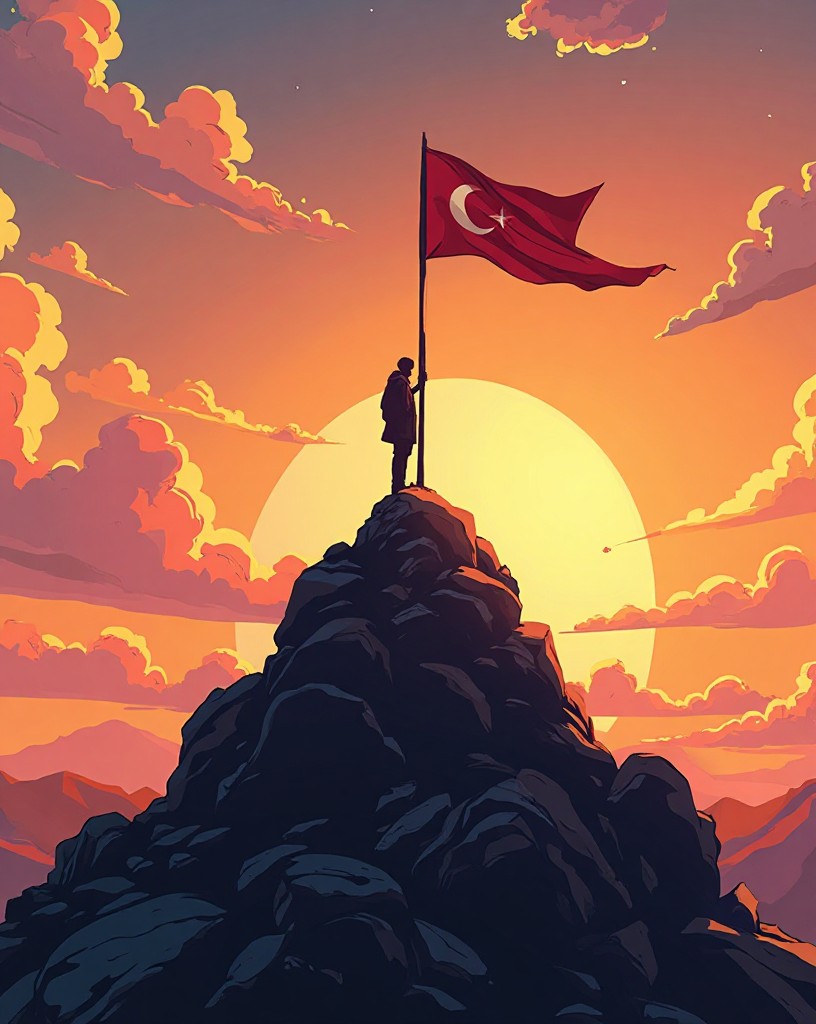
Of the Marines on Iwo Jima, an admiral said: "Uncommon valor was a common virtue." The little island became — and remains — one of the proudest and most painful names in the history of the Corps.
Sources
This story was adapted from the following. The illustrations are stylized depictions, not photographs of the events.
“Battle of Iwo Jima”, Wikipedia
Overview, Kuribayashi's defense, the flag raisings, and casualties.
Flags of Our Fathers, James Bradley (2000)
On the flag raising and the men who took part.
That’s the story.
More are in the studio. Head back to the collection to see what’s coming.