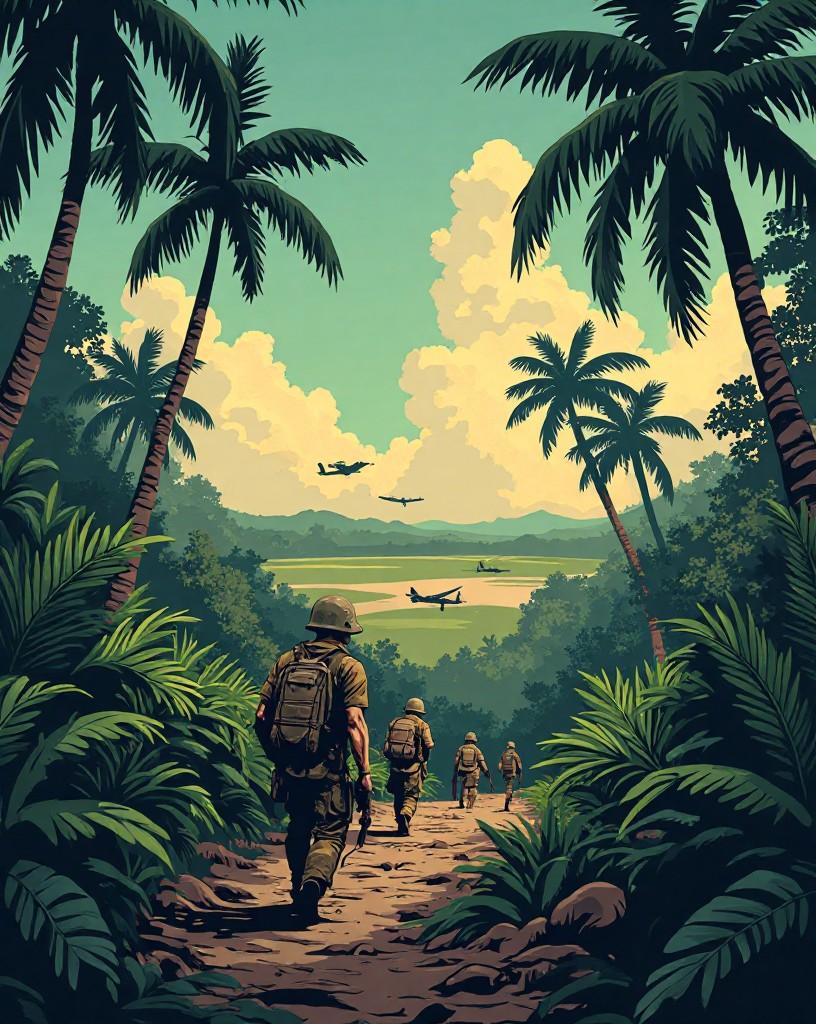
Guadalcanal
Six months of jungle, sea, and sky for one muddy airfield.
Solomon Islands · 1942–43
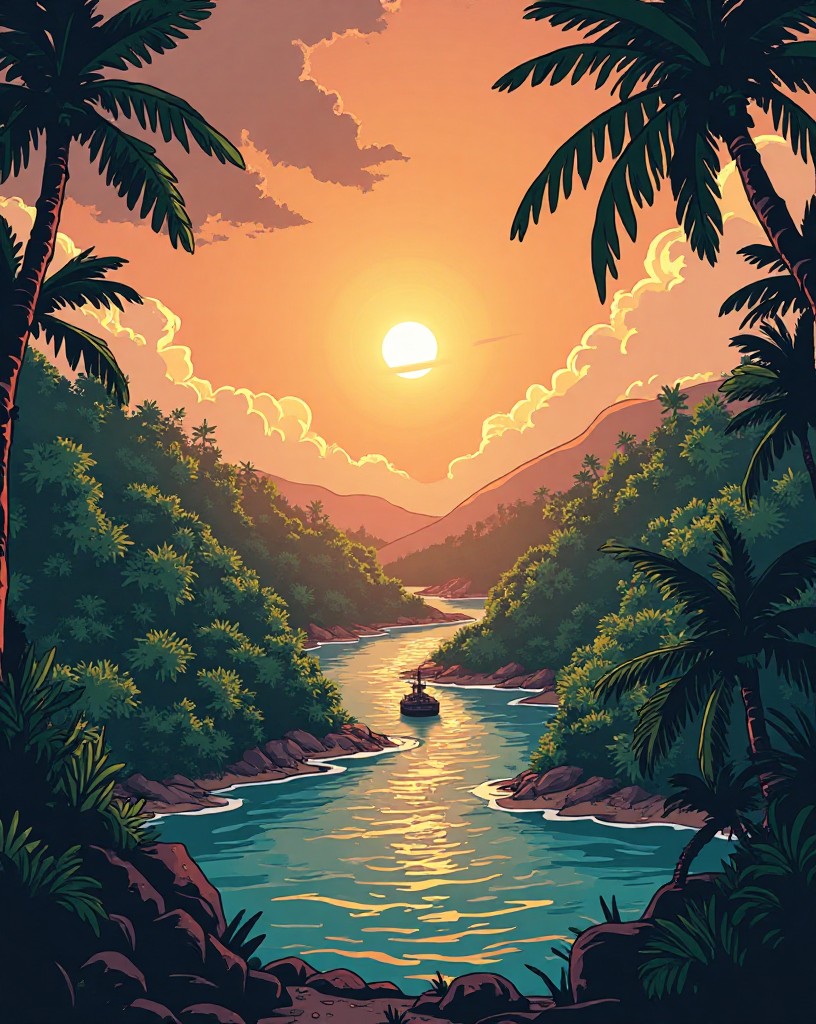
August 1942. Six months after Pearl Harbor, Japan is still expanding across the Pacific. On a jungle island almost no one has heard of — Guadalcanal — the Japanese are building an airfield that could cut the lifeline to Australia. America decides to take it, in its first great offensive of the war.
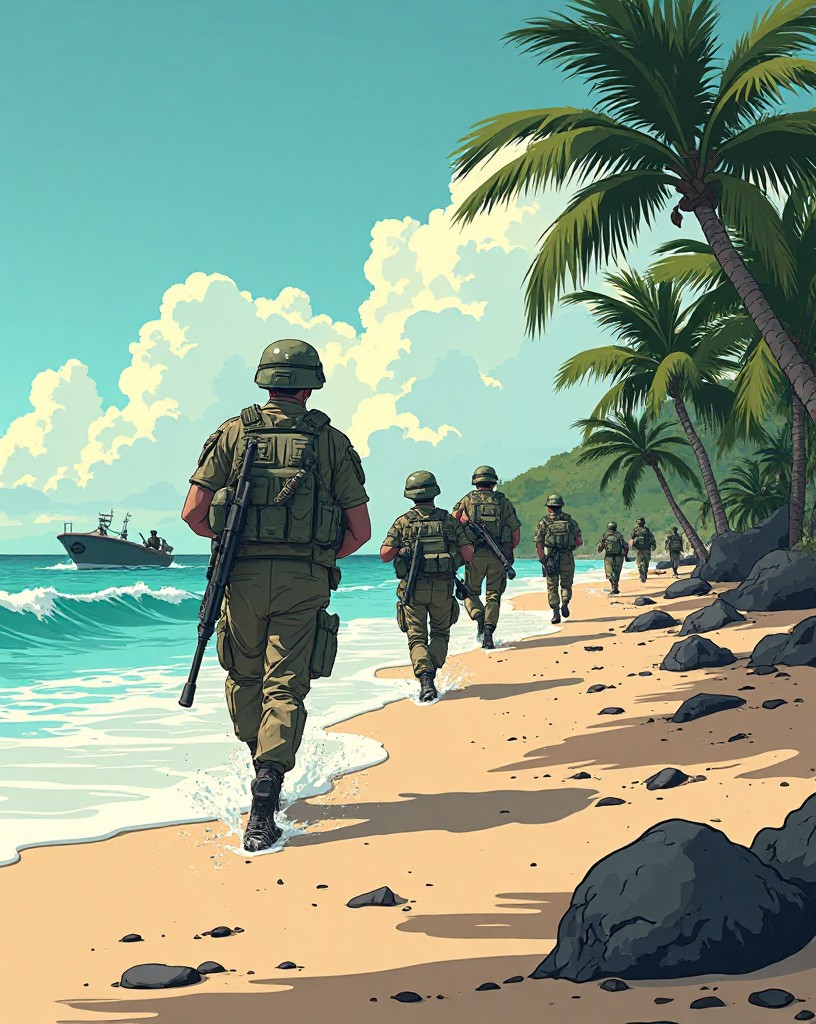
The US Marines wade ashore expecting a fight — and find the airfield half-built and lightly held. They seize it fast and name it Henderson Field.
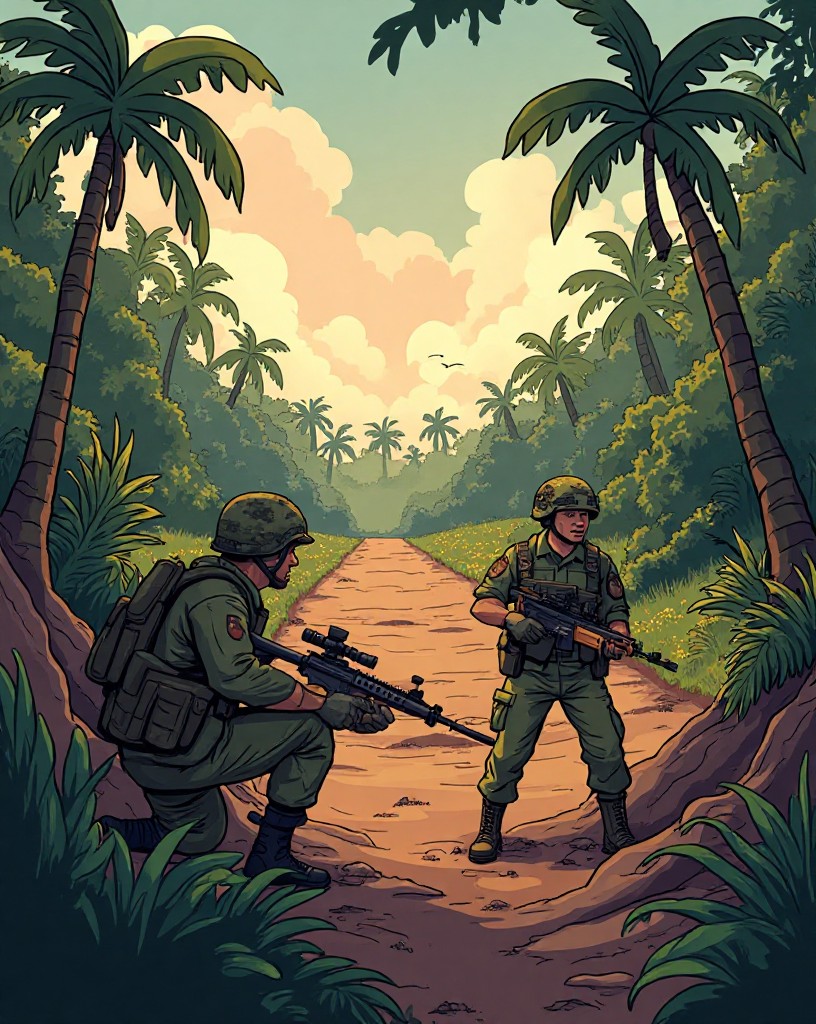
Taking it was easy. Keeping it will be the hardest fighting in the Pacific. For both sides, this airfield is now the prize, and they will pour in everything to win it.
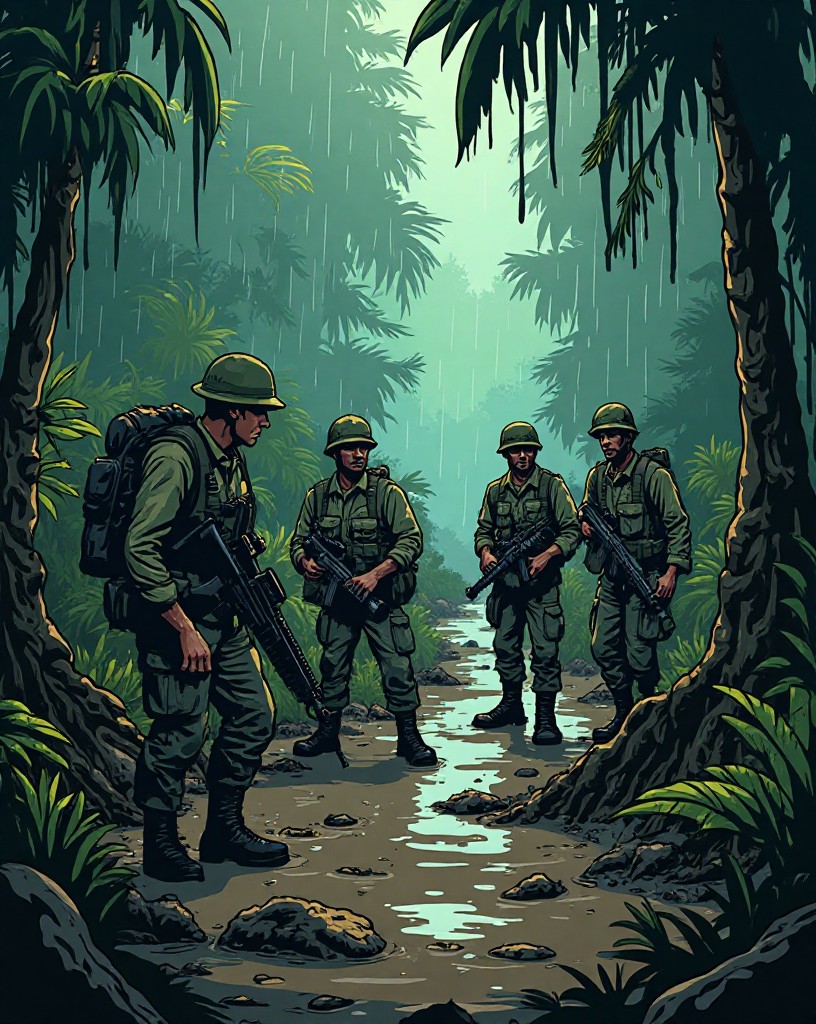
The Marines dig in around Henderson Field in the steaming jungle — short of supplies, racked by malaria — as the Japanese land troops to take it back.
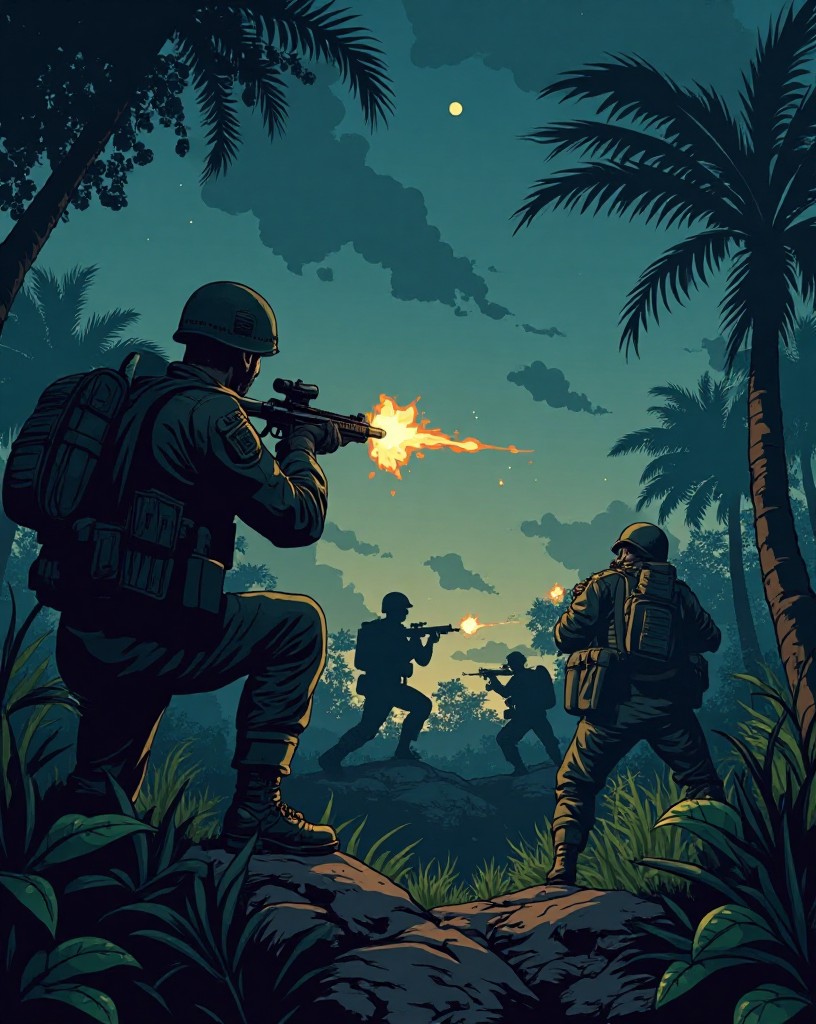
The Japanese attack at night, again and again, hurling themselves at the Marine lines. On a low ridge before the airfield, a few hundred Marines hold against wave after wave in the dark.
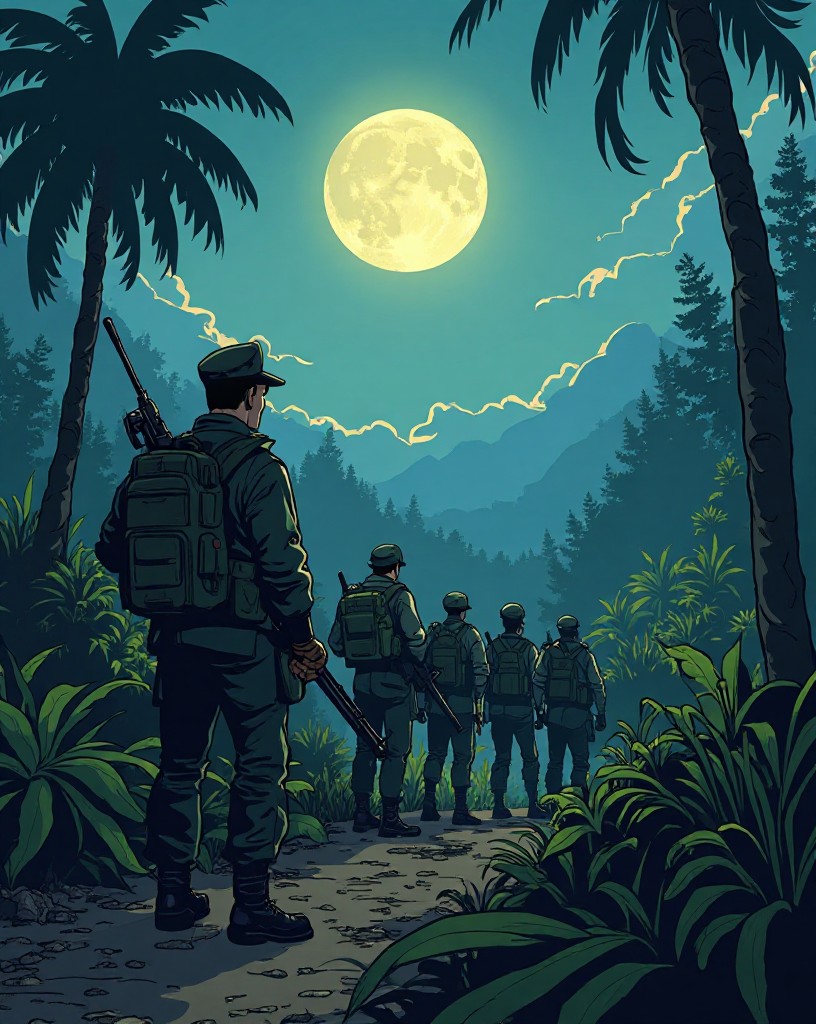
Col. Edson
“Nobody moves. You don't fall back. This ridge is the airfield, and the airfield is the island.”
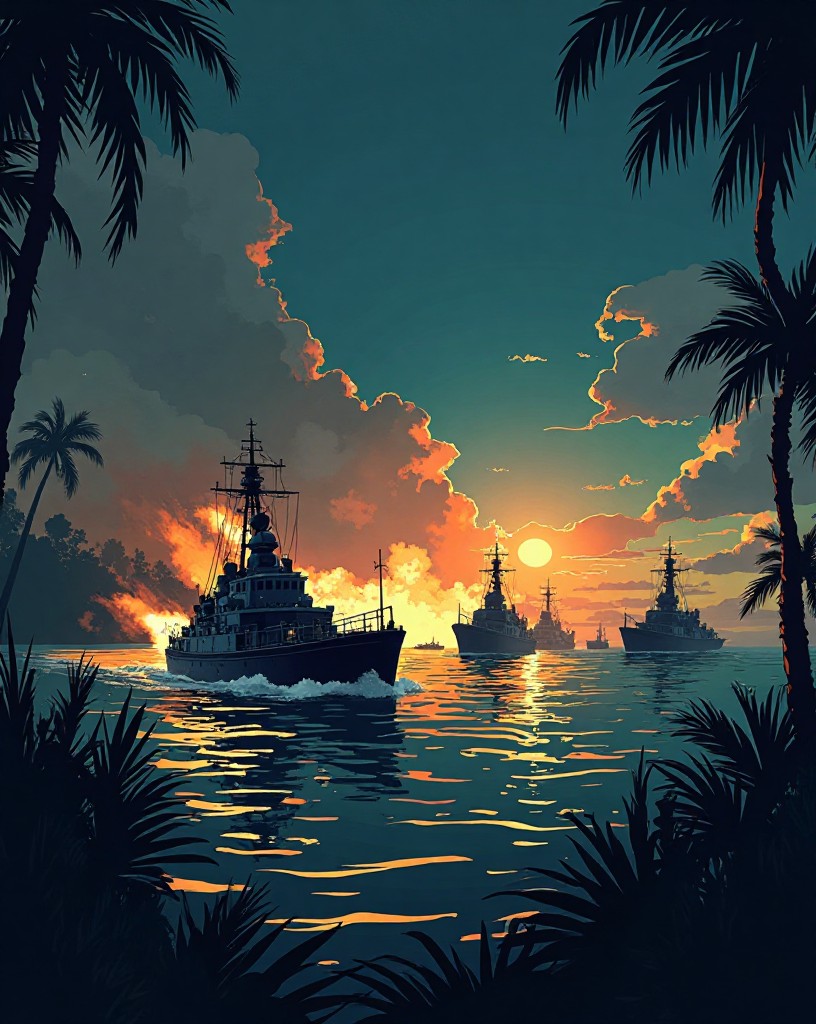
Out at sea it is just as savage. In the dark waters off the island, fleets clash again and again at point-blank range — so many ships sink in one stretch of water it becomes known as Ironbottom Sound.
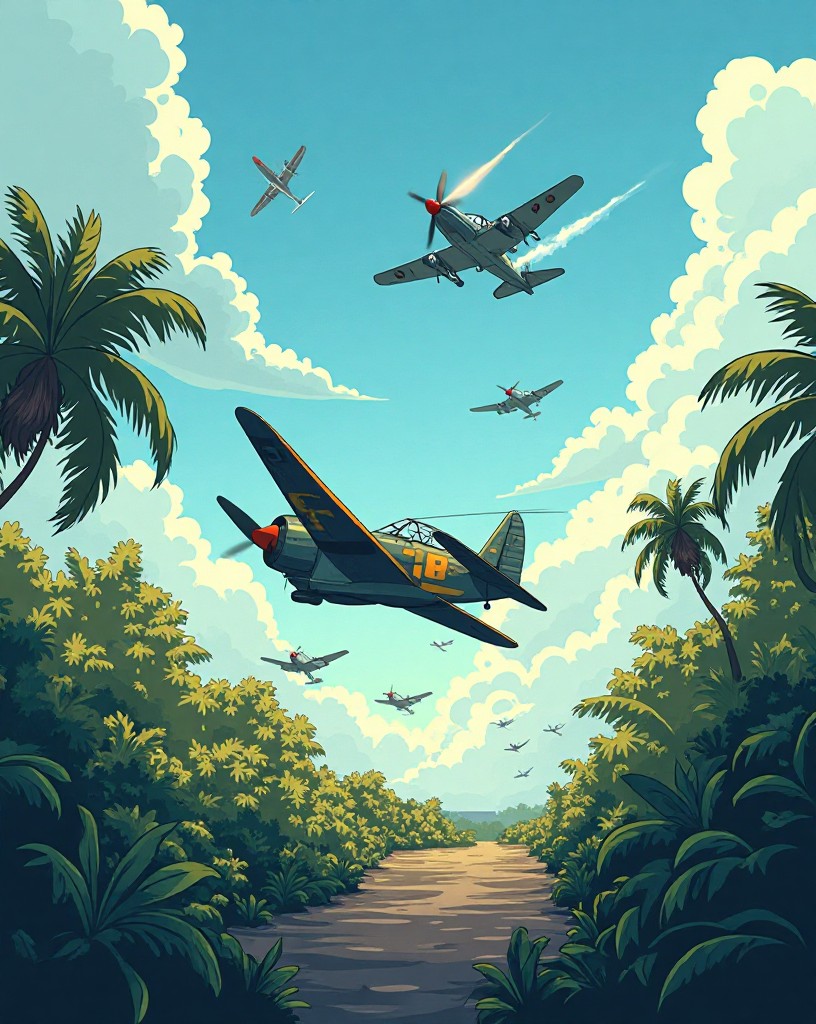
By day, planes from Henderson Field battle Japanese bombers overhead; by night, Japanese warships shell the airfield. Neither side can quite knock the other out.
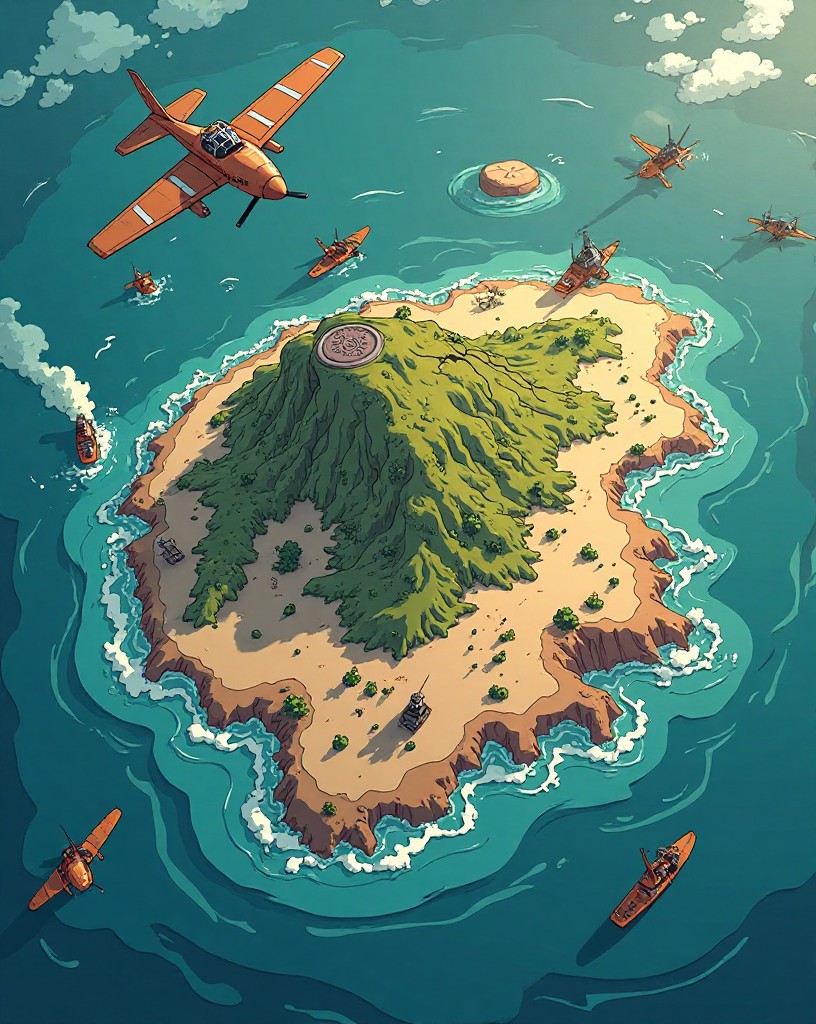
It becomes a battle of attrition — a meat grinder of jungle, sea, and sky. Whoever can feed in men, ships, and planes the longest will win.
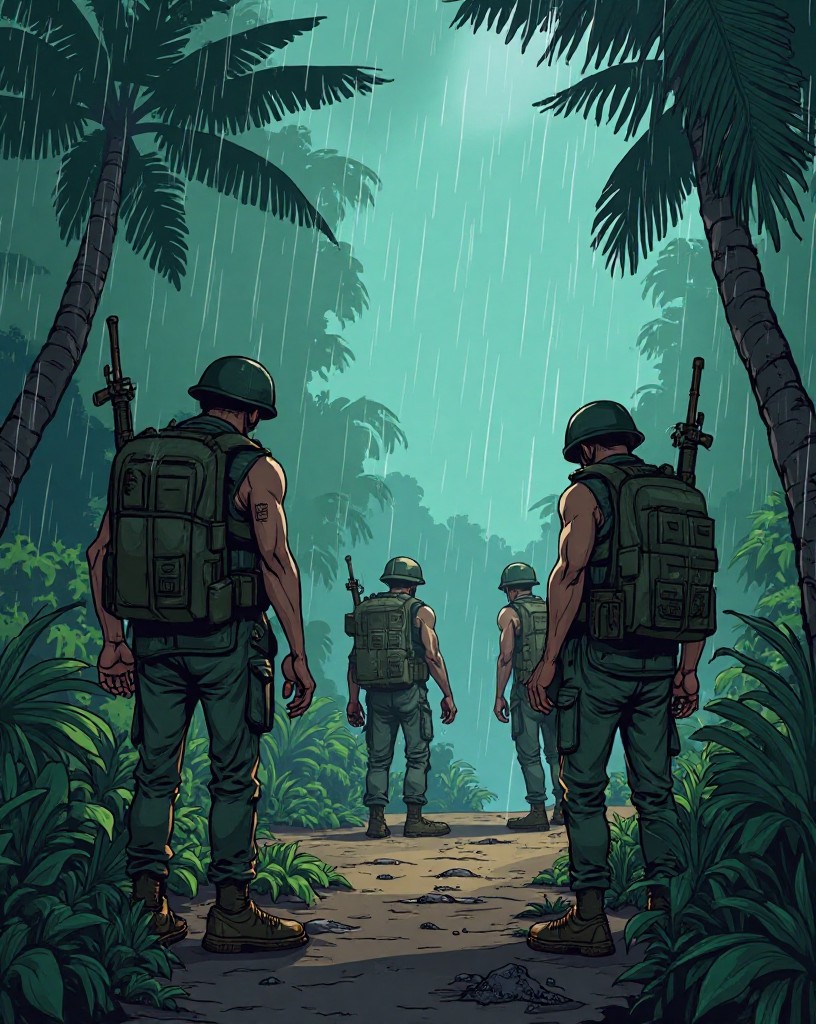
Slowly, the balance tips. American supply lines hold; Japan's cannot keep up the cost. Starving and dying of disease, the Japanese troops on the island waste away.
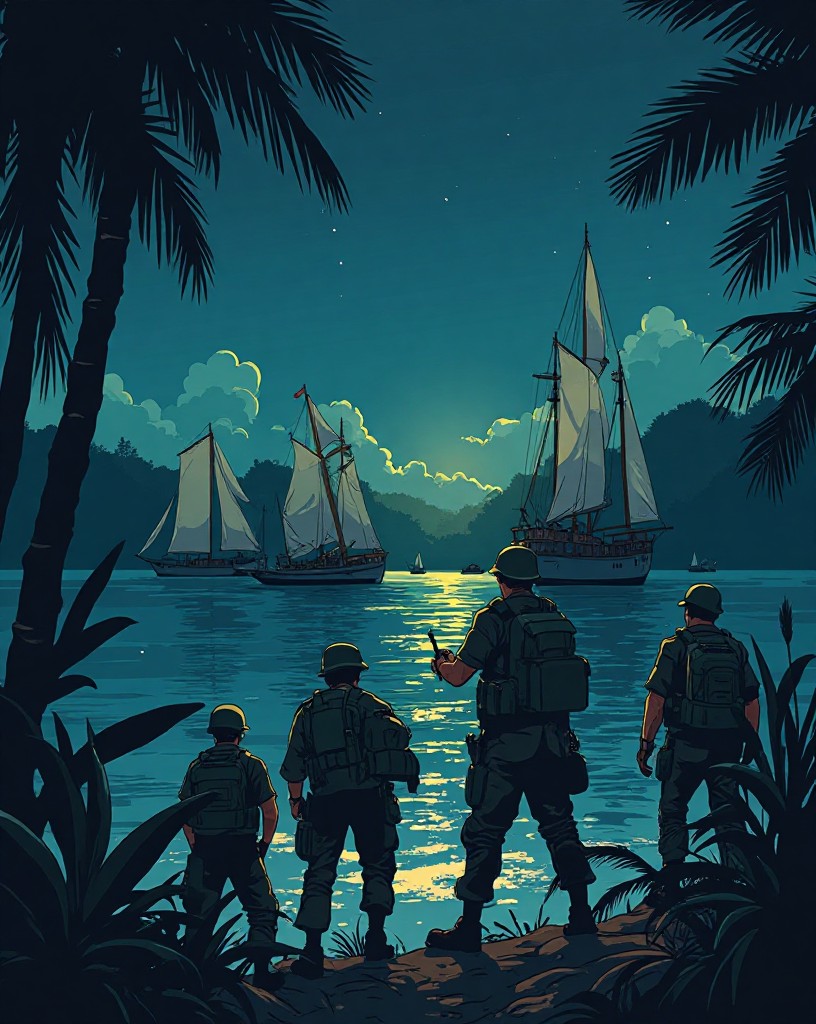
In February 1943, the Japanese give up and secretly evacuate their surviving troops by night.
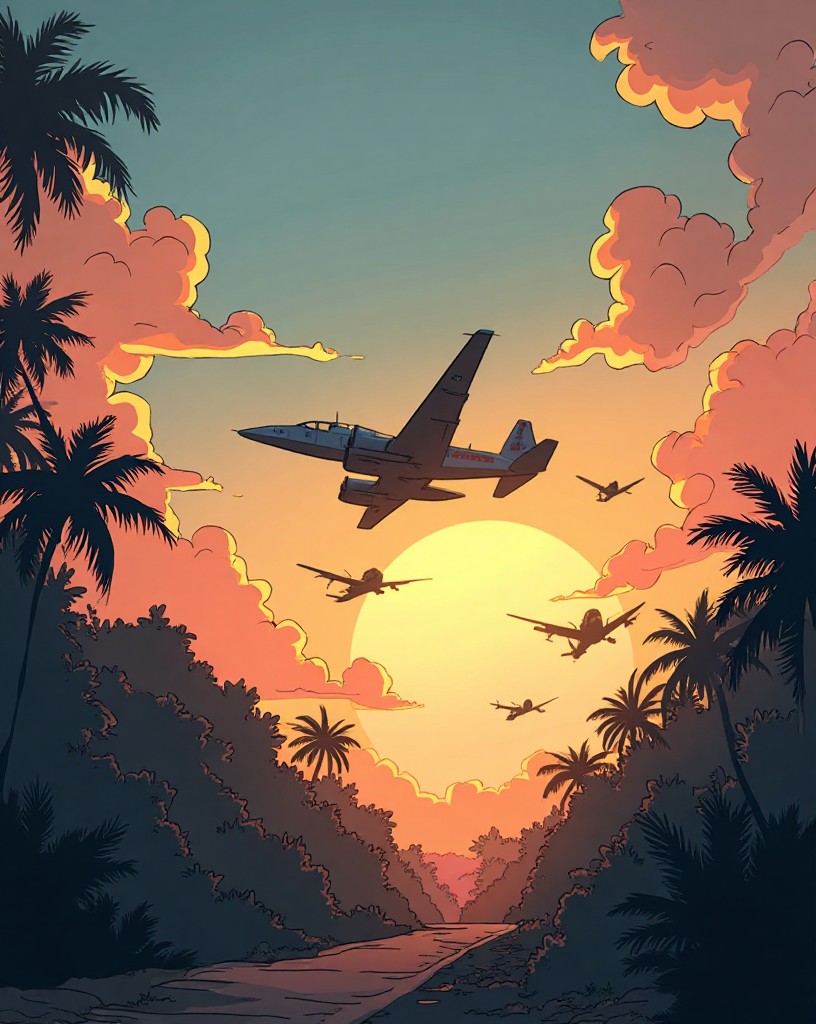
After six months, Guadalcanal was American. It was Japan's first major defeat on land — and the moment the tide of the Pacific war turned. From here, Japan would be on the defensive, island by island, all the way home.
Sources
This story was adapted from the following. The illustrations are stylized depictions, not photographs of the events.
“Guadalcanal campaign”, Wikipedia
Overview, Henderson Field, the ridge, and the naval battles.
Guadalcanal: The Definitive Account of the Landmark Battle, Richard B. Frank (1990)
Comprehensive history of the campaign.
That’s the story.
More are in the studio. Head back to the collection to see what’s coming.