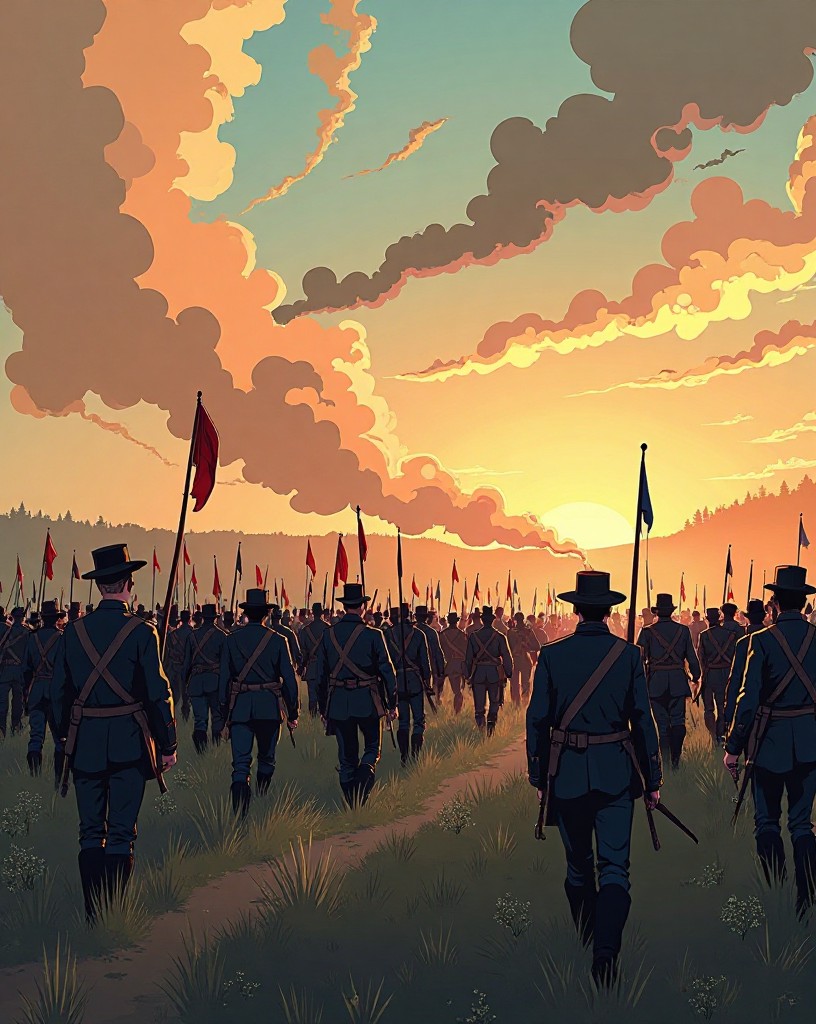
The High-Water Mark
Three days at a crossroads town that decided a war.
Gettysburg · July 1863
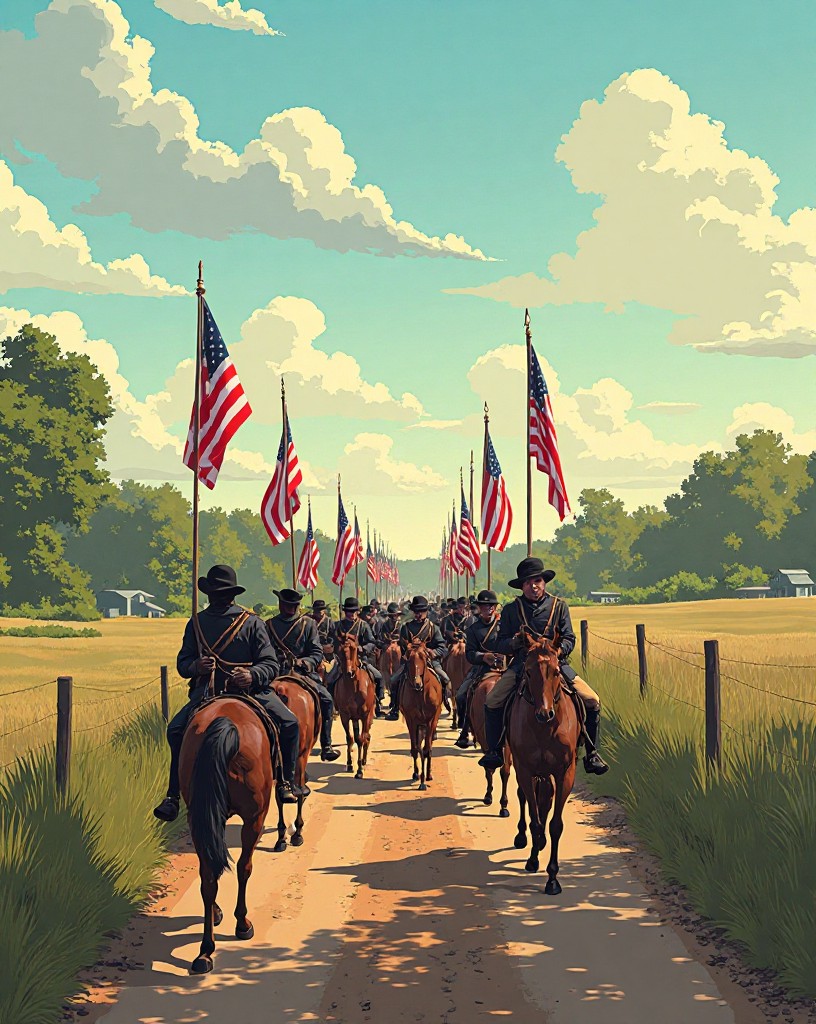
Summer 1863. The American Civil War is at its height, and General Robert E. Lee has done the unthinkable — marched his Confederate army north into Pennsylvania, hoping one great victory on Union soil will finally end the war.
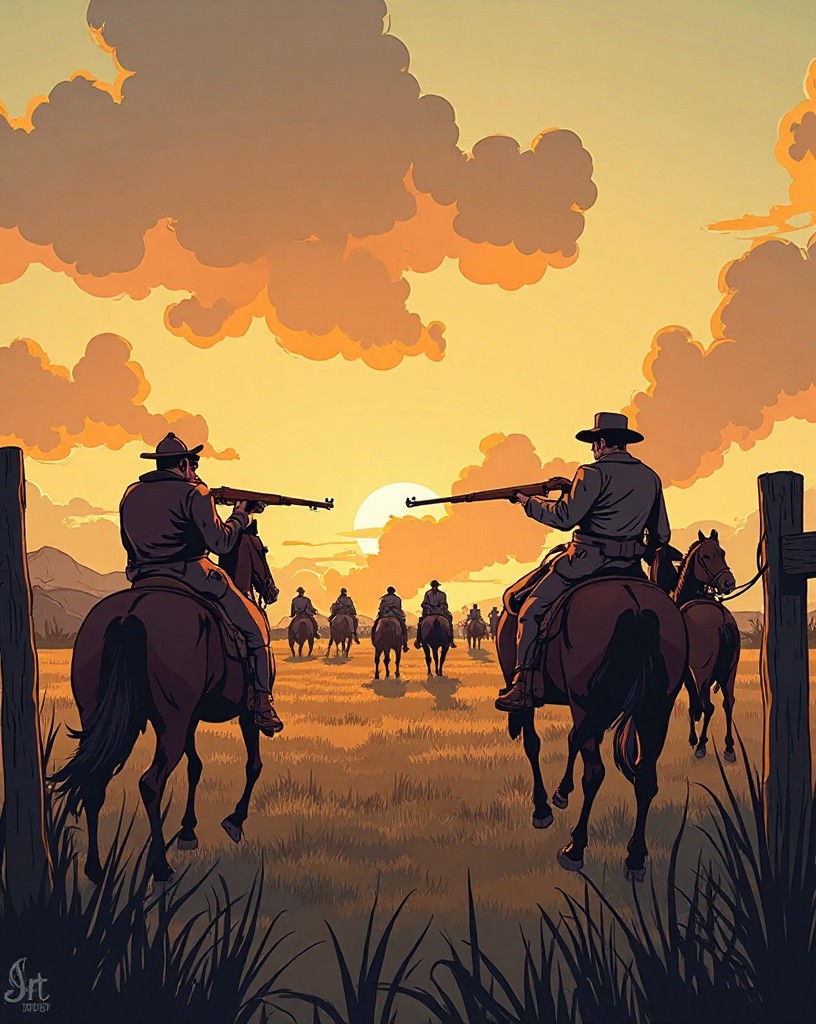
The two armies collide almost by accident at a small crossroads town: Gettysburg.
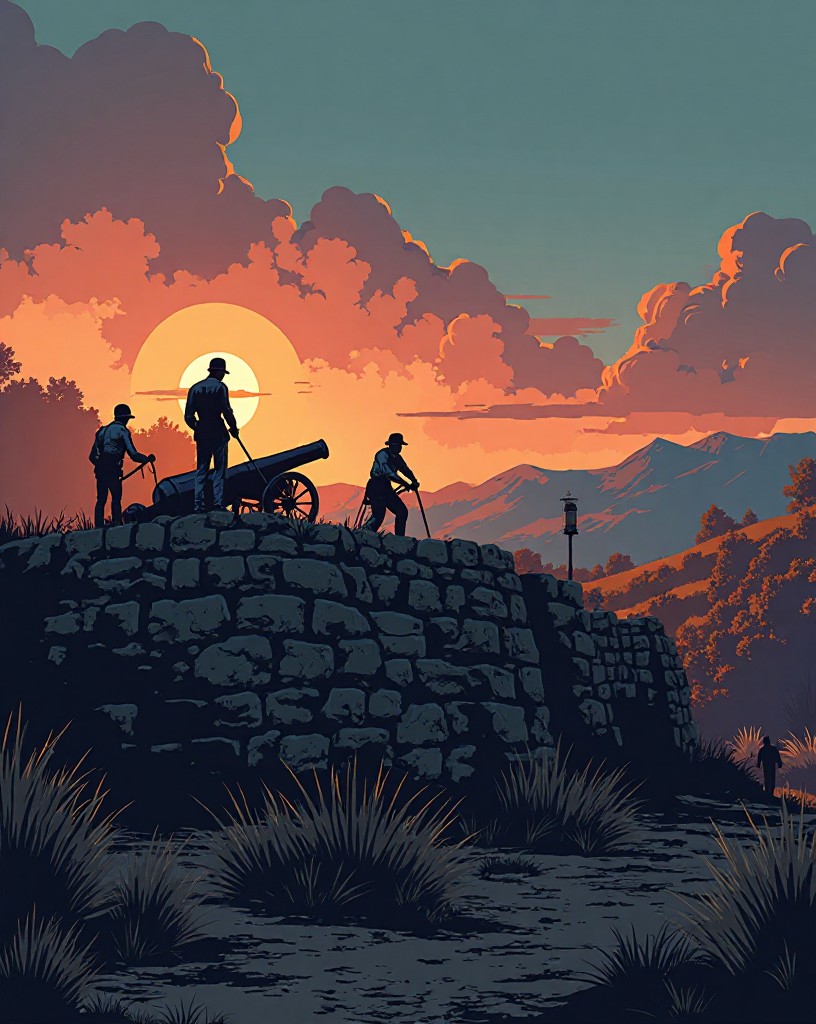
On the first day, the Confederates drive the outnumbered Union troops back through the streets — but the Union men dig in on the high ground south of town, along the ridges and hills, and wait.
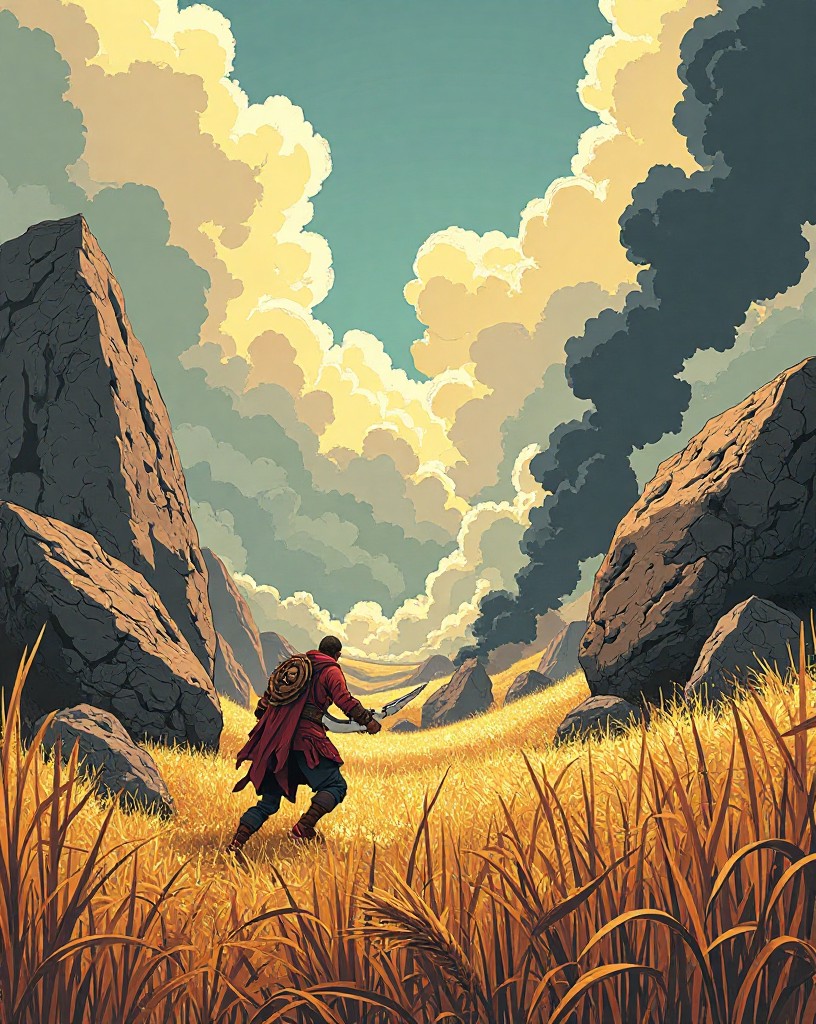
Day two. Lee hammers both ends of the Union line. The fighting turns savage in places that will become legend — the Wheatfield, the Peach Orchard, Devil's Den.
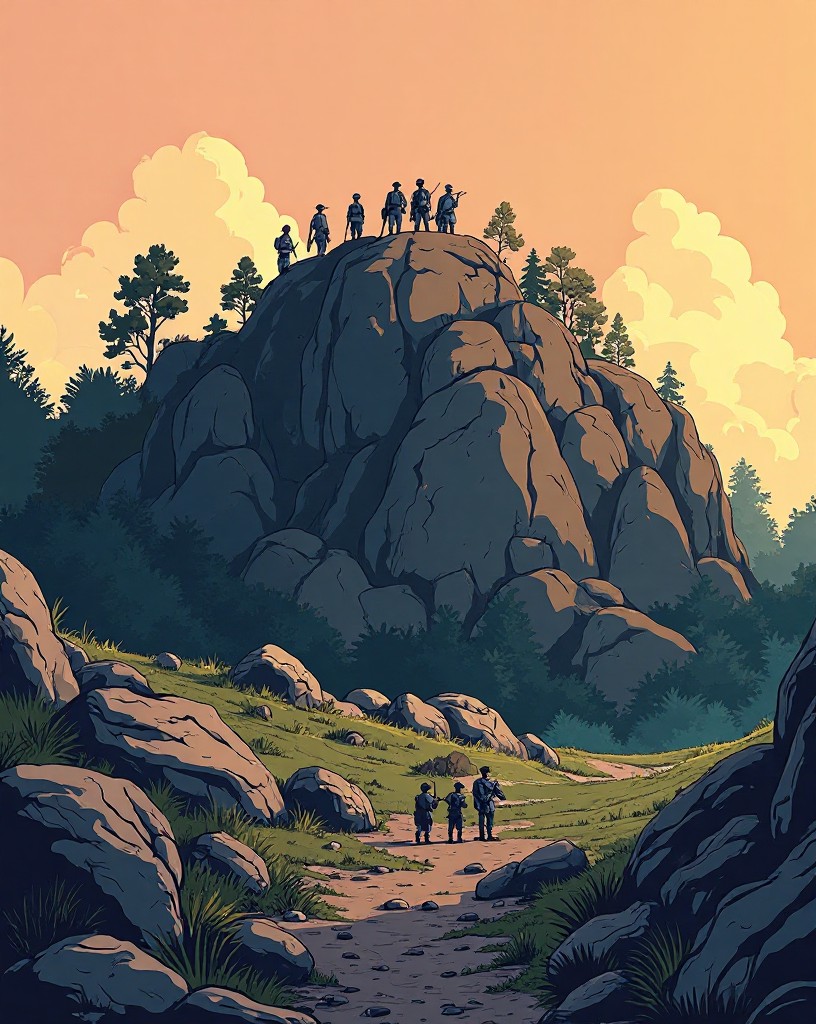
At the far left end of the line rises a small rocky hill, Little Round Top. If it falls, the whole Union army can be rolled up from the flank.
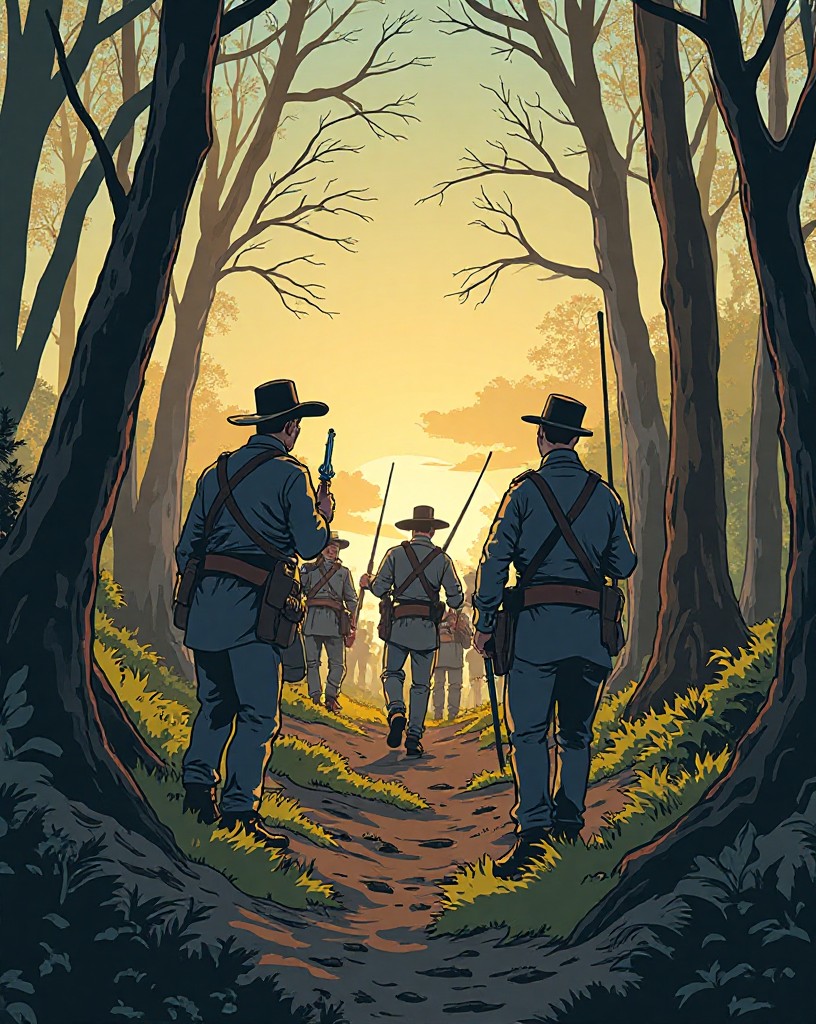
Holding the very end of the line stands the 20th Maine, under a former college professor named Joshua Chamberlain. Wave after wave of Confederates climbs the slope.
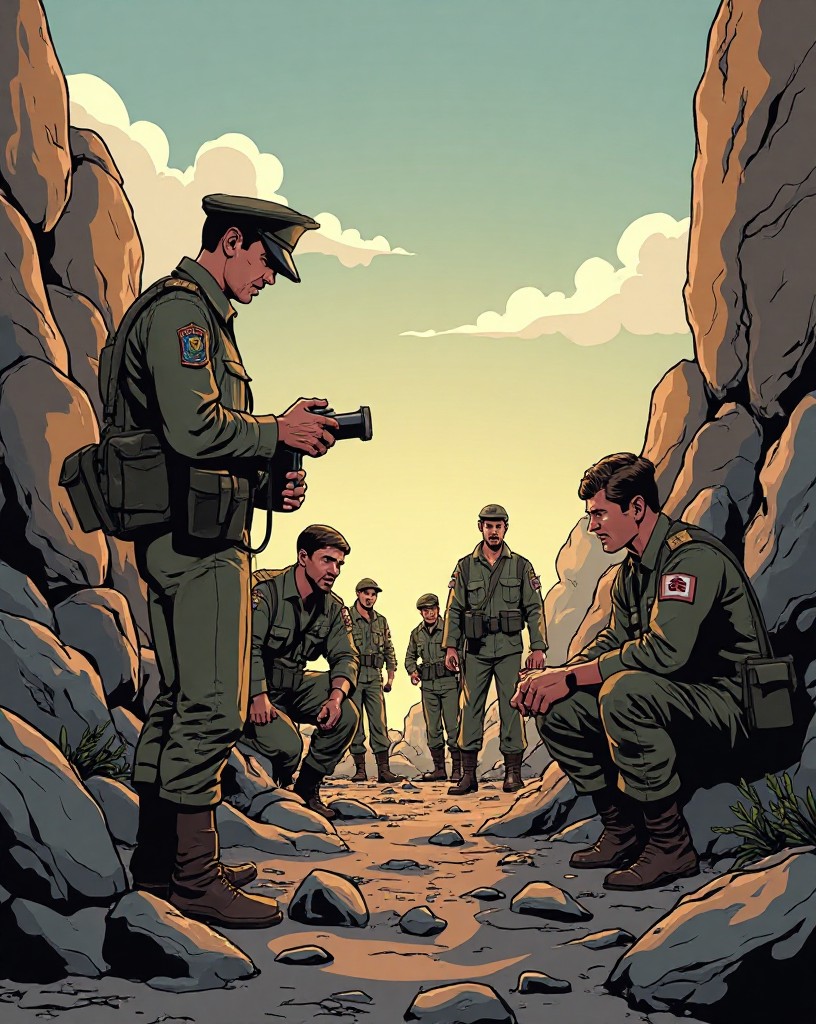
His men are running out of ammunition. There is no time to reload, and nowhere left to fall back to.
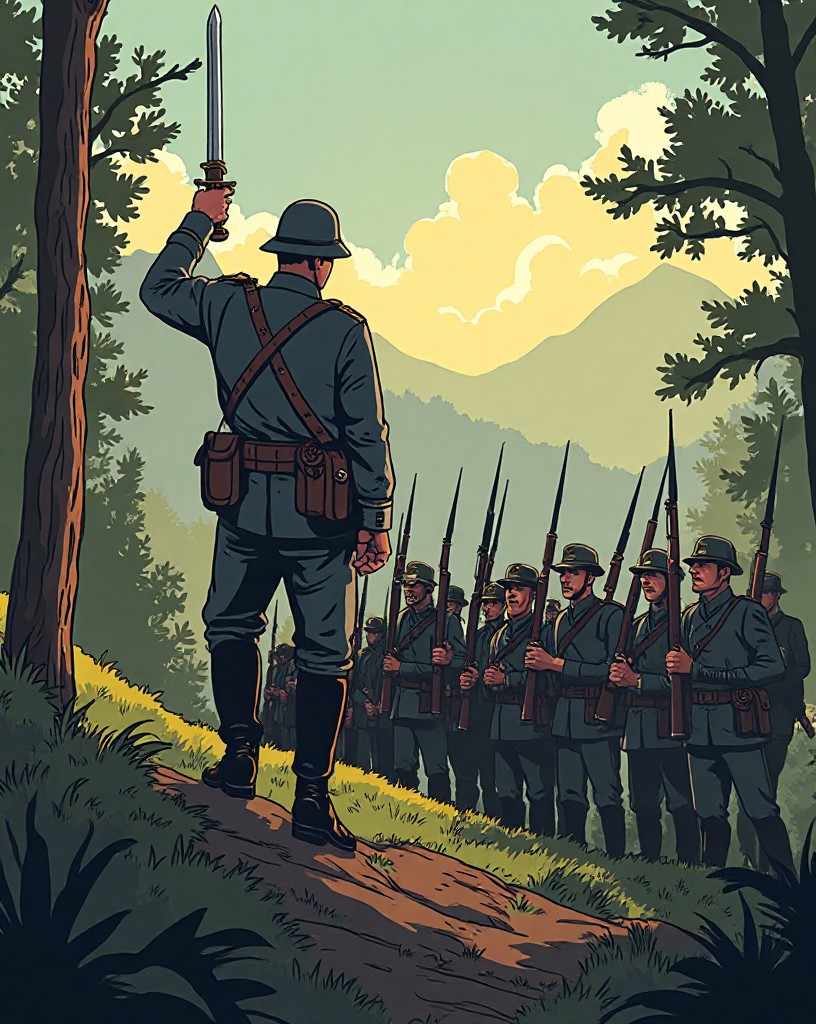
Col. Chamberlain
“Fix bayonets. We charge.”
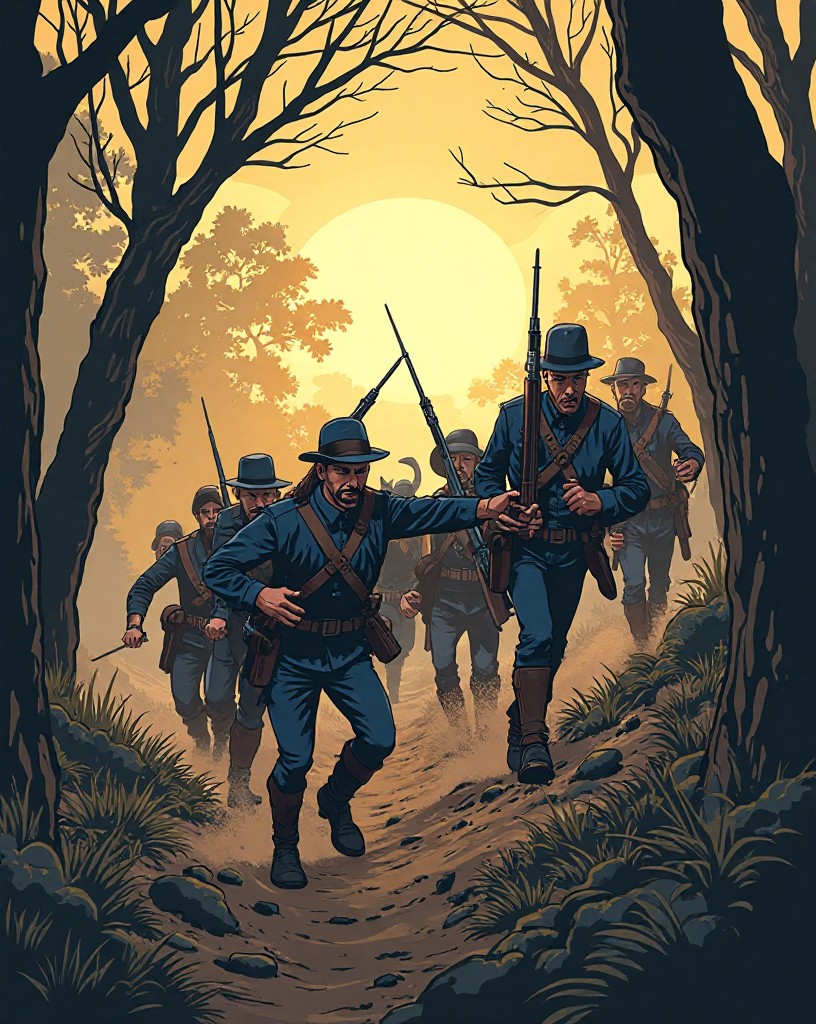
The 20th Maine sweeps down the hill in a screaming bayonet charge that stuns the attackers and saves the flank.
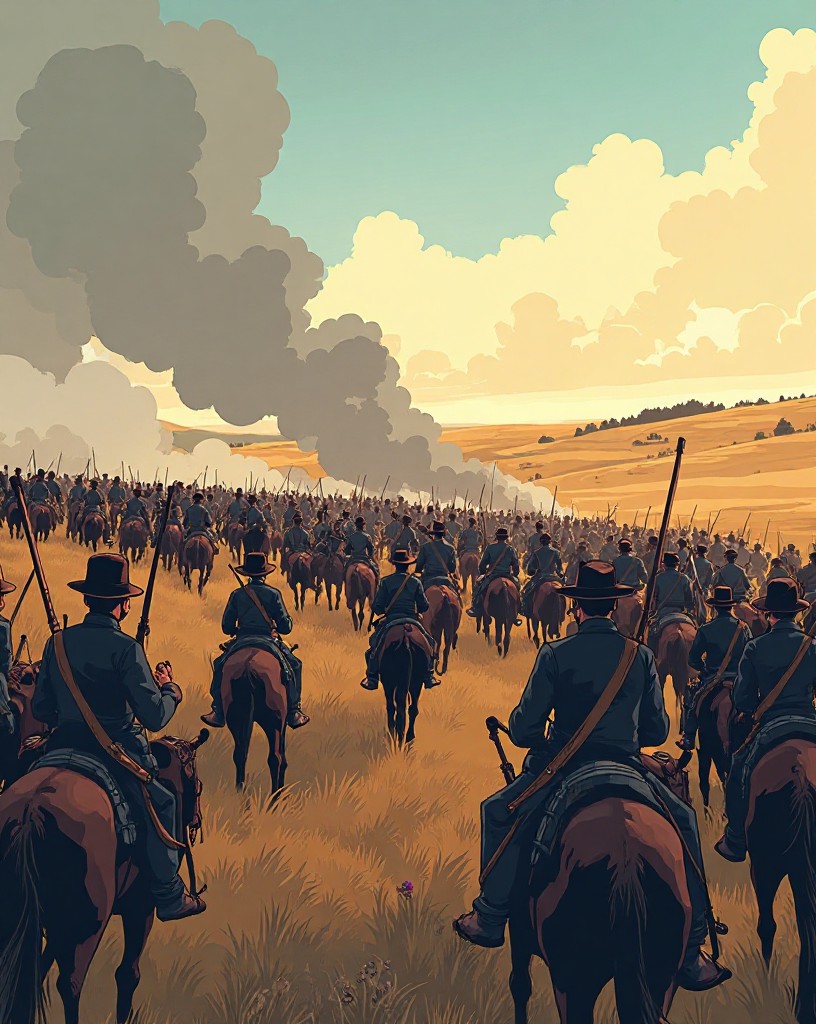
Day three. Lee stakes everything on one blow at the Union center. Some twelve thousand men step from the trees and march across nearly a mile of open field, into massed cannon and rifle fire. It is remembered as Pickett's Charge.
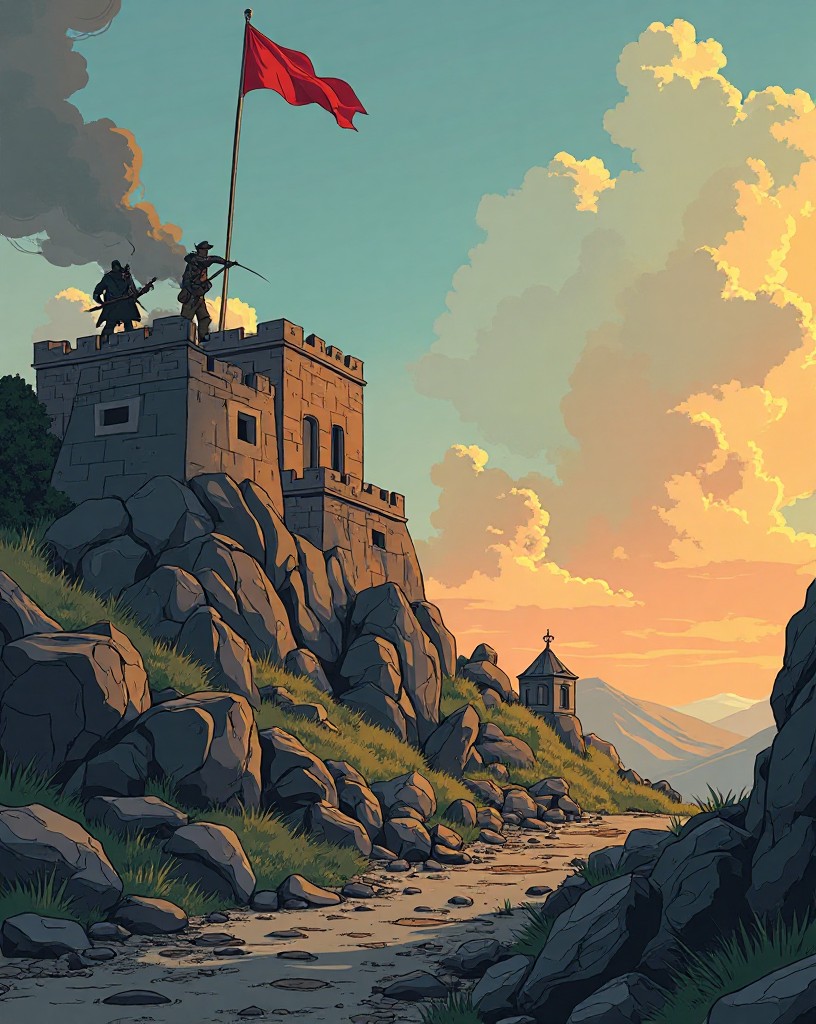
A few hundred reach the Union line. They are killed or thrown back. The charge breaks — and with it, Lee's invasion. It is called the high-water mark of the Confederacy, the closest the South would ever come.
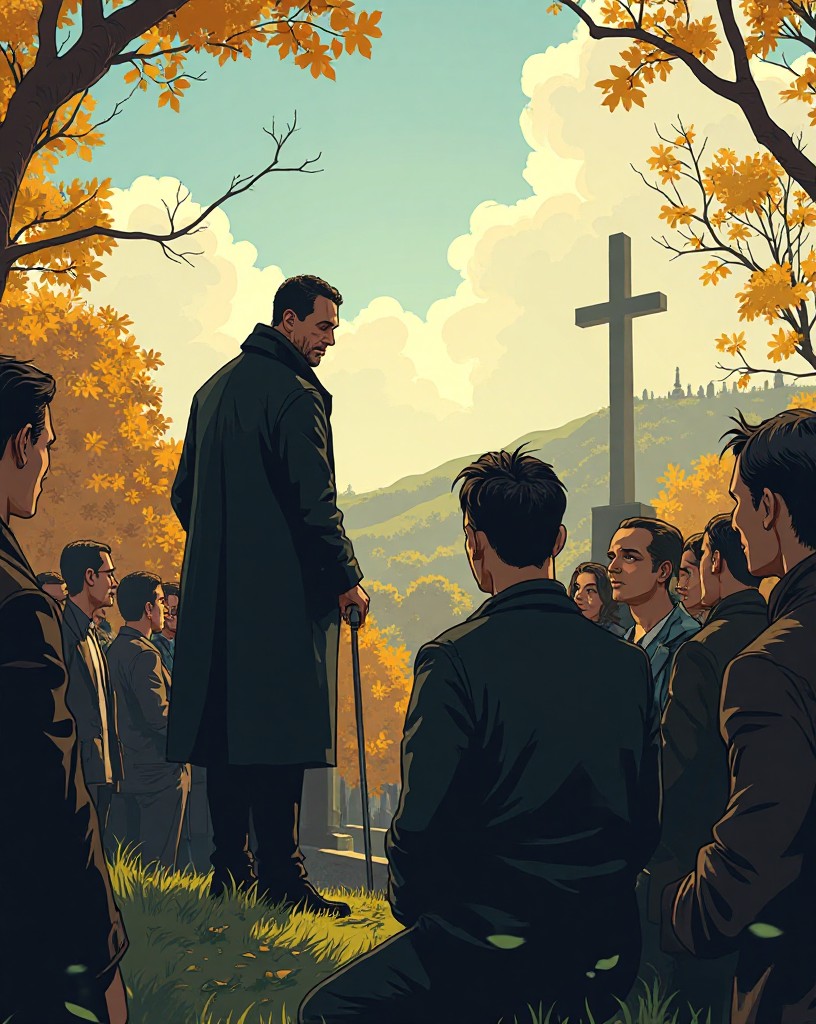
Lee retreated south and never invaded the North again. That November, on the ground where thousands had fallen, Abraham Lincoln spoke for two minutes about a "new birth of freedom" — and gave the war its meaning.
Sources
This story was adapted from the following. The illustrations are stylized depictions, not photographs of the events.
“Battle of Gettysburg”, Wikipedia
Overview, the three days, and Pickett's Charge.
The Killer Angels, Michael Shaara (1974)
Pulitzer-winning historical novel of the battle (dramatized but well-researched).
That’s the story.
More are in the studio. Head back to the collection to see what’s coming.