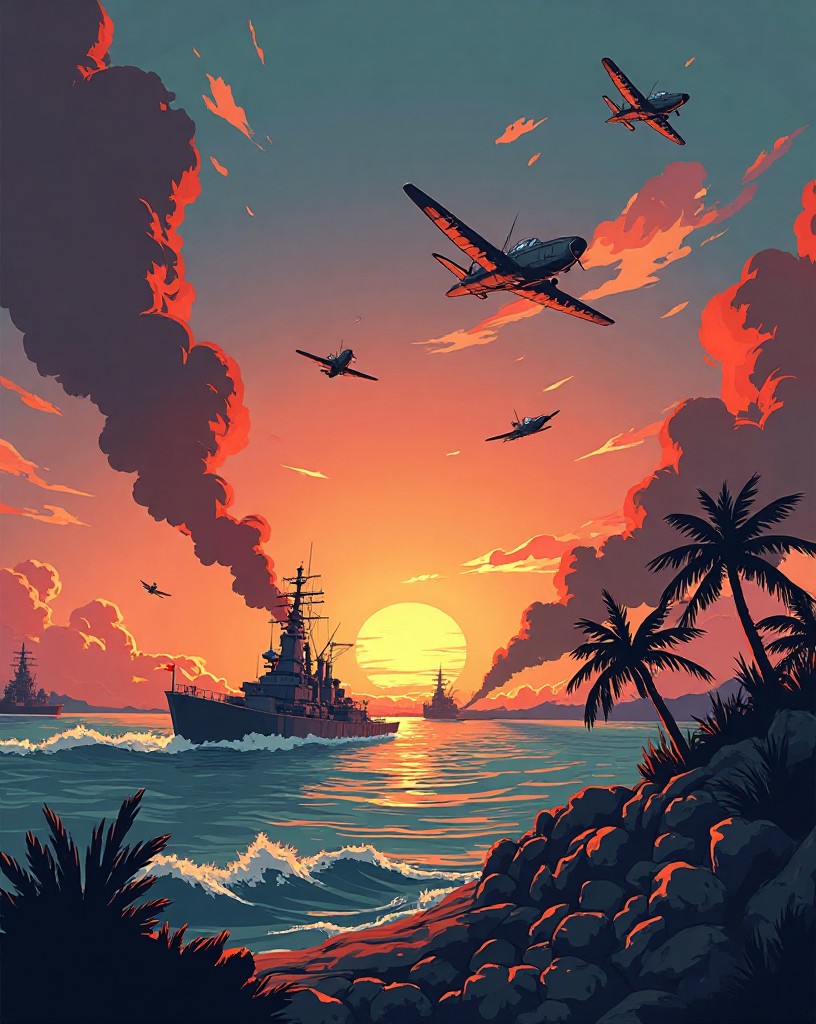
Pearl Harbor
A quiet Sunday, two hours, and the morning that pulled America into the war.
Hawaii · December 1941
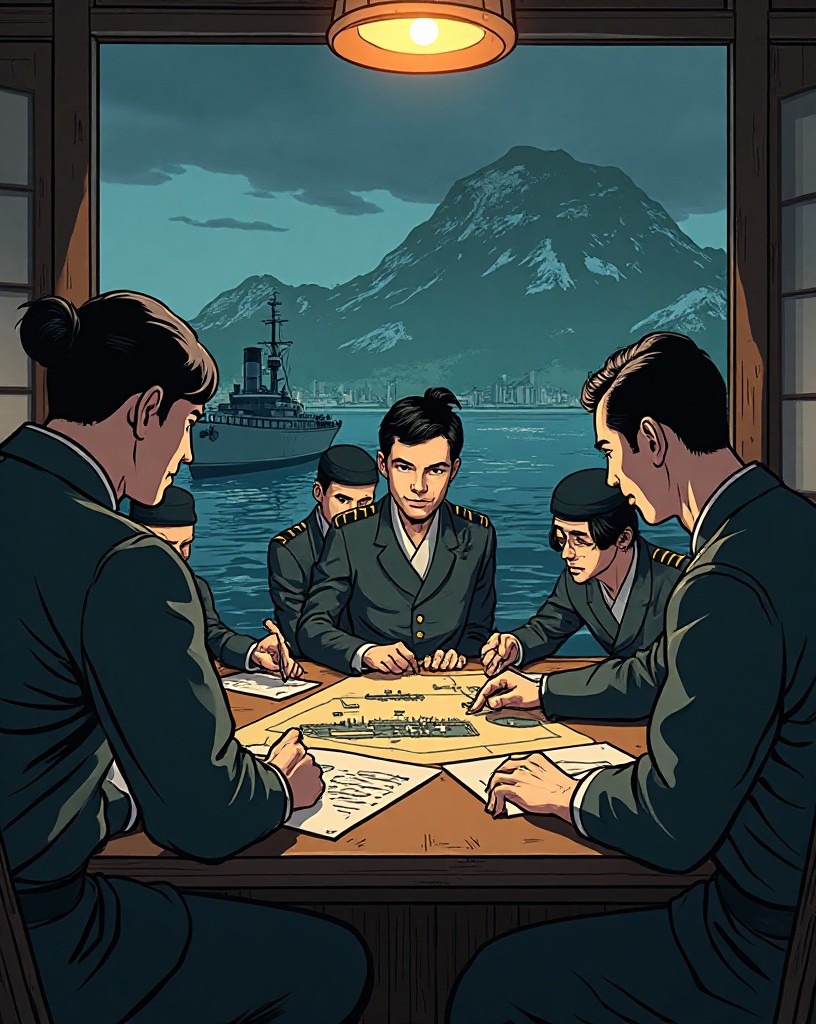
By late 1941, Japan and the United States are locked in a tightening standoff over Japan's expansion across Asia and the Pacific. Japan decides on a desperate gamble: a knockout blow against the one force that can stop it — the US Pacific Fleet, at anchor in Hawaii.
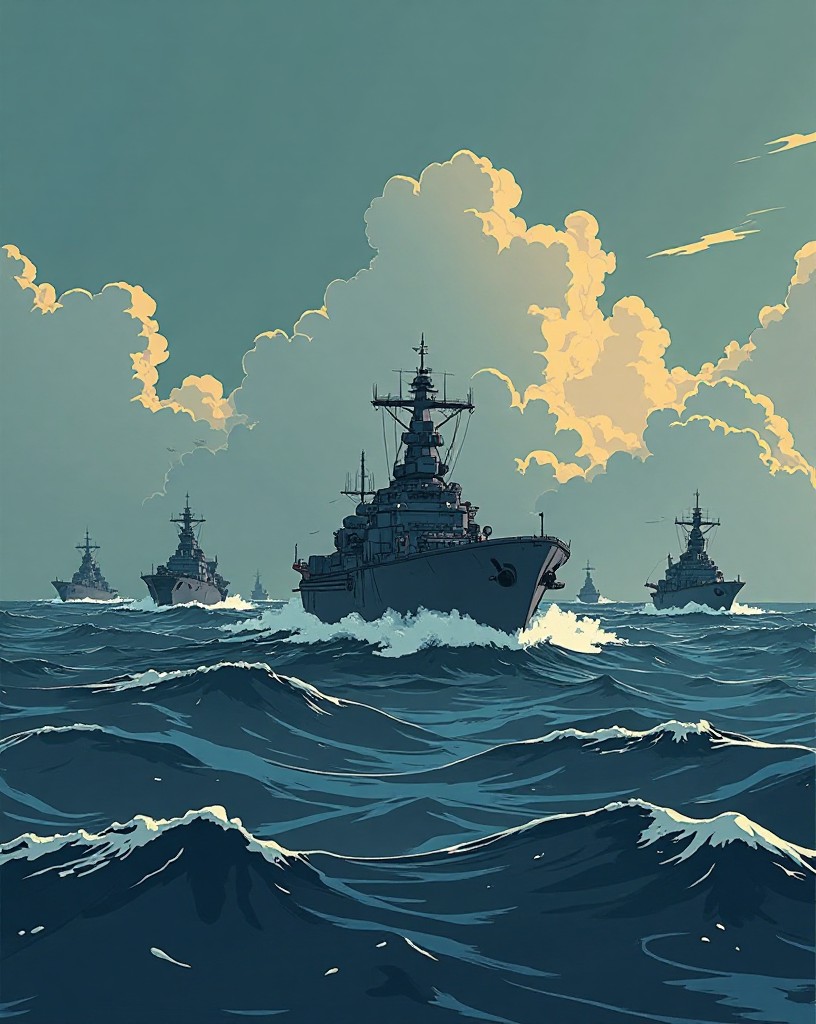
In secret, a Japanese fleet of six aircraft carriers sails thousands of miles across the empty north Pacific, holding radio silence, undetected.
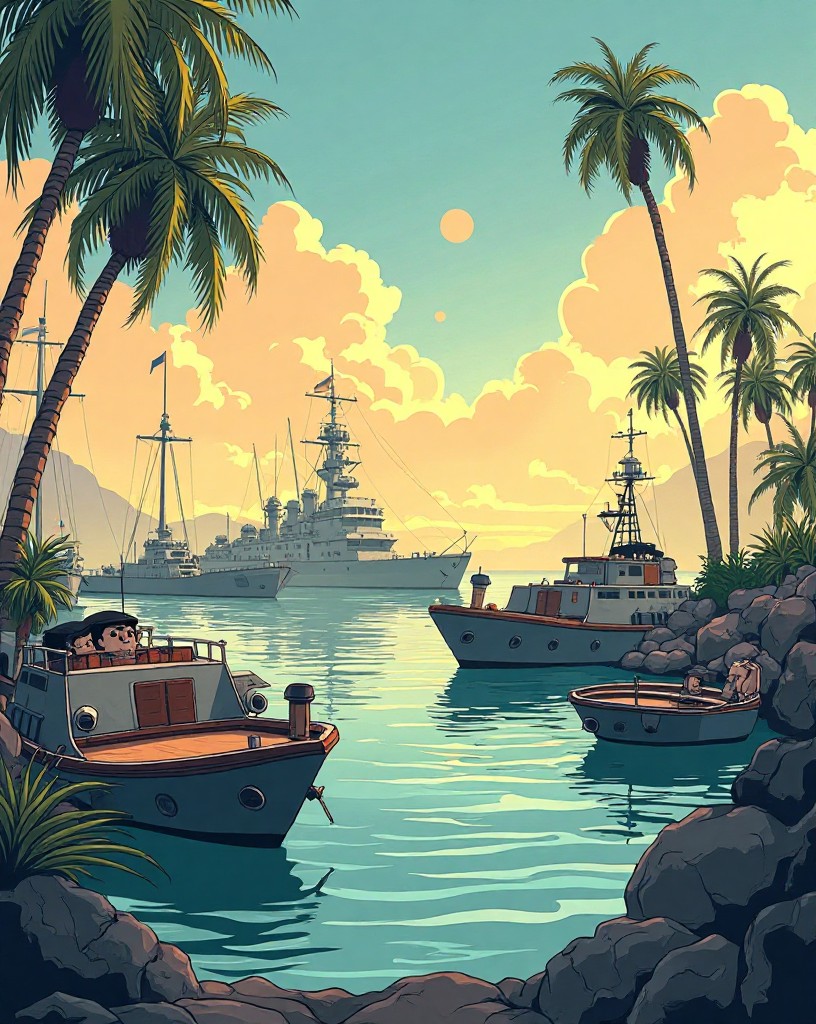
Sunday morning, December 7th. At Pearl Harbor, sailors sleep in, flags are raised, and the great battleships sit in a peaceful row. It is a quiet tropical dawn.
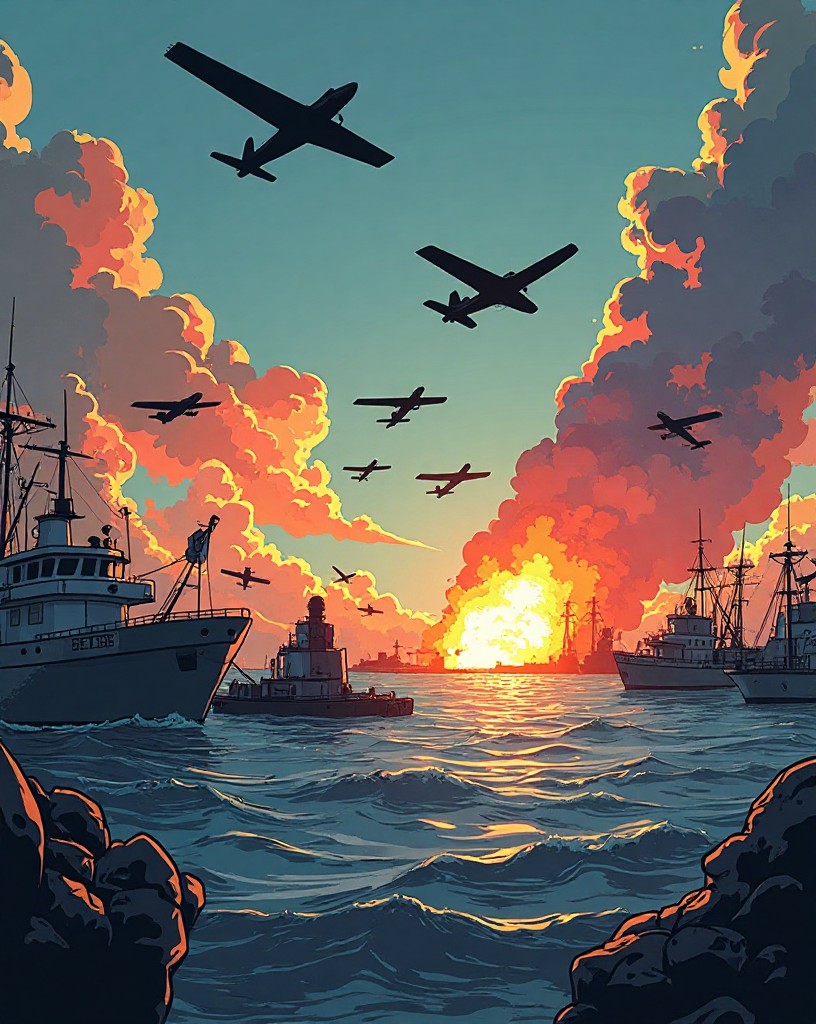
Then the sky fills with aircraft. Hundreds of Japanese planes — torpedo bombers, dive bombers, fighters — sweep in low over the harbor.
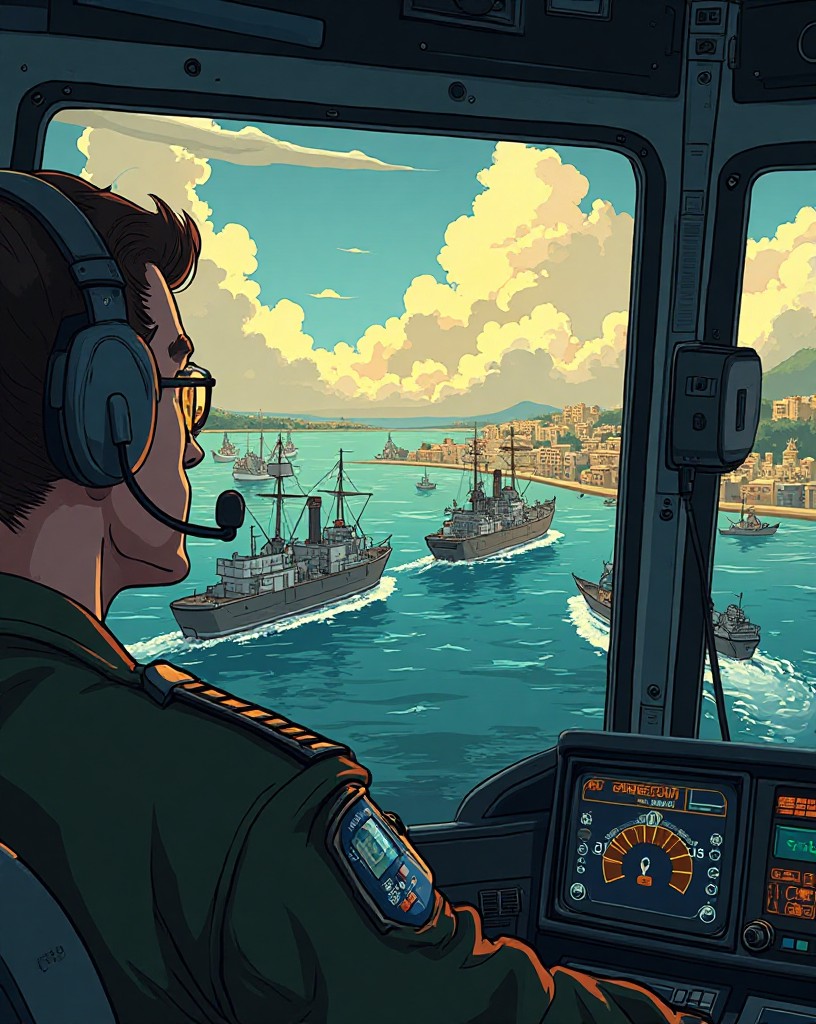
Japanese flight leader
“Tora! Tora! Tora!”
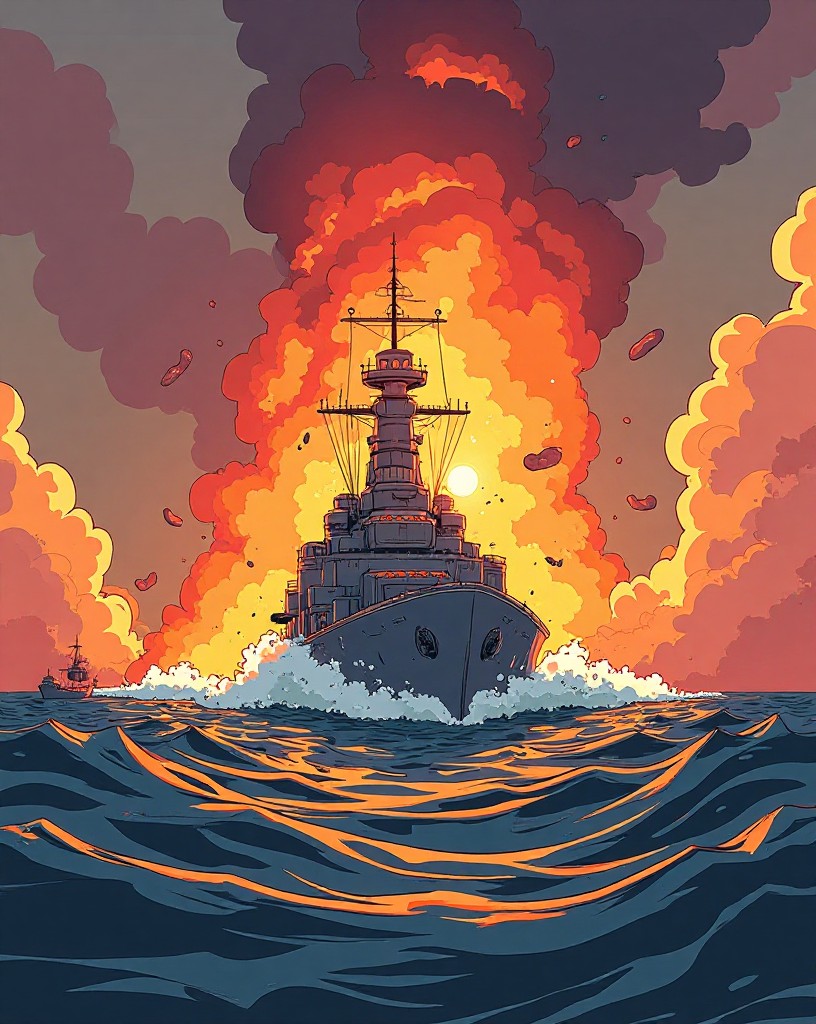
Torpedoes and bombs tear into the battleships. The Oklahoma rolls over. The Arizona's magazine explodes in a fireball, killing over a thousand men in an instant.
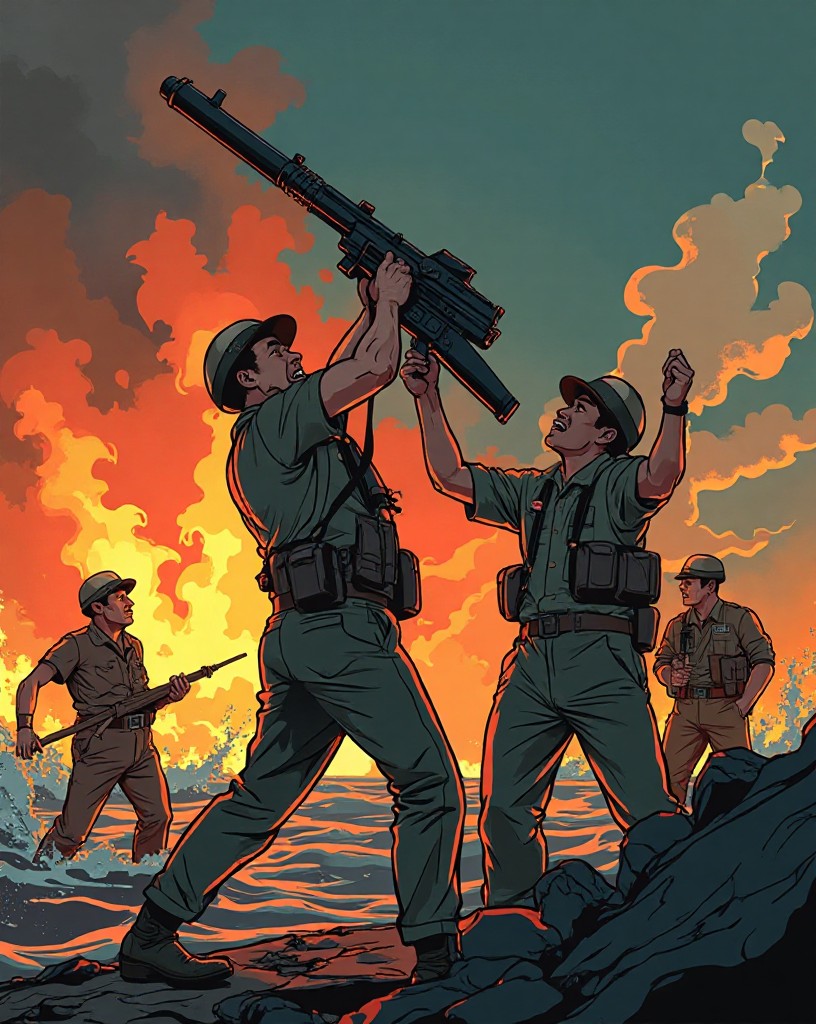
Caught utterly by surprise, sailors and airmen fight back with whatever they can reach — manning guns amid the flames, some firing rifles at the diving planes.
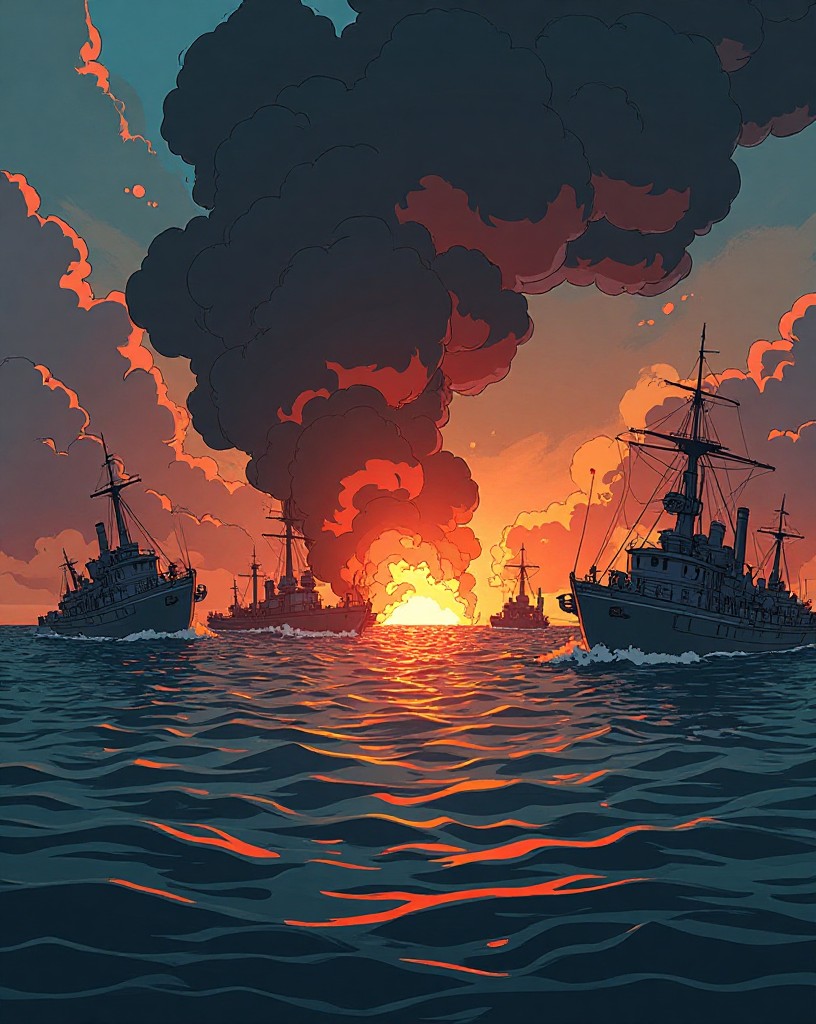
In under two hours it is over. Much of the Pacific Fleet's battleship line lies sunk or burning, and some twenty-four hundred Americans are dead.
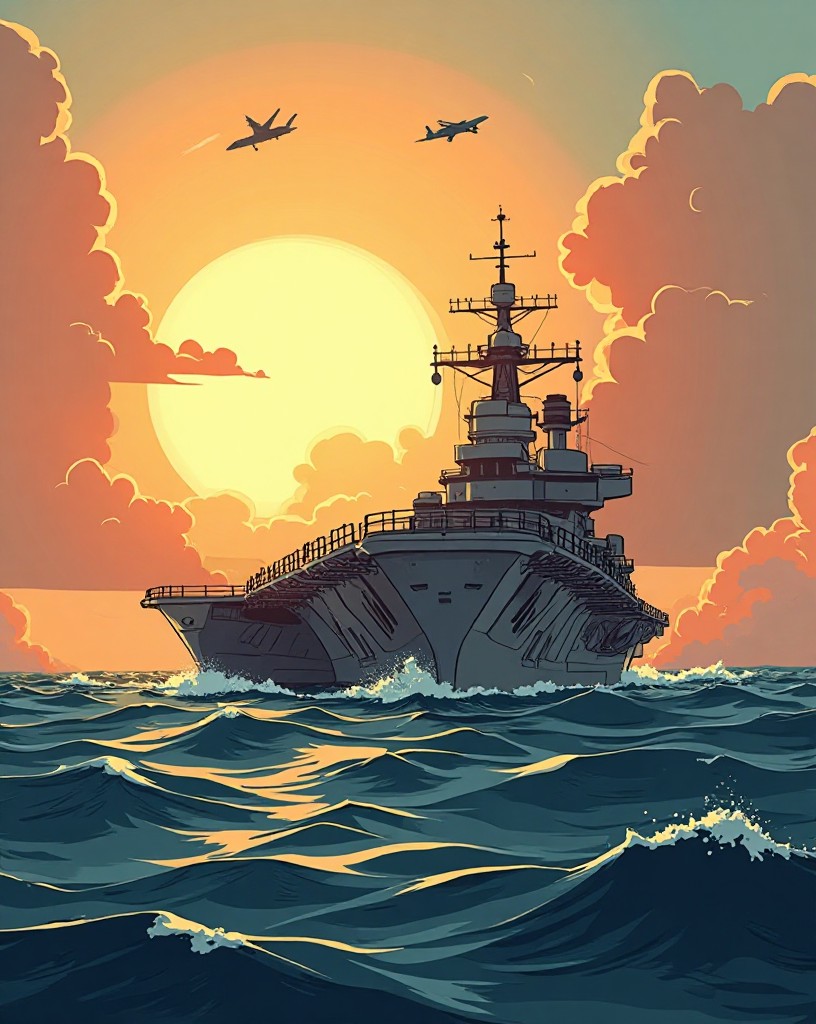
But the blow is not as complete as it looks. By chance, the fleet's aircraft carriers are out at sea that morning — and they, not the battleships, will decide the war in the Pacific.
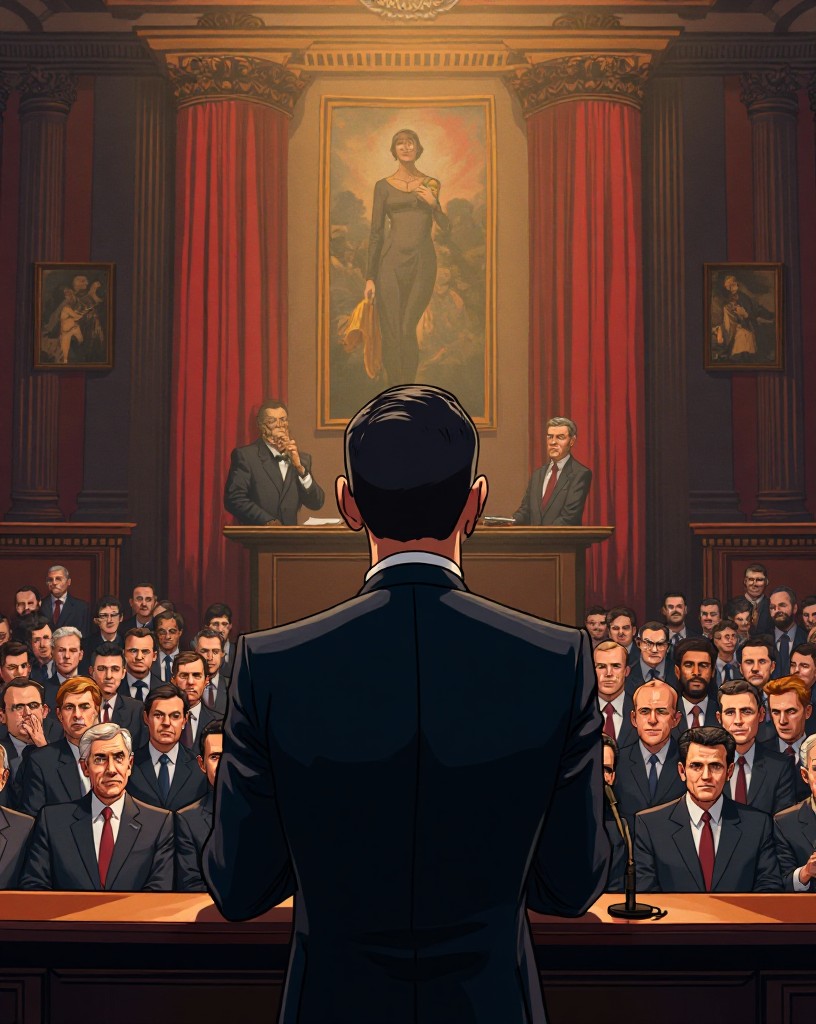
The next day, a grim President Roosevelt speaks to the nation and the world.
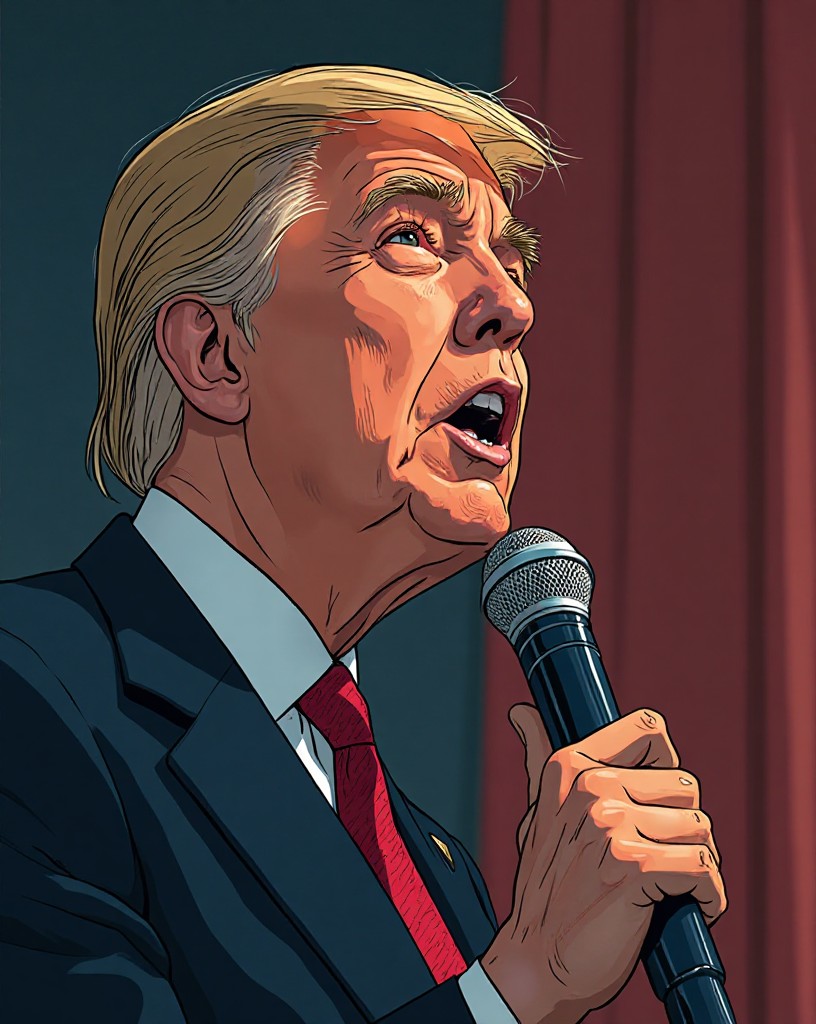
President Roosevelt
“December 7th, 1941 — a date which will live in infamy.”
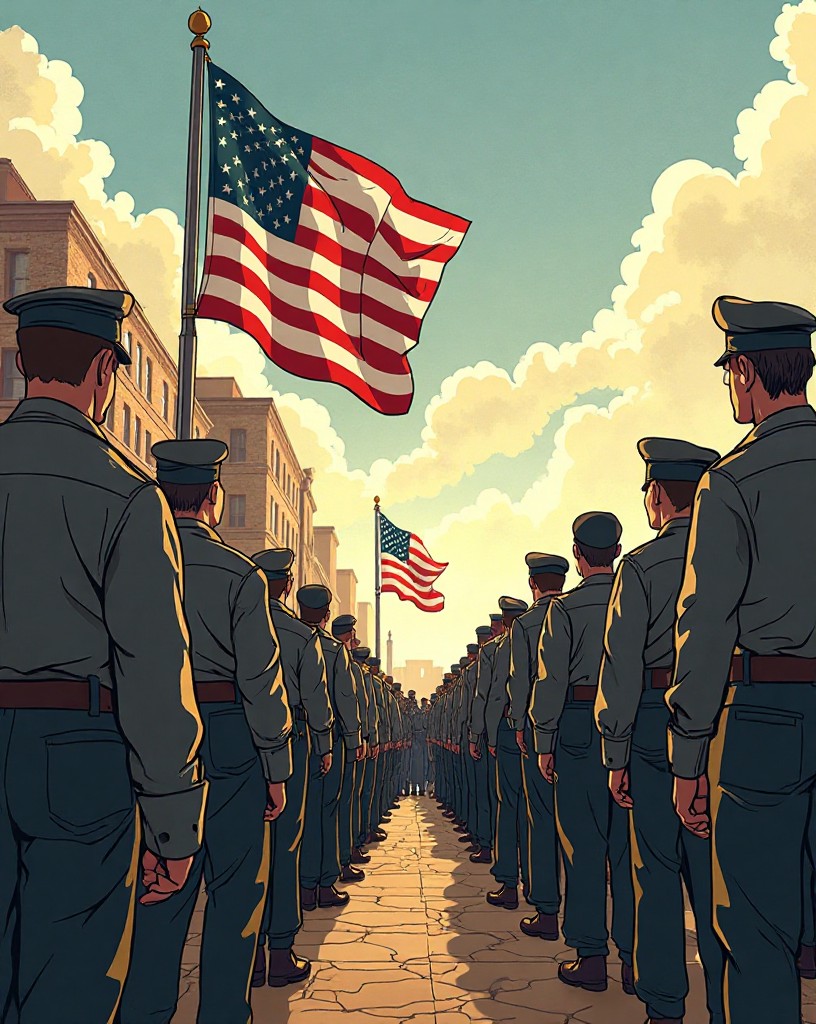
America, divided and reluctant the day before, is now united and at war. Japan had won a stunning victory — and, as one of its own admirals is said to have feared, had only awakened a sleeping giant and filled it with a terrible resolve.
Sources
This story was adapted from the following. The illustrations are stylized depictions, not photographs of the events.
“Attack on Pearl Harbor”, Wikipedia
Overview, the attack, losses, and the carriers' absence.
At Dawn We Slept, Gordon W. Prange (1981)
Definitive history of Pearl Harbor.
That’s the story.
More are in the studio. Head back to the collection to see what’s coming.